10% Off
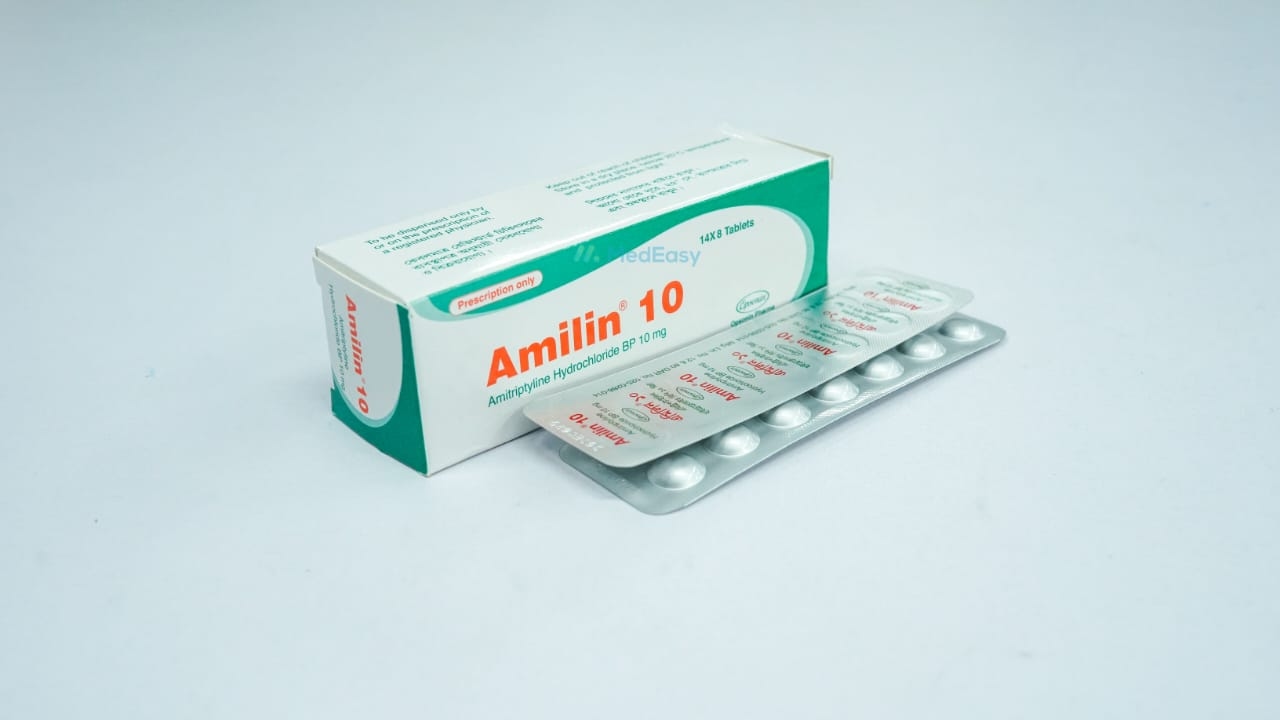
Amilin10 mg
Opsonin Pharma Ltd.
৳10.71
Add to cart

Amitip 10 mg Tablet is available on MedEasy for ৳0.78 per piece, with home delivery anywhere in Bangladesh. It is manufactured by Pacific Pharmaceuticals Ltd. Its generic name is Amitriptyline hydrochloride.

Amitip is a tricyclic antidepressant (TCA) used for the following indications, classified by strength of evidence:
The final decision on indication and duration of use must be individualized by a qualified physician.
Each tablet contains Amitriptyline hydrochloride as the active ingredient. In Bangladesh, Amitriptyline hydrochloride is commonly available as oral tablets in strengths of 10 mg and 25 mg. Excipients vary by manufacturer; refer to the specific product's package insert for the complete list of inactive ingredients.
Amitip is a tricyclic antidepressant (TCA) that has been used in clinical practice for decades. It works primarily by inhibiting the reuptake of the neurotransmitters serotonin and norepinephrine in the central nervous system, thereby increasing their availability at nerve synapses.
In addition to its antidepressant effect, Amitip has significant anticholinergic, antihistaminic, and alpha-1 adrenergic blocking properties, which account for many of its side effects. It is available as oral tablets and is taken once or in divided doses daily, typically with a larger portion or the entire dose given at bedtime because of its sedating effect.
Amitip belongs to the therapeutic class of Tricyclic Antidepressants (TCAs).
Amitriptyline hydrochloride is thought to exert its antidepressant effect mainly by inhibiting the neuronal reuptake of serotonin and norepinephrine at the presynaptic membrane, increasing their concentration in the synaptic cleft and enhancing neurotransmission.
Amitriptyline hydrochloride also has notable secondary pharmacological actions:
Amitriptyline hydrochloride is well absorbed orally, extensively metabolized in the liver (partly to its active metabolite nortriptyline) via the CYP2D6 and CYP2C19 pathways, and has a long elimination half-life that allows once-daily dosing.
Dosage of Amitip must be individualized by a physician according to the indication being treated, the patient's age, and clinical response. See the Dosage table for indication-specific dosing and Administration for practical instructions on taking the medicine. Treatment is usually started at a low dose and increased gradually to minimize side effects, and should never be stopped abruptly without medical advice.
Amitip has several clinically significant drug interactions:
Amitriptyline hydrochloride is contraindicated in the following situations:
Common and serious side effects associated with Amitip include:
Serious but less common effects include serotonin syndrome (in combination with other serotonergic drugs — see Interactions), suicidal thoughts/behavior in young people (see Precautions), and severe allergic reactions. Report any severe or persistent side effect to a physician promptly.
Pregnancy: Amitip should be used during pregnancy only if clearly needed and if the potential benefit justifies the potential risk to the fetus. Amitip crosses the placenta; adequate and well-controlled studies in pregnant women are lacking. Consult a physician before use during pregnancy.
Lactation: Amitip is excreted into breast milk. Breastfeeding while taking Amitip should be discussed with a physician, weighing the benefits of breastfeeding against potential risk to the infant; the physician may advise an alternative or discontinuing nursing.
Amitip, like other antidepressants, increases the risk of suicidal thinking and behavior in children, adolescents, and young adults (up to age 24), particularly during the initial months of treatment and after dose changes. Patients of all ages should be closely monitored for clinical worsening, unusual changes in behavior, and emergence of suicidal ideation. Amitip is not approved for use in patients under 12 years of age.
Overdose of Amitip is a recognized life-threatening medical emergency. Signs and symptoms may include cardiac arrhythmias, severe hypotension, widened QRS complex, seizures, respiratory depression, and coma.
If an overdose of Amitip is suspected, seek immediate emergency medical attention or contact a poison control center/emergency services right away. Do not attempt to manage a suspected overdose at home; continuous cardiac monitoring and hospital-level supportive care are required.
Store at room temperature (below 30°C), away from light and moisture. Keep out of reach of children.
The safety and efficacy of Amitip for depression have not been established in children under 12 years of age. Amitip carries a boxed warning for increased suicidality risk in children, adolescents, and young adults (see Precautions). Off-label short-term use for nocturnal enuresis in children should only occur under specialist supervision given cardiac risk in overdose.
Elderly patients are more sensitive to the anticholinergic, sedative, orthostatic hypotensive, and cardiac effects of Amitip; lower starting doses and slower titration are recommended, with close monitoring.
No formal dose-adjustment guidelines are established; use with caution and physician oversight.
Use with caution and reduced dosing, as Amitip undergoes extensive hepatic metabolism.
Duration of treatment with Amitip is individualized by the treating physician. For major depressive disorder, an adequate treatment trial is typically several weeks (4–6 weeks) before full antidepressant effect is assessed, with continued maintenance therapy for months as clinically indicated to prevent relapse. For neuropathic pain, chronic pain, or migraine prophylaxis, duration is guided by clinical response and is periodically reviewed. Amitip should not be discontinued abruptly; any change in duration or stopping treatment should be done under medical supervision with gradual tapering.
Amitriptyline hydrochloride belongs to the Tricyclic Antidepressant (TCA) drug class.
Amitriptyline hydrochloride acts primarily by inhibiting the presynaptic reuptake of serotonin and norepinephrine, increasing their availability in the synaptic cleft and enhancing monoaminergic neurotransmission, which is believed to underlie its antidepressant and analgesic effects. It also blocks muscarinic acetylcholine receptors, histamine H1 receptors, and alpha-1 adrenergic receptors, and has a membrane-stabilizing (sodium-channel blocking) effect on cardiac tissue that accounts for its side-effect profile and toxicity in overdose.
C
Amitip is not approved for the treatment of depression in patients under 12 years of age, and safety and efficacy for this indication in the pediatric population have not been established. Amitip carries a boxed warning for increased risk of suicidal thinking and behavior in children, adolescents, and young adults up to age 24, particularly early in treatment; close monitoring is required if used in this age group under specialist care.
A limited off-label use of Amitip exists for nocturnal enuresis in children (typically age 7 and older) when other measures have failed; this should only be initiated and supervised by a specialist due to the risk of serious cardiotoxicity in accidental overdose in children.
Q: What is Amitip 10 mg Tablet used for?
A: Amitip 10 mg Tablet is a tricyclic antidepressant primarily used to treat major depressive disorder. It is also used off-label for neuropathic pain, chronic pain conditions like fibromyalgia, migraine prevention, and, at low doses, for insomnia.
Q: How should I take Amitip 10 mg Tablet?
A: Amitip 10 mg Tablet is taken by mouth, usually once daily or in divided doses, often with the main dose at bedtime because it can cause drowsiness. Take it exactly as prescribed by your physician, and do not stop it suddenly without medical advice, as this can cause withdrawal symptoms.
Q: What are the most common side effects of Amitip 10 mg Tablet?
A: Common side effects include dry mouth, constipation, blurred vision, urinary retention, drowsiness, dizziness, weight gain, and orthostatic hypotension (light-headedness on standing). Contact your physician if side effects are severe or persistent.
Q: Can Amitip 10 mg Tablet be taken with other antidepressants or MAOIs?
A: Amitip 10 mg Tablet must not be taken with monoamine oxidase inhibitors (MAOIs), or within 14 days of stopping one, due to the risk of a life-threatening hypertensive crisis or serotonin syndrome. Combining Amitip 10 mg Tablet with other serotonergic medicines (such as SSRIs, SNRIs, or tramadol) also increases the risk of serotonin syndrome and should only be done under medical supervision.
Q: Is Amitip 10 mg Tablet safe during pregnancy and breastfeeding?
A: Amitip 10 mg Tablet should be used in pregnancy only if clearly needed, since it crosses the placenta and data on fetal safety are limited; the potential benefit must outweigh the potential risk. Amitip 10 mg Tablet also passes into breast milk, so breastfeeding mothers should consult their physician before use.
Q: What should I do if someone overdoses on Amitip 10 mg Tablet?
A: An overdose of Amitip 10 mg Tablet is a medical emergency that can cause life-threatening heart rhythm problems, seizures, and coma. Seek immediate emergency medical attention or contact a poison control center right away; do not try to manage it at home.
Disclaimer
The information provided is accurate to the best of our knowledge, but it does not replace professional medical advice. We cannot guarantee its completeness or accuracy, and the absence of specific information about a drug should not be taken as an endorsement. We are not responsible for any consequences arising from this information, so please consult a healthcare professional for any concerns or questions.