
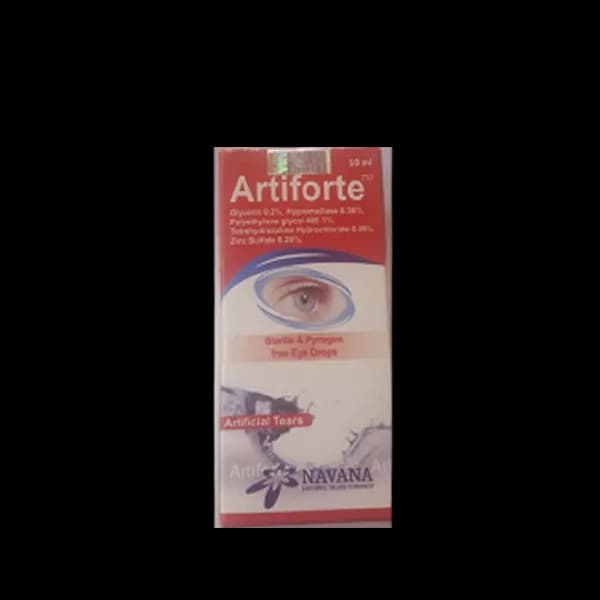

Medicine overview
Indications of Artiforte
Artiforte is a mineral salt supplement used for the following indications:
Established / Guideline-Supported Uses
- Treatment and prevention of zinc deficiency — dietary or condition-related zinc deficiency, including malabsorption syndromes, chronic diarrhea, malnutrition, and certain gastrointestinal or liver diseases.
- Adjunct management of acute diarrhea in children — recommended by the World Health Organization (WHO) alongside oral rehydration therapy (ORT) to reduce the duration and severity of the current diarrheal episode and lower the risk of recurrence over the following 2-3 months. Artiforte is not a substitute for oral rehydration therapy and is used only as an adjunct to it.
General / Supplemental Use
- General nutritional supplementation in individuals with inadequate dietary zinc intake or increased physiological requirements (e.g., pregnancy), as directed by a physician or per approved dietary supplement labeling.
Composition
Each formulation of Zinc Sulfate provides a specified amount of elemental zinc, depending on the salt hydrate form (monohydrate or heptahydrate) and dosage form (tablet, dispersible tablet, syrup, or injectable solution). The elemental zinc content of a given strength of Zinc Sulfate should always be confirmed on the product label, since different hydrate forms yield different amounts of elemental zinc per unit weight.
Description
Artiforte is an inorganic mineral salt used as a source of supplemental zinc, an essential trace element. Zinc functions as a cofactor for more than 300 enzymes involved in protein synthesis, DNA synthesis, immune function, wound healing, cell division, and normal growth and development. Artiforte is available in oral tablet, dispersible tablet, syrup/suspension, and injectable (parenteral trace element additive) forms, and is used both as a general nutritional supplement and, in pediatric populations, as a WHO-recommended adjunct in the management of acute diarrhea.
Therapeutic Class
Artiforte belongs to the therapeutic class of Minerals and Trace Element Supplements.
Pharmacology
Zinc Sulfate provides elemental zinc, which is absorbed primarily in the duodenum and jejunum through both carrier-mediated and passive diffusion processes. Zinc absorption is inversely related to the amount ingested and is reduced by dietary phytates and by concurrent high intake of calcium or iron.
Absorbed zinc circulates bound to albumin and other plasma proteins, is taken up by the liver, and is distributed to tissues, where it acts as a structural and catalytic cofactor for numerous metalloenzymes (e.g., carbonic anhydrase, alkaline phosphatase, RNA/DNA polymerases, superoxide dismutase). Zinc supports normal immune cell function, epithelial integrity and wound healing, taste and smell perception, and growth. In diarrheal illness, zinc from Zinc Sulfate is thought to promote enterocyte regeneration and mucosal immune function, underlying its role in shortening the duration and severity of acute diarrhea in children. Zinc is eliminated mainly in the feces (unabsorbed dietary zinc plus endogenous secretions), with smaller amounts lost in urine and sweat.
Dosage & Administration of Artiforte
Dosing of Artiforte is expressed in terms of elemental zinc and should be individualized by indication and age.
| Indication | Population | Typical Dose (elemental zinc) |
|---|---|---|
| Acute diarrhea (adjunct to ORT) | Infants under 6 months | 10 mg once daily for 10-14 days |
| Acute diarrhea (adjunct to ORT) | Children 6 months to 5 years | 20 mg once daily for 10-14 days |
| Zinc deficiency (treatment) | Adults | Typically 25-50 mg elemental zinc daily in divided doses, as directed by a physician, based on severity of deficiency |
| General nutritional supplementation | Adults | As per product labeling or physician recommendation, typically once daily |
Artiforte is best given on an empty stomach (1 hour before or 2 hours after meals) for optimal absorption; if gastric upset occurs, it may be taken with a small amount of food, which may modestly reduce absorption. See Administration below and Interactions for guidance on spacing doses from other medicines.
Administration of Artiforte
Artiforte may be taken orally as a tablet, dispersible tablet, or syrup. Dispersible tablets can be dissolved in a small amount of clean drinking water or breast milk for infants and young children. Give Artiforte on an empty stomach when possible for best absorption; if stomach upset occurs, it can be taken with a small amount of food instead. Doses of iron, calcium, or certain antibiotics (see Interactions) should be separated from Artiforte by at least 2 hours. Injectable forms of Artiforte, used as a trace element additive in parenteral nutrition, must be administered only by a healthcare professional in a clinical setting.
Interaction of Artiforte
Artiforte has the following clinically significant interactions:
- Tetracycline and fluoroquinolone antibiotics (e.g., doxycycline, ciprofloxacin): Artiforte can chelate these antibiotics in the gut, reducing their absorption and effectiveness. Separate dosing by at least 2 hours (antibiotic before zinc) up to 4-6 hours apart where possible.
- Penicillamine: zinc from Artiforte can reduce penicillamine absorption and effectiveness; separate dosing.
- Iron and copper supplements: concurrent high-dose Artiforte can reduce absorption of iron and copper; separate dosing and monitor with prolonged co-administration.
- Calcium and phosphorus-containing products: may reduce absorption of zinc from Artiforte when taken concurrently in high amounts.
- Thiazide diuretics: may increase urinary zinc excretion, potentially increasing zinc requirements with long-term use of Artiforte.
Contraindications
Zinc Sulfate is contraindicated in patients with known hypersensitivity to zinc salts or to any component of the specific formulation.
Side Effects of Artiforte
Common side effects of Artiforte include:
- Nausea, vomiting, gastric irritation, and abdominal cramps (more common on an empty stomach or at higher doses)
- Diarrhea or constipation
- Metallic or unpleasant taste
- Headache
Less common, and generally associated with prolonged high-dose use: copper deficiency (which may cause sideroblastic anemia and neurological effects), reduced HDL cholesterol, and paradoxically impaired immune function with excessive intake. See Precautions and Warnings and Overdose Effects for further detail.
Pregnancy & Lactation
Artiforte at standard recommended dietary/supplemental doses is generally considered acceptable during pregnancy and lactation and is often included as part of prenatal nutritional supplementation. However, Artiforte should be used only as directed by a physician, at doses appropriate for pregnancy or lactation, since zinc intake above recommended levels may interfere with copper and iron status. Use Artiforte only if clearly needed and as directed; consult a physician before use during pregnancy or breastfeeding, particularly for doses above standard nutritional supplementation.
Precautions & Warnings
Use Artiforte with the following precautions:
- Take with a small amount of food if gastric irritation occurs, understanding this may modestly reduce absorption.
- Prolonged use of high-dose Artiforte without adequate copper intake can cause copper deficiency, associated anemia, neutropenia, and neurological symptoms; long-term high-dose use should be under medical supervision, with periodic monitoring of copper status if prolonged.
- Artiforte is not a substitute for oral rehydration therapy (ORT) in acute diarrheal illness; it is used only as an adjunct alongside appropriate fluid and electrolyte replacement.
- Separate dosing of Artiforte from certain antibiotics and minerals as described under Interactions to avoid reduced absorption or effectiveness.
- Use with caution in patients with renal impairment, in whom zinc excretion may be reduced.
Overdose Effects of Artiforte
Acute overdose of Artiforte may cause nausea, vomiting, abdominal pain, diarrhea, headache, and, with very high doses, gastric erosion or renal impairment. Chronic excessive intake of Artiforte can cause copper deficiency, sideroblastic anemia, neutropenia, and neurological effects. If overdose of Artiforte is suspected, seek immediate medical attention or contact a poison control center; do not attempt home treatment. Management is generally supportive (discontinuation of zinc, supportive care, and correction of copper deficiency if present) and should be directed by a healthcare professional.
Storage Conditions
Store Artiforte at room temperature (below 30°C), away from light and moisture. Keep out of reach of children.
Use In Special Populations
Renal impairment: use Artiforte with caution; reduced renal excretion of zinc may increase the risk of accumulation with prolonged high-dose use.
Hepatic impairment: no specific dose adjustment of Artiforte is well established; use as clinically indicated.
Elderly: no specific dose adjustment of Artiforte is generally required; use per nutritional need, with monitoring of copper status during prolonged high-dose use.
See Pediatric Uses and Pregnancy and Lactation above for further population-specific guidance on Artiforte.
Duration Of Treatment
For acute diarrhea, Artiforte is typically given for 10-14 days per WHO guidance, even after diarrhea resolves, to replenish zinc losses and reduce the risk of recurrence. For treatment of diagnosed zinc deficiency, the duration of Artiforte is individualized based on clinical and/or laboratory response, as directed by a physician. For general nutritional supplementation, duration follows product labeling or physician recommendation.
Drug Classes
Nutritional Supplements > Minerals and Trace Elements > Zinc Salts (Zinc Sulfate)
Mode Of Action
Zinc Sulfate dissociates in solution to release zinc ions, which are absorbed and act as an essential cofactor in more than 300 metalloenzymes governing DNA/RNA synthesis, protein synthesis, and cell division. Zinc released from Zinc Sulfate stabilizes cell membranes, supports T-lymphocyte and neutrophil function important for immune defense, promotes epithelial proliferation relevant to wound healing and intestinal mucosal repair, and is required for normal taste bud and olfactory function. These combined actions underlie the role of Zinc Sulfate in correcting deficiency states and in reducing the duration of acute diarrheal illness in children.
Pediatric Uses
Artiforte is well established for use in children as an adjunct in the management of acute diarrhea, per WHO/UNICEF guidance: 10 mg/day elemental zinc for infants under 6 months, or 20 mg/day for children 6 months to 5 years, for 10-14 days, given alongside oral rehydration therapy. Artiforte is also used for treatment of diagnosed zinc deficiency in children, with dosing individualized by age, weight, and severity under medical supervision. Dispersible tablet or syrup formulations of Artiforte are preferred for accurate pediatric dosing where available. Safety and efficacy of specific formulations or doses of Artiforte outside these established uses have not been established in children; use only as directed by a pediatrician.
Frequently Asked Questions
Q: What is Artiforte 0.25% Ophthalmic Solution used for?
A: Artiforte 0.25% Ophthalmic Solution is used to treat and prevent zinc deficiency and, in children, as an adjunct to oral rehydration therapy for acute diarrhea, as recommended by the World Health Organization.
Q: Can Artiforte 0.25% Ophthalmic Solution be taken with antibiotics?
A: Artiforte 0.25% Ophthalmic Solution can reduce the absorption of tetracycline and fluoroquinolone antibiotics if taken at the same time. Separate dosing by at least 2 hours, and consult your physician or pharmacist for guidance specific to your antibiotic.
Q: Is Artiforte 0.25% Ophthalmic Solution safe during pregnancy?
A: At standard recommended doses, Artiforte 0.25% Ophthalmic Solution is generally considered acceptable during pregnancy and is often part of prenatal nutritional supplementation, but it should be used only as directed by a physician, since doses above recommended levels may affect copper and iron status.
Q: What are the common side effects of Artiforte 0.25% Ophthalmic Solution?
A: Common side effects of Artiforte 0.25% Ophthalmic Solution include nausea, gastric irritation, abdominal cramps, and an unpleasant taste, especially when taken on an empty stomach.
Q: Can I take Artiforte 0.25% Ophthalmic Solution long-term at high doses?
A: Prolonged high-dose use of Artiforte 0.25% Ophthalmic Solution without adequate copper intake can cause copper deficiency and related anemia or neurological effects. Long-term high-dose use of Artiforte 0.25% Ophthalmic Solution should be supervised by a physician.
Q: What should I do if I take too much Artiforte 0.25% Ophthalmic Solution?
A: If an overdose of Artiforte 0.25% Ophthalmic Solution is suspected, seek immediate medical attention or contact a poison control center rather than attempting home treatment.
Disclaimer
The information provided is accurate to the best of our knowledge, but it does not replace professional medical advice. We cannot guarantee its completeness or accuracy, and the absence of specific information about a drug should not be taken as an endorsement. We are not responsible for any consequences arising from this information, so please consult a healthcare professional for any concerns or questions.
