
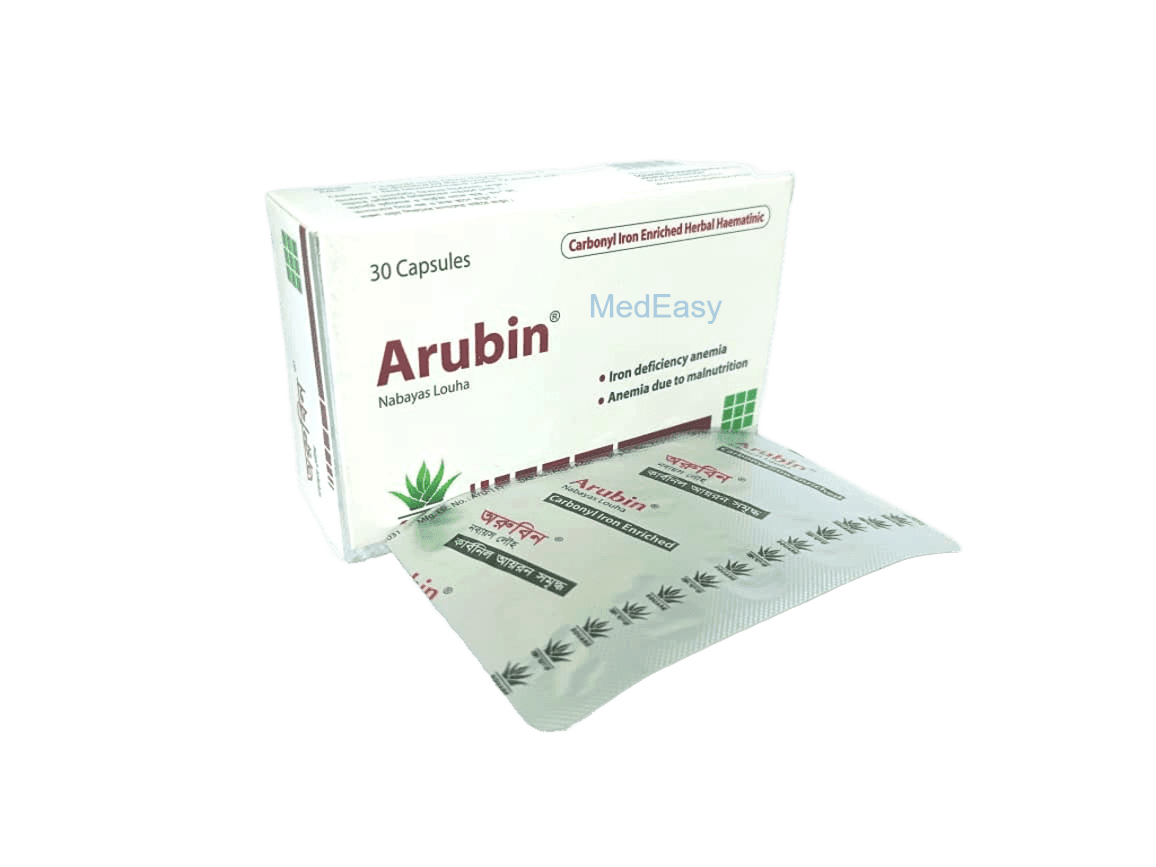

Medicine overview
Indications of Arubin
Arubin is a traditional Ayurvedic herbo-mineral haematinic (blood-building/iron-supporting) preparation. Its use is based on classical Ayurvedic tradition rather than robust modern clinical trial evidence.
- Traditional/adjunct use: Arubin is traditionally used as a supportive haematinic tonic to help address symptoms associated with mild iron-deficiency-type anemia, such as generalized weakness and fatigue, when used as an adjunct alongside dietary measures and, where indicated, conventional medical treatment.
- General tonic use: Traditionally used in Ayurveda to support healthy hemoglobin levels and overall vitality during convalescence or periods of low energy.
Evidence for these uses is traditional and anecdotal, and is not supported by robust modern randomized clinical trials. Arubin is not a substitute for proper medical diagnosis and treatment of anemia. Anyone with persistent fatigue, pallor, or suspected significant anemia should undergo conventional medical evaluation (including blood testing) rather than relying on Arubin alone.
Composition
Nabayas Louha Herbal Haematinic is a herbo-mineral formulation related to the classical Ayurvedic preparation known as "Navayas Lauha" (Navayasa Lauha/Louha), a calcined iron (Lauha Bhasma) based Ayurvedic Bhasma traditionally combined with select herbal adjuvants described in classical Ayurvedic formularies.
Important: the precise standardized composition, elemental iron content, and processing method of Nabayas Louha Herbal Haematinic vary by manufacturer and have not been independently verified beyond general Ayurvedic formulary categorization. Consult the product label/package insert of the specific manufactured pack, or a qualified Ayurvedic practitioner or physician, for exact ingredient and quantity details before use.
Description
Arubin is a traditional Ayurvedic herbo-mineral haematinic tonic. The name relates to "Navayas Loha," a classical Ayurvedic iron-based Bhasma (calcined mineral preparation) that has traditionally been used to support healthy blood and hemoglobin levels as part of Ayurvedic medicine.
Arubin is intended for traditional/adjunct supportive use and has not undergone the same rigorous modern clinical trial evaluation as conventional pharmaceutical iron therapies. It should be used under the guidance of a qualified Ayurvedic practitioner or physician, and is not intended to replace conventional diagnosis or treatment of anemia.
Therapeutic Class
Traditional/Ayurvedic herbo-mineral haematinic (iron-supporting tonic) — Arubin belongs to the classical Ayurvedic Lauha Bhasma-based haematinic category of preparations.
Pharmacology
Traditional (Ayurvedic) Perspective
In classical Ayurveda, Nabayas Louha Herbal Haematinic (a Navayas Lauha-related formulation) is understood to act by delivering processed/calcined iron (Bhasma) in a form traditionally believed to be more readily assimilated, combined with herbal adjuvants intended to aid digestion (Agni) and absorption.
Modern Pharmacological Perspective
From a modern pharmacology standpoint, any haematinic benefit of Nabayas Louha Herbal Haematinic would be expected to derive primarily from its iron content contributing to hemoglobin synthesis, similar in principle to other iron sources, though the bioavailability, elemental iron content, and consistency of absorption of Bhasma-based iron preparations like Nabayas Louha Herbal Haematinic have not been well characterized in controlled modern pharmacokinetic studies. Robust modern clinical pharmacology data supporting specific mechanisms of action are limited.
Dosage & Administration of Arubin
General Dosing Guidance
Dosage of Arubin varies by manufacturer and specific product formulation. Always follow the dose printed on the manufacturer's product label/package insert, or the dose advised by a qualified Ayurvedic practitioner or physician.
| Population | Typical Guidance |
|---|---|
| Adults | As advised by the product label or a qualified Ayurvedic practitioner/physician; typically taken once or twice daily, generally after meals, with water, honey, or as otherwise directed. |
| Children | Not recommended without direct guidance from a qualified Ayurvedic practitioner or physician; see Use in Special Populations. |
| Elderly | As advised by the product label or practitioner; no separate validated dose-adjustment data available (see Precautions). |
Do not exceed the recommended dose. Arubin should generally be used for a limited, practitioner-guided duration with periodic reassessment (see Duration of Treatment).
Administration of Arubin
Take Arubin by mouth, generally after meals, with water, honey, or milk as directed on the product label or by a qualified practitioner. Swallow/take as directed; do not increase the dose or frequency without medical advice.
Interaction of Arubin
Because Arubin contains iron, it may interact with certain medicines, similar to other iron-containing products:
- Tetracyclines and fluoroquinolone antibiotics: iron can chelate (bind) these antibiotics in the gut, reducing absorption of both the antibiotic and the iron; separate dosing by at least 2–3 hours.
- Levothyroxine: iron can reduce absorption of levothyroxine; separate dosing by several hours and monitor thyroid status if used concurrently.
- Antacids, H2-blockers, and proton pump inhibitors: these can reduce stomach acidity and may reduce iron absorption from Arubin.
- Other herbal or mineral products: concurrent use of other iron-containing or mineral-containing preparations with Arubin may increase the risk of excess iron intake.
Because the exact herbal constituents of Arubin are not fully standardized across manufacturers, inform your physician or pharmacist about all other medicines and supplements you are taking before starting Arubin.
Contraindications
- Known hypersensitivity to Nabayas Louha Herbal Haematinic or any of its ingredients.
- Iron overload conditions such as hemochromatosis or hemosiderosis, and other conditions in which iron administration is contraindicated — Nabayas Louha Herbal Haematinic and other iron-containing traditional preparations should be avoided in these conditions.
Side Effects of Arubin
Reported side effects of Arubin are generally similar to those seen with other oral iron-containing preparations and may include:
- Gastrointestinal discomfort (nausea, epigastric discomfort, constipation, or diarrhea)
- Dark or black-colored stools (an expected, generally harmless effect of iron)
- Rare hypersensitivity reactions (skin rash, itching)
Because Arubin is a herbo-mineral product whose exact composition varies by manufacturer, unexpected reactions related to specific herbal constituents cannot be fully excluded. Discontinue and seek medical advice if severe or persistent side effects occur.
Pregnancy & Lactation
Data on the safety of Arubin specifically during pregnancy and breastfeeding are lacking, as it has not undergone the rigorous clinical evaluation applied to conventional pharmaceuticals. Iron requirements do increase during pregnancy and lactation, but the standardized dose, elemental iron content, and safety profile of Arubin are not well established.
Arubin should be used during pregnancy or lactation only if clearly needed and under the direct guidance of a qualified physician or Ayurvedic practitioner, who can weigh potential benefit against potential risk to the mother and infant. Self-medication with Arubin during pregnancy or breastfeeding is not advised.
Precautions & Warnings
- The standardized composition, iron content, and dosing of Arubin vary by manufacturer and have not been independently verified beyond general Ayurvedic formulary categorization.
- Use Arubin only under the guidance of a qualified Ayurvedic practitioner or physician.
- Persistent fatigue, pallor, or suspected significant anemia warrant conventional medical evaluation (including blood testing) rather than reliance on Arubin alone; Arubin should not delay appropriate medical diagnosis or treatment.
- Keep Arubin out of reach of children — iron-containing products, including herbo-mineral preparations like Arubin, pose a serious overdose risk in children.
- Use with caution in individuals with known iron-overload risk or gastrointestinal disorders; see Contraindications.
Overdose Effects of Arubin
Excessive intake of iron-containing products such as Arubin can be serious, particularly in children, and may cause gastrointestinal symptoms (nausea, vomiting, abdominal pain, diarrhea), and in severe cases more serious systemic toxicity.
If overdose of Arubin is suspected, seek immediate medical attention or contact emergency services/a poison control center without delay. Do not attempt specific home treatment; take the product packaging with you if seeking medical care.
Storage Conditions
Store at room temperature (below 30°C), away from light and moisture. Keep out of reach of children.
Use In Special Populations
- Children: Safety and efficacy of Arubin have not been formally established in children. Use only under direct guidance of a qualified Ayurvedic practitioner or physician; keep out of reach of children due to iron overdose risk.
- Elderly: No specific validated dose adjustment data are available for Arubin in elderly patients; use with the same practitioner-guided caution as in adults, considering other medicines being taken and any renal/hepatic conditions.
- Renal/hepatic impairment: Specific data on the use of Arubin in renal or hepatic impairment are not available; use only under medical/practitioner supervision.
- Iron-overload disorders (e.g., hemochromatosis): Arubin should be avoided — see Contraindications.
Duration Of Treatment
Duration of use of Arubin should be determined by a qualified Ayurvedic practitioner or physician, generally for a limited period with periodic reassessment (including blood testing where anemia is suspected) rather than indefinite self-directed use.
Drug Classes
Traditional Ayurvedic Herbo-Mineral Haematinic / Iron-Supporting Tonic
Mode Of Action
Nabayas Louha Herbal Haematinic is traditionally believed to act by supplying processed (calcined) iron together with herbal adjuvants intended to support digestion and assimilation, consistent with its classical Ayurvedic Lauha Bhasma-based formulation. Any haematinic effect would be expected to relate primarily to its iron content contributing to hemoglobin synthesis; however, the precise bioavailability and pharmacological mechanism of Nabayas Louha Herbal Haematinic have not been validated through robust modern clinical pharmacology studies.
Pediatric Uses
Safety and efficacy of Arubin in the pediatric population have not been formally established through robust modern clinical studies. Arubin should be used in children only under the direct guidance of a qualified Ayurvedic practitioner or physician, who can assess the appropriateness of dose and duration.
Arubin must be kept out of reach of children at all times, as iron-containing products, including herbo-mineral preparations like Arubin, are a well-recognized cause of accidental pediatric iron poisoning, which can be serious.
Frequently Asked Questions
Q: What is Arubin Capsule used for?
A: Arubin Capsule is a traditional Ayurvedic herbo-mineral haematinic (iron-supporting) tonic used as an adjunct to help support iron status and address symptoms such as mild fatigue associated with iron-deficiency-type anemia. It is based on traditional/anecdotal use rather than robust modern clinical trial evidence, and it is not a substitute for proper medical diagnosis and treatment of anemia.
Q: Can I take Arubin Capsule without consulting a doctor?
A: No. Arubin Capsule should be used only under the guidance of a qualified Ayurvedic practitioner or physician, because its exact composition, iron content, and dosing vary by manufacturer and have not been independently verified.
Q: Is Arubin Capsule safe during pregnancy or breastfeeding?
A: Safety data specific to Arubin Capsule in pregnancy and breastfeeding are lacking. It should be used during pregnancy or lactation only if clearly needed and under the direct guidance of a physician or qualified Ayurvedic practitioner, who can weigh potential benefit against potential risk.
Q: What are the side effects of Arubin Capsule?
A: Arubin Capsule may cause gastrointestinal discomfort such as nausea, constipation, or dark-colored stools, similar to other iron-containing products. Rare hypersensitivity reactions are also possible. Discontinue and seek medical advice if severe or persistent side effects occur.
Q: Who should not take Arubin Capsule?
A: Arubin Capsule should be avoided by anyone with known hypersensitivity to it or its ingredients, and by anyone with an iron-overload condition such as hemochromatosis or hemosiderosis, since it contains iron.
Q: What should I do if a child accidentally takes too much Arubin Capsule?
A: Iron-containing products like Arubin Capsule pose a serious overdose risk in children. If overdose is suspected, seek immediate medical attention or contact emergency services/a poison control center right away, and keep Arubin Capsule out of reach of children at all times.
Disclaimer
The information provided is accurate to the best of our knowledge, but it does not replace professional medical advice. We cannot guarantee its completeness or accuracy, and the absence of specific information about a drug should not be taken as an endorsement. We are not responsible for any consequences arising from this information, so please consult a healthcare professional for any concerns or questions.
