
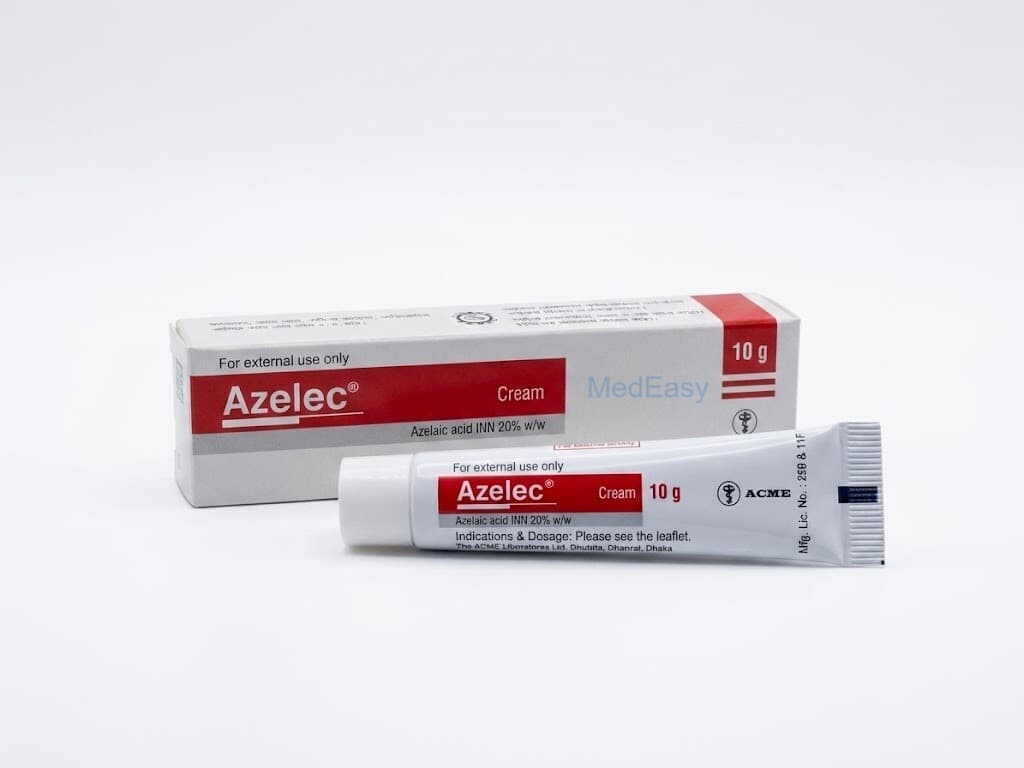

Medicine overview
Indications of Azelec
Azelec is a topical medication with established efficacy in dermatology, used according to the following evidence-based indications:
FDA-Approved / Established Uses
- Mild to moderate acne vulgaris - Azelec (20% cream, 15% gel) is approved for topical treatment of acne, particularly comedonal and inflammatory lesions.
- Inflammatory papulopustular rosacea - Azelec (15% gel or foam) is approved to reduce inflammatory lesions (papules and pustules) associated with rosacea.
Common Off-Label / Adjunct Uses
- Post-inflammatory hyperpigmentation and melasma - Azelec is frequently used off-label, often in combination with other agents, for its mild tyrosinase-inhibiting (skin-lightening) effect. This is not an FDA-approved indication and should be discussed with a clinician.
Azelec is often combined with other topical or oral acne/rosacea therapies as part of a broader treatment regimen; a physician should confirm the specific regimen appropriate for each patient.
Composition
Azelaic Acid is available as a topical formulation in strengths that typically include 15% gel, 15% foam, and 20% cream, depending on the brand and indication. Each formulation contains Azelaic Acid as the active ingredient combined with a pharmaceutical base (gel, cream, or foam vehicle) that aids absorption and tolerability. Exact excipients vary by manufacturer/brand.
Description
Azelec is a naturally occurring saturated dicarboxylic acid used as a topical dermatological agent. It exhibits antimicrobial, anti-inflammatory, and anti-keratinizing (normalizing skin cell turnover) properties, along with a mild inhibitory effect on abnormal melanocyte activity. It is applied directly to the skin for the treatment of acne vulgaris and rosacea, and is also used off-label for pigmentary skin conditions.
Therapeutic Class
Topical anti-acne and anti-rosacea agent; dicarboxylic acid derivative (dermatological/topical use only, not a systemic antimicrobial).
Pharmacology
Mechanism of Action
Azelaic Acid works through multiple complementary mechanisms in the skin:
- Normalizes abnormal keratinization within the hair follicle, reducing the formation of comedones.
- Exhibits antimicrobial activity against Cutibacterium (Propionibacterium) acnes and Staphylococcus epidermidis, organisms implicated in acne.
- Has direct and indirect anti-inflammatory effects, including reduction of reactive oxygen species produced by neutrophils, contributing to its benefit in rosacea.
- Mildly inhibits tyrosinase, an enzyme involved in melanin synthesis, which reduces activity of abnormally hyperactive melanocytes without significantly affecting normally pigmented skin - the basis for its use in pigmentary disorders.
Pharmacokinetics
Systemic absorption of topical Azelaic Acid is low (approximately 3-4% of an applied dose). Absorbed drug is distributed in tissues, partially metabolized by beta-oxidation, and excreted primarily by the kidneys largely unchanged. Because systemic exposure is minimal, systemic pharmacokinetic effects are generally not clinically significant.
Dosage & Administration of Azelec
| Indication | Adult Dose | Pediatric Dose |
|---|---|---|
| Acne vulgaris | Apply a thin layer of Azelec to clean, dry affected skin twice daily (morning and evening) | Safety and efficacy of Azelec not established in children under 12 years |
| Rosacea | Apply a thin layer of Azelec to clean, dry affected facial skin twice daily (morning and evening) | Not indicated for pediatric rosacea; safety and efficacy not established |
Improvement is usually noted after several weeks; treatment is often continued for up to 6 months as advised by a physician. See Duration of Treatment for details.
Administration of Azelec
Wash the affected area with a mild cleanser and pat dry before application. Apply a thin layer of Azelec and gently massage into the skin until absorbed. Wash hands thoroughly after application unless the hands are the treated area. Avoid contact with the eyes, mouth, nose, and other mucous membranes; if accidental contact occurs, rinse thoroughly with plenty of water. Cosmetics may be applied after the medication has dried, if advised by a physician. Do not apply occlusive dressings unless directed.
Interaction of Azelec
Because systemic absorption of Azelec is minimal, clinically significant systemic drug interactions are rare and not well established.
- Other topical acne/rosacea products: Concurrent use of other potentially irritating topical agents (e.g., strong keratolytics, alcohol-based astringents, abrasive cleansers) may increase local skin irritation when combined with Azelec; space applications apart or use under physician guidance.
Inform the prescribing physician of all other topical products in use alongside Azelec.
Contraindications
Azelaic Acid is contraindicated in patients with known hypersensitivity to Azelaic Acid or to any component of the specific formulation being used.
Side Effects of Azelec
Local application-site reactions are the most common side effects of Azelec and are often most noticeable when treatment is started, typically improving with continued use:
- Burning, stinging, or tingling sensation
- Itching (pruritus)
- Dryness, peeling, or scaling
- Redness (erythema) or mild irritation
Less commonly, contact dermatitis, rare hypopigmentation (see Precautions and Warnings), and rare hypersensitivity reactions have been reported with Azelec. Systemic side effects are uncommon given minimal systemic absorption.
Pregnancy & Lactation
Pregnancy
Data on Azelec use in human pregnancy are limited. Systemic absorption is low, and animal reproduction studies have not shown evidence of harm at clinically relevant exposure, but adequate, well-controlled human studies are lacking. Azelec should be used during pregnancy only if clearly needed and if the potential benefit justifies the potential risk to the fetus; consult a physician before use.
Lactation
It is not known whether topically applied Azelec is excreted in human breast milk. Given low systemic absorption, risk to a breastfeeding infant is expected to be low, but caution is advised. Avoid applying Azelec directly to the breast/nipple area, and consult a physician before use while breastfeeding.
Precautions & Warnings
Local skin irritation (burning, stinging, itching, dryness) is common with Azelec, often more pronounced at the start of treatment and usually improving with continued use.
- Avoid contact of Azelec with the eyes, mouth, and mucous membranes; rinse thoroughly with water if accidental contact occurs.
- Hypopigmentation (skin lightening) has been rarely reported with Azelec; this warrants particular monitoring in patients with darker skin tones, although Azelec is also sometimes specifically chosen for its mild skin-lightening effect in certain pigmentary conditions - discuss expectations with a physician before starting treatment.
- Azelec may cause mild bleaching of hair or colored fabrics; take care to avoid unnecessary contact with clothing, bedding, and hair.
- Reasonable sun protection (sunscreen, protective clothing) is advisable during treatment with Azelec, consistent with general skin-care precautions for topical acne/rosacea therapies.
- Clinical response to Azelec typically requires several weeks of consistent use to assess; do not discontinue prematurely without discussing with a physician.
See Contraindications for hypersensitivity information and Pregnancy and Lactation for use of Azelec during pregnancy/breastfeeding.
Overdose Effects of Azelec
Topical overdose of Azelec is unlikely to cause serious systemic toxicity due to low systemic absorption; excessive application may increase local irritation. If Azelec is accidentally ingested, or if exposure causes concerning symptoms, seek immediate medical attention or contact a poison control center/emergency services rather than attempting home treatment.
Storage Conditions
Store at room temperature (below 30°C), away from light and moisture. Do not freeze. Keep the container tightly closed and out of reach of children.
Use In Special Populations
Renal Impairment
No specific dose adjustment is established for Azelec in renal impairment, given minimal systemic absorption; use with routine caution.
Hepatic Impairment
No specific dose adjustment is established for Azelec in hepatic impairment, given minimal systemic absorption.
Elderly
No specific dose adjustment is required for Azelec in elderly patients; clinical studies have not identified age-specific differences in response.
Pediatric
Safety and efficacy of Azelec have not been established in children under 12 years of age. See Pediatric Uses for details.
Duration Of Treatment
Visible improvement with Azelec typically requires several weeks of consistent, twice-daily use. For acne and rosacea, treatment with Azelec is commonly continued for up to 6 months, or as directed by a physician, with periodic reassessment of response and tolerability. Do not stop or extend treatment with Azelec without medical advice.
Drug Classes
Dicarboxylic acid derivatives; topical anti-acne agents; topical anti-rosacea agents.
Mode Of Action
Azelaic Acid normalizes follicular keratinization, exerts direct antimicrobial activity against acne-associated bacteria, reduces inflammatory mediators (including reactive oxygen species), and mildly inhibits tyrosinase to reduce activity of abnormally hyperactive melanocytes.
Pregnancy
B
Pediatric Uses
The safety and efficacy of Azelec have not been established in children under 12 years of age; use in this age group is generally not recommended outside of specific physician guidance. In adolescents 12 years and older, Azelec may be used for acne vulgaris under medical supervision, following the same application guidance as adults, with attention to local skin tolerability.
Frequently Asked Questions
Q: What is Azelec 20% Cream used for?
A: Azelec 20% Cream is a topical medication mainly used to treat mild to moderate acne vulgaris and the inflammatory bumps (papules and pustules) of rosacea. It is also sometimes used off-label to help even out skin tone in certain pigmentation conditions.
Q: How long does it take for Azelec 20% Cream to work?
A: Most people using Azelec 20% Cream notice improvement after several weeks of consistent, twice-daily use. Full benefit for acne or rosacea may take up to 6 months of continued treatment, so it is important not to stop early without talking to a physician.
Q: Is it safe to use Azelec 20% Cream during pregnancy or while breastfeeding?
A: Data on Azelec 20% Cream in human pregnancy are limited, and systemic absorption from the skin is low. It should be used during pregnancy only if clearly needed and if the potential benefit outweighs any potential risk to the fetus. It is not known whether Azelec 20% Cream passes into breast milk in significant amounts; use with caution and consult a physician before using Azelec 20% Cream while pregnant or breastfeeding.
Q: What are the common side effects of Azelec 20% Cream?
A: The most common side effects of Azelec 20% Cream are local skin reactions such as burning, stinging, itching, dryness, and mild redness, especially when treatment is first started. These effects usually lessen with continued use. Rarely, Azelec 20% Cream can cause patches of lighter skin (hypopigmentation), which should be reported to a physician if noticed.
Q: Can children use Azelec 20% Cream?
A: The safety and efficacy of Azelec 20% Cream have not been established in children under 12 years of age. In adolescents 12 and older, a physician may prescribe Azelec 20% Cream for acne under medical supervision.
Q: What should I do if Azelec 20% Cream accidentally gets in my eyes or is swallowed?
A: If Azelec 20% Cream accidentally contacts the eyes, mouth, or mucous membranes, rinse thoroughly with plenty of water. If Azelec 20% Cream is swallowed or causes concerning symptoms, seek immediate medical attention or contact a poison control center rather than attempting home treatment.
Disclaimer
The information provided is accurate to the best of our knowledge, but it does not replace professional medical advice. We cannot guarantee its completeness or accuracy, and the absence of specific information about a drug should not be taken as an endorsement. We are not responsible for any consequences arising from this information, so please consult a healthcare professional for any concerns or questions.
