
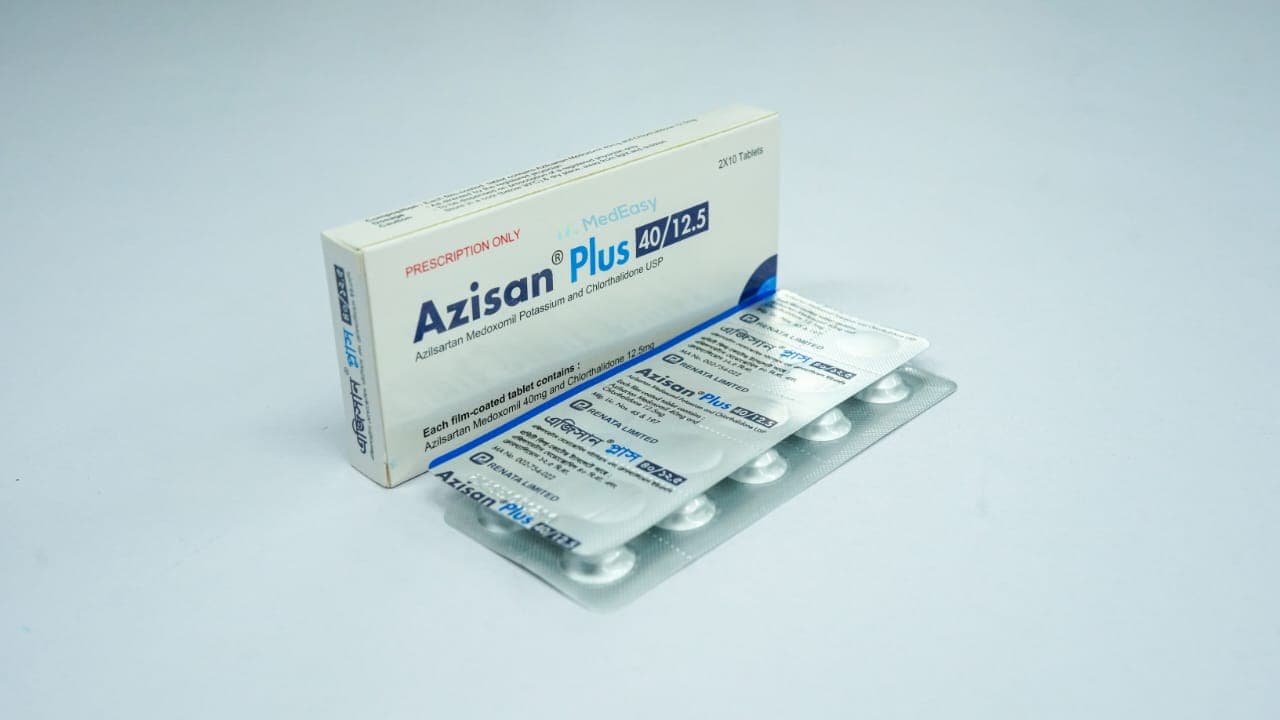

Medicine overview
Indications of Azisan Plus
Azisan Plus is indicated for the treatment of hypertension (high blood pressure), to lower blood pressure in adults. It is FDA-approved for two established uses:
- Add-on/substitution therapy: In patients whose blood pressure is not adequately controlled on a single antihypertensive agent (such as an angiotensin II receptor blocker alone or a thiazide-type diuretic alone).
- Initial (first-line) therapy: In patients who are likely to need multiple drugs to achieve their blood pressure goals, as an initial combination therapy.
Azisan Plus is not indicated for the initial treatment of hypertensive emergencies. Lowering blood pressure with this combination has been shown to reduce the risk of fatal and non-fatal cardiovascular events, primarily stroke and myocardial infarction, consistent with the benefits of blood pressure reduction in general. Azisan Plus is generally not used as monotherapy for mild, newly diagnosed hypertension where a single agent may be tried first, and its use should be guided by a physician's overall assessment of cardiovascular risk.
Composition
Each tablet of Azilsartan Medoxomil + Chlorthalidone contains two active ingredients:
- Azilsartan medoxomil - an angiotensin II receptor blocker (ARB), commonly available in strengths equivalent to 40 mg azilsartan.
- Chlorthalidone - a thiazide-like diuretic, commonly available as 12.5 mg or 25 mg.
Azilsartan Medoxomil + Chlorthalidone is typically formulated as fixed-dose combination tablets (for example, 40/12.5 mg and 40/25 mg strengths), combining the two active substances in a single oral dosage form.
Description
Azisan Plus is a fixed-dose combination oral antihypertensive medicine that pairs an angiotensin II receptor blocker (azilsartan medoxomil) with a thiazide-like diuretic (chlorthalidone). Azilsartan medoxomil is a prodrug that is hydrolyzed during absorption to its active form, azilsartan, which blocks the vasoconstricting and aldosterone-secreting effects of angiotensin II. Chlorthalidone increases excretion of sodium, chloride, and water by inhibiting sodium reabsorption in the distal renal tubule, and also has direct vasodilating effects. By combining two complementary mechanisms, Azisan Plus produces a greater reduction in blood pressure than either component alone and is used when a single antihypertensive agent is insufficient to control blood pressure.
Therapeutic Class
Azisan Plus belongs to the therapeutic class of combination antihypertensive agents, specifically an Angiotensin II Receptor Blocker (ARB) combined with a thiazide-like diuretic.
Pharmacology
Mechanism of Action
Azilsartan Medoxomil + Chlorthalidone combines two agents with complementary and additive blood-pressure-lowering actions:
- Azilsartan (from azilsartan medoxomil): Selectively blocks the binding of angiotensin II to the AT1 receptor in vascular smooth muscle and the adrenal gland, blocking the vasoconstrictive and aldosterone-secreting effects of angiotensin II. This reduces peripheral vascular resistance without the reflex tachycardia typically seen with direct vasodilators.
- Chlorthalidone: A thiazide-like diuretic that inhibits sodium and chloride reabsorption at the distal convoluted tubule of the nephron, increasing excretion of sodium, chloride, and water, thereby reducing plasma and extracellular fluid volume. It may also have a direct arterial vasodilatory effect that contributes to its antihypertensive action.
Pharmacokinetics
Azilsartan medoxomil is rapidly converted to the active moiety azilsartan during absorption in the gastrointestinal tract, reaching peak plasma concentration in about 1.5 to 3 hours, and is highly protein bound; it is metabolized in the liver and eliminated via biliary/renal routes with an effective half-life of approximately 11 hours. Chlorthalidone is well absorbed orally, is extensively bound to erythrocytes and plasma proteins, undergoes minimal hepatic metabolism, and is eliminated largely unchanged by the kidneys, with a long elimination half-life (approximately 40-60 hours), permitting once-daily dosing.
Dosage & Administration of Azisan Plus
Dosing Overview
| Indication / Situation | Recommended Dose |
|---|---|
| Initial dose (adults, not volume-depleted) | Azisan Plus 40 mg/12.5 mg orally once daily |
| Titration (if additional blood pressure lowering needed after 2-4 weeks) | May increase to Azisan Plus 40 mg/25 mg once daily |
| Maximum recommended dose | 40 mg/25 mg once daily |
| Volume-depleted patients (e.g. diuretic pretreatment) | Correct volume depletion before starting, or start at a lower dose under close medical supervision |
Azisan Plus may be taken with or without food. It may be used alone or added to other antihypertensive agents. Dose adjustments should only be made by a physician based on individual blood pressure response.
Renal impairment: Azisan Plus has not been extensively studied in patients with severe renal impairment; thiazide-type diuretics such as chlorthalidone are generally less effective as renal function declines, and the drug should be used with caution and close monitoring in such patients (see Precautions and Warnings).
Hepatic impairment: No dedicated dose adjustment is established for mild-to-moderate hepatic impairment; Azisan Plus is contraindicated in patients with hepatic coma or precoma (see Contraindications).
Administration of Azisan Plus
Azisan Plus is administered orally, once daily, at approximately the same time each day to maintain consistent blood levels. It can be taken with or without food. Tablets should be swallowed whole with a glass of water and should not be crushed or chewed unless a physician or pharmacist advises otherwise. If a dose is missed, it should be taken as soon as remembered unless it is close to the time of the next dose, in which case the missed dose should be skipped; doses should not be doubled.
Interaction of Azisan Plus
Azisan Plus should be used with caution alongside the following agents:
- Aliskiren: Concomitant use in patients with diabetes is contraindicated due to increased risk of hyperkalemia, hypotension, and renal impairment (see Contraindications).
- Other ARBs, ACE inhibitors, or direct renin inhibitors: Concurrent use increases the risk of hyperkalemia, hypotension, and renal function changes without added cardiovascular benefit; dual blockade of the renin-angiotensin system is generally not recommended.
- Potassium-sparing diuretics, potassium supplements, or salt substitutes containing potassium: May increase the risk of hyperkalemia when combined with the azilsartan component.
- NSAIDs (including selective COX-2 inhibitors): May reduce the antihypertensive and diuretic effect of Azisan Plus and increase the risk of renal impairment, particularly in volume-depleted or elderly patients.
- Lithium: Diuretics reduce renal clearance of lithium, increasing the risk of lithium toxicity; concurrent use requires close monitoring of lithium levels.
- Other antihypertensive agents: Additive blood-pressure-lowering effect, which is often used therapeutically but requires monitoring for excessive hypotension.
- Corticosteroids, ACTH, or amphotericin B: May intensify electrolyte depletion (particularly hypokalemia) caused by the chlorthalidone component.
- Digoxin: Chlorthalidone-induced hypokalemia or hypomagnesemia may increase the risk of digoxin toxicity and cardiac arrhythmias.
- Antidiabetic drugs (insulin/oral agents): The chlorthalidone component may raise blood glucose, requiring dose adjustment of antidiabetic therapy.
Contraindications
Azilsartan Medoxomil + Chlorthalidone is contraindicated in the following situations:
- Pregnancy: Azilsartan Medoxomil + Chlorthalidone can cause fetal harm and death when used during pregnancy; it must be discontinued as soon as pregnancy is detected (see boxed warning under Pregnancy and Lactation).
- Anuria: Patients with anuria (no urine output) should not receive Azilsartan Medoxomil + Chlorthalidone, as the diuretic component is ineffective and unsafe in this setting.
- Concomitant use with aliskiren in patients with diabetes mellitus: This combination increases the risk of hyperkalemia, hypotension, and renal impairment.
- Known hypersensitivity to azilsartan, chlorthalidone, other sulfonamide-derived drugs, or any component of the formulation.
- Hepatic coma or precoma: Related to the chlorthalidone component, which can precipitate hepatic coma in patients with severe hepatic impairment.
Side Effects of Azisan Plus
Most patients tolerate Azisan Plus well. Reported adverse effects include:
Common
- Dizziness
- Fatigue
- Headache
- Diarrhea or nausea
Less Common but Clinically Important
- Symptomatic hypotension, particularly after the first dose or with volume depletion
- Syncope (fainting)
- Electrolyte disturbances: hypokalemia, hyponatremia, hypomagnesemia, hypochloremic alkalosis (see Precautions and Warnings)
- Hyperuricemia and gout flares
- Elevated blood glucose
- Muscle cramps or weakness (related to electrolyte changes)
Rare but Serious
- Angioedema (swelling of face, lips, tongue, or throat)
- Acute kidney injury, particularly in susceptible patients
- Severe allergic/hypersensitivity reactions, including in patients with sulfonamide allergy
- Blood dyscrasias (rare, associated with the thiazide-like component)
Patients should seek immediate medical attention for signs of angioedema, severe dizziness/fainting, or signs of significant electrolyte imbalance (e.g. severe muscle weakness, irregular heartbeat).
Pregnancy & Lactation
Boxed Warning - Fetal Toxicity
Azisan Plus can cause injury and death to the developing fetus when used during pregnancy. Drugs that act directly on the renin-angiotensin system, such as the azilsartan component of Azisan Plus, can cause oligohydramnios, fetal lung hypoplasia, skeletal deformations, and neonatal renal failure, particularly with use in the second and third trimesters. Azisan Plus must be discontinued as soon as pregnancy is detected, and it should not be used in women who are pregnant or planning pregnancy unless there is no suitable alternative.
Lactation
It is not known whether the components of Azisan Plus pass into human breast milk in clinically significant amounts. Because of the potential for serious adverse effects in a nursing infant, a decision should be made whether to discontinue breastfeeding or discontinue Azisan Plus, taking into account the importance of the drug to the mother. Azisan Plus should be used during breastfeeding only if clearly needed and after consultation with a physician, since safer alternatives are usually preferred during lactation.
Precautions & Warnings
- Hypotension: Symptomatic hypotension may occur, especially at treatment initiation, after dose increases, or in volume- or salt-depleted patients (e.g. from prior diuretic therapy, vomiting, diarrhea, or a low-salt diet). Correct volume depletion before starting Azisan Plus where possible.
- Renal function changes: Azisan Plus can cause changes in renal function; monitor periodically, particularly in patients with renal artery stenosis, volume depletion, or concurrent use of NSAIDs, as acute kidney injury may occur.
- Hyperkalemia: The azilsartan component can raise serum potassium, especially in patients with renal impairment, diabetes, or those taking potassium-sparing diuretics, potassium supplements, or salt substitutes; monitor potassium levels periodically.
- Electrolyte and metabolic disturbances: Chlorthalidone can cause hypokalemia, hyponatremia, hypomagnesemia, and hypochloremic alkalosis; periodic monitoring of serum electrolytes is recommended, particularly in the elderly or those on other medications affecting electrolytes.
- Hyperuricemia/gout: Chlorthalidone can raise serum uric acid and precipitate gout attacks in susceptible individuals.
- Hyperglycemia: Thiazide-like diuretics may impair glucose tolerance; monitor blood glucose in patients with diabetes or prediabetes.
- Sulfonamide hypersensitivity: Chlorthalidone is chemically related to sulfonamides; use caution in patients with a history of sulfonamide allergy due to possible cross-sensitivity.
- Dual renin-angiotensin system blockade: Avoid combining Azisan Plus with other ARBs, ACE inhibitors, or aliskiren, as this increases the risk of hyperkalemia, hypotension, and renal impairment without added benefit.
- Angioedema: Discontinue immediately and seek emergency care if swelling of the face, lips, tongue, or throat, or difficulty breathing occurs.
Overdose Effects of Azisan Plus
Overdose of Azisan Plus is most likely to present as pronounced hypotension, dizziness, electrolyte disturbances (particularly hypokalemia and hyponatremia), dehydration, and possible bradycardia or tachycardia. There is no specific antidote. In case of suspected overdose, seek immediate medical attention or contact emergency services/poison control. Management is generally supportive, involving monitoring of vital signs, correction of fluid and electrolyte imbalances, and symptomatic treatment as directed by medical professionals; do not attempt home treatment for a suspected overdose.
Storage Conditions
Store at room temperature (below 30°C), away from light and moisture. Keep out of reach of children.
Use In Special Populations
- Elderly: No overall dosage adjustment is generally required, but elderly patients may be more sensitive to blood-pressure-lowering and electrolyte effects; use with caution and monitor closely.
- Renal impairment: Use with caution; thiazide-type diuretics tend to be less effective as renal function worsens, and closer monitoring of renal function and electrolytes is warranted (see Dosage and Administration and Precautions and Warnings).
- Hepatic impairment: Azisan Plus is contraindicated in hepatic coma or precoma; use with caution in other hepatic impairment as minor alterations in fluid and electrolyte balance may precipitate complications.
- Pregnancy: Contraindicated; discontinue immediately upon detection of pregnancy (see Pregnancy and Lactation).
- Lactation: Use only if clearly needed, weighing benefits against potential infant risk (see Pregnancy and Lactation).
- Pediatric patients: Safety and efficacy have not been established (see Pediatric Uses).
Duration Of Treatment
Azisan Plus is intended for long-term, ongoing management of hypertension rather than short-term use. Treatment is typically continued indefinitely as part of chronic blood pressure control, with periodic physician follow-up to reassess blood pressure control, renal function, and electrolytes. Azisan Plus should not be stopped abruptly without medical advice, and any change in duration or dose should be directed by the prescribing physician.
Drug Classes
Angiotensin II Receptor Blocker (ARB) + Thiazide-like Diuretic (combination antihypertensive)
Mode Of Action
Azilsartan Medoxomil + Chlorthalidone works through two complementary mechanisms. Azilsartan (the active form of azilsartan medoxomil) selectively and competitively blocks angiotensin II from binding to the AT1 receptor, preventing angiotensin II-mediated vasoconstriction and aldosterone release, which lowers blood pressure and reduces sodium/water retention. Chlorthalidone inhibits sodium and chloride reabsorption in the distal convoluted tubule of the kidney, promoting diuresis (loss of sodium, chloride, and water), which reduces circulating blood volume and further lowers blood pressure; it may also have a direct vasodilating effect on arterial smooth muscle. Together, these mechanisms produce a synergistic antihypertensive effect greater than either agent alone.
Pregnancy
Category D
Pediatric Uses
Safety and efficacy of Azisan Plus in pediatric patients have not been established. Azisan Plus is not recommended for use in children or adolescents, and it should only be used in adults for the treatment of hypertension under the guidance of a physician.
Frequently Asked Questions
Q: What is Azisan Plus 40 mg+12.5 mg Tablet used for?
A: Azisan Plus 40 mg+12.5 mg Tablet is a combination medicine used to treat high blood pressure (hypertension) in adults, either when a single blood-pressure medicine is not enough or as an initial therapy for patients who are likely to need more than one medicine to reach their blood pressure goal.
Q: Can I take Azisan Plus 40 mg+12.5 mg Tablet during pregnancy?
A: No. Azisan Plus 40 mg+12.5 mg Tablet carries a boxed warning because it can cause serious harm or death to a developing baby, especially in the second and third trimesters. It must be stopped as soon as pregnancy is detected, and it should not be used by women who are pregnant or planning to become pregnant unless there is no suitable alternative and a physician advises otherwise.
Q: What are the main side effects of Azisan Plus 40 mg+12.5 mg Tablet?
A: The most common side effects are dizziness, fatigue, and headache. Less commonly, it can cause low blood pressure, electrolyte disturbances (such as low potassium or sodium), high uric acid, or elevated blood sugar. Seek immediate medical attention for facial/throat swelling, severe dizziness or fainting, or signs of severe electrolyte imbalance.
Q: Who should not take Azisan Plus 40 mg+12.5 mg Tablet?
A: Azisan Plus 40 mg+12.5 mg Tablet should not be used by pregnant women, patients with anuria (no urine output), patients with hepatic coma or precoma, those with known hypersensitivity to azilsartan, chlorthalidone, or sulfonamide-derived drugs, or patients with diabetes who are also taking aliskiren.
Q: Can Azisan Plus 40 mg+12.5 mg Tablet be taken with other blood pressure medicines?
A: Azisan Plus 40 mg+12.5 mg Tablet is often combined with other antihypertensive agents, but it should generally not be combined with other ARBs, ACE inhibitors, or aliskiren, since this increases the risk of high potassium, low blood pressure, and kidney problems without extra benefit. Always inform your physician about all medicines you are taking.
Q: What should I do if I miss a dose of Azisan Plus 40 mg+12.5 mg Tablet?
A: Take the missed dose as soon as you remember, unless it is almost time for your next dose, in which case skip the missed dose. Do not take a double dose to make up for a missed one. Contact your physician if you are unsure.
Disclaimer
The information provided is accurate to the best of our knowledge, but it does not replace professional medical advice. We cannot guarantee its completeness or accuracy, and the absence of specific information about a drug should not be taken as an endorsement. We are not responsible for any consequences arising from this information, so please consult a healthcare professional for any concerns or questions.
