
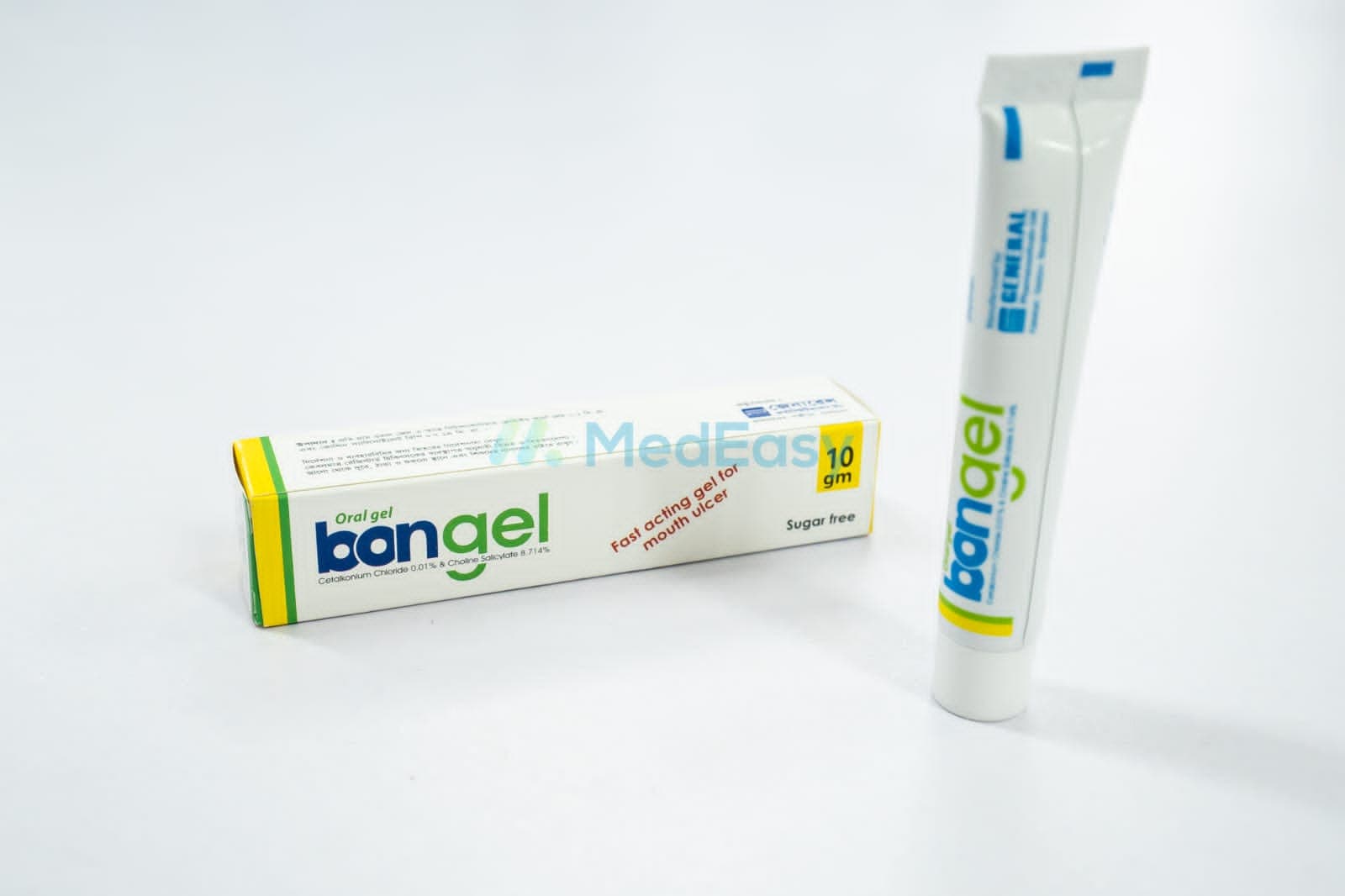

Medicine overview
Indications of Bongel
Bongel oral/dental gel is used for the short-term, symptomatic relief of minor pain and irritation in the mouth. Evidence-based/label-supported uses include:
- Established/labeled uses: Symptomatic relief of pain associated with mouth ulcers (aphthous ulcers), minor gum irritation, and denture-related sore spots.
- Product-label-dependent use: Relief of teething discomfort in infants, where specifically labeled for this use — subject to the minimum age and duration restrictions on the individual product label and current regional regulatory guidance (see Contraindications and Pediatric Uses).
Bongel provides only temporary, symptomatic relief; it does not treat the underlying cause of mouth ulcers, gum disease, or teething, and is not a substitute for dental or medical evaluation if symptoms persist.
Composition
Cetalkonium Chloride + Choline Salicylate is a combination topical oral/dental preparation, typically formulated as a gel for application inside the mouth. It combines cetalkonium chloride, a quaternary ammonium antiseptic, with choline salicylate, a salicylate ester with local analgesic and anti-inflammatory activity. Exact strengths and pack sizes vary by product; check the specific product label for the labeled concentration of each component.
Description
Bongel is a fixed-dose combination product intended for topical (oromucosal) use on the gums, oral mucosa, and mouth ulcers. Cetalkonium chloride provides local antiseptic action against oral micro-organisms, while choline salicylate provides local analgesic and mild anti-inflammatory (counterirritant) relief of pain and discomfort. It is available as an over-the-counter oral/dental gel in some markets, applied directly to the affected area with a clean fingertip or cotton applicator.
Therapeutic Class
Topical oral/dental antiseptic and salicylate-based local analgesic combination — Bongel
Pharmacology
Mechanism of Action
Cetalkonium Chloride + Choline Salicylate combines two complementary local actions. Cetalkonium chloride is a quaternary ammonium compound that acts as a surface antiseptic, disrupting the cell membranes of susceptible bacteria and reducing the local microbial load at the site of application. Choline salicylate is an ester of choline and salicylic acid; applied topically to the oral mucosa, it produces local analgesic and mild anti-inflammatory effects, thought to relate to local inhibition of prostaglandin synthesis and a counterirritant action, providing relief of pain associated with mouth ulcers, gum irritation, or teething.
Pharmacokinetics
When used as directed in small amounts on the oral mucosa, systemic absorption of both components is expected to be limited. However, choline salicylate can be absorbed systemically as salicylate if used in excess, applied too frequently, or swallowed in significant amounts, particularly in infants and young children, which underlies the safety restrictions on this combination (see Precautions and Warnings and Overdose).
Dosage & Administration of Bongel
Bongel gel is intended for topical application inside the mouth only, in the smallest effective amount, as directed on the product label. Typical per-indication guidance:
| Indication | Typical Use | Frequency/Duration |
|---|---|---|
| Mouth ulcers, gum irritation, denture sore spots (adults and older children) | Apply a small amount of gel to the affected area with a clean fingertip or cotton applicator | Up to 3–4 times daily; do not use for more than 7 days without medical/dental advice |
| Teething discomfort (infants), only where the product is specifically labeled for this use and age-appropriate | Apply a very small amount to the affected gum area | As directed on the label, not exceeding the maximum labeled frequency; follow current pediatric/regulatory guidance closely (see Contraindications and Pediatric Uses) |
See Administration for application technique and Duration of Treatment for guidance on how long to continue use.
Administration of Bongel
For topical oromucosal (inside-the-mouth) use only.
- Wash hands before use, or use a clean cotton applicator.
- Apply a small amount of Bongel gel directly to the affected ulcer, gum area, or denture sore spot; a thin film is sufficient.
- Avoid swallowing the gel; do not eat or drink for a short period after application if directed on the label, to allow local contact time.
- Do not apply to broken skin outside the mouth or use in the eyes.
- For infant teething use, apply only where the product label specifically permits this and follow the exact age-appropriate amount and frequency stated; do not apply to a soother/pacifier or feeding teat, and do not use more often than directed.
Interaction of Bongel
Because Bongel is applied topically in small amounts, clinically significant systemic drug interactions are uncommon with normal use. The main interaction concern relates to the salicylate component:
- Other salicylate- or NSAID-containing products (oral or topical): Concurrent use of other products containing salicylates (e.g., aspirin) or other topical oral salicylate gels increases the total systemic salicylate exposure and the risk of salicylate-related adverse effects; avoid combining unless advised by a physician or dentist.
- Anticoagulants (e.g., warfarin): Salicylates can theoretically enhance bleeding risk if significant systemic absorption occurs; use with caution and medical advice in patients on anticoagulant therapy.
Contraindications
Cetalkonium Chloride + Choline Salicylate is contraindicated in:
- Patients with known hypersensitivity to salicylates (including aspirin) or to cetalkonium chloride or any other component of the formulation.
- Children and teenagers with chickenpox, influenza, or other flu-like viral illness, or who are recovering from these, because of the risk of Reye's syndrome associated with salicylate exposure.
- Infants below the minimum age specifically stated on the product label; current regulatory guidance in several countries advises against the use of choline salicylate-containing oral/teething gels in young infants specifically because of Reye's syndrome and other salicylate-related safety concerns — the applicable local product labeling and regulatory guidance must be followed.
Side Effects of Bongel
Bongel is generally well tolerated when used as directed in small amounts. Reported effects include:
- Local burning, stinging, or tingling sensation at the application site (usually transient).
- Mild local irritation of the oral mucosa or gums.
- Hypersensitivity reactions (rash, swelling, or allergic-type reactions), which are uncommon.
- With excessive or prolonged use, particularly in infants, local tissue effects and signs of systemic salicylate absorption (see Overdose) have been reported.
If irritation, ulceration, or discomfort persists or worsens after a few days of use, discontinue Bongel and seek dental or medical evaluation.
Pregnancy & Lactation
Pregnancy: There are limited controlled data on the use of topical oral Bongel during pregnancy. As with other salicylate-containing products, systemic salicylate exposure — particularly in the third trimester — carries theoretical risks. Bongel should be used during pregnancy only if clearly needed and if the potential benefit justifies the potential risk to the fetus; consult a physician before use.
Lactation: It is not known whether topically applied Bongel is excreted in breast milk in clinically significant amounts. Use with caution during breastfeeding and consult a physician, particularly with frequent or prolonged use.
Precautions & Warnings
- Bongel is for topical oromucosal use only, in the smallest effective amount and at the frequency stated on the label; avoid swallowing large amounts.
- Excessive or overly frequent use, especially in infants, has been associated with local tissue effects and concerns about systemic salicylate absorption; do not exceed the labeled dose or frequency.
- Discontinue use and seek dental or medical evaluation if mouth irritation, ulcers, or discomfort persist or worsen beyond a few days.
- Use of Bongel for infant teething should follow current pediatric and regulatory guidance closely, as safety recommendations around salicylate-containing teething products have evolved; do not use in children with chickenpox, flu, or other viral illness (see Contraindications).
- Avoid use in patients with known aspirin/NSAID-sensitive asthma or a history of severe salicylate hypersensitivity.
- Keep the product out of the reach of children; accidental ingestion of larger amounts can cause salicylate toxicity (see Overdose).
Overdose Effects of Bongel
Swallowing a substantial amount of Bongel, particularly in infants and young children, can lead to salicylate toxicity. Signs may include nausea, vomiting, ringing in the ears (tinnitus), rapid or deep breathing, drowsiness, or confusion; in severe cases, serious metabolic disturbances can occur.
If accidental ingestion of a significant amount is suspected, or if any of the above symptoms occur, seek immediate medical attention or contact emergency services or a poison control center. Do not attempt to manage a suspected overdose at home.
Storage Conditions
Store at room temperature (below 30°C), away from light and moisture. Keep the tube tightly closed and out of the reach of children.
Use In Special Populations
Infants and young children: Use of Bongel in infants, including for teething, should strictly follow the minimum age and frequency stated on the product label and current pediatric/regulatory guidance; it must not be used in children with chickenpox, influenza, or other viral illness (see Contraindications).
Pregnant women: Use only if clearly needed; consult a physician (see Pregnancy and Lactation).
Breastfeeding women: Use with caution and physician guidance (see Pregnancy and Lactation).
Elderly patients: No specific dose adjustment is established; general precautions for topical oral use apply, including in denture wearers.
Renal/hepatic impairment: Specific data are limited; because systemic absorption is expected to be minimal with directed use, no specific dose adjustment is established, but excessive use should still be avoided.
Duration Of Treatment
Bongel is intended for short-term, symptomatic use only. If mouth ulcers, gum irritation, or discomfort do not improve, or worsen, within about 7 days of use, discontinue the product and seek dental or medical evaluation rather than continuing self-treatment.
Drug Classes
Topical antiseptic (quaternary ammonium compound) combined with a salicylate-based local analgesic/anti-inflammatory agent for oromucosal use — Cetalkonium Chloride + Choline Salicylate
Mode Of Action
In Cetalkonium Chloride + Choline Salicylate, cetalkonium chloride acts as a quaternary ammonium antiseptic, disrupting the membranes of susceptible oral micro-organisms to reduce local microbial load. Choline salicylate, a salicylate ester, produces local analgesic and mild anti-inflammatory (counterirritant) effects on application to the oral mucosa, reducing pain and discomfort associated with mouth ulcers, gum irritation, or teething.
Pediatric Uses
Use of Bongel in children, including for teething discomfort, is conservative and label-dependent. It must not be used in infants below the minimum age stated on the specific product label, and safety and efficacy below that labeled age have not been established. Bongel must not be used in children or teenagers with chickenpox, influenza, or other flu-like viral illness because of the risk of Reye's syndrome linked to salicylate exposure. Because safety recommendations regarding salicylate-containing teething products have evolved and vary by region, use in infants for teething should strictly follow current pediatric and regulatory guidance and product labeling, with parents advised to consult a physician, pharmacist, or dentist before use in young children.
Frequently Asked Questions
Q: What is Bongel 0.01%+8.71% Oral Gel used for?
A: Bongel 0.01%+8.71% Oral Gel is a topical oral/dental gel used for short-term relief of pain from mouth ulcers, minor gum irritation, denture sore spots, and, where the specific product is labeled for it, teething discomfort in infants.
Q: How should I apply Bongel 0.01%+8.71% Oral Gel?
A: Apply a small amount of Bongel 0.01%+8.71% Oral Gel gel to the affected area with a clean fingertip or cotton applicator, up to the maximum frequency stated on the label. Avoid swallowing the gel and do not use for more than about 7 days without consulting a physician or dentist.
Q: Is Bongel 0.01%+8.71% Oral Gel safe to use for a baby's teething pain?
A: Bongel 0.01%+8.71% Oral Gel should only be used for infant teething if the specific product is labeled for that use and age group, and current pediatric/regulatory guidance should be followed closely, because salicylate-containing teething gels carry safety concerns, including Reye's syndrome risk and systemic salicylate absorption, particularly with excessive use in young infants. Parents should consult a physician, pharmacist, or dentist before using Bongel 0.01%+8.71% Oral Gel in a baby.
Q: Who should not use Bongel 0.01%+8.71% Oral Gel?
A: Bongel 0.01%+8.71% Oral Gel should not be used by anyone with a known hypersensitivity to salicylates (including aspirin) or to any component of the product, or in children and teenagers who have chickenpox, influenza, or another flu-like viral illness, because of the risk of Reye's syndrome. It should also not be used in infants below the minimum age stated on the product label.
Q: What happens if Bongel 0.01%+8.71% Oral Gel is swallowed in a large amount?
A: Swallowing a significant amount of Bongel 0.01%+8.71% Oral Gel, especially by an infant or young child, can cause salicylate toxicity, with symptoms such as nausea, vomiting, ringing in the ears, or rapid breathing. If this is suspected, seek immediate medical attention or contact emergency services or a poison control center rather than treating it at home.
Q: Can Bongel 0.01%+8.71% Oral Gel be used during pregnancy or breastfeeding?
A: Bongel 0.01%+8.71% Oral Gel should be used during pregnancy or breastfeeding only if clearly needed, since it contains a salicylate that could theoretically pose risks with significant systemic absorption. Consult a physician before use in either situation.
Disclaimer
The information provided is accurate to the best of our knowledge, but it does not replace professional medical advice. We cannot guarantee its completeness or accuracy, and the absence of specific information about a drug should not be taken as an endorsement. We are not responsible for any consequences arising from this information, so please consult a healthcare professional for any concerns or questions.
