
8% Off
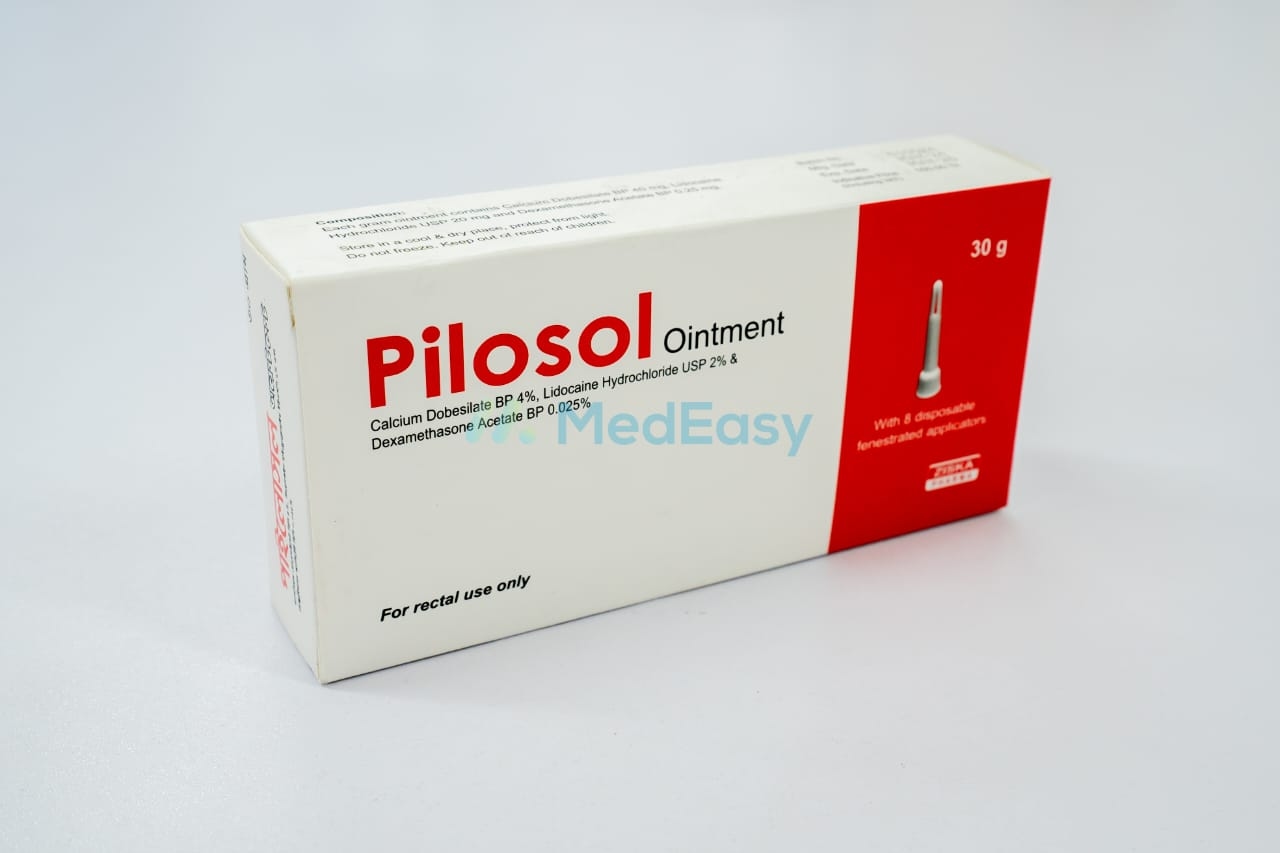
Pilosol4%+2%+0.02
Ziska Pharmaceuticals Ltd.
৳147.20
Add to cart
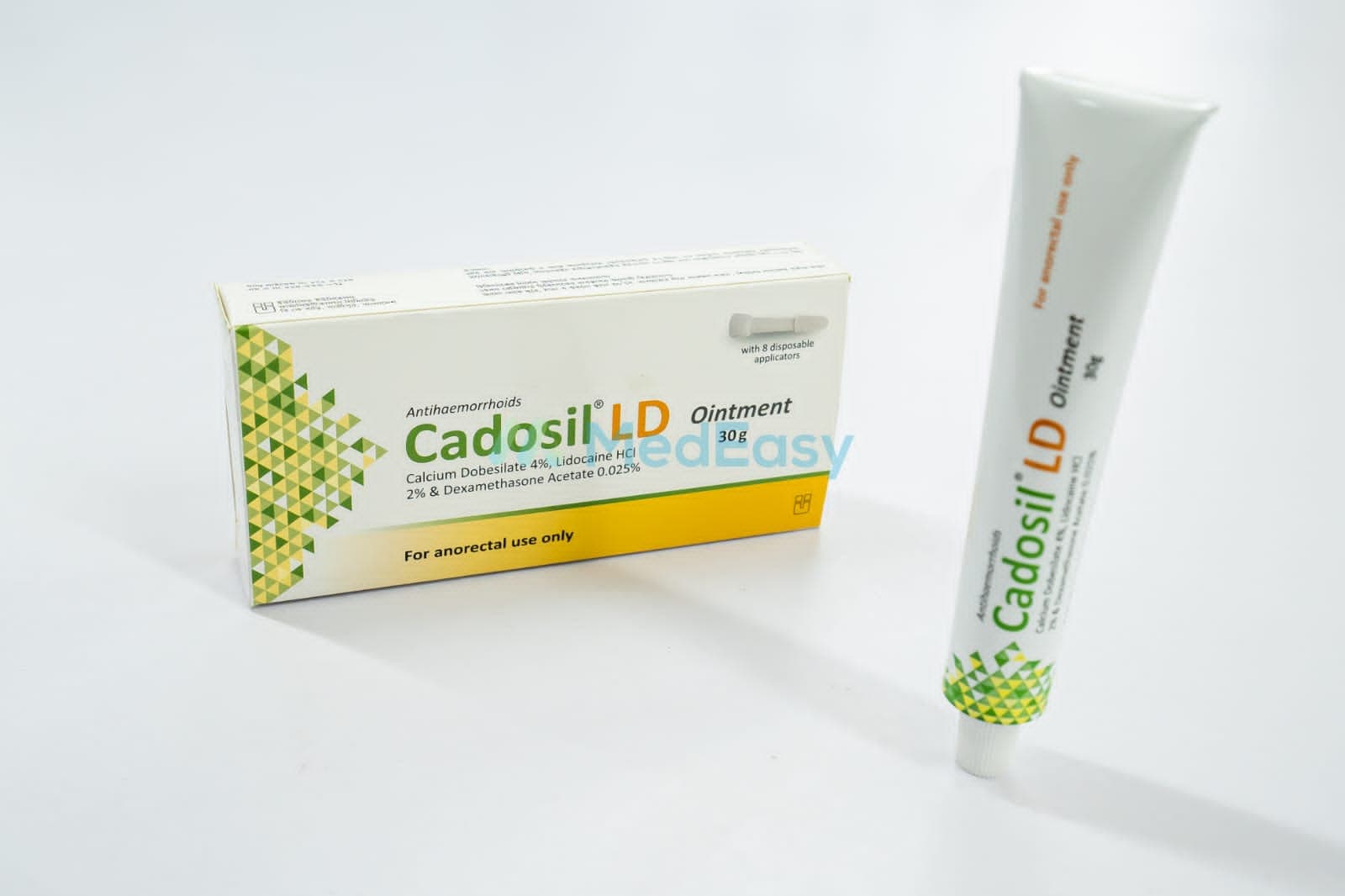

Cadosil LD is a fixed-dose combination topical/rectal preparation (vasoprotective agent + local anesthetic + corticosteroid) used for anorectal conditions. Its use is classified below by strength of evidence:
Cadosil LD does not treat the underlying vascular or structural cause of hemorrhoidal disease and should not be used to self-treat rectal bleeding of unknown cause (see Precautions and Warnings).
Each unit (ointment, cream, or suppository, depending on manufacturer presentation) of Calcium Dobesilate + Lidocaine HCl + Dexamethasone Acetate contains Calcium Dobesilate as the vasoprotective/capillary-stabilizing component, Lidocaine HCl as the local anesthetic component, and Dexamethasone Acetate as the corticosteroid (anti-inflammatory) component, combined in a fixed ratio for topical anorectal application. Exact strengths per unit vary by brand/manufacturer; refer to the specific product label for precise composition.
Cadosil LD is a triple-combination topical/rectal product formulated for the local management of hemorrhoids and related anorectal disorders. It brings together three complementary mechanisms in one preparation:
It is typically presented as an ointment/cream for external application and/or a suppository for internal (intra-rectal) use, and is intended for short-term, physician-directed or product-label-directed symptomatic use.
Anorectal (hemorrhoidal) preparation - combination of a vasoprotective agent, an amide local anesthetic, and a topical corticosteroid
Calcium Dobesilate + Lidocaine HCl + Dexamethasone Acetate combines three distinct pharmacologic actions targeted at the anorectal mucosa and perianal skin:
When applied topically/rectally in recommended amounts, systemic absorption of all three components is generally low, but can increase with application to inflamed, excoriated, or extensive mucosal surfaces, or with more frequent/prolonged use than recommended.
Cadosil LD is intended for external/topical and intra-rectal use only, for short-term symptomatic treatment of hemorrhoids and related anorectal conditions.
| Indication | Typical adult dosing |
|---|---|
| External hemorrhoids / perianal pruritus | Apply a thin layer of ointment/cream to the affected external area, usually 1-2 times daily and after each bowel movement, for a limited course (commonly up to 7 days unless a physician directs otherwise). |
| Internal hemorrhoids | Insert one suppository into the rectum, usually 1-2 times daily (e.g., morning and at bedtime) and/or after defecation, for a limited course as above. |
Pediatric dosing is not established (see Use in Special Populations). No well-established renal or hepatic dose-adjustment schedule exists for this topical/rectal combination because systemic exposure is normally minimal; however, caution and medical supervision are advised in patients with significant hepatic impairment because systemically absorbed lidocaine is hepatically metabolized.
Hands should be washed before and after application; the applicator tip (if any) should not be inserted deeply into the rectum. Do not exceed the recommended dose, frequency, or duration of use.
Ointment/cream: apply a thin layer externally to the clean, dry perianal area, gently. Suppository: insert one suppository into the rectum, pointed end first, after a bowel movement when possible, and retain in place. Wash hands before and after use. Do not apply to broken or extensively excoriated skin/mucosa beyond the intended treatment area, and avoid contact with the eyes.
Because Cadosil LD is applied topically/rectally and systemic absorption is normally low, clinically significant drug-drug interactions are uncommon with recommended use. Well-recognized interaction risks relate mainly to situations of increased systemic absorption:
Inform your physician or pharmacist of all other medicines and topical products in use.
Calcium Dobesilate + Lidocaine HCl + Dexamethasone Acetate is contraindicated in:
Local adverse effects are most common with Cadosil LD; systemic effects are uncommon with recommended short-term use but can occur with overuse or extensive application.
Discontinue use and seek medical advice if a rash, worsening irritation, or any signs of systemic toxicity develop.
Pregnancy: Data on the combination product in pregnancy are limited. As with other combination local anesthetic/corticosteroid preparations, Cadosil LD should be used in pregnancy only if clearly needed and if the potential benefit justifies the potential risk to the fetus; use the smallest effective amount for the shortest necessary duration, and only under medical advice.
Lactation: It is not established whether topically/rectally applied Cadosil LD is excreted in clinically significant amounts in breast milk. Because systemic absorption is normally low with recommended use, use during breastfeeding should still only occur on a physician's advice, avoiding application to the breast area.
Cadosil LD is intended for short-term use only. Key precautions include:
Overdose of Cadosil LD is uncommon with correct topical/rectal use but may occur with significant overapplication, ingestion, or absorption through extensive/broken mucosa. Possible features include systemic lidocaine toxicity (dizziness, tinnitus, perioral or tongue numbness, drowsiness, confusion, and in severe cases seizures, cardiac arrhythmia, or cardiovascular collapse) and, less acutely, corticosteroid-related effects with excessive or prolonged exposure. If overdose or accidental ingestion is suspected, or if any signs of systemic toxicity appear, stop use immediately and seek emergency medical attention or contact a poison control center without delay. Do not attempt specific home treatment beyond stopping the product and seeking care.
Store at room temperature (below 30°C), away from light and moisture. Do not freeze unless the product label states otherwise. Keep out of reach of children.
Children: Safety and efficacy of Cadosil LD in pediatric patients have not been well established; avoid use in infants and young children, whose thinner, more permeable perianal skin/mucosa increases the risk of greater systemic absorption. Use in older children only if specifically directed by a physician.
Elderly: No specific dose adjustment is established for elderly patients; use the standard adult regimen with attention to skin fragility and any coexisting hepatic or cardiac disease.
Hepatic impairment: Use with caution and physician guidance, as systemically absorbed lidocaine is hepatically metabolized and impaired clearance could theoretically increase toxicity risk if significant absorption occurs.
Renal impairment: No well-established dose adjustment is required for this topical/rectal product, since systemic exposure is normally minimal with recommended use.
Generally limited to short-term symptomatic use, commonly not exceeding about 7 days, unless a physician specifically directs a different duration; if symptoms persist beyond this period or worsen, medical reassessment is advised rather than continuing use unsupervised.
Vasoprotective/capillary-stabilizing agent (calcium dobesilate); amide-type local anesthetic (lidocaine); topical corticosteroid/glucocorticoid (dexamethasone acetate)
Calcium Dobesilate + Lidocaine HCl + Dexamethasone Acetate acts through three complementary mechanisms: calcium dobesilate stabilizes capillary walls and reduces abnormal vascular permeability and fragility; lidocaine HCl blocks sodium channels in local sensory nerves to produce temporary anesthesia; and dexamethasone acetate suppresses local inflammatory mediator release via glucocorticoid receptor binding, reducing swelling, redness, and itching.
The safety and efficacy of Cadosil LD in children and adolescents have not been established through controlled studies. Use in pediatric patients is not generally recommended and should occur only under direct physician supervision, given the increased potential for systemic absorption of the local anesthetic and corticosteroid components through thinner perianal skin and mucosa in this age group.
Q: What is Cadosil LD 4%+2%+0.025% Rectal Ointment used for?
A: Cadosil LD 4%+2%+0.025% Rectal Ointment is a combination ointment/suppository used for short-term relief of pain, itching, swelling, and bleeding tendency associated with internal and external hemorrhoids and related anal conditions.
Q: How long can I use Cadosil LD 4%+2%+0.025% Rectal Ointment?
A: It is generally intended for short-term use, commonly not more than about 7 days, unless your physician advises a different duration. Prolonged use of the corticosteroid component can thin the local skin/mucosa, so do not use for longer than recommended without medical review.
Q: Can I use Cadosil LD 4%+2%+0.025% Rectal Ointment if I have rectal bleeding?
A: Do not use Cadosil LD 4%+2%+0.025% Rectal Ointment for active or unexplained rectal bleeding without first seeing a physician, so that more serious causes can be ruled out. Once hemorrhoidal bleeding has been confirmed by a doctor, it may be used as directed.
Q: Is Cadosil LD 4%+2%+0.025% Rectal Ointment safe during pregnancy or breastfeeding?
A: Use during pregnancy or breastfeeding only if clearly needed and advised by a physician, using the smallest effective amount for the shortest time, since data on the combination in these situations are limited.
Q: Can children use Cadosil LD 4%+2%+0.025% Rectal Ointment?
A: Safety and efficacy in children have not been established. It should generally be avoided in infants and young children and used in older children only under a physician's direct guidance.
Q: What should I do if I miss a dose or apply too much?
A: If you miss an application, simply resume your regular schedule; do not double up. If you have applied significantly more than recommended, or notice dizziness, numbness, tinnitus, or an irregular heartbeat, stop use and seek immediate medical attention or contact a poison control center.
Disclaimer
The information provided is accurate to the best of our knowledge, but it does not replace professional medical advice. We cannot guarantee its completeness or accuracy, and the absence of specific information about a drug should not be taken as an endorsement. We are not responsible for any consequences arising from this information, so please consult a healthcare professional for any concerns or questions.
