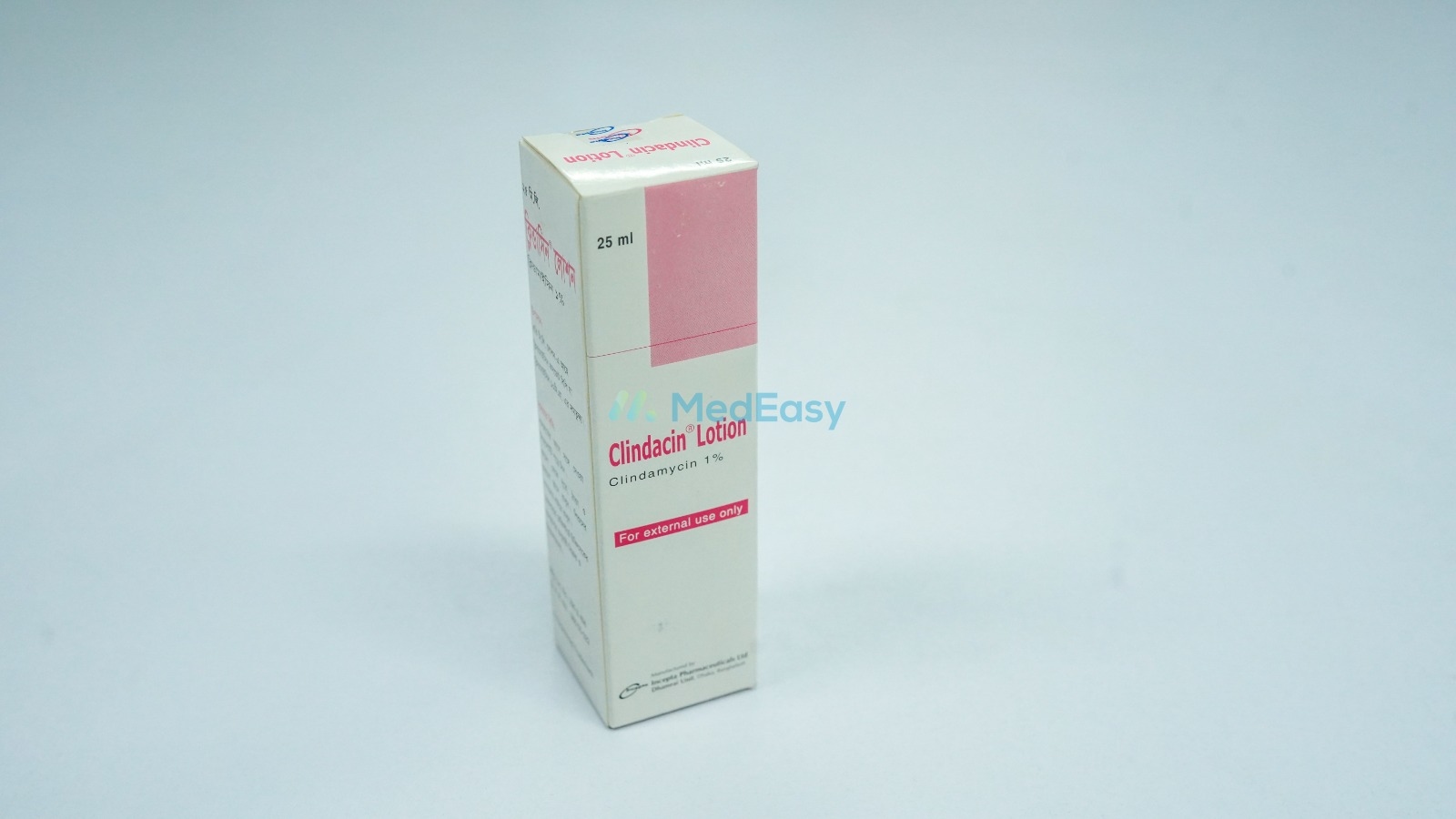
Clindamycin Vaginal Cream: This is indicated in the treatment of bacterial vaginosis (formerly referred to as Haemophilus vaginitis, Gardnerella vaginitis, nonspecific vaginitis, Corynebacterium vaginitis, or anaerobic vaginosis). Clindamycin Vaginal Cream can be used to treat non-pregnant women and pregnant women during the second and third trimester.Clindamycin Lotion: This is indicated for the topical treatment of acne vulgaris.
Theropeutic Class
Macrolides
Pharmacology
Clindamycin is a lincosamide antibiotic. It has bacteriostatic effect. It binds to the 50S subunit of bacterial ribosome and inhibits the early stage of protein synthesis. It is highly active against gram positive and anaerobic bacteria. It has activity against aerobic gram-positive cocci, including: Staphylococcus aureus, Staphylococcus epidermidis (penicillinase and non-penicillinase producing strains), Streptococci, Pneumococci. Anerobic gram-negative bacilli including; Bacteroids species, Fusobacterium species. Anaerobic gram-positove non-spore forming bacilli including: Propionibacterium species, Eubacterium species, Actinomyces species, Peptostreptococcus species, Microaerophillic streptococci, C. perferinges.
Dosage & Administration of Clinex 1%
Clindamycin Vaginal Cream: The recommended dose is one applicatorful of clindamycin phosphate vaginal cream intravaginally, preferably at bedtime, for 3 or 7 consecutive days in non-pregnant patients and for 7 consecutive days in pregnant patients.Clindamycin Lotion: Lotion is usually applied to affected areas twice daily, once in the morning and once at bedtime. The frequency of treatment will depend on the severity of acne condition as well as skin tolerance, but should not be more than twice daily. Clindamycin Lotion works best if it is used at the same time each day. The face should not be washed for at least two hours after applying this medication.Clindamycin Lotion is for external use only and is applied directly on the skin. Wash the entire face with mild, non alkaline soap and warm water prior to any application. Shake the bottle well before each use. Then apply a thin film directly to each acne lesion or to areas having potential of eruption. Avoid contact with eyes, lips and mucous membranes. It is better to continue using Clindamycin Lotion even if the condition improves. It may take between 2-6 weeks to notice an improvement and up to 12 weeks to see the full benefit.
Interaction of Clinex 1%
Clindamycin has been shown to have neuromuscular blocking properties that may enhance the action of other neuromuscular blocking agents. Therefore it should be used with caution in patients receiving such agents. Simultaneous use of other anti-acne or comedogenic cosmetic products should be avoided.
Contraindications
Clindamycin is contraindicated in patients with known history of hypersensitivity reactions to preparations containing Clindamycin, lincomycin, a history of regional enteritis or ulcerative colitis, or a history of antibiotic-associated colitis.
Side Effects of Clinex 1%
Side effects are usually very rare which includes skin dryness, erythema, burning, peeling, oily skin, itching, diarrhea, colitis & GI disturbance.
Pregnancy & Lactation
Pregnancy category B. There are no adequate and well controlled studies in pregnant woman. This drug should be used during pregnancy only if clearly needed. It is not known whether Clindamycin is excreted in human milk following use of Clindamycin topical lotion.However, orally and parenterally administered Clindamycin has been reported to appear in breast milk. Caution should be exercised when topical Clindamycin lotion is administered to a nursing woman.
Precautions & Warnings
Clindamycin lotion has an unpleasant taste and caution should be exercised when applying medication around the mouth. Clindamycin lotion may cause burning and irritation of the eye. In the event of accidental contact with sensitive surfaces (eye, abraded skin, mucous membranes), wash with copious amounts of cool tap water.
Storage Conditions
Store in a cool (below 25°C) & dry place. Protect from light. Keep away from the reach of children. Do not freeze.
Use In Special Populations
Safety and effectiveness in pediatric patients under the age of 12 have not been established.
Frequently Asked Questions
What is Clinex 1% used for?
Clindamycin Vaginal Cream: This is indicated in the treatment of bacterial vaginosis (formerly referred to as Haemophilus vaginitis, Gardnerella vaginitis, nonspecific vaginitis, Corynebacterium vaginitis, or anaerobic vaginosis). Clindamycin Vaginal Cream can be used to treat non-pregnant women and pregnant women during the second and third trimester.Clindamycin Lotion: This is indicated for the …
What is the dosage of Clinex 1%?
Clindamycin Vaginal Cream: The recommended dose is one applicatorful of clindamycin phosphate vaginal cream intravaginally, preferably at bedtime, for 3 or 7 consecutive days in non-pregnant patients and for 7 consecutive days in pregnant patients.Clindamycin Lotion: Lotion is usually applied to affected areas twice daily, once in the morning and once at bedtime. The frequency of treatment will de…
What are the side effects of Clinex 1%?
Side effects are usually very rare which includes skin dryness, erythema, burning, peeling, oily skin, itching, diarrhea, colitis & GI disturbance.
Who should not take Clinex 1%?
Clindamycin is contraindicated in patients with known history of hypersensitivity reactions to preparations containing Clindamycin, lincomycin, a history of regional enteritis or ulcerative colitis, or a history of antibiotic-associated colitis.
What precautions should be taken with Clinex 1%?
Clindamycin lotion has an unpleasant taste and caution should be exercised when applying medication around the mouth. Clindamycin lotion may cause burning and irritation of the eye. In the event of accidental contact with sensitive surfaces (eye, abraded skin, mucous membranes), wash with copious amounts of cool tap water.
Is Clinex 1% safe during pregnancy and breastfeeding?
Pregnancy category B. There are no adequate and well controlled studies in pregnant woman. This drug should be used during pregnancy only if clearly needed. It is not known whether Clindamycin is excreted in human milk following use of Clindamycin topical lotion.However, orally and parenterally administered Clindamycin has been reported to appear in breast milk. Caution should be exercised when to…
Disclaimer
The information provided is accurate to our best practices, but it does not replace professional medical advice. We cannot guarantee its completeness or accuracy. The absence of specific information about a drug should not be seen as an endorsement. We are not responsible for any consequences resulting from this information, so consult a healthcare professional for any concerns or questions.