
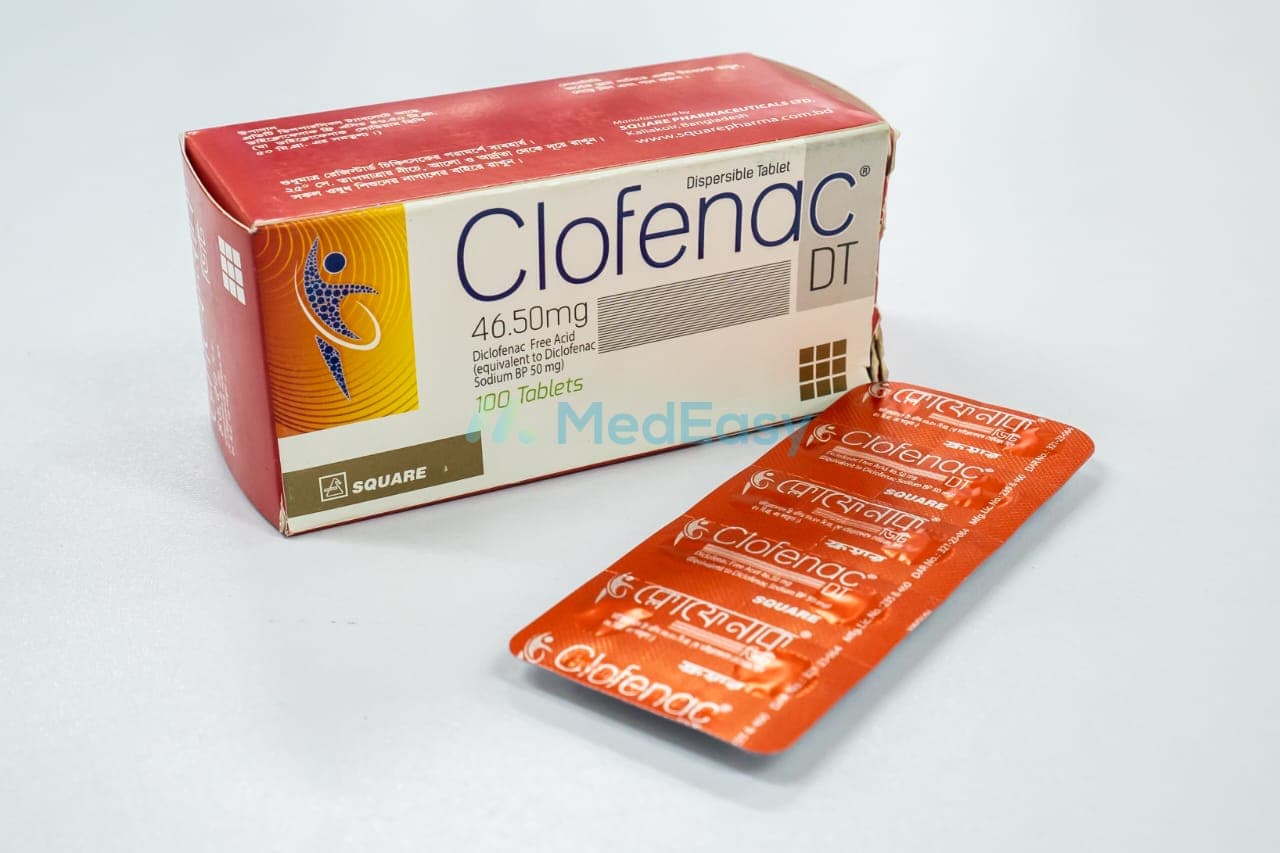

Medicine overview
Indications of Clofenac DT
Clofenac DT is a nonsteroidal anti-inflammatory drug (NSAID) formulated using fine-particle (submicronized) technology to enhance dissolution and absorption, allowing effective pain relief at lower milligram doses than conventional diclofenac salts.
Established/FDA-Approved Uses (Adults)
- Management of osteoarthritis (OA) pain
- Management of mild-to-moderate acute pain
Notes on Formulation-Specific Use
Clofenac DT capsules are not interchangeable on a milligram-for-milligram basis with other diclofenac products (such as diclofenac sodium or diclofenac potassium), because the fine-particle formulation achieves comparable effect at reduced doses. Clofenac DT is indicated for short-term, symptomatic relief only; it does not alter the underlying disease process in osteoarthritis.
Clofenac DT is not approved for use in children, and is not intended for chronic use beyond what is clinically necessary.
Composition
Each capsule contains Diclofenac Free Acid (submicronized, as the free acid rather than a sodium or potassium salt) in strengths of 18 mg or 35 mg, formulated with fine-particle technology to improve dissolution. Exact strengths, excipients, and available pack sizes may vary by manufacturer and market.
Description
Clofenac DT is a phenylacetic acid derivative NSAID supplied in its unsalted (free acid) chemical form and manufactured as submicronized particles to improve solubility and the rate of absorption compared with conventional diclofenac sodium or diclofenac potassium salts. This allows Clofenac DT capsules to provide analgesic and anti-inflammatory effects at lower doses. Clofenac DT is used for osteoarthritis pain and for mild-to-moderate acute pain in adults.
Therapeutic Class
Clofenac DT belongs to the Non-Steroidal Anti-Inflammatory Drug (NSAID) class, specifically the phenylacetic acid derivative group of non-selective cyclooxygenase (COX-1 and COX-2) inhibitors.
Pharmacology
Pharmacodynamics
Diclofenac Free Acid non-selectively inhibits cyclooxygenase-1 (COX-1) and cyclooxygenase-2 (COX-2) enzymes, reducing the synthesis of prostaglandins that mediate pain, inflammation, and fever. Its mechanism of anti-inflammatory, analgesic, and antipyretic action is the same as that of other diclofenac salts; the free-acid, submicronized formulation differs only in its dissolution and absorption characteristics, not its receptor-level activity.
Pharmacokinetics
- Absorption: The submicronized free-acid particles dissolve rapidly, giving faster and more consistent absorption than standard-particle diclofenac salts, permitting lower effective doses; food delays and reduces peak absorption.
- Distribution: Highly bound to plasma proteins (greater than 99%, mainly albumin).
- Metabolism: Extensively metabolized in the liver, mainly via CYP2C9, to hydroxylated metabolites that are further conjugated.
- Elimination: Eliminated mainly via urine (as glucuronide/sulfate conjugates) and bile; elimination half-life is approximately 1.5-2 hours.
Dosage & Administration of Clofenac DT
Clofenac DT should be used at the lowest effective dose for the shortest duration consistent with individual treatment goals. Doses of Clofenac DT are not interchangeable on a milligram-for-milligram basis with other diclofenac products.
| Indication/Population | Dose | Notes |
|---|---|---|
| Adults - osteoarthritis pain | 35 mg three times daily | May be taken with or without food |
| Adults - mild-to-moderate acute pain | 18 mg or 35 mg three times daily | Use the lowest dose that controls symptoms |
| Elderly | Start at the lowest recommended dose | Increase cautiously with monitoring for GI, renal, and cardiovascular effects |
| Mild-to-moderate renal or hepatic impairment | Use the lowest effective dose with close monitoring | Contraindicated in severe impairment (see Contraindications) |
| Children | Not recommended | Safety and efficacy not established (see Pediatric Uses) |
Capsules of Clofenac DT should be swallowed whole with water and not opened, crushed, dissolved, or chewed, as this may alter the intended absorption profile of the submicronized particles.
Administration of Clofenac DT
Clofenac DT capsules should be swallowed whole with a glass of water. Do not crush, chew, or open the capsule, as the submicronized particle formulation is designed to be taken intact. Capsules may be taken with or without food; taking with food may reduce stomach upset but can slightly delay onset of pain relief. See Dosage and Administration for complete dosing schedules.
Interaction of Clofenac DT
Clofenac DT has clinically significant interactions with the following medicines:
| Interacting Drug/Class | Mechanism | Clinical Consequence |
|---|---|---|
| Other NSAIDs or aspirin | Additive COX inhibition | Increased risk of GI ulceration and bleeding without added benefit; avoid concurrent use |
| Anticoagulants (e.g., warfarin) and antiplatelets | Additive effect on bleeding risk | Increased risk of serious bleeding; monitor closely if co-administered |
| ACE inhibitors, ARBs, and diuretics | Reduced renal prostaglandin synthesis | Reduced antihypertensive effect and increased risk of acute renal impairment ("triple whammy" effect) |
| Lithium | Reduced renal clearance of lithium | Increased plasma lithium levels and risk of toxicity |
| Methotrexate | Reduced renal clearance of methotrexate | Increased methotrexate toxicity, especially at high doses |
| Cyclosporine | Additive nephrotoxicity | Increased risk of renal impairment; monitor renal function |
| Corticosteroids and SSRIs | Additive GI mucosal effects | Increased risk of GI ulceration or bleeding |
| Digoxin | Reduced renal clearance | Increased digoxin plasma levels; monitor cardiac status |
| CYP2C9 inhibitors (e.g., voriconazole, fluconazole) | Reduced metabolism of Clofenac DT | Increased plasma concentration and risk of adverse effects; dose reduction may be needed |
Contraindications
- Known hypersensitivity to Diclofenac Free Acid or any component of the formulation
- History of asthma, urticaria, or other allergic-type reactions after taking aspirin or other NSAIDs
- Use in the setting of coronary artery bypass graft (CABG) surgery, including in the perioperative period
- Active gastrointestinal bleeding or peptic ulcer disease
- Severe hepatic impairment
- Severe renal impairment
- Severe heart failure
- Third trimester of pregnancy
See Precautions and Warnings for additional cautions that do not amount to absolute contraindications.
Side Effects of Clofenac DT
Common
- Headache
- Nausea, diarrhea, dyspepsia, abdominal pain
- Constipation, flatulence
- Elevated liver enzymes
- Dizziness
Uncommon
- Vomiting
- Fluid retention/edema
- Increased blood pressure
- Rash, pruritus
- Tinnitus
Rare/Serious
- Gastrointestinal ulceration, bleeding, or perforation
- Cardiovascular thrombotic events (myocardial infarction, stroke) - see Precautions and Warnings
- Severe hepatotoxicity, including hepatitis and liver failure (rare but reported with diclofenac specifically)
- Acute renal failure
- Severe hypersensitivity reactions, including anaphylaxis and angioedema
- Serious skin reactions (Stevens-Johnson syndrome, toxic epidermal necrolysis) - rare
- Bronchospasm in aspirin/NSAID-sensitive patients
Patients should seek prompt medical attention for signs of a severe allergic reaction, black or bloody stools, unexplained bruising/bleeding, or yellowing of the skin or eyes.
Pregnancy & Lactation
Pregnancy
Clofenac DT is contraindicated during the third trimester of pregnancy because NSAIDs can cause premature closure of the fetal ductus arteriosus. In addition, use of NSAIDs, including Clofenac DT, at or after 20 weeks of pregnancy may cause fetal renal dysfunction leading to low amniotic fluid (oligohydramnios), and should generally be avoided from that point onward unless clearly necessary. Use earlier in pregnancy is not recommended unless the potential benefit justifies the potential risk to the fetus, and only under medical supervision at the lowest effective dose for the shortest duration; consult a physician before use.
Lactation
Diclofenac (including the free-acid form) passes into breast milk in small amounts. Use of Clofenac DT while breastfeeding is generally not recommended unless a physician determines the benefit outweighs the potential risk to the nursing infant; if used, the lowest effective dose for the shortest duration should be chosen and the infant monitored.
Precautions & Warnings
Boxed Warning: Cardiovascular Risk
Clofenac DT, like other NSAIDs, can increase the risk of serious cardiovascular thrombotic events, including myocardial infarction and stroke, which can be fatal. This risk may occur early in treatment and may increase with duration of use and in patients with existing cardiovascular disease or risk factors. Clofenac DT is contraindicated for the treatment of perioperative pain in the setting of CABG surgery.
Boxed Warning: Gastrointestinal Risk
Clofenac DT can cause serious gastrointestinal adverse events, including bleeding, ulceration, and perforation of the stomach or intestines, which can be fatal; these events can occur at any time during use and without warning symptoms. Elderly patients and those with a prior history of peptic ulcer disease or GI bleeding are at greater risk.
Hepatotoxicity
Elevations of liver enzymes and, rarely, severe hepatic reactions (including liver failure) have been reported specifically with diclofenac products. Monitor liver function periodically with prolonged use, and discontinue if abnormal liver test results persist or worsen, or if clinical signs/symptoms of liver disease develop.
Renal Function
Use with caution in patients who are dehydrated, elderly, or taking concurrent nephrotoxic drugs, diuretics, or ACE inhibitors/ARBs; renal function should be monitored, particularly with prolonged use.
Fluid Retention and Hypertension
Clofenac DT can cause new-onset hypertension or worsening of pre-existing hypertension, and fluid retention/edema; use with caution in patients with heart failure or hypertension.
Other Precautions
- Use the lowest effective dose for the shortest duration necessary, particularly in patients with GI or cardiovascular risk factors; consider gastroprotection if risk factors are present.
- Avoid concurrent use with other NSAIDs or aspirin (including low-dose aspirin) unless specifically directed by a physician.
- May mask signs of infection (fever, inflammation).
- May cause dizziness; use caution when driving or operating machinery.
- Anaphylactoid reactions may occur even without prior exposure to Clofenac DT.
Overdose Effects of Clofenac DT
Symptoms of Clofenac DT overdose may include drowsiness, dizziness, nausea, vomiting, and epigastric pain, and in more severe cases gastrointestinal bleeding, hypertension, acute kidney injury, respiratory depression, coma, and seizures. There is no specific antidote for Clofenac DT overdose.
If an overdose of Clofenac DT is suspected, seek immediate medical attention or contact a poison control center/emergency services right away. Treatment is generally supportive and symptomatic and should be provided by trained medical personnel; do not attempt specific home treatment.
Storage Conditions
Store at room temperature (below 30°C), away from light and moisture. Keep out of reach of children.
Use In Special Populations
Renal Impairment
Use the lowest effective dose with close monitoring in mild-to-moderate renal impairment; contraindicated in severe renal impairment (see Contraindications).
Hepatic Impairment
Use the lowest effective dose with close monitoring in mild-to-moderate hepatic impairment; contraindicated in severe hepatic impairment.
Elderly
Start at the lowest recommended dose and monitor closely, as elderly patients have a higher risk of GI, renal, and cardiovascular adverse effects with Clofenac DT.
Pregnancy and Lactation
See Pregnancy and Lactation section for full details.
Children
See Pediatric Uses section for full details.
Cardiovascular Disease
Use with caution and only after cardiovascular risk assessment in patients with pre-existing cardiovascular disease or risk factors; contraindicated in the perioperative period of CABG surgery.
Duration Of Treatment
Clofenac DT should be used for the shortest duration necessary to control symptoms. For acute pain, treatment is typically limited to the period the pain persists, generally reassessed if needed beyond a few days. For osteoarthritis, periodic reassessment by a physician is recommended to confirm continued need and to monitor for cardiovascular, renal, GI, and hepatic effects. Prolonged use increases the risk of these adverse effects.
Drug Classes
Diclofenac Free Acid belongs to the Non-Steroidal Anti-Inflammatory Drug (NSAID) class, within the phenylacetic acid derivative subgroup, alongside other diclofenac salt forms such as diclofenac sodium and diclofenac potassium.
Mode Of Action
Diclofenac Free Acid works by non-selectively inhibiting cyclooxygenase (COX-1 and COX-2) enzymes, thereby blocking synthesis of the prostaglandins responsible for pain, inflammation, and fever. Its submicronized, unsalted (free acid) particle formulation improves dissolution and absorption compared with conventional diclofenac salts, allowing effective relief at lower doses. See Pharmacology for full pharmacodynamic and pharmacokinetic details.
Pediatric Uses
The safety and efficacy of Clofenac DT in pediatric patients have not been established, and its use in children is not recommended. Clofenac DT should only be used in pediatric patients if specifically directed and supervised by a physician; no established pediatric dosing regimen exists.
Frequently Asked Questions
Q: What is Clofenac DT 50 mg Tablet used for?
A: Clofenac DT 50 mg Tablet is used for the management of osteoarthritis pain and mild-to-moderate acute pain in adults. Clofenac DT 50 mg Tablet is a submicronized (fine-particle) NSAID capsule that provides pain relief at lower doses than conventional diclofenac salts.
Q: How is Clofenac DT 50 mg Tablet different from regular diclofenac?
A: Clofenac DT 50 mg Tablet is formulated as the unsalted free-acid form of diclofenac using fine-particle technology, which improves dissolution and absorption. This allows effective doses (18 mg or 35 mg) that are lower than those typically used with diclofenac sodium or diclofenac potassium; the products are not interchangeable milligram-for-milligram.
Q: Can I take Clofenac DT 50 mg Tablet if I am pregnant?
A: Clofenac DT 50 mg Tablet is contraindicated in the third trimester of pregnancy due to the risk of premature closure of a key fetal heart vessel. Use at or after 20 weeks of pregnancy should generally be avoided because it may cause reduced amniotic fluid, and use earlier in pregnancy should only occur if clearly necessary and under medical supervision.
Q: Can I take Clofenac DT 50 mg Tablet while breastfeeding?
A: Small amounts of diclofenac pass into breast milk, so use of Clofenac DT 50 mg Tablet while breastfeeding is generally not recommended unless your physician determines the benefit outweighs the risk to your baby. If needed, the lowest effective dose for the shortest time should be used.
Q: What should I avoid while taking Clofenac DT 50 mg Tablet?
A: Avoid taking other NSAIDs or aspirin at the same time as Clofenac DT 50 mg Tablet unless your physician tells you to, as this increases the risk of stomach bleeding and kidney problems. Do not crush or chew the capsules. Also inform your doctor about any blood thinners, steroids, or diuretics you are taking.
Q: What should I do if I take too much Clofenac DT 50 mg Tablet?
A: If you suspect an overdose of Clofenac DT 50 mg Tablet, seek immediate medical attention or contact emergency services/poison control right away, even if you feel well, as symptoms of overdose can include stomach bleeding, kidney problems, or breathing difficulty.
Disclaimer
The information provided is accurate to the best of our knowledge, but it does not replace professional medical advice. We cannot guarantee its completeness or accuracy, and the absence of specific information about a drug should not be taken as an endorsement. We are not responsible for any consequences arising from this information, so please consult a healthcare professional for any concerns or questions.
