
10% Off
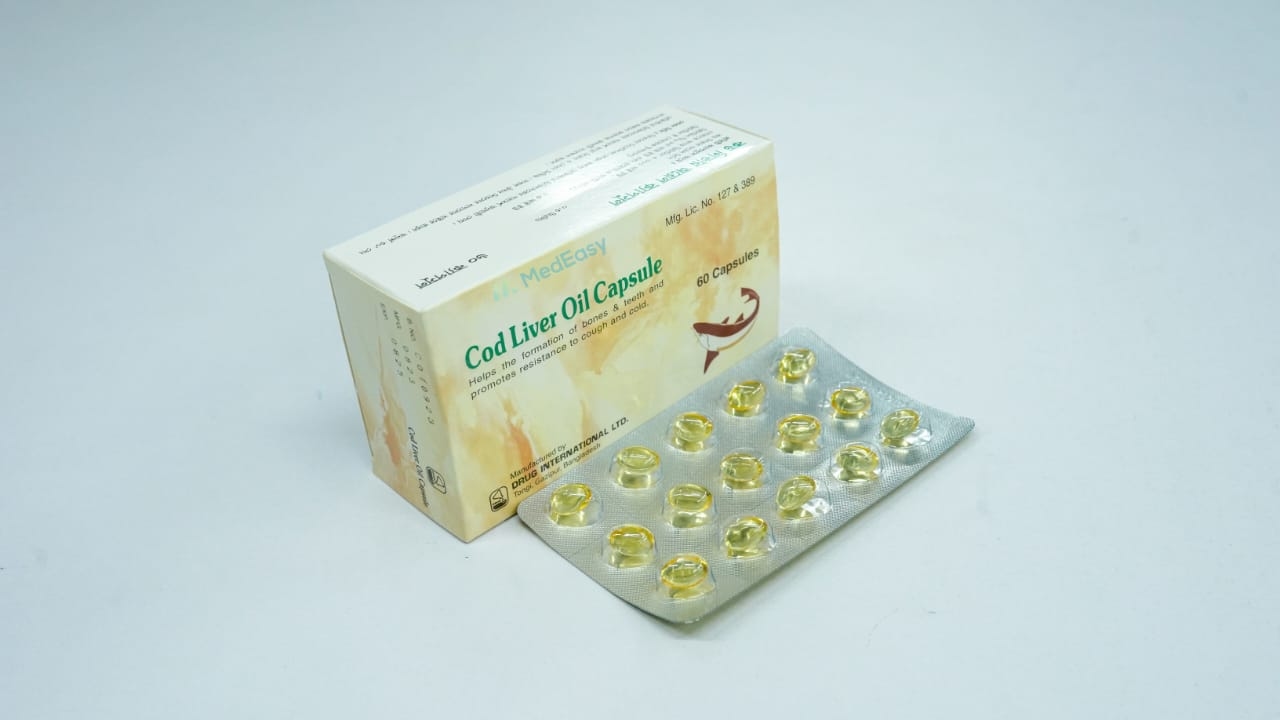
Cod Liver Oil
Drug International Ltd.
৳40.50
Add to cart


Codliv is a nutritional supplement derived from the liver of cod fish, naturally rich in vitamin A, vitamin D, and the omega-3 fatty acids EPA (eicosapentaenoic acid) and DHA (docosahexaenoic acid). It is used for:
Note: Codliv is a dietary supplement, not a treatment for diagnosed vitamin A, vitamin D, or omega-3 deficiency states requiring specific medical dosing; in such cases, a physician-directed, product-specific regimen should be followed.
Each dose of Cod Liver Oil (capsule or liquid) typically provides:
Exact vitamin A, vitamin D, EPA, and DHA content varies between manufactured products; always check the specific product label for per-capsule or per-5 mL values before dosing.
Codliv is an oil extracted from the fresh liver of cod fish (Gadus species). It has been used for generations as a traditional dietary supplement and is now manufactured and standardized to provide consistent amounts of fat-soluble vitamins A and D along with long-chain omega-3 polyunsaturated fatty acids (EPA and DHA).
Codliv is available as soft gelatin capsules, chewable capsules, and oral liquid/emulsion formulations. It is widely marketed as an over-the-counter nutritional supplement rather than a prescription medicine, although some higher-strength or pediatric formulations may be recommended by a physician.
Codliv belongs to the class of vitamin and nutritional supplements, specifically combined fat-soluble vitamin (A and D) and omega-3 fatty acid (fish oil) preparations.
Cod Liver Oil supplies three main classes of active nutrients, each with a distinct mechanism:
Absorption of Cod Liver Oil's fat-soluble vitamins and fatty acids is enhanced when taken with a meal containing some dietary fat.
| Population/Use | Typical Dose |
|---|---|
| Adults (general supplementation) | Typically 1 capsule (or 5 mL liquid) once or twice daily, or as directed on the product label, generally providing up to the recommended daily allowance of vitamin A and vitamin D |
| Children above 1 year | Age-appropriate liquid or chewable formulations dosed per product labeling (e.g., 2.5–5 mL daily); use only products specifically labeled for pediatric use |
| Infants under 1 year | Use only under medical supervision with a product/dose specifically indicated for infants |
Codliv is best taken with food to improve absorption of its fat-soluble vitamins. Do not exceed the dose stated on the specific product label, as vitamin A and vitamin D content vary between brands and excessive intake can cause toxicity.
Codliv capsules should be swallowed whole with water, preferably with a meal to enhance absorption of the fat-soluble vitamins. Liquid/emulsion forms should be measured with the measuring cup or spoon provided and can be taken directly or mixed with juice or milk to mask the taste. Do not chew capsules unless they are specifically labeled as chewable.
Clinically relevant interactions with Codliv include:
Cod Liver Oil is contraindicated in individuals with:
Codliv is generally well tolerated at recommended doses. Reported side effects include:
Codliv should be used in pregnancy only under medical guidance and only if the potential benefit justifies the potential risk, because excessive vitamin A intake (particularly preformed vitamin A/retinol) has been associated with teratogenic effects (birth defects) when taken in high doses during pregnancy. Pregnant women should avoid exceeding the recommended daily allowance of vitamin A and should consult a physician before using Codliv or any vitamin A-containing supplement. Vitamin D and omega-3 content are generally considered acceptable in pregnancy within recommended intake levels, but overall product dosing should still be physician-guided. Use during breastfeeding should also be discussed with a physician, as vitamin A and D pass into breast milk; do not exceed labeled doses.
The following precautions apply to the use of Codliv:
Overdose of Codliv, or chronic excessive intake, can cause vitamin A toxicity (symptoms may include severe headache, dizziness, blurred vision, nausea/vomiting, dry or peeling skin, bone/joint pain, and in severe cases increased pressure in the brain) and/or vitamin D toxicity with hypercalcemia (symptoms may include nausea, vomiting, constipation, weakness, confusion, excessive thirst/urination, and kidney impairment). If overdose of Codliv is suspected, seek immediate medical attention or contact a poison control center; do not attempt specific home treatment. Bring the product packaging to help medical staff assess the vitamin A/D dose ingested.
Store at room temperature (below 30°C), away from light, heat, and moisture. Keep the container tightly closed. Keep out of reach of children.
Pediatric use: Codliv products specifically formulated and labeled for children/infants may be used under a physician's or pediatrician's guidance, dosed according to age and the vitamin content of the specific product; adult-strength Codliv products should not be given to infants or young children without medical advice.
Elderly: No specific dose adjustment is generally required in the elderly beyond following standard label dosing, but caution regarding cumulative vitamin A/D intake from other supplements is advised, particularly in those on multiple medications or with renal impairment.
Hepatic/renal impairment: Patients with liver or kidney disease may have altered vitamin A/D metabolism or handling and should use Codliv only under medical supervision, as they may be more susceptible to vitamin toxicity.
Fish allergy: Individuals with known fish allergy should avoid Codliv (see Contraindications).
Codliv is typically used long-term as an ongoing dietary supplement, as long as it continues to be appropriate for the individual's nutritional needs. There is no fixed treatment duration; however, periodic review with a physician is advisable, especially with long-term daily use, to confirm the dose remains appropriate and to avoid cumulative vitamin A/D excess.
Cod Liver Oil is classified as a fish-oil-derived nutritional/vitamin supplement, combining fat-soluble vitamins (A and D) with omega-3 polyunsaturated fatty acids (EPA and DHA).
Cod Liver Oil acts through the combined physiological actions of its constituent nutrients: vitamin A supports the visual cycle, epithelial integrity, and immune function; vitamin D increases intestinal calcium and phosphate absorption and supports bone mineralization; and the omega-3 fatty acids EPA and DHA are incorporated into cell membranes and serve as precursors to anti-inflammatory lipid mediators, with mild triglyceride-lowering and antiplatelet effects.
Codliv may be used in children above 1 year of age using formulations and doses specifically labeled for pediatric use, generally to supplement dietary intake of vitamin A, vitamin D, and omega-3 fatty acids. Use in infants under 1 year should only occur under direct medical supervision with an appropriately indicated product. Safety and efficacy of adult-strength Codliv products in young children have not been established, and parents should not exceed the pediatric dose stated on the product label due to the risk of vitamin A/D toxicity in children, who are more susceptible to overdose from small absolute amounts.
Q: What is Codliv Capsule used for?
A: Codliv Capsule is a nutritional supplement used to provide vitamin A, vitamin D, and omega-3 fatty acids (EPA/DHA), supporting general nutrition, bone health, vision, and immune function, particularly when dietary intake of these nutrients is low.
Q: Can I take Codliv Capsule every day?
A: Yes, Codliv Capsule is generally intended for daily use as a supplement, but you should not exceed the dose stated on the specific product label, since taking more than recommended can lead to vitamin A or vitamin D toxicity over time.
Q: Is Codliv Capsule safe during pregnancy?
A: Codliv Capsule should be used in pregnancy only if clearly needed and under medical guidance, because high doses of vitamin A can be harmful to the developing fetus. Pregnant women should consult a physician before starting Codliv Capsule and avoid exceeding the recommended vitamin A intake.
Q: Can children take Codliv Capsule?
A: Children above 1 year can take Codliv Capsule using age-appropriate formulations and doses specifically labeled for children. Infants should only receive Codliv Capsule under a doctor's supervision. Do not give adult-strength Codliv Capsule to young children.
Q: What happens if I take too much Codliv Capsule?
A: Taking too much Codliv Capsule can cause vitamin A toxicity (headache, dizziness, blurred vision, skin peeling, bone pain) or vitamin D toxicity with high blood calcium (nausea, vomiting, weakness, confusion). If overdose is suspected, seek immediate medical attention or contact a poison control center.
Q: Can I take Codliv Capsule with blood thinners like warfarin?
A: Codliv Capsule contains omega-3 fatty acids that can have a mild blood-thinning effect, so combining it with warfarin or other anticoagulant/antiplatelet medicines may increase bleeding risk. Inform your physician if you are on such medication before starting Codliv Capsule.
Disclaimer
The information provided is accurate to the best of our knowledge, but it does not replace professional medical advice. We cannot guarantee its completeness or accuracy, and the absence of specific information about a drug should not be taken as an endorsement. We are not responsible for any consequences arising from this information, so please consult a healthcare professional for any concerns or questions.
