
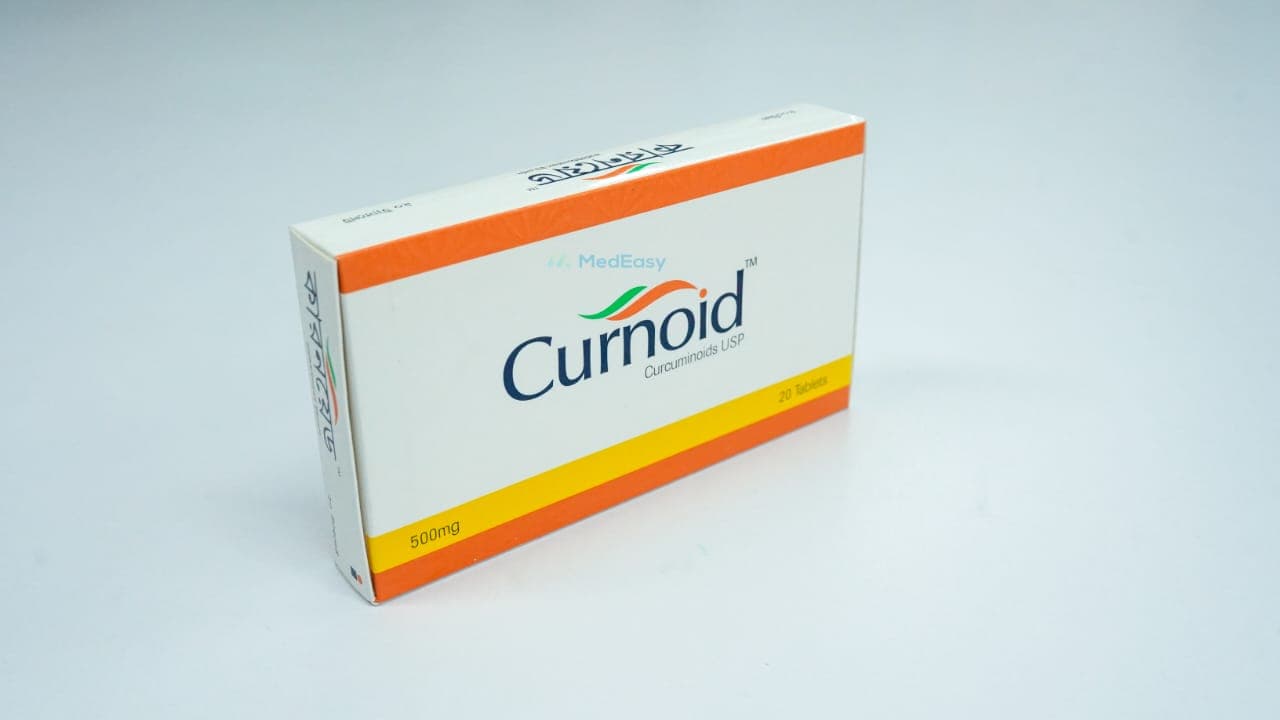

Medicine overview
Indications of Curnoid
Commonly Used For
- General antioxidant and anti-inflammatory support — widely used as a dietary supplement, though evidence is largely from smaller clinical trials and traditional use rather than large-scale regulatory approval.
- Joint discomfort / osteoarthritis-related symptoms — several small-to-moderate randomized trials suggest Curnoid may reduce joint pain and stiffness, with some studies showing benefit comparable to certain over-the-counter analgesics; evidence quality varies and this is not an FDA-approved indication.
- Adjunct general inflammatory conditions — sometimes used alongside standard medical therapy for conditions with an inflammatory component, as an adjunct rather than a replacement for prescribed treatment.
Curnoid is not an FDA-approved prescription drug for any disease indication; it is marketed and used as a dietary/herbal supplement. It should not be used as a substitute for medically prescribed treatment of any diagnosed condition without consulting a physician.
Composition
Each unit contains standardized Curcuminoids [Curcuma Longa] extract, typically providing a defined percentage (commonly 95%) of the three major curcuminoid compounds — curcumin, demethoxycurcumin, and bisdemethoxycurcumin — derived from the rhizome of the turmeric plant (Curcuma longa). Many commercial formulations combine Curcuminoids [Curcuma Longa] with an absorption-enhancing agent such as piperine (black pepper extract) or a lipid/phytosome-based delivery system, since curcuminoids alone have poor oral bioavailability. Exact strength and added excipients vary by manufacturer and product; refer to the specific product label for precise composition.
Description
Curnoid is a herbal/botanical extract concentrating the major polyphenolic constituents of turmeric (Curcuma longa) rhizome. It is marketed as a dietary/herbal supplement rather than as an approved prescription drug, and is commonly used for its antioxidant and anti-inflammatory properties, particularly for joint discomfort and general inflammatory support.
Because natural curcuminoids are poorly absorbed when taken orally, many Curnoid products are formulated with enhanced-absorption technology (e.g., piperine/black pepper extract, phospholipid complexes, or nanoparticle delivery) to improve bioavailability. Clinical effects and appropriate dosing can therefore differ meaningfully between specific branded formulations.
Therapeutic Class
Curnoid belongs to the herbal/nutraceutical supplement class, specifically classified as a botanical antioxidant and anti-inflammatory agent. It is not classified as a conventional pharmaceutical drug and is regulated in most jurisdictions as a dietary supplement rather than a prescription medicine.
Pharmacology
Mechanism
Curcuminoids [Curcuma Longa] exert antioxidant activity by scavenging reactive oxygen species and upregulating endogenous antioxidant enzyme pathways (e.g., Nrf2-mediated pathways). Anti-inflammatory activity is thought to occur mainly through inhibition of the NF-κB signaling pathway and downregulation of pro-inflammatory mediators such as COX-2, LOX, TNF-α, and various interleukins.
Pharmacokinetics
Natural curcuminoids have low intrinsic oral bioavailability due to poor intestinal absorption, rapid first-pass glucuronidation/sulfation in the liver and gut wall, and rapid systemic elimination. Absorption-enhancing formulations of Curcuminoids [Curcuma Longa] (e.g., co-administration with piperine, or phytosome/nanoparticle delivery) can substantially increase measurable plasma levels compared with unformulated curcumin powder. Elimination occurs predominantly via biliary/fecal excretion.
Dosage & Administration of Curnoid
General Dosing
Dosing of Curnoid varies significantly by product formulation and standardization (e.g., percentage of curcuminoids, presence of absorption enhancers such as piperine). There is no single FDA-approved dose; the following reflects commonly used dietary-supplement dosing ranges reported in clinical studies and manufacturer labeling.
| Use | Typical Adult Dose | Notes |
|---|---|---|
| General antioxidant/anti-inflammatory support | 500–1000 mg of standardized curcuminoid extract, once or twice daily with food | Taking with a fat-containing meal and/or an absorption enhancer improves uptake |
| Joint discomfort (e.g., osteoarthritis-related) | 500 mg twice daily, up to 1000–2000 mg/day of standardized extract, in divided doses | Clinical benefit, if any, is typically assessed after 4–8 weeks of consistent use |
Always follow the dose stated on the specific product label, as strength and formulation of Curnoid differ between manufacturers.
Administration of Curnoid
Curnoid is taken orally, generally with meals to reduce gastrointestinal upset and to improve absorption when taken with a fat-containing meal. Capsules/tablets should be swallowed whole with water unless the product labeling states otherwise; do not exceed the dose stated on the product label.
Interaction of Curnoid
Anticoagulants and Antiplatelet Agents
Curnoid have mild antiplatelet activity and may increase bleeding risk when combined with anticoagulants (e.g., warfarin) or antiplatelet agents (e.g., aspirin, clopidogrel). Concomitant use should be avoided or closely monitored under medical supervision.
Antidiabetic Medications
May produce an additive blood-glucose-lowering effect when combined with insulin or oral antidiabetic drugs; blood glucose should be monitored if used together with Curnoid.
Drugs Metabolized via CYP450 Enzymes
Curnoid may inhibit certain hepatic cytochrome P450 enzymes (e.g., CYP3A4, CYP2C9) and P-glycoprotein transport, potentially altering blood levels of drugs metabolized through these pathways; caution is advised with narrow-therapeutic-index medications.
Iron Supplements
May reduce iron absorption when taken concurrently with Curnoid; separate dosing times if both are required.
Contraindications
Curcuminoids [Curcuma Longa] is contraindicated in individuals with known hypersensitivity to turmeric, curcumin, or other members of the Zingiberaceae (ginger) plant family. It is also contraindicated in patients with biliary obstruction or active gallstone disease, as curcuminoids stimulate bile production and gallbladder contraction and may worsen these conditions.
Side Effects of Curnoid
Curnoid is generally well tolerated at typical supplement doses. Reported adverse effects include:
- Gastrointestinal upset, nausea, diarrhea, or dyspepsia, particularly at higher doses
- Headache or dizziness (uncommon)
- Skin rash or allergic reactions in sensitized individuals
- Rare reports of drug-induced liver injury have been associated with certain concentrated, enhanced-bioavailability Curnoid products; discontinue use and seek medical attention if symptoms of liver problems occur (e.g., yellowing of skin/eyes, dark urine, severe fatigue, abdominal pain)
Pregnancy & Lactation
Safety data for concentrated Curnoid supplement doses in pregnancy and breastfeeding are limited. While turmeric is commonly consumed in food amounts, medicinal/supplemental doses of Curnoid should be used only if clearly needed and after consulting a physician, as potential risks to the fetus or nursing infant have not been adequately studied. Use during pregnancy and lactation is generally not recommended without medical guidance.
Precautions & Warnings
Use Curnoid with caution in patients on anticoagulant/antiplatelet therapy or antidiabetic medications (see Interactions). Discontinue use at least two weeks before any scheduled surgical procedure due to potential mild antiplatelet activity and bleeding risk, unless directed otherwise by a physician. Because of poor natural bioavailability, many Curnoid products use enhanced-absorption technology (e.g., piperine/black pepper extract or lipid-based delivery systems); effects and appropriate dosing may vary significantly between specific formulations, so products are not necessarily interchangeable. Use with caution in patients with hepatic impairment given rare reports of liver injury associated with concentrated curcumin/curcuminoid products (see Side Effects). Discontinue and seek medical advice if signs of liver injury, significant gastrointestinal upset, or allergic reaction occur.
Overdose Effects of Curnoid
Data on overdose with Curnoid are limited. Excessive intake may cause pronounced gastrointestinal symptoms such as nausea, vomiting, or diarrhea. In case of a suspected overdose or ingestion of a significantly larger-than-recommended amount, seek immediate medical attention or contact a poison control center; do not attempt specific home treatment.
Storage Conditions
Store at room temperature (below 30°C), away from light and moisture. Keep out of reach of children.
Use In Special Populations
Hepatic Impairment
Use with caution in patients with pre-existing liver disease, given rare reports of liver injury associated with concentrated Curnoid products; consult a physician before use.
Renal Impairment
Specific dose-adjustment data for Curnoid are not well established; use cautiously and under medical supervision.
Elderly
No specific dose adjustment is established for elderly patients using Curnoid, but they should be monitored for interactions with concurrently used medications, particularly anticoagulants and antidiabetic drugs.
Duration Of Treatment
Duration of use of Curnoid depends on the indication; for joint discomfort or general inflammatory support, a trial of at least 4 to 8 weeks is typically needed to assess benefit. Long-term use should be periodically reviewed with a physician, particularly given limited long-term safety data for concentrated extracts.
Drug Classes
Curcuminoids [Curcuma Longa] is classified as a herbal/botanical dietary supplement with antioxidant and anti-inflammatory properties; it is not part of a conventional pharmaceutical drug class.
Mode Of Action
Curcuminoids [Curcuma Longa] is believed to act primarily by inhibiting the NF-κB inflammatory signaling pathway and reducing production of pro-inflammatory mediators (e.g., COX-2, TNF-α, various interleukins), along with direct free-radical scavenging and upregulation of endogenous antioxidant defenses (e.g., via the Nrf2 pathway). These combined antioxidant and anti-inflammatory actions are thought to underlie its use for joint discomfort and general inflammatory support.
Pediatric Uses
Safety and efficacy of Curnoid have not been well established in children, and it is generally not recommended for pediatric use without medical supervision. If use is being considered in a child, this should only be done on the advice of a physician.
Frequently Asked Questions
Q: What is Curnoid 500 mg Tablet used for?
A: Curnoid 500 mg Tablet is a herbal supplement commonly used for its antioxidant and anti-inflammatory properties, particularly to help with joint discomfort and general inflammatory support. It is not an FDA-approved drug and should not replace medically prescribed treatment.
Q: Can I take Curnoid 500 mg Tablet with blood thinners?
A: Curnoid 500 mg Tablet has mild antiplatelet activity and may increase bleeding risk when combined with anticoagulants such as warfarin or antiplatelet drugs such as aspirin. Combining them should be avoided or done only under close medical supervision.
Q: Is Curnoid 500 mg Tablet safe during pregnancy?
A: Safety data for concentrated supplement doses of Curnoid 500 mg Tablet during pregnancy are limited. It should be used only if clearly needed and after consulting a physician, as potential risks to the fetus have not been fully studied.
Q: Why do some Curnoid 500 mg Tablet products contain black pepper extract?
A: Natural curcuminoids are poorly absorbed by the body. Many Curnoid 500 mg Tablet products add piperine (black pepper extract) or use special delivery technology to significantly improve absorption and effectiveness.
Q: What are the main side effects of Curnoid 500 mg Tablet?
A: Curnoid 500 mg Tablet is generally well tolerated, but some people experience gastrointestinal upset, nausea, or diarrhea, especially at higher doses. Rare cases of liver injury have been reported with certain concentrated products, so any signs of liver problems should prompt immediate medical attention.
Q: Should I stop taking Curnoid 500 mg Tablet before surgery?
A: Yes. Because Curnoid 500 mg Tablet has mild antiplatelet activity, it is generally recommended to stop use at least two weeks before any scheduled surgery unless your physician advises otherwise.
Disclaimer
The information provided is accurate to the best of our knowledge, but it does not replace professional medical advice. We cannot guarantee its completeness or accuracy, and the absence of specific information about a drug should not be taken as an endorsement. We are not responsible for any consequences arising from this information, so please consult a healthcare professional for any concerns or questions.
