
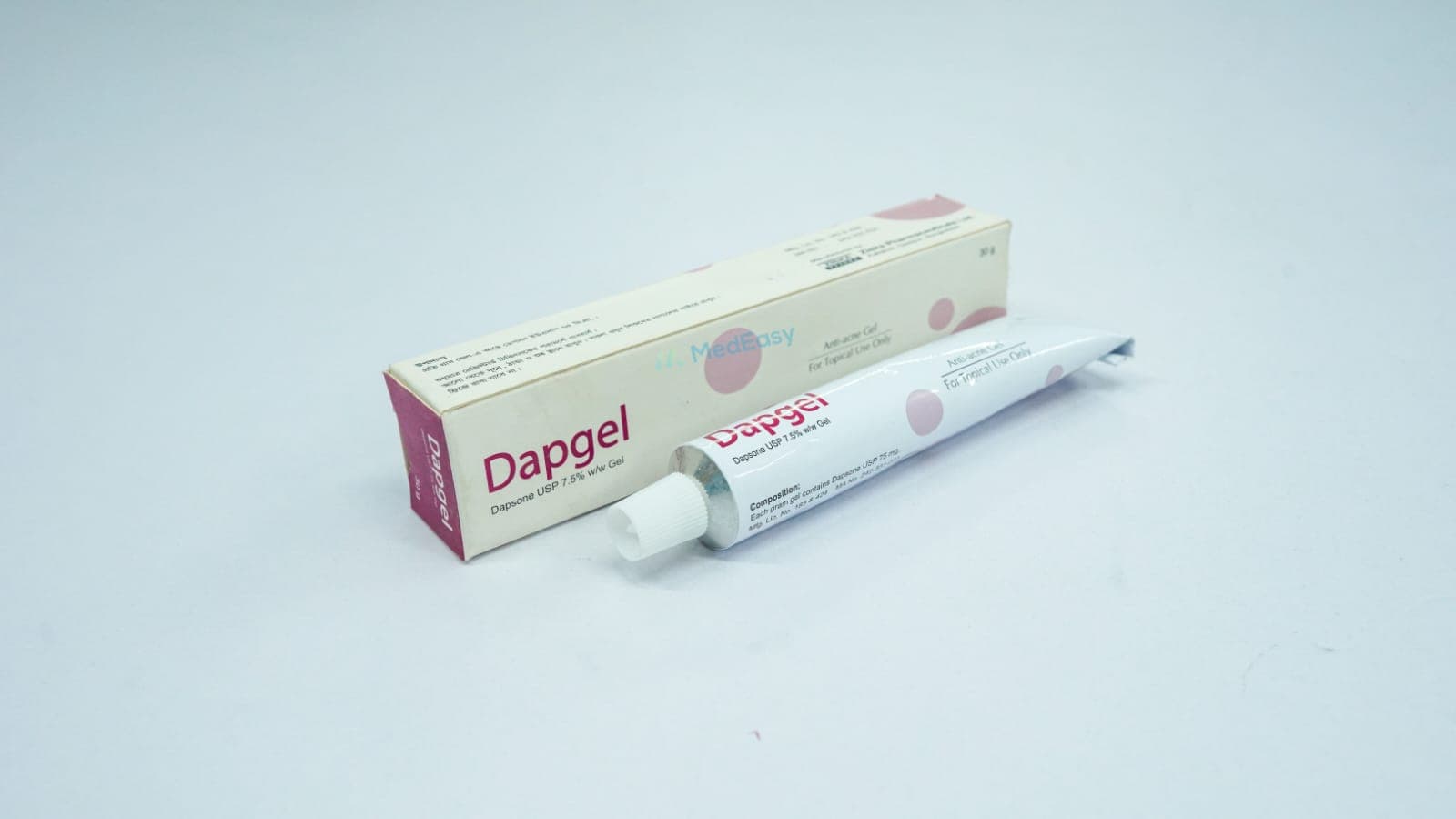

Medicine overview
Indications of Dapgel
Dapgel is a sulfone-class antibacterial and anti-inflammatory agent used for the following indications:
Established / FDA-approved uses
- Leprosy (Hansen's disease): Dapgel is a core component of WHO-recommended multidrug therapy (MDT) for both paucibacillary and multibacillary leprosy, used in combination with other antileprosy drugs (e.g., rifampicin, clofazimine) to prevent resistance.
- Dermatitis herpetiformis (DH): Dapgel is first-line therapy for the skin manifestations of DH, often used alongside a gluten-free diet.
- Acne vulgaris (topical gel, 5%/7.5%): approved for topical treatment of acne vulgaris in patients 12 years of age and older.
Guideline-supported off-label use
- Pneumocystis jirovecii pneumonia (PCP) prophylaxis: an alternative agent (per CDC/NIH opportunistic infection guidelines) for primary or secondary PCP prophylaxis in immunocompromised patients (e.g., HIV infection) who cannot tolerate trimethoprim-sulfamethoxazole; sometimes combined with pyrimethamine and leucovorin for added toxoplasmosis prophylaxis.
Other off-label dermatologic uses (variable evidence)
- Bullous pemphigoid, linear IgA bullous dermatosis, subcorneal pustular dermatosis, and selected neutrophilic/vasculitic skin disorders, used under specialist supervision.
Dapgel is not effective against sulfone-resistant strains of Mycobacterium leprae.
Composition
Each oral tablet contains Dapsone (INN) as the active ingredient, typically in 25 mg and 100 mg strengths. Dapsone is also formulated as a topical gel (5% and 7.5% Dapsone) for dermatologic use. Exact strength, excipients, and formulation vary by manufacturer — refer to the specific product's label for full composition.
Description
Dapgel is a synthetic sulfone derivative with combined antimicrobial and anti-inflammatory properties. It has been used for decades as the backbone antileprosy agent and, separately, as a treatment for dermatitis herpetiformis and certain neutrophilic dermatoses. A topical gel formulation of Dapgel is also used for inflammatory acne.
Dapgel is available as oral tablets (for systemic use) and as a topical gel; the appropriate formulation and dose depend entirely on the indication being treated.
Therapeutic Class
Sulfone antibacterial and anti-inflammatory agent; antileprosy drug; topical anti-acne agent (Dapgel gel).
Pharmacology
Dapsone has two distinct, clinically relevant actions:
- Antimicrobial action: like sulfonamides, Dapsone competitively inhibits dihydropteroate synthase, blocking bacterial folic acid synthesis. This gives it bacteriostatic activity against Mycobacterium leprae.
- Anti-inflammatory / immunomodulatory action: independent of its antimicrobial effect, Dapsone inhibits neutrophil myeloperoxidase-mediated production of toxic oxygen species and suppresses neutrophil chemotaxis and adhesion. This underlies its efficacy in dermatitis herpetiformis, neutrophilic dermatoses, and inflammatory acne.
Dapsone is well absorbed orally, extensively bound to plasma proteins, metabolized in the liver (N-acetylation and N-hydroxylation to the hydroxylamine metabolite responsible for hemolysis/methemoglobinemia), enterohepatically recirculated, and has a long elimination half-life (approximately 10–50 hours), permitting once-daily dosing.
Dosage & Administration of Dapgel
Dosage of Dapgel is individualized by indication. It should always be taken exactly as prescribed by a physician.
| Indication | Adult dose | Pediatric dose |
|---|---|---|
| Leprosy (WHO-MDT) | 100 mg once daily, combined with other antileprosy drugs, for the duration specified by the WHO MDT regimen (6 months for paucibacillary, 12 months for multibacillary disease) | Weight-based dose (approximately 1–2 mg/kg/day) per WHO pediatric MDT blister-pack regimens |
| Dermatitis herpetiformis | Initially 50 mg/day, titrated as needed within a 50–300 mg/day range to control skin lesions, then reduced to the lowest effective maintenance dose | Correspondingly smaller weight-based doses under specialist supervision |
| PCP prophylaxis (off-label) | Typically 100 mg once daily (regimens vary; may be combined with pyrimethamine/leucovorin) per treating physician's guidance | Weight-based dosing per pediatric infectious disease guidance |
| Acne vulgaris (topical gel) | Apply a thin layer to affected areas once daily (7.5% gel) or twice daily (5% gel) after cleansing | Approved for patients 12 years and older; same application instructions |
Dapgel tablets are usually taken orally, with or without food. See Precautions for required baseline and monitoring tests (G6PD status, complete blood count).
Administration of Dapgel
Oral Dapgel tablets may be swallowed whole with water, with or without food, at approximately the same time each day. Topical Dapgel gel should be applied only to clean, dry skin in a thin layer, avoiding the eyes, mouth, and mucous membranes.
Because Dapgel is used as an antimicrobial agent in leprosy treatment, patients must take it exactly as prescribed by their physician; do not stop, extend, skip doses, or share this medicine with others without medical advice, as incomplete therapy can promote drug resistance and disease relapse.
If a dose is missed, take it as soon as remembered unless it is nearly time for the next dose; do not double the dose. Consult a physician or pharmacist for guidance specific to your treatment regimen.
Interaction of Dapgel
Dapgel has the following well-established, clinically significant interactions:
- Rifampicin/rifampin: induces hepatic metabolism of Dapgel, reducing its plasma levels by roughly 7- to 10-fold, which may reduce efficacy against leprosy despite this combination being standard MDT therapy under close monitoring.
- Folate antagonists (e.g., pyrimethamine, trimethoprim): co-administration increases the risk of hematologic toxicity (hemolysis, agranulocytosis) due to additive bone-marrow and folate-pathway effects; trimethoprim also raises plasma concentrations of both Dapgel and itself by mutual inhibition of metabolism.
- Other oxidizing or hemolysis-promoting drugs: concurrent use with other agents known to cause hemolysis or methemoglobinemia (e.g., certain antimalarials, nitrites) increases the risk of these Dapgel-related adverse effects, particularly in G6PD-deficient patients.
- Probenecid: may reduce renal clearance of Dapgel, increasing its plasma levels.
Contraindications
Dapsone is contraindicated in patients with known hypersensitivity to Dapsone or other sulfone compounds. There are no other well-established absolute contraindications; other risk factors (e.g., G6PD deficiency, hepatic impairment) require caution and monitoring rather than being absolute contraindications — see Precautions and Warnings.
Side Effects of Dapgel
Adverse effects of Dapgel range from common and mild to rare but serious:
Serious / boxed-warning-class risks
- Hemolytic anemia: dose-related; significantly more severe in patients with G6PD deficiency.
- Methemoglobinemia: presents with cyanosis, fatigue, and shortness of breath.
- Agranulocytosis: rare but potentially fatal; occurs more often early in treatment.
- Peripheral neuropathy: rare, predominantly motor, usually reversible with dose reduction or discontinuation.
- Dapgel hypersensitivity syndrome (a DRESS-type reaction): fever, rash, lymphadenopathy, and hepatitis, typically within the first weeks of therapy.
Common effects
- Headache, nausea, vomiting, and loss of appetite (oral use).
- Application-site dryness, peeling, erythema, or oiliness (topical gel).
Patients should seek urgent medical attention for unusual paleness, fatigue, blue-tinged skin/lips, fever with rash, sore throat, or unusual bruising/bleeding while on Dapgel.
Pregnancy & Lactation
Pregnancy: Dapgel is classified under the older FDA pregnancy category C. It should be used during pregnancy only if clearly needed and the potential benefit justifies the potential risk to the fetus; treatment decisions should be made in consultation with a physician, and folic acid supplementation is often recommended.
Lactation: Dapgel is excreted into breast milk in substantial amounts and has been associated with hemolytic reactions in breastfed neonates, particularly those with G6PD deficiency. Dapgel should be used during breastfeeding only under medical supervision, with the infant monitored for signs of hemolysis (e.g., jaundice, pallor).
Precautions & Warnings
Before and during treatment with Dapgel, the following precautions apply:
- G6PD testing: screen for glucose-6-phosphate dehydrogenase (G6PD) deficiency before starting systemic Dapgel, as this significantly increases the risk of hemolytic anemia (see Side Effects).
- Blood count monitoring: obtain complete blood counts weekly for the first month, monthly for the next six months, and periodically thereafter, to detect early agranulocytosis or other blood dyscrasias.
- Neurologic monitoring: discontinue Dapgel promptly if muscle weakness or other signs of peripheral neuropathy develop.
- Hypersensitivity syndrome: monitor for fever, rash, and lymphadenopathy in the first several weeks of therapy; discontinue immediately if these occur.
- Hepatic impairment: use with caution, as Dapgel is hepatically metabolized; dose reduction or closer monitoring may be needed.
- Concurrent hemolysis-risk drugs: use caution when combining Dapgel with other drugs that increase hemolysis or methemoglobinemia risk.
- Antimicrobial stewardship: when used for leprosy, take Dapgel exactly as prescribed by your physician; do not stop, extend, skip doses, or share this medicine with others without medical advice, and complete the full WHO multidrug therapy course to prevent resistance and relapse.
Overdose Effects of Dapgel
Overdose of Dapgel may cause nausea, vomiting, hyperexcitability, and — most notably — methemoglobinemia (cyanosis, shortness of breath, fatigue) and hemolysis, which can appear within 24 hours and may be delayed or prolonged due to Dapgel's long half-life and enterohepatic recirculation.
Suspected Dapgel overdose is a medical emergency: seek immediate medical attention or contact a poison control center/emergency services right away. Do not attempt to manage a suspected overdose at home; hospital-based supportive care and specific antidotal treatment (administered only by medical professionals, with special caution required in G6PD-deficient individuals) may be needed.
Storage Conditions
Store at room temperature (20-25°C/68-77°F), protected from light and moisture. Keep out of reach of children.
Use In Special Populations
- G6PD-deficient patients: at markedly increased risk of hemolytic anemia and methemoglobinemia with Dapgel; screening before starting systemic therapy is recommended (see Precautions).
- Hepatic impairment: use Dapgel with caution; no formally established dose-adjustment schedule exists, so clinical monitoring is advised.
- Renal impairment: no well-established dose adjustment is required, but patients should be monitored, since accumulation of metabolites may occur.
- Elderly patients: no specific dose adjustment is established; monitor closely for hematologic and neurologic adverse effects.
- Pediatric patients: see Pediatric Uses.
- Pregnant/breastfeeding patients: see Pregnancy and Lactation.
Duration Of Treatment
Duration of Dapgel therapy depends on the indication:
- Leprosy: per WHO MDT protocol — 6 months for paucibacillary disease, 12 months for multibacillary disease (or longer per national program guidance); the full course must be completed.
- Dermatitis herpetiformis: often long-term, at the lowest effective maintenance dose, alongside a gluten-free diet.
- PCP prophylaxis: continued for as long as the underlying immunosuppression risk persists, per the treating physician's assessment.
- Acne (topical gel): as directed by the prescriber; response is typically assessed after approximately 12 weeks.
Drug Classes
Sulfones; antileprosy agents; antibacterial agents; topical anti-acne agents.
Mode Of Action
Dapsone acts through two mechanisms:
- It competitively inhibits bacterial dihydropteroate synthase, blocking folate synthesis and producing bacteriostatic activity against Mycobacterium leprae — the basis for its antileprosy effect.
- Independently, it inhibits neutrophil myeloperoxidase-halide-mediated cytotoxic activity and reduces neutrophil chemotaxis, giving it anti-inflammatory effects used to treat dermatitis herpetiformis and inflammatory acne, which are not primarily infectious conditions.
Pregnancy
C
Pediatric Uses
Dapgel pediatric use varies by indication:
- Leprosy: pediatric patients are treated on the same MDT schedule as adults but with correspondingly smaller, weight-based doses, per WHO pediatric leprosy treatment guidelines.
- Dermatitis herpetiformis: used in children with correspondingly reduced doses under specialist supervision; controlled pediatric data are limited.
- Acne (topical gel): approved for patients 12 years of age and older; safety and efficacy in children younger than 12 have not been established.
- PCP prophylaxis: weight-based dosing may be used off-label in immunocompromised children per pediatric infectious disease guidance; safety and efficacy for this specific use are not formally established in labeling.
Frequently Asked Questions
Q: What is Dapgel 7.5% Gel used for?
A: Dapgel 7.5% Gel is used to treat leprosy (as part of combination therapy), dermatitis herpetiformis, and, as a topical gel, acne vulgaris. It is also used off-label to help prevent Pneumocystis jirovecii pneumonia in some immunocompromised patients.
Q: Do I need any tests before starting Dapgel 7.5% Gel?
A: Yes. Before starting oral Dapgel 7.5% Gel, your doctor will typically test for glucose-6-phosphate dehydrogenase (G6PD) deficiency, because Dapgel 7.5% Gel can cause more severe hemolytic anemia in people with this condition. Regular blood count monitoring is also recommended during treatment, especially in the first several months, to catch rare but serious effects such as agranulocytosis.
Q: Can I stop taking Dapgel 7.5% Gel once I feel better?
A: No. If you are taking Dapgel 7.5% Gel as part of leprosy treatment, you must complete the full prescribed multidrug therapy course exactly as directed by your physician. Do not stop, extend, skip doses, or share this medicine with others without medical advice — stopping early can allow the infection to relapse or become resistant to treatment.
Q: Is Dapgel 7.5% Gel safe during pregnancy or breastfeeding?
A: Dapgel 7.5% Gel falls under pregnancy category C, meaning it should be used in pregnancy only if clearly needed and if the benefit outweighs potential risk to the baby, under a physician's guidance. It also passes into breast milk in significant amounts and can rarely cause hemolytic problems in a nursing infant, so breastfeeding while taking Dapgel 7.5% Gel should be supervised by a doctor, with the baby monitored for signs such as jaundice or unusual paleness.
Q: What side effects should prompt me to call my doctor right away?
A: Contact your doctor immediately if you notice unusual paleness or fatigue, yellowing of the skin or eyes, blue-tinged lips or skin, fever with rash or sore throat, unusual bruising or bleeding, or muscle weakness while taking Dapgel 7.5% Gel. These may signal serious effects such as hemolytic anemia, methemoglobinemia, agranulocytosis, or peripheral neuropathy, which need prompt medical evaluation.
Q: What should I do if I take too much Dapgel 7.5% Gel or someone overdoses?
A: An overdose of Dapgel 7.5% Gel is a medical emergency. Seek immediate medical attention or contact emergency services or a poison control center right away rather than trying to manage it at home, since overdose can cause serious methemoglobinemia and hemolysis that require hospital-based treatment.
Disclaimer
The information provided is accurate to the best of our knowledge, but it does not replace professional medical advice. We cannot guarantee its completeness or accuracy, and the absence of specific information about a drug should not be taken as an endorsement. We are not responsible for any consequences arising from this information, so please consult a healthcare professional for any concerns or questions.
