
10% Off
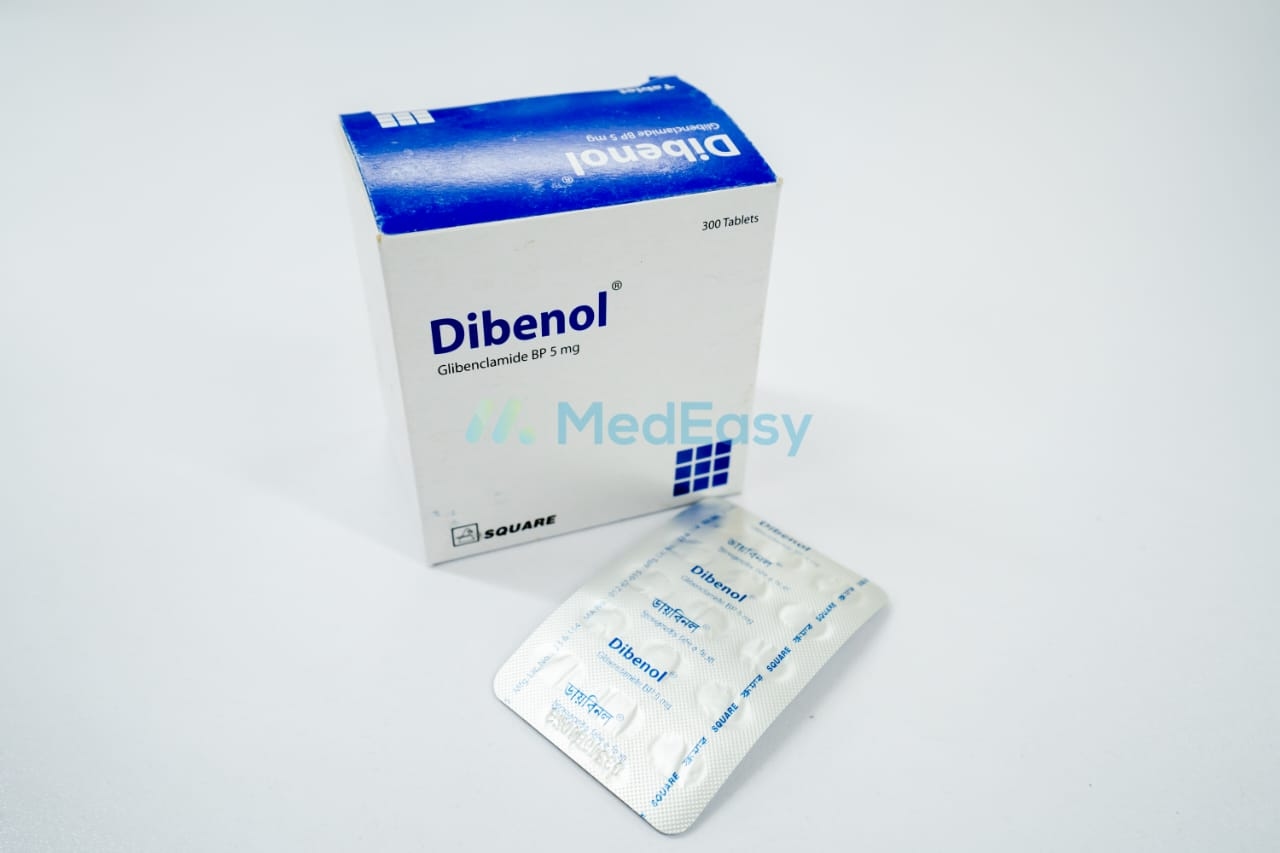
Dibenol5 mg
Square Pharmaceuticals PLC.
৳4.72
Add to cart


Dicon is indicated as an adjunct to diet and exercise to improve glycemic control in adults with type 2 diabetes mellitus.
Dicon is also used, under a physician's supervision, in combination with metformin or other antidiabetic agents when diet, exercise, and a single agent do not achieve adequate glycemic control.
Dicon is not indicated for type 1 diabetes mellitus or diabetic ketoacidosis, which require insulin therapy.
Each tablet contains Glibenclamide (also known as glyburide) as the active ingredient, commonly available in strengths of 2.5 mg and 5 mg for oral administration. Tablets also contain standard pharmaceutical excipients such as binders, fillers, and disintegrants.
Dicon is an oral, second-generation sulfonylurea used to lower blood glucose levels in adults with type 2 diabetes mellitus. It works mainly by stimulating the pancreas to release more insulin.
Dicon is intended for use alongside diet control and regular physical activity, and it is one of the longer-acting sulfonylureas available, generally taken once or twice daily.
Dicon belongs to the sulfonylurea class of oral antidiabetic (hypoglycemic) agents, specifically the second-generation sulfonylureas.
Glibenclamide lowers blood glucose acutely by stimulating the release of insulin from the beta cells of the pancreas. It binds to the sulfonylurea receptor (SUR1) on pancreatic beta-cell ATP-sensitive potassium channels, causing the channels to close, the cell membrane to depolarize, and calcium to enter the cell — this triggers insulin secretion.
With long-term use, the blood glucose-lowering effect of Glibenclamide appears to persist even as the acute insulin-releasing response declines, suggesting additional extrapancreatic (peripheral tissue insulin sensitivity) effects.
Glibenclamide is well absorbed orally, extensively bound to plasma proteins, metabolized in the liver, and has a relatively long duration of action, which allows once- or twice-daily dosing.
| Stage | Dose |
|---|---|
| Initial dose | 2.5–5 mg once daily with breakfast or the first main meal |
| Sensitive patients (elderly, malnourished, renal/hepatic impairment) | Start at 1.25 mg once daily |
| Titration | Increase in increments of no more than 2.5 mg at weekly intervals, based on blood glucose response |
| Maintenance | 1.25–20 mg daily, given once daily or in two divided doses |
| Maximum | Daily doses above 20 mg of Dicon are not recommended |
Patients with renal or hepatic impairment are at increased risk of prolonged hypoglycemia with Dicon; a conservative starting dose (e.g., 1.25 mg daily) and close monitoring are advised, and significant impairment often favors an alternative, shorter-acting agent (see Precautions).
Dicon is not established for use in children (see Pediatric Use).
Dicon tablets should be taken by mouth with breakfast or the first main meal of the day, at approximately the same time each day. Swallow the tablet with a glass of water; do not skip meals after taking Dicon, as this increases the risk of hypoglycemia (low blood sugar). If a dose is missed, it should not be doubled — consult a physician or pharmacist for guidance.
Glibenclamide is contraindicated in patients with:
Hypoglycemia is the principal and most important adverse effect of Dicon; severe episodes with coma, seizure, or other neurological impairment occur infrequently but can be serious, particularly because Dicon has a long duration of action (see Precautions and Overdose).
Dicon should be used during pregnancy only if the potential benefit clearly justifies the potential risk to the fetus; insulin is generally the preferred treatment for diabetes during pregnancy to achieve tight glucose control. If a sulfonylurea such as Dicon is used, it is typically discontinued at least two weeks before the expected delivery date, since prolonged, severe neonatal hypoglycemia has been reported in infants of mothers who received a sulfonylurea near delivery. Consult a physician before use during pregnancy.
It is not known whether Dicon passes into human breast milk; because of the potential for neonatal hypoglycemia, a decision should be made, in consultation with a physician, whether to discontinue nursing or discontinue Dicon, taking into account the importance of the drug to the mother.
All sulfonylureas, including Dicon, can cause severe hypoglycemia. Because Dicon has a long duration of action, hypoglycemia may be prolonged and severe, especially in elderly patients, those with irregular meal patterns, or those with renal or hepatic impairment. Patients should be educated to recognize and manage hypoglycemia (sweating, tremor, confusion, hunger) promptly.
Use Dicon with extra caution, at a lower starting dose, in patients with renal or hepatic impairment; significant impairment often favors avoiding Dicon in favor of a shorter-acting antidiabetic agent because of the increased risk of prolonged hypoglycemia.
Elderly patients are at higher risk of severe, prolonged hypoglycemia with Dicon; a shorter-acting sulfonylurea or alternative agent is often preferred in this population.
Dicon and other sulfonylureas may cause hemolytic anemia in patients with glucose-6-phosphate dehydrogenase (G6PD) deficiency; a non-sulfonylurea alternative should be considered in these patients.
Older studies raised concern about a possible increase in cardiovascular mortality with sulfonylureas compared with diet alone or other treatments; this should be discussed with patients as a precaution when considering Dicon therapy, though it is not an absolute contraindication.
The effectiveness of Dicon may diminish over time or during periods of stress, fever, trauma, surgery, or infection; temporary insulin therapy may be required.
Overdose of Dicon primarily causes hypoglycemia, which may present as sweating, tremor, palpitations, confusion, hunger, weakness, and in severe cases, seizures, coma, or neurological impairment.
Mild hypoglycemia can often be treated promptly with oral glucose or sugar. However, any suspected Dicon overdose or severe/prolonged hypoglycemia is a medical emergency — seek immediate medical attention or contact emergency services / a poison control center right away. Hospitalization and close monitoring (often for 24–48 hours) may be required, as hypoglycemia can recur after apparent recovery due to the long duration of action of Dicon. Do not attempt to manage severe hypoglycemia from Dicon overdose at home without professional medical guidance.
Store at room temperature (below 30°C), away from light and moisture. Keep out of reach of children.
Use Dicon with caution and at reduced starting doses; significant renal impairment increases the risk of prolonged hypoglycemia and often warrants an alternative agent (see Precautions).
Use Dicon with caution and close monitoring, as impaired hepatic metabolism can prolong its glucose-lowering effect and increase hypoglycemia risk.
Start at the lowest effective dose (e.g., 1.25 mg daily) due to increased sensitivity to the hypoglycemic effects of Dicon (see Precautions).
Safety and efficacy of Dicon in children have not been established; its use in this population is not recommended (see Pediatric Uses).
See Pregnancy and Lactation section above.
Dicon is generally used as a long-term, ongoing treatment for type 2 diabetes mellitus, alongside diet and exercise. Treatment duration and dose are determined and periodically reassessed by the treating physician based on blood glucose control (e.g., HbA1c), tolerability, and any changes in kidney or liver function.
Sulfonylureas (second-generation); Oral antidiabetic (hypoglycemic) agents. Glibenclamide is classified within this drug class.
Glibenclamide acts primarily by binding to sulfonylurea receptors (SUR1) on pancreatic beta-cell ATP-sensitive potassium (K-ATP) channels, closing these channels. This causes cell membrane depolarization, opening of voltage-gated calcium channels, calcium influx, and subsequent release of insulin from storage granules. The result is an increase in circulating insulin and a reduction in blood glucose.
C
The safety and efficacy of Dicon in pediatric patients have not been established. Dicon is not recommended for use in children, and alternative, better-studied treatments should be considered under pediatric endocrinology or specialist guidance.
Q: What is Dicon 5 mg Tablet used for?
A: Dicon 5 mg Tablet is used to help control blood sugar levels in adults with type 2 diabetes mellitus, alongside a proper diet and regular exercise.
Q: How should I take Dicon 5 mg Tablet?
A: Take Dicon 5 mg Tablet by mouth with breakfast or your first main meal of the day, at the same time each day, exactly as prescribed by your physician. Do not skip meals after taking a dose.
Q: What is the most important side effect of Dicon 5 mg Tablet to watch for?
A: The most important side effect is hypoglycemia (low blood sugar), which can be prolonged and severe with Dicon 5 mg Tablet because of its long duration of action. Warning signs include sweating, shaking, confusion, and hunger — treat promptly with sugar or glucose and seek medical help if severe.
Q: Can I take Dicon 5 mg Tablet if I am pregnant or breastfeeding?
A: Dicon 5 mg Tablet should only be used in pregnancy if a physician determines the benefit outweighs the potential risk to the baby, since insulin is usually preferred for tight blood sugar control in pregnancy; it is often stopped before delivery. If breastfeeding, discuss with your physician, as it is not known whether Dicon 5 mg Tablet passes into breast milk and it could cause low blood sugar in the infant.
Q: Who should not take Dicon 5 mg Tablet?
A: Dicon 5 mg Tablet should not be used by people with a known allergy to Dicon 5 mg Tablet or other sulfonylurea medicines, people with type 1 diabetes, or people in diabetic ketoacidosis — these patients require insulin instead.
Q: Can Dicon 5 mg Tablet be taken with other medicines?
A: Some medicines (such as NSAIDs, certain antibiotics, and alcohol) can increase the risk of low blood sugar with Dicon 5 mg Tablet, while others (such as steroids or rifampin) can make it work less well. Always tell your physician or pharmacist about all medicines you take before starting Dicon 5 mg Tablet.
Disclaimer
The information provided is accurate to the best of our knowledge, but it does not replace professional medical advice. We cannot guarantee its completeness or accuracy, and the absence of specific information about a drug should not be taken as an endorsement. We are not responsible for any consequences arising from this information, so please consult a healthcare professional for any concerns or questions.
