
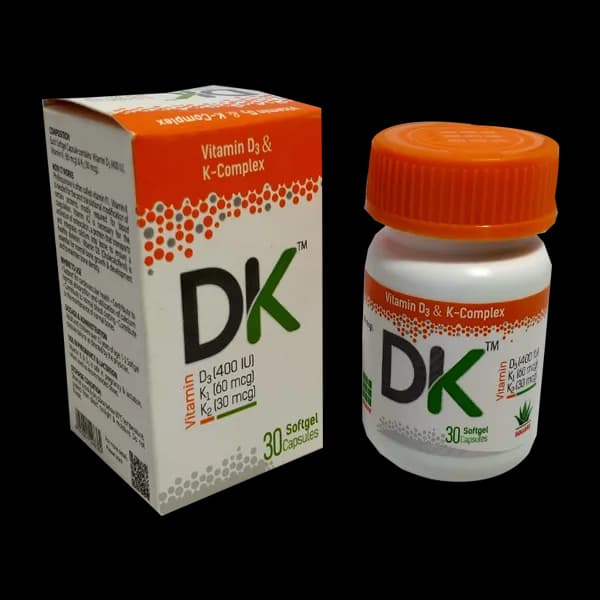

Medicine overview
Indications of DK
DK is a combination fat-soluble vitamin supplement containing cholecalciferol (vitamin D3), phylloquinone (vitamin K1), and menaquinone (vitamin K2). It is used for the following purposes, classified by strength of evidence:
Established/guideline-supported uses
- Prevention and treatment of combined vitamin D and vitamin K insufficiency/deficiency in individuals with inadequate dietary intake or limited sun exposure.
- Supportive therapy for bone health, as an adjunct to adequate calcium intake, in individuals at risk of low bone mineral density (e.g., postmenopausal women, older adults), used alongside — not as a replacement for — physician-directed osteoporosis therapy where indicated.
Adjunct / evidence-evolving uses
- Supporting the body's calcium-regulation pathway, based on the physiological premise that vitamin D increases intestinal calcium absorption while vitamin K (via carboxylation of osteocalcin and matrix Gla-protein) helps direct that calcium toward bone rather than soft tissue and blood vessel walls. Clinical evidence for a measurable added cardiovascular or fracture-reduction benefit of combining vitamin D3 with vitamin K1/K2, compared with vitamin D alone, is still evolving and not yet conclusively established in large outcome trials.
- General dietary supplementation to help meet recommended daily allowances of vitamins D and K in people with restricted diets, malabsorption risk factors, or increased requirements.
This product is a dietary/nutritional supplement rather than a treatment for a specific diagnosed disease, and it does not replace prescribed medical therapy for osteoporosis, cardiovascular disease, or diagnosed vitamin deficiency requiring high-dose prescription repletion.
Composition
Each dose unit of Vitamin D3 + Vitamin K1 + Vitamin K2 typically provides:
- Vitamin D3 (Cholecalciferol) — commonly 1000–2000 IU (25–50 mcg) per dose, depending on product strength.
- Vitamin K1 (Phylloquinone) — commonly 10–100 mcg per dose, depending on product strength.
- Vitamin K2 (Menaquinone, e.g., MK-7 or MK-4 form) — commonly 45–100 mcg per dose, depending on product strength.
Exact strengths vary by manufacturer and formulation (tablet, capsule, or oral drops); always check the product label/pack insert for the specific quantities in the formulation dispensed.
Description
DK is an oral combination supplement of three fat-soluble vitamins. Vitamin D3 (cholecalciferol) is the form of vitamin D naturally produced in human skin on sun exposure and is more effectively converted to the active hormone calcitriol than plant-derived vitamin D2. Vitamin K1 (phylloquinone) is the primary dietary form of vitamin K, found in green leafy vegetables, and is essential for hepatic synthesis of clotting factors. Vitamin K2 (menaquinone) is produced by gut bacteria and found in fermented foods; it is preferentially used by extrahepatic tissues such as bone and blood vessels.
Combining these three vitamins is intended to support the full calcium-handling pathway: vitamin D increases calcium absorption from the intestine, while vitamin K1 and K2 activate calcium-binding proteins (osteocalcin in bone, matrix Gla-protein in blood vessels) that help direct absorbed calcium into bone rather than allowing it to deposit in soft tissue and arterial walls.
Therapeutic Class
DK belongs to the therapeutic class of fat-soluble vitamin supplements, specifically the combined vitamin D and vitamin K nutritional supplement category, used for bone metabolism and calcium-homeostasis support.
Pharmacology
Vitamin D3 + Vitamin K1 + Vitamin K2 combines three fat-soluble vitamins with complementary roles in calcium metabolism:
Vitamin D3 (Cholecalciferol)
Vitamin D3 is hydroxylated in the liver to 25-hydroxyvitamin D and then in the kidney to the active hormone 1,25-dihydroxyvitamin D (calcitriol). Calcitriol increases intestinal absorption of calcium and phosphate, supports bone mineralization, and helps regulate parathyroid hormone secretion.
Vitamin K1 (Phylloquinone) and Vitamin K2 (Menaquinone)
Both forms of vitamin K act as cofactors for the enzyme gamma-glutamyl carboxylase, which converts specific glutamate residues to gamma-carboxyglutamate (Gla) on vitamin K-dependent proteins. This carboxylation is required to activate: (a) clotting factors II, VII, IX, and X in the liver (mainly vitamin K1's classical role); and (b) osteocalcin in bone and matrix Gla-protein (MGP) in vascular tissue, which regulate binding of calcium to the bone matrix and inhibit calcium deposition in blood vessel walls (a role in which vitamin K2 is thought to be particularly active due to its longer tissue half-life and extrahepatic distribution).
Through this combined mechanism, Vitamin D3 + Vitamin K1 + Vitamin K2 is intended to increase available calcium (via vitamin D) while promoting its appropriate deposition into bone rather than soft tissue (via vitamin K1/K2), although the magnitude of added clinical benefit from combining these vitamins over vitamin D alone continues to be studied.
Dosage & Administration of DK
Dosing of DK depends on the specific product strength and the indication. The following is general guidance; always follow the product label or a physician's/pharmacist's specific instructions.
| Population/Indication | Typical Dose |
|---|---|
| Adults — general supplementation/maintenance | One dose unit (as labeled) once daily, or as directed, providing the vitamin D3/K1/K2 amounts stated on the pack |
| Adults — diagnosed vitamin D insufficiency (physician-directed) | Higher-strength vitamin D repletion regimens may be prescribed separately by a physician; this combination product is generally used for maintenance, not high-dose deficiency correction |
| Elderly / postmenopausal individuals (bone health support) | As directed by physician, typically one dose unit daily, alongside adequate dietary calcium intake |
| Children | Not generally recommended without pediatric medical advice; see Use in Special Populations |
Administration: Take orally, preferably with a meal containing some fat, as vitamin D and vitamin K are fat-soluble and absorption is improved when taken with food. Swallow tablets/capsules whole with water unless the product is designed to be chewed or taken as drops. Do not exceed the labeled daily dose. Do not combine with other vitamin D or vitamin K–containing supplements without medical advice, to avoid exceeding recommended total daily intake.
Administration of DK
DK is administered orally, ideally with a meal containing fat to enhance absorption of these fat-soluble vitamins. Follow the specific administration instructions (swallowing whole, chewing, or drops mixed with food/liquid) provided on the product label, as formulations vary by manufacturer.
Interaction of DK
DK has the following clinically significant interactions:
Vitamin K antagonist anticoagulants (e.g., warfarin)
This is the single most important interaction. The vitamin K1 and vitamin K2 components directly oppose the mechanism of action of warfarin and other vitamin K antagonists, which work by inhibiting vitamin K–dependent activation of clotting factors. Taking DK together with warfarin can significantly reduce anticoagulant efficacy, lower the INR, and increase the risk of thromboembolic events (e.g., stroke, clot). Concurrent use should generally be avoided; if considered medically necessary, it requires close INR monitoring and dose coordination with the prescribing physician.
Calcium supplements and calcium-containing antacids
Combining with high-dose calcium supplements may increase the risk of hypercalcemia when taken together with the vitamin D component; monitor calcium intake from all sources.
Thiazide diuretics
Concomitant use with thiazide diuretics may increase the risk of hypercalcemia in susceptible individuals (e.g., those with hypoparathyroidism), due to reduced renal calcium excretion combined with vitamin D–enhanced calcium absorption.
Orlistat, cholestyramine, and other fat/bile-acid–binding agents
These may reduce the intestinal absorption of fat-soluble vitamins D and K, reducing the effectiveness of DK; separate dosing times where possible and consult a physician.
Certain anticonvulsants and corticosteroids
Long-term use of some anticonvulsants (e.g., phenytoin, phenobarbital) and corticosteroids can accelerate vitamin D metabolism/reduce its effect, potentially warranting dose adjustment under medical supervision.
Contraindications
Vitamin D3 + Vitamin K1 + Vitamin K2 is contraindicated in:
- Known hypersensitivity to vitamin D3, vitamin K1, vitamin K2, or any excipient in the formulation.
- Hypercalcemia or conditions of pathologic calcium hypersensitivity (e.g., some granulomatous diseases, certain malignancies) where additional vitamin D would worsen calcium elevation.
- Hypervitaminosis D or vitamin D toxicity.
Concurrent use with vitamin K antagonist anticoagulants (e.g., warfarin) should be avoided unless under close medical supervision with INR monitoring, due to the significant reduction in anticoagulant efficacy this combination can cause (see Interactions for full detail).
Side Effects of DK
DK is generally well tolerated at recommended supplement doses. Reported side effects are usually mild and include:
- Gastrointestinal upset: mild nausea, constipation, or stomach discomfort.
- Headache.
- Mild allergic-type skin reactions (rash, itching) in sensitive individuals.
Symptoms of excessive intake/toxicity (typically only with doses well above the recommended daily amount, sustained over time) can include those of hypercalcemia — nausea, vomiting, weakness, frequent urination, confusion, and in severe cases kidney problems or abnormal heart rhythm; these are uncommon at labeled supplement doses. Seek medical advice if such symptoms occur.
Pregnancy & Lactation
DK should be used during pregnancy and breastfeeding only if clearly needed and only at doses within recommended daily allowances, and after consulting a physician. Adequate vitamin D and vitamin K intake is important during pregnancy and lactation for maternal and fetal/infant bone health, but doses should not exceed those recommended for pregnant/lactating women, as excessive vitamin D intake has been associated with risk of maternal and fetal hypercalcemia. A physician or obstetric provider should confirm appropriate dosing and duration; self-directed supplementation above standard recommended amounts is not advised.
Precautions & Warnings
Use DK with caution in the following situations:
- Renal impairment: Calcium and vitamin D handling is altered in kidney disease; there is increased risk of hypercalcemia and vascular/soft-tissue calcification. Use only under medical supervision with monitoring of calcium, phosphate, and renal function.
- Avoid exceeding total daily vitamin D intake: Account for vitamin D from all sources (diet, sunlight, other supplements, fortified foods) to avoid cumulative excess and risk of hypercalcemia/vitamin D toxicity.
- Hepatic impairment: Liver disease may impair activation of vitamin D and synthesis of vitamin K–dependent clotting factors; use with medical guidance.
- Patients on anticoagulant therapy: See Interactions and Contraindications — the vitamin K content can significantly reduce the effectiveness of warfarin-type anticoagulants.
- Sarcoidosis and other granulomatous disorders, hyperparathyroidism: These conditions increase sensitivity to vitamin D–induced hypercalcemia; use only under specialist supervision.
- Evidence limitations: The added cardiovascular and bone-density benefit of combining vitamin D3 with vitamin K1/K2, over vitamin D alone, is still being studied; this product should be viewed as a nutritional supplement rather than a substitute for prescribed medical treatment of osteoporosis or cardiovascular disease.
Overdose Effects of DK
Overdose of DK, generally from prolonged intake well above recommended daily amounts, can cause vitamin D toxicity with hypercalcemia (nausea, vomiting, weakness, confusion, excessive thirst, frequent urination, kidney impairment) and, rarely, effects related to excess vitamin K such as altered clotting parameters in individuals on anticoagulant therapy. If overdose is suspected, stop the product and seek immediate medical attention or contact a poison control center/emergency services; do not attempt specific home treatment. Management is supportive and directed by a physician based on clinical assessment and calcium/vitamin D levels.
Storage Conditions
Store at room temperature (below 30°C), away from light and moisture. Keep out of reach of children.
Use In Special Populations
Pediatric use: DK combination products are generally intended for adults; safety and efficacy of this specific fixed combination in children have not been well established. Age-appropriate, separately dosed vitamin D (and vitamin K where indicated, e.g., in newborns for hemorrhagic disease prevention) should follow pediatrician guidance rather than this adult-formulated combination product; see Pediatric Uses.
Elderly: Often a target population for bone-health supplementation; generally well tolerated, but renal function and concurrent medications (especially anticoagulants and calcium-affecting drugs) should be reviewed before use.
Renal impairment: Use with caution and medical supervision — see Precautions and Warnings.
Hepatic impairment: Use with medical guidance — see Precautions and Warnings.
Patients on anticoagulants: Avoid unless supervised by the prescribing physician — see Contraindications and Interactions.
Duration Of Treatment
Duration of use of DK depends on the reason for supplementation. For general maintenance of vitamin D and K status, it may be used long-term as part of a daily nutritional routine, subject to periodic review by a physician, particularly for individuals on other calcium- or vitamin D–affecting therapy. For a specific diagnosed deficiency, a physician should determine the appropriate duration and any need for monitoring of serum calcium and vitamin D levels.
Drug Classes
Fat-soluble vitamin supplement; combined Vitamin D (cholecalciferol) and Vitamin K (phylloquinone/menaquinone) nutritional supplement.
Mode Of Action
Vitamin D3 + Vitamin K1 + Vitamin K2 works through the complementary calcium-regulating actions of its components: vitamin D3 is converted to active calcitriol, which increases intestinal calcium absorption, while vitamin K1 and K2 activate the calcium-binding proteins osteocalcin (in bone) and matrix Gla-protein (in blood vessels), helping to direct absorbed calcium toward bone mineralization and away from soft-tissue/vascular deposition.
Pediatric Uses
DK as a fixed adult combination supplement is not generally recommended for children, and safety and efficacy of this specific combination in the pediatric population have not been established. Children have different, weight/age-based requirements for vitamin D and vitamin K that are usually addressed with separately formulated pediatric products under a pediatrician's guidance (for example, single-agent vitamin D drops for infants, or a one-time vitamin K injection at birth for prevention of vitamin K deficiency bleeding). Parents should consult a pediatrician before giving any vitamin D/K combination product to a child, rather than using this adult-formulated product.
Frequently Asked Questions
Q: What is DK 400 IU+60 mcg+30 mcg Capsule used for?
A: DK 400 IU+60 mcg+30 mcg Capsule is a combination supplement used to support bone health and the body's calcium-regulation pathway. Vitamin D3 helps the body absorb calcium from food, while vitamin K1 and vitamin K2 help direct that calcium into bone rather than soft tissue or blood vessels. It also helps address combined vitamin D and vitamin K insufficiency.
Q: Can I take DK 400 IU+60 mcg+30 mcg Capsule if I am on warfarin or another blood thinner?
A: Generally, no, without close medical supervision. The vitamin K1 and vitamin K2 in DK 400 IU+60 mcg+30 mcg Capsule can significantly reduce the effectiveness of warfarin and similar vitamin K antagonist anticoagulants, lowering INR and increasing clot risk. If you are on this type of anticoagulant, tell your physician before starting DK 400 IU+60 mcg+30 mcg Capsule; combined use is usually avoided or requires close INR monitoring.
Q: Is DK 400 IU+60 mcg+30 mcg Capsule safe during pregnancy or breastfeeding?
A: DK 400 IU+60 mcg+30 mcg Capsule should be used during pregnancy or breastfeeding only if clearly needed, at doses within the recommended daily allowance, and after consulting a physician, since excessive vitamin D intake has been linked to maternal and fetal hypercalcemia risk. Do not exceed recommended doses without medical advice.
Q: What are the side effects of DK 400 IU+60 mcg+30 mcg Capsule?
A: DK 400 IU+60 mcg+30 mcg Capsule is generally well tolerated. Mild side effects can include nausea, constipation, stomach discomfort, or headache. Taking much more than the recommended dose over time can cause symptoms of excess calcium (hypercalcemia) such as nausea, vomiting, weakness, and frequent urination — seek medical advice if these occur.
Q: Can children take DK 400 IU+60 mcg+30 mcg Capsule?
A: This combination product is generally formulated for adults, and its safety and efficacy in children have not been established. Children should receive vitamin D and vitamin K through separately dosed, pediatrician-recommended products rather than this adult combination.
Q: What should I do if I take too much DK 400 IU+60 mcg+30 mcg Capsule?
A: If you suspect you have taken more than the recommended dose of DK 400 IU+60 mcg+30 mcg Capsule, especially over a prolonged period, stop taking it and seek immediate medical attention or contact a poison control center, as excess intake can lead to hypercalcemia and related complications.
Disclaimer
The information provided is accurate to the best of our knowledge, but it does not replace professional medical advice. We cannot guarantee its completeness or accuracy, and the absence of specific information about a drug should not be taken as an endorsement. We are not responsible for any consequences arising from this information, so please consult a healthcare professional for any concerns or questions.
