
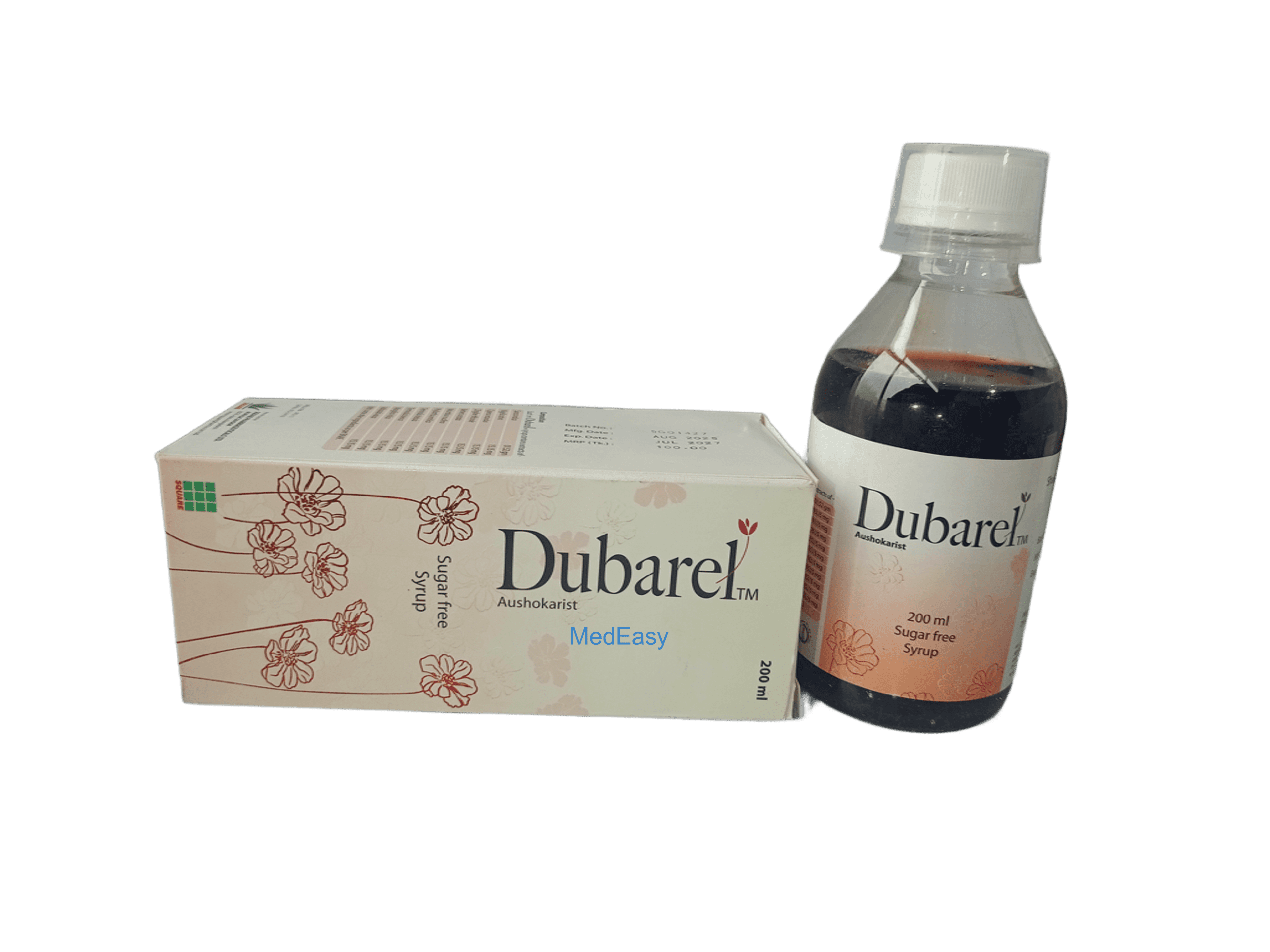

Medicine overview
Indications of Dubarel
Dubarel is a traditional Ayurvedic (arishta-type) fermented polyherbal preparation. It is not an FDA-approved pharmaceutical drug and has not been evaluated through rigorous modern clinical trials; its use is based on classical Ayurvedic texts and traditional practice rather than modern evidence-based medicine. Reported traditional uses include:
- Menstrual cycle support: traditionally used as a general tonic for menstrual irregularities and cycle regularity.
- Dysmenorrhea (menstrual discomfort): traditionally used to help ease menstrual-related discomfort.
- Leucorrhea/general gynecological tonic use: traditionally used as a supportive uterine and reproductive-health tonic in women.
These are traditional/evidence-limited indications only. Dubarel should not be used as a substitute for medical evaluation of persistent, heavy, or abnormal gynecological symptoms, and should be used only under the guidance of a qualified physician or registered Ayurvedic practitioner.
Composition
Aushokarist is a polyherbal fermented liquid (an 'arishta'-type preparation) built primarily around the bark of Ashoka (Saraca asoca), traditionally combined with other Ayurvedic herbs and a natural sugar/jaggery base that undergoes self-fermentation, producing a small amount of self-generated alcohol typical of arishta-type formulations (commonly in the range of about 3-10% v/v, depending on the manufacturer).
The exact standardized composition and proportion of ingredients for this specific product could not be independently verified from regulatory sources, and may vary by manufacturer. Patients should check the ingredient label of the specific pack of Aushokarist they are using.
Description
Dubarel (commonly known in Ayurveda as an Ashoka-bark-based 'arishta') is a traditional fermented Ayurvedic liquid formulation used as a supportive tonic for women's reproductive and menstrual health. It is prepared by fermentation, which generates a small, self-contained alcohol content, and is taken orally, usually diluted with water. As a traditional medicine product, Dubarel is not regulated or evaluated in the same way as conventional pharmaceutical drugs, and the strength of scientific evidence supporting its use is limited.
Therapeutic Class
Traditional/Ayurvedic polyherbal gynecological tonic (fermented 'arishta'-type preparation); not a modern pharmacological drug class.
Pharmacology
Classical Ayurvedic texts attribute uterine-tonic, styptic (hemostatic), and cooling properties to Ashoka (Saraca asoca) bark, the principal ingredient traditionally used in Aushokarist. Preliminary laboratory (in-vitro/animal) studies have suggested that constituents such as tannins, flavonoids, and glycosides in Ashoka bark may have antioxidant and mild uterine-modulating activity, but this has not been confirmed through well-designed human clinical trials.
There is no established, quantified modern pharmacokinetic or pharmacodynamic profile for Aushokarist as a finished product. Its traditional mode of action should be understood as evidence-limited rather than scientifically established.
Dosage & Administration of Dubarel
| Population | Typical traditional dose | Notes |
|---|---|---|
| Adult women | 15-30 mL, taken 1-2 times daily after meals, mixed with an equal quantity of water | Exact dose and duration should be individualized by a qualified physician or registered Ayurvedic practitioner; do not exceed the label-recommended dose. |
| Children | Not recommended | Safety and appropriate dosing in children have not been established; avoid use unless specifically directed by a qualified practitioner. |
| Pregnant/breastfeeding women | Avoid | See Pregnancy and Lactation section. |
Shake the bottle well before use. Dubarel should be taken exactly as directed on the label or as advised by a physician/Ayurvedic practitioner; do not use for longer than advised without medical review.
Administration of Dubarel
Dubarel is for oral use only. Shake the bottle well before each use. Measure the dose with a proper measuring cup, dilute with an equal volume of water, and take after meals unless otherwise directed. Do not take on an empty stomach if it causes discomfort.
Interaction of Dubarel
Formal drug-interaction studies for Dubarel have not been conducted. However, because it contains self-generated alcohol from fermentation, the following clinically relevant interactions should be considered:
- Disulfiram, metronidazole, and other alcohol-sensitizing drugs: concurrent use with Dubarel may cause a disulfiram-like reaction (flushing, nausea, palpitations) due to its alcohol content.
- Sedatives, CNS depressants, and other alcohol-containing products: concurrent use with Dubarel may have additive sedative effects.
Patients on other prescription medicines, especially for chronic conditions, should inform their physician before using Dubarel to rule out other theoretical herb-drug interactions.
Contraindications
Aushokarist is contraindicated in:
- Known hypersensitivity to Ashoka (Saraca asoca) or any other component of Aushokarist.
- Patients currently being treated with disulfiram, metronidazole, or other alcohol-sensitizing medications, due to the self-generated alcohol content of Aushokarist.
- Known alcohol-use disorder, given the self-generated alcohol content of Aushokarist.
Side Effects of Dubarel
Reported side effects of Dubarel are generally mild and not systematically studied. They may include:
- Mild gastric discomfort, nausea, or acidity, particularly if taken undiluted or on an empty stomach.
- Rare hypersensitivity reactions (skin rash, itching) in sensitive individuals.
- Mild drowsiness in alcohol-sensitive individuals, related to its self-generated alcohol content.
Discontinue Dubarel and seek medical advice if any persistent or concerning symptoms occur.
Pregnancy & Lactation
Pregnancy: Dubarel is not recommended during pregnancy. Traditional gynecological/menstrual-support formulations of this type are generally considered inappropriate in pregnancy, and safety has not been established; avoid use unless specifically advised and supervised by a physician.
Lactation: Safety data on the use of Dubarel during breastfeeding are limited, and its self-generated alcohol content is an additional consideration. Use only if clearly needed and under medical guidance, weighing potential benefit against potential risk to the infant.
Precautions & Warnings
Dubarel should be used only under the guidance of a qualified physician or registered Ayurvedic practitioner, particularly given its traditional gynecological indication. Additional precautions:
- Alcohol content: Dubarel contains self-generated alcohol from fermentation; use with caution in individuals with liver disease, epilepsy, or a history of alcohol-use disorder (see Contraindications), and be cautious with activities requiring alertness (e.g., driving) if sensitive to alcohol.
- Diabetes: some formulations use a sugar/jaggery fermentation base; diabetic patients should use with caution and monitor blood glucose.
- Not a substitute for medical evaluation: significant, heavy, persistent, or unusual menstrual/gynecological symptoms should be medically evaluated rather than managed with Dubarel alone.
- Discontinue Dubarel and consult a physician if any adverse effects occur.
- Evidence for the traditional uses of Dubarel is limited; indications should be understood conservatively and not as established, guideline-backed treatment.
Overdose Effects of Dubarel
There is no well-documented overdose profile for Dubarel. In case of suspected overdose or accidental ingestion of a large amount (particularly in a child), seek immediate medical attention or contact a poison control center/emergency services rather than attempting home treatment. Bring the product bottle/label when seeking care.
Storage Conditions
Store at room temperature (below 30°C), away from light and moisture. Keep the bottle tightly closed and shake well before use. Keep out of reach of children.
Use In Special Populations
Children: Not recommended; safety and effective dosing of Dubarel in children have not been established.
Elderly: No specific dose adjustment is established; use with caution, particularly regarding the self-generated alcohol content and any concurrent medications.
Hepatic impairment: Use with caution due to the alcohol content of Dubarel; consult a physician.
Renal impairment: No specific data available; use under medical guidance.
Diabetic patients: Use with caution due to the sugar/jaggery fermentation base in some formulations of Dubarel; monitor blood glucose.
Duration Of Treatment
Duration of Dubarel use should be individualized by a physician or registered Ayurvedic practitioner, typically reviewed after several weeks (commonly around 4-6 weeks) to assess response. It is not intended for indefinite, unsupervised long-term use. If menstrual/gynecological symptoms persist or worsen despite use of Dubarel, medical evaluation is recommended rather than continued self-treatment.
Drug Classes
Traditional/Ayurvedic fermented polyherbal liquid ('arishta'); gynecological/menstrual-health tonic.
Mode Of Action
Aushokarist is traditionally believed, per classical Ayurvedic understanding, to act as a uterine tonic and mild hemostatic/astringent agent through the properties attributed to Ashoka (Saraca asoca) bark. Modern scientific characterization of a specific mode of action is limited; some preliminary laboratory studies suggest antioxidant and mild hormonal-modulating activity of Ashoka bark constituents, but this has not been established through robust human clinical research for Aushokarist as a finished formulation.
Pediatric Uses
Safety and efficacy of Dubarel in children have not been established. Use in pediatric populations is not recommended, and Dubarel should not be given to children except under the specific direction of a qualified physician or registered Ayurvedic practitioner.
Frequently Asked Questions
Q: What is Dubarel 200 ml Syrup used for?
A: Dubarel 200 ml Syrup is a traditional Ayurvedic tonic used to support menstrual cycle regularity and general gynecological health. It is a traditional remedy with limited modern clinical evidence, not an FDA-approved drug, and should not replace medical evaluation for persistent gynecological symptoms.
Q: How should I take Dubarel 200 ml Syrup?
A: Dubarel 200 ml Syrup is usually taken orally, 15-30 mL once or twice daily after meals, diluted with an equal amount of water, or as directed by a physician or registered Ayurvedic practitioner. Shake well before use and do not exceed the recommended dose.
Q: Does Dubarel 200 ml Syrup contain alcohol?
A: Yes. Dubarel 200 ml Syrup is a fermented ('arishta'-type) preparation that contains a small amount of self-generated alcohol. It should be avoided by people with a known alcohol-use disorder or those taking disulfiram, metronidazole, or similar alcohol-sensitizing medications, as this combination may cause a disulfiram-like reaction.
Q: Can I take Dubarel 200 ml Syrup during pregnancy or while breastfeeding?
A: Dubarel 200 ml Syrup is not recommended during pregnancy, as safety has not been established and this type of traditional formulation is generally considered inappropriate in pregnancy. During breastfeeding, safety data are limited and its alcohol content is an additional concern; use only if a physician specifically advises it, weighing benefit against potential risk to the infant.
Q: What are the side effects of Dubarel 200 ml Syrup?
A: Dubarel 200 ml Syrup may cause mild gastric discomfort, nausea, or acidity, especially if taken undiluted, and rarely, hypersensitivity reactions such as rash or itching. Alcohol-sensitive individuals may notice mild drowsiness. Stop use and consult a physician if you experience persistent or concerning symptoms.
Q: Who should not take Dubarel 200 ml Syrup?
A: Dubarel 200 ml Syrup should not be used by people with known hypersensitivity to Ashoka bark or any other ingredient, those with a known alcohol-use disorder, or those currently taking disulfiram, metronidazole, or other alcohol-sensitizing medications, due to its self-generated alcohol content. It should be used only under professional guidance given its traditional gynecological indication.
Disclaimer
The information provided is accurate to the best of our knowledge, but it does not replace professional medical advice. We cannot guarantee its completeness or accuracy, and the absence of specific information about a drug should not be taken as an endorsement. We are not responsible for any consequences arising from this information, so please consult a healthcare professional for any concerns or questions.
