
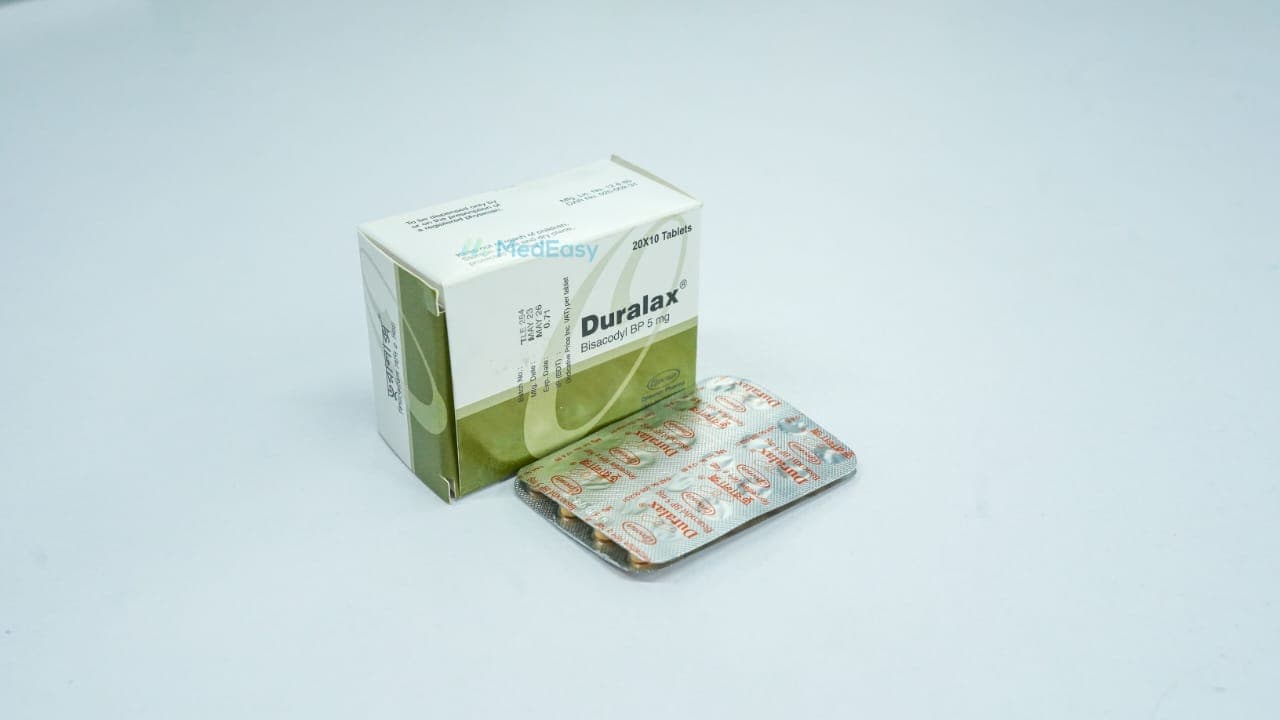

Medicine overview
Indications of Duralax
Duralax is a stimulant laxative used in the following situations:
Established / labeled uses
- Occasional (short-term) constipation: Duralax is indicated for the short-term relief of occasional constipation, when a rapid, predictable bowel movement is needed.
- Bowel evacuation before procedures: Duralax is widely used as part of a bowel-preparation regimen before colonoscopy, sigmoidoscopy, abdominal x-ray, surgery, or other procedures requiring an empty bowel.
Adjunct / regimen use
- Duralax is frequently combined with other bowel-preparation agents (e.g., polyethylene glycol-based solutions) as part of a multi-step protocol; in this role it is an adjunct to the primary preparation, not a stand-alone bowel-prep solution.
- Duralax is also used in the management of chronic constipation associated with opioid use or in patients unresponsive to bulk-forming/osmotic laxatives, under medical supervision, when other measures have failed.
Duralax is not intended for routine, prolonged, or unsupervised daily use. Persistent constipation lasting more than one week should be medically evaluated rather than self-treated.
Composition
Each enteric-coated oral tablet contains Bisacodyl 5 mg.
Bisacodyl is also formulated as a rectal suppository containing Bisacodyl 10 mg.
Exact excipients and strengths vary by manufacturer/brand; refer to the specific product label.
Description
Duralax is a synthetic, orally and rectally administered stimulant (contact) laxative belonging to the diphenylmethane (triarylmethane) chemical class. It is used to produce a bowel movement in occasional constipation and to empty the bowel before diagnostic or surgical procedures.
Oral tablets of Duralax are enteric-coated so that the drug is released in the colon rather than the stomach, minimizing gastric irritation and unpredictable onset. The suppository form acts more rapidly by direct local stimulation of the rectal mucosa.
Therapeutic Class
Stimulant (contact) laxative — Duralax belongs to the diphenylmethane/triarylmethane class of laxatives.
Pharmacology
Mechanism
Bisacodyl is a prodrug that, after oral ingestion, is hydrolyzed by intestinal mucosal and bacterial enzymes to its active metabolite, bis-(p-hydroxyphenyl)-pyridyl-2-methane (BHPM). BHPM directly stimulates sensory nerve endings in the colonic mucosa, triggering increased colonic peristaltic contractions. It also alters fluid and electrolyte transport, promoting accumulation of water and electrolytes within the colonic lumen, which softens the stool and increases its volume.
Onset
Oral Bisacodyl tablets typically produce a bowel movement within 6–12 hours. Rectal Bisacodyl suppositories act more quickly, usually within 15–60 minutes, because of direct local mucosal stimulation.
Absorption
Systemic absorption of Bisacodyl and its active metabolite is minimal; the drug acts predominantly through a local effect on the colon.
Dosage & Administration of Duralax
Occasional constipation
| Population | Route | Dose |
|---|---|---|
| Adults and children ≥12 years | Oral | 5–15 mg once daily as needed (maximum 15 mg/day) |
| Children 6–11 years | Oral | 5 mg once daily, under adult/physician guidance |
| Children under 6 years | Oral | Not recommended without physician guidance |
| Adults and children ≥12 years | Rectal suppository | 10 mg once daily as needed |
| Children 2–11 years | Rectal suppository | 5 mg once daily, under physician guidance |
Bowel preparation before procedures
Duralax is dosed according to the specific institutional or manufacturer bowel-preparation protocol, typically as a single 10 mg oral or rectal dose the evening before or the morning of the procedure, often combined with other bowel-prep agents. Follow the prescribing physician's or endoscopy unit's specific instructions.
Administration
Swallow oral Duralax tablets whole with water; do not crush, chew, or split, as breaking the enteric coating can cause the drug to be released in the stomach, leading to irritation and cramping. Do not take oral Duralax within 1 hour of milk, antacids, or acid-reducing agents (see Interactions). Duralax is usually taken at bedtime to produce a bowel movement the following morning. For suppositories, insert as directed, retaining as long as comfortable before evacuation.
Duralax is intended for short-term use; do not use for more than 7 consecutive days unless directed by a physician.
Administration of Duralax
Take oral Duralax tablets whole with a full glass of water; do not crush or chew. Avoid taking Duralax within 1 hour before or after milk, antacids, or other agents that raise gastric pH, as this can dissolve the enteric coating prematurely and cause stomach irritation or cramping. Duralax oral tablets are commonly taken at bedtime for a morning bowel movement.
Duralax rectal suppositories should be inserted as far as possible into the rectum and retained for 15–30 minutes if possible before the urge to evacuate is allowed to occur.
Interaction of Duralax
- Milk, antacids, and acid-reducing agents (H2-blockers, proton pump inhibitors): Taking these within about 1 hour of oral Duralax can prematurely dissolve its enteric coating, releasing the drug in the stomach and causing gastric irritation, cramping, or reduced effectiveness.
- Diuretics and corticosteroids: Concurrent use with Duralax, especially with excessive or prolonged Duralax use, increases the risk of electrolyte disturbances (particularly hypokalemia).
- Digoxin: Duralax-induced hypokalemia from excessive/prolonged use can increase the risk of digoxin toxicity.
Contraindications
- Known hypersensitivity to Bisacodyl or any component of the formulation.
- Known or suspected mechanical bowel obstruction or ileus.
- Acute surgical abdomen (e.g., appendicitis or undiagnosed acute abdominal pain accompanied by nausea, vomiting, or fever, which may indicate obstruction or perforation).
- Severe dehydration.
Side Effects of Duralax
Common
- Abdominal cramping or pain
- Diarrhea
- Nausea
- Rectal burning or local irritation (with suppository use)
Less common / with excessive or prolonged use
- Dizziness or lightheadedness
- Electrolyte disturbances (e.g., hypokalemia) — see Precautions and Warnings
- Rectal bleeding
- Allergic reactions (rash, itching)
Seek medical attention if rectal bleeding occurs or if there is no bowel movement after using Duralax, as this may indicate a more serious underlying condition.
Pregnancy & Lactation
Pregnancy: Duralax is minimally absorbed systemically. It should be used during pregnancy only if clearly needed, and only after consulting a physician, as with any medication in pregnancy; non-pharmacologic measures and bulk-forming laxatives are generally preferred first-line options for constipation in pregnancy. Duralax should not be used routinely or for prolonged periods without medical supervision.
Lactation: Because systemic absorption of Duralax is minimal, clinically significant transfer into breast milk is not expected; however, Duralax should still be used during breastfeeding only if clearly needed and under medical advice.
Precautions & Warnings
- Duralax is intended for short-term, occasional use only; do not use for more than 7 consecutive days unless directed by a physician. Chronic stimulant laxative use has been associated with dependence-type effects on normal bowel function and electrolyte disturbances — persistent constipation warrants medical evaluation rather than continued self-treatment.
- Swallow oral tablets whole; do not crush, chew, or take within 1 hour of milk or antacids, as this can disrupt the enteric coating and cause premature release with stomach irritation or cramping (see Interactions).
- Use with caution in patients with rectal bleeding of unknown origin, inflammatory bowel disease, or a history suggestive of appendicitis or acute abdominal conditions; stop use and seek medical advice if severe abdominal pain, cramping, or rectal bleeding occurs.
- Excessive or prolonged use can cause electrolyte disturbances (particularly hypokalemia); use particular caution in patients on diuretics, corticosteroids, or digoxin.
- Use in children should be guided by a pediatrician for appropriate dosing and indication.
- Discontinue and consult a physician if no bowel movement occurs after use, or if abdominal pain persists, as this may suggest a serious underlying condition rather than simple constipation.
Overdose Effects of Duralax
Overdose or excessive use of Duralax can cause severe diarrhea, abdominal cramping, and significant fluid and electrolyte loss (including dehydration and hypokalemia). If overdose of Duralax is suspected, seek immediate medical attention or contact a poison control center/emergency services rather than attempting home treatment. Management is supportive, focused on fluid and electrolyte replacement under medical supervision.
Storage Conditions
Store at room temperature (below 30°C), away from light and moisture. Keep out of reach of children.
Use In Special Populations
- Renal impairment: No specific dose adjustment for Duralax is well established; systemic absorption is minimal, but use with the usual short-term-use precautions.
- Hepatic impairment: No specific dose adjustment for Duralax is well established given its predominantly local action and minimal systemic absorption.
- Elderly: Use Duralax with caution, particularly the rectal form, and monitor for electrolyte disturbance with repeated use; age-related comorbidities warrant closer supervision.
- Children: Use of Duralax in children should always be guided by a pediatrician for appropriate dosing and indication (see Pediatric Uses).
Duration Of Treatment
Duralax is intended for short-term or occasional use — typically single doses as needed, and not for more than 7 consecutive days without medical supervision. For bowel preparation, Duralax is used as a single dose or short course per the specific procedure protocol. Continuous, long-term self-administration of Duralax is not recommended; persistent constipation should be medically evaluated.
Drug Classes
Stimulant laxatives (diphenylmethane/triarylmethane derivatives)
Mode Of Action
Bisacodyl is hydrolyzed in the intestine to its active metabolite, which directly stimulates sensory nerve endings in the colonic mucosa. This stimulation increases colonic motility (peristalsis) and promotes accumulation of water and electrolytes in the colonic lumen, resulting in softer stool and a bowel movement.
Pediatric Uses
Oral Duralax is not generally recommended for children under 6 years of age except under direct physician guidance. In children 6–11 years, a lower oral dose (5 mg once daily) may be used under adult/physician supervision. Rectal Duralax suppositories may be used in children 2–11 years at a reduced dose (5 mg) under pediatrician guidance. Safety and efficacy of Duralax in children under 2 years have not been established, and use in this age group should only occur on a physician's specific direction. In all pediatric use, Duralax should be limited to short-term, occasional constipation and bowel-preparation indications, with dosing guided by a pediatrician.
Frequently Asked Questions
Q: What is Duralax 5 mg Tablet used for?
A: Duralax 5 mg Tablet is a stimulant laxative used for short-term relief of occasional constipation and to empty the bowel before procedures such as colonoscopy or surgery.
Q: How quickly does Duralax 5 mg Tablet work?
A: Oral Duralax 5 mg Tablet tablets usually produce a bowel movement within 6–12 hours, often taken at bedtime for a morning effect. Duralax 5 mg Tablet rectal suppositories act faster, typically within 15–60 minutes.
Q: Can I take Duralax 5 mg Tablet with milk or antacids?
A: No. Avoid taking oral Duralax 5 mg Tablet within 1 hour of milk, antacids, or acid-reducing medicines, as this can break down the tablet's protective coating too early and cause stomach irritation or cramping.
Q: Is it safe to use Duralax 5 mg Tablet every day?
A: Duralax 5 mg Tablet is meant for short-term or occasional use only, generally not more than 7 days in a row without medical advice. Regular, prolonged use of Duralax 5 mg Tablet can lead to dependence-type effects on normal bowel function and electrolyte disturbances. If constipation persists, see a physician instead of continuing self-treatment.
Q: Can pregnant or breastfeeding women take Duralax 5 mg Tablet?
A: Duralax 5 mg Tablet has minimal systemic absorption, but it should still be used during pregnancy or breastfeeding only if clearly needed and after consulting a physician, since safety data are limited and other measures are often preferred first.
Q: What should I do if I accidentally take too much Duralax 5 mg Tablet?
A: An overdose of Duralax 5 mg Tablet can cause severe diarrhea, cramping, and dehydration or electrolyte imbalance. Seek immediate medical attention or contact a poison control center rather than treating it at home.
Disclaimer
The information provided is accurate to the best of our knowledge, but it does not replace professional medical advice. We cannot guarantee its completeness or accuracy, and the absence of specific information about a drug should not be taken as an endorsement. We are not responsible for any consequences arising from this information, so please consult a healthcare professional for any concerns or questions.
