
8% Off
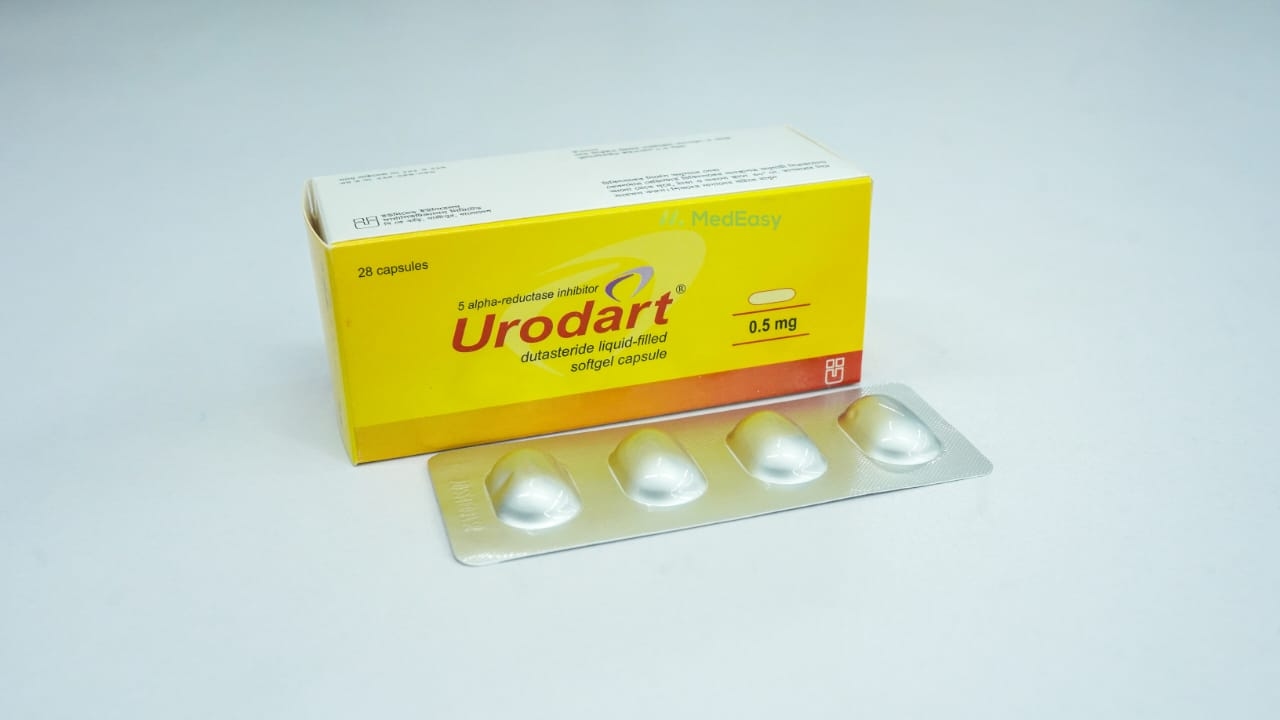
Urodart0.5 mg
Unimed Unihealth MFG. Ltd.
৳42.32
Add to cart
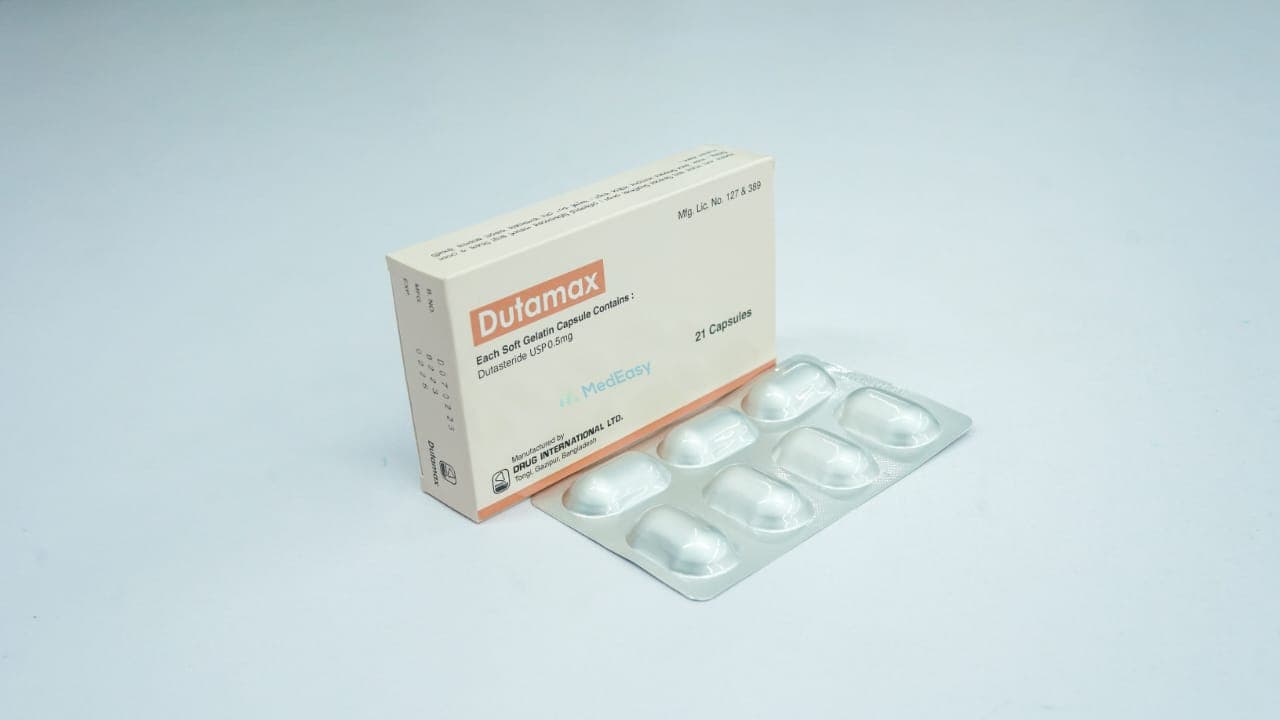
Dutamax 0.5 mg Capsule is available on MedEasy for ৳77.59 per 7's Strip, with home delivery anywhere in Bangladesh. It is manufactured by Drug International Ltd. Its generic name is Dutasteride.

Dutamax is a 5-alpha reductase inhibitor used mainly in the management of an enlarged prostate gland in men.
Dutamax is not indicated and should not be used for the prevention of prostate cancer, and it is not indicated for use in women or children.
Each capsule contains Dutasteride as the active pharmaceutical ingredient, together with pharmaceutically acceptable excipients. Dutasteride is typically formulated as a soft gelatin capsule for oral use.
Dutamax is a synthetic 4-azasteroid compound that belongs to the class of 5-alpha reductase inhibitors. It works by blocking the conversion of testosterone to the more potent androgen dihydrotestosterone (DHT), which is a key driver of prostate gland enlargement. By lowering DHT levels, Dutamax helps shrink the enlarged prostate over time, improves urinary symptoms associated with benign prostatic hyperplasia (BPH), and reduces the long-term risk of acute urinary retention and the need for prostate-related surgery.
Dutamax is taken orally, once daily, and its full clinical benefit typically develops gradually over three to six months of continuous use.
Dutamax belongs to the therapeutic class of 5-alpha reductase inhibitors (dual inhibitor of Type 1 and Type 2 isoenzymes), used in the medical management of benign prostatic hyperplasia.
Mechanism of action: Dutasteride is a selective inhibitor of both the Type 1 and Type 2 isoforms of the enzyme 5-alpha reductase, which is responsible for converting testosterone into dihydrotestosterone (DHT). DHT is the principal androgen responsible for the initial development and subsequent hyperplastic growth of prostate tissue. By inhibiting both isoenzymes, Dutasteride produces a greater suppression of serum DHT (approximately 90-95% reduction) compared with selective Type 2 inhibitors.
| Population | Recommended dose |
|---|---|
| Adult men | 0.5 mg orally, once daily, with or without food |
0.5 mg Dutamax once daily, taken together with tamsulosin 0.4 mg once daily, approximately 30 minutes after the same meal each day, as directed by the physician.
Not applicable — Dutamax is not indicated for use in children; safety and efficacy have not been established.
No dose adjustment is considered necessary in patients with renal impairment, as Dutamax has not been studied extensively in this population but is not significantly renally excreted.
Dutamax has not been studied in patients with hepatic impairment; because it is extensively metabolized by the liver, it should be used with caution in these patients (see Precautions and Warnings).
A noticeable improvement in symptoms may take up to 3-6 months of continuous, regular use. The capsule should be swallowed whole (see Administration).
Dutamax capsules should be swallowed whole with a glass of water and must not be crushed, chewed, or opened, as contact with the liquid contents of the capsule may cause irritation of the lips, mouth, and throat. Dutamax may be taken with or without food, at approximately the same time each day to help maintain consistent blood levels.
Women, especially those who are or may become pregnant, should avoid handling leaking or damaged Dutamax capsules. If contact does occur, the area should be washed immediately with soap and water.
Dutamax is metabolized mainly by the CYP3A4 enzyme, so drugs that strongly inhibit this enzyme can raise blood levels of Dutamax and potentially increase the risk of side effects.
| Interacting drug/class | Effect | Clinical recommendation |
|---|---|---|
| Strong CYP3A4 inhibitors (e.g., ritonavir, ketoconazole, verapamil, diltiazem) | Increased plasma concentration of Dutamax, prolonged elimination | Use with caution; monitor for increased side effects |
| Alpha-blockers (e.g., tamsulosin) when used for combination BPH therapy | Intended additive therapeutic effect | Used together intentionally as combination therapy under medical supervision |
Dutamax is not known to significantly affect the metabolism of other commonly co-administered drugs such as warfarin or digoxin, but routine clinical monitoring is still advisable when starting or stopping therapy.
The most common side effects of Dutamax are related to sexual function and generally occur more frequently during the first year of treatment.
| Frequency | Side effects |
|---|---|
| Common | Decreased libido, erectile dysfunction, ejaculation disorders (including decreased semen volume, retrograde ejaculation), gynecomastia (breast enlargement/tenderness) |
| Uncommon | Testicular pain/swelling, dizziness, palpitations, skin rash, itching, hives |
| Rare | Male infertility (rare reports; semen parameters generally normalize after stopping) |
In some patients, sexual side effects such as decreased libido and erectile dysfunction have been reported to persist even after Dutamax is discontinued. Patients experiencing this should discuss it with their physician.
Dutamax is contraindicated in women and must never be used, or even handled in its leaking/damaged capsule form, by women who are pregnant or who could become pregnant. Dutamax is absorbed through the skin, and exposure of a female fetus in utero, or of a male fetus, to Dutamax can cause abnormalities of the external genitalia. This is a well-established teratogenic risk (legacy pregnancy category X).
Pregnant women or women who could become pregnant should avoid any contact with leaking or crushed Dutamax capsules; if accidental contact occurs, the area should be washed immediately with soap and water, and a physician should be contacted.
Dutamax is not indicated for use in women, so lactation is not applicable to this medicine.
There is no specific antidote for Dutamax overdose. Single doses of up to 40 mg/day (80 times the therapeutic dose) have been given for short periods in clinical studies without serious safety concerns, but this does not guarantee safety in all individuals. If an overdose of Dutamax is suspected, seek immediate medical attention or contact a poison control center; treatment should be symptomatic and supportive, as directed by a physician.
Store at room temperature (below 30°C), away from light and moisture, in the original container. Keep out of reach of children and away from women, especially those who are or may become pregnant.
Dutamax is generally used as a long-term, continuous therapy for BPH, since prostate size and symptoms tend to recur if treatment is stopped. Clinical response should be reassessed periodically (e.g., every 3-6 months and then annually) by the prescribing physician. When used off-label for hair loss, duration is likewise long-term and should be guided by the treating physician.
5-alpha reductase inhibitors
Dutasteride works by blocking both the Type 1 and Type 2 isoforms of the 5-alpha reductase enzyme, which converts testosterone into dihydrotestosterone (DHT). Because DHT is the main hormone driving prostate tissue growth, this dual inhibition markedly lowers DHT levels in the blood and prostate, leading to shrinkage of the enlarged prostate gland and improvement of urinary symptoms over time.
X
Dutamax is not indicated for use in pediatric patients. The safety and efficacy of Dutamax in children have not been established, and Dutamax must not be given to, or handled by, children.
Q: What is Dutamax 0.5 mg Capsule used for?
A: Dutamax 0.5 mg Capsule is mainly used to treat symptoms of an enlarged prostate gland (benign prostatic hyperplasia, or BPH) in men, either alone or together with another medicine called tamsulosin. It is sometimes used off-label for male pattern hair loss under a doctor's supervision.
Q: How long does Dutamax 0.5 mg Capsule take to work?
A: Dutamax 0.5 mg Capsule usually needs to be taken continuously for 3 to 6 months before its full benefit on urinary symptoms becomes noticeable, because it works gradually by shrinking the prostate.
Q: Can women take Dutamax 0.5 mg Capsule?
A: No. Dutamax 0.5 mg Capsule is strictly contraindicated in women, especially those who are pregnant or who could become pregnant, because it can cause serious birth defects in a male fetus. Women should also avoid handling leaking or broken Dutamax 0.5 mg Capsule capsules.
Q: Does Dutamax 0.5 mg Capsule affect PSA (prostate cancer screening) test results?
A: Yes. Dutamax 0.5 mg Capsule lowers PSA levels by about half after 6 months of use, so your doctor will use an adjusted baseline PSA value to monitor you. Always tell your doctor you are taking Dutamax 0.5 mg Capsule before any PSA test.
Q: Can I donate blood while taking Dutamax 0.5 mg Capsule?
A: Men taking Dutamax 0.5 mg Capsule should not donate blood until at least 6 months after stopping the medicine, to avoid exposing a pregnant woman who might receive the donated blood.
Q: What side effects should I watch for with Dutamax 0.5 mg Capsule?
A: The most common side effects involve sexual function, such as reduced libido, erectile dysfunction, and ejaculation problems, as well as breast enlargement or tenderness. In some men these effects can continue even after stopping Dutamax 0.5 mg Capsule; report any persistent problems to your doctor.
Disclaimer
The information provided is accurate to the best of our knowledge, but it does not replace professional medical advice. We cannot guarantee its completeness or accuracy, and the absence of specific information about a drug should not be taken as an endorsement. We are not responsible for any consequences arising from this information, so please consult a healthcare professional for any concerns or questions.