10% Off
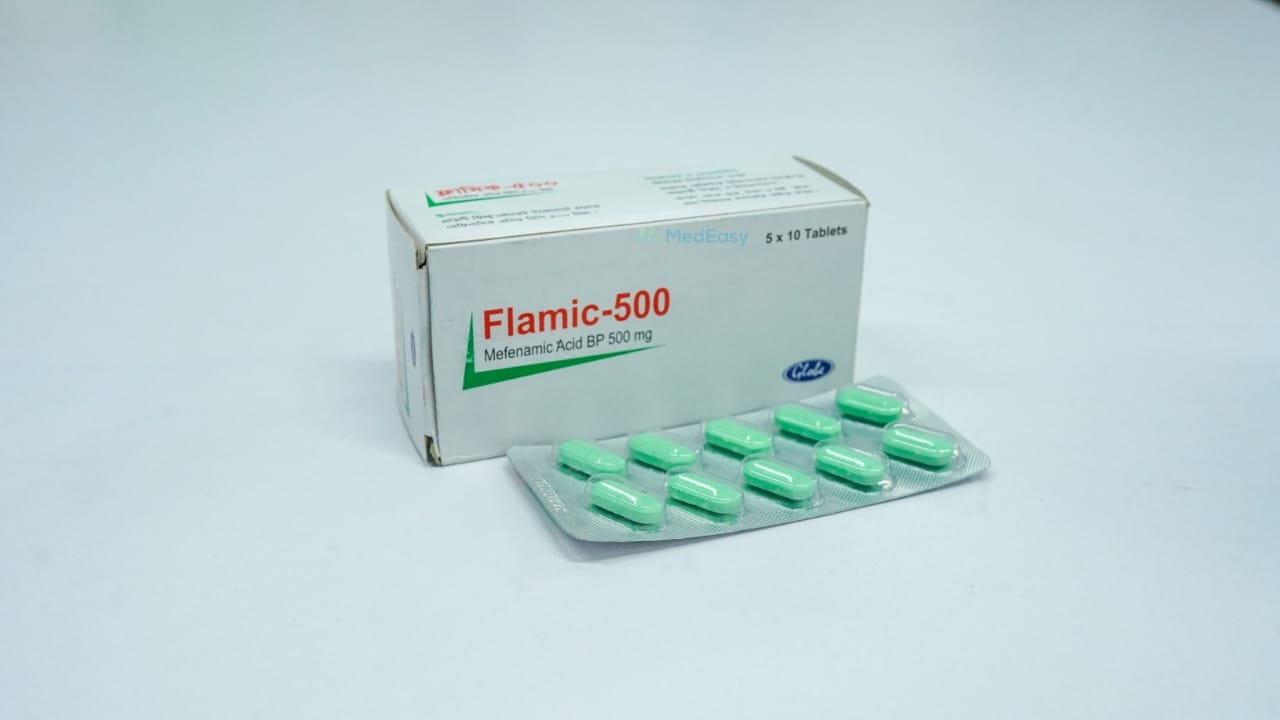
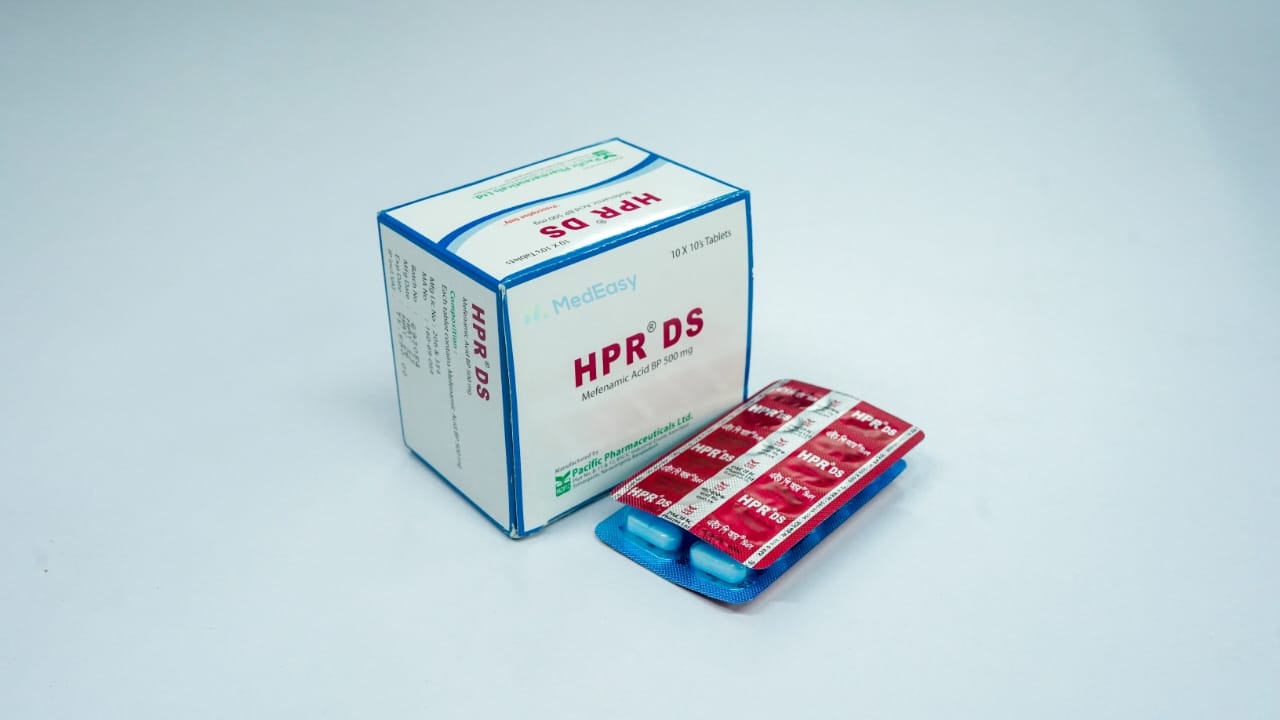
HPR-DS500 mg
Pacific Pharmaceuticals Ltd.
৳63.00
Add to cart
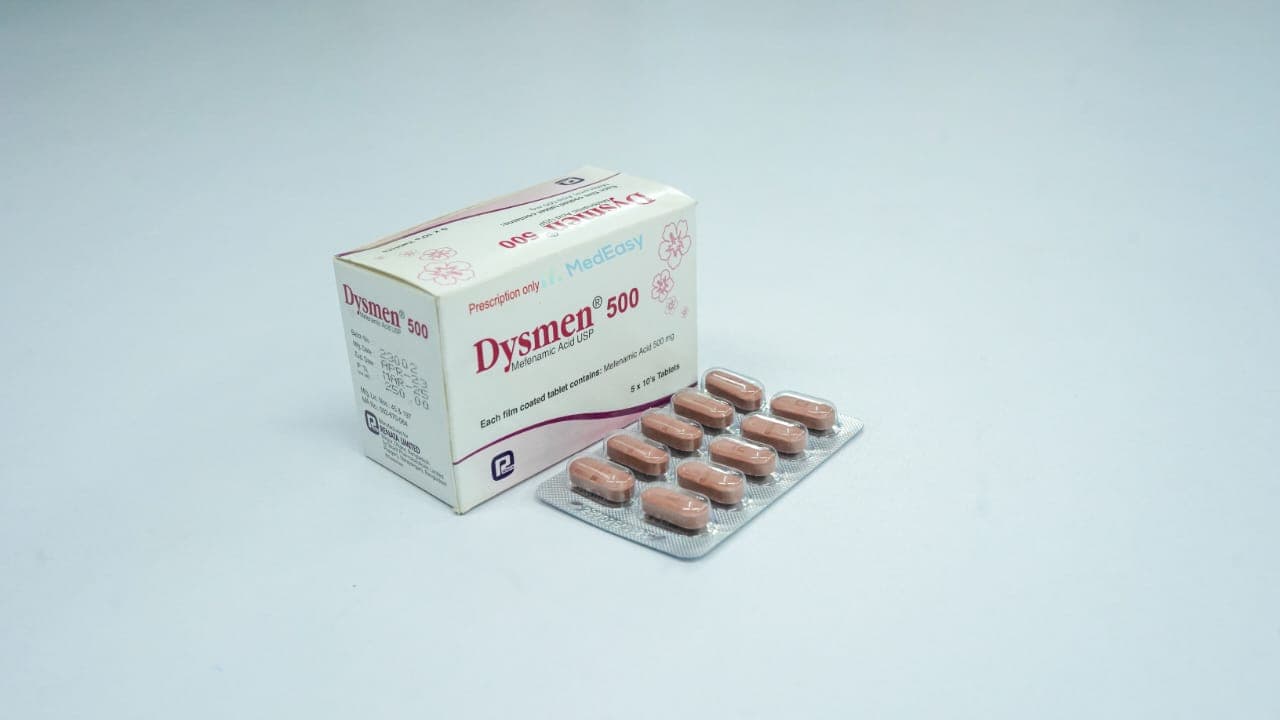

Dysmen is a fenamate-class non-steroidal anti-inflammatory drug (NSAID) used for the short-term relief of pain and for menstrual pain. Indications vary by strength of evidence:
Dysmen is not intended for chronic, long-term use; it is indicated only for short courses of therapy.
Each capsule/tablet of Mefenamic acid contains Mefenamic acid BP/USP 250 mg or 500 mg as the active ingredient, along with standard pharmaceutical excipients (e.g., lactose, starch, magnesium stearate, and a capsule shell or tablet coating), depending on the manufacturer and formulation.
Dysmen is a member of the fenamate (anthranilic acid derivative) class of non-steroidal anti-inflammatory drugs (NSAIDs). It possesses analgesic, anti-inflammatory, and antipyretic properties and is chemically distinct from, though pharmacologically related to, other NSAID subclasses such as the propionic acid derivatives (e.g., ibuprofen).
Dysmen is typically supplied as oral capsules or tablets of 250 mg and 500 mg strength and is widely used for short-term pain relief, particularly for menstrual pain.
Non-Steroidal Anti-Inflammatory Drug (NSAID) – Fenamate (anthranilic acid) class
Mefenamic acid works primarily by non-selectively inhibiting the cyclooxygenase (COX-1 and COX-2) enzymes, which reduces the synthesis of prostaglandins — lipid mediators responsible for pain signaling, inflammation, and fever. By lowering endometrial prostaglandin concentrations, Mefenamic acid also reduces uterine contractility and menstrual blood loss, which underlies its usefulness in dysmenorrhea.
Mefenamic acid is rapidly absorbed after oral administration, reaching peak plasma concentrations within approximately 2–4 hours. It is highly protein-bound (over 90%), metabolized in the liver (primarily via CYP2C9), and excreted mainly via the kidneys, with a plasma elimination half-life of roughly 2–4 hours.
| Indication | Dose | Notes |
|---|---|---|
| Acute mild-to-moderate pain | 500 mg as an initial dose, followed by 250 mg every 6 hours as needed | Treatment should not exceed 7 days |
| Primary dysmenorrhea | 500 mg as an initial dose at the onset of bleeding/pain, followed by 250 mg every 6 hours | Usually continued for 2–3 days, or until symptoms resolve |
Safety and efficacy of Dysmen have not been established in children under 14 years of age; it is not recommended in this age group.
Dysmen should be avoided in patients with severe renal or hepatic impairment (see Contraindications). In mild-to-moderate impairment, use the lowest effective dose for the shortest duration and monitor renal/hepatic function.
Take Dysmen with food or milk to reduce gastrointestinal upset. Do not exceed the recommended dose or duration without medical advice.
Dysmen is for oral use only. Swallow the capsule/tablet whole with a full glass of water. Taking Dysmen with food or milk can help reduce stomach upset. Do not lie down for at least 10 minutes after taking a dose. Do not crush or chew extended-release forms if prescribed.
| Drug/Class | Effect of interaction with Dysmen |
|---|---|
| Anticoagulants (e.g., warfarin), antiplatelets, SSRIs | Increased risk of bleeding, including GI bleeding; use together only with close monitoring |
| Aspirin and other NSAIDs | No increase in therapeutic benefit but increased risk of GI adverse effects; concomitant use not recommended |
| ACE inhibitors, ARBs, diuretics | Reduced antihypertensive effect; combined use may increase risk of acute kidney injury, especially in volume-depleted or elderly patients |
| Lithium | May increase plasma lithium levels to toxic range; monitor lithium levels |
| Methotrexate | May increase methotrexate toxicity, particularly at high (antineoplastic) doses |
| Corticosteroids | Additive risk of gastrointestinal ulceration/bleeding |
Always inform the physician about all medications being taken before starting Dysmen.
Seek medical attention promptly for signs of GI bleeding (black stools, vomiting blood), unexplained bruising/bleeding, yellowing of skin/eyes, or breathing difficulty.
Pregnancy: Dysmen should be avoided starting at 20 weeks of pregnancy and onward, as NSAIDs at this stage can cause fetal renal dysfunction leading to oligohydramnios, and, if used at 30 weeks gestation or later, premature closure of the fetal ductus arteriosus. Dysmen is contraindicated in the third trimester. Earlier in pregnancy, Dysmen should be used only if clearly needed, at the lowest effective dose for the shortest possible duration, and only after consulting a physician, since the potential benefit must be weighed against potential risk to the fetus.
Lactation: Dysmen passes into human breast milk in low amounts. Because of the potential for adverse effects in a nursing infant, a decision should be made whether to discontinue breastfeeding or discontinue Dysmen, taking into account the benefit of breastfeeding and the mother's clinical need for the drug — consult a physician before use while breastfeeding.
Dysmen, like other NSAIDs, may increase the risk of serious cardiovascular thrombotic events, including myocardial infarction and stroke, which can be fatal. This risk may occur early in treatment and may increase with duration of use or in patients with existing cardiovascular risk factors or disease.
Dysmen can cause serious gastrointestinal adverse events including bleeding, ulceration, and perforation of the stomach or intestines, which can occur at any time during use, with or without warning symptoms, and can be fatal. The risk is higher in the elderly and in those with a prior history of peptic ulcer disease or GI bleeding.
Dysmen is not recommended for use beyond 7 days for pain relief without medical review, as safety data for longer courses are limited.
Long-term or high-dose use of Dysmen can affect kidney function, including rare renal papillary necrosis; periodic monitoring is advised in patients with pre-existing renal or hepatic impairment, the elderly, or those on diuretics/ACE inhibitors.
Dysmen can prolong bleeding time and, rarely, cause hemolytic anemia or other blood dyscrasias; use with caution in patients on anticoagulants or with pre-existing bleeding or hematologic disorders.
Dysmen may mask signs of infection such as fever and inflammation. Use with caution in elderly patients, who are at greater risk of serious adverse effects, and in patients with asthma (risk of bronchospasm).
Symptoms of Dysmen overdose may include drowsiness, lethargy, nausea, vomiting, epigastric pain, gastrointestinal bleeding, and, in severe cases, seizures (convulsions may be more prominent with Dysmen overdose than with some other NSAIDs), or acute kidney injury.
Overdose of Dysmen is a medical emergency. Seek immediate medical attention or contact a poison control center/emergency services. Treatment is supportive; activated charcoal may be given by medical personnel if the patient presents soon after ingestion. Do not attempt to treat an overdose at home without professional guidance.
Store at room temperature (below 30°C), away from light and moisture. Keep out of reach of children.
Dysmen is approved only for patients 14 years of age and older for pain, and for primary dysmenorrhea; safety and efficacy in children under 14 years have not been established.
Elderly patients are at greater risk of serious cardiovascular, gastrointestinal, and renal adverse effects with Dysmen. Use the lowest effective dose for the shortest duration and monitor closely.
Dysmen should be avoided in severe renal or hepatic impairment (see Contraindications); use with caution and monitoring in mild-to-moderate impairment.
See "Pregnancy and Lactation" section.
Dysmen is intended for short-term use only: generally up to 7 days for acute pain, and typically 2–3 days (coinciding with the days of heaviest menstrual pain) for primary dysmenorrhea. Use beyond these periods should only occur under medical supervision.
Non-Steroidal Anti-Inflammatory Drug (NSAID); Fenamate (anthranilic acid derivative)
Mefenamic acid exerts its effects mainly through non-selective, reversible inhibition of cyclooxygenase enzymes (COX-1 and COX-2), thereby reducing the biosynthesis of prostaglandins from arachidonic acid. This reduction in prostaglandin production accounts for the analgesic, anti-inflammatory, and antipyretic effects of Mefenamic acid, and for its ability to reduce uterine prostaglandin levels and contractility in dysmenorrhea.
Category C (before 30 weeks gestation); Category D (at 30 weeks gestation and later)
Dysmen is approved for use in patients 14 years of age and older for short-term treatment of mild-to-moderate pain and for primary dysmenorrhea. Safety and efficacy of Dysmen in children younger than 14 years have not been established, and its use is therefore not recommended in this younger age group.
Q: What is Dysmen 500 mg Tablet used for?
A: Dysmen 500 mg Tablet is mainly used for short-term relief of mild-to-moderate pain, and especially for primary dysmenorrhea (menstrual cramps), in patients 14 years of age and older.
Q: Can I take Dysmen 500 mg Tablet for more than a week?
A: Dysmen 500 mg Tablet is generally not recommended for more than 7 days of continuous use for pain without medical review, because of increased risk of gastrointestinal and other adverse effects with prolonged use. Always follow your physician's advice on duration.
Q: Is Dysmen 500 mg Tablet safe during pregnancy?
A: Dysmen 500 mg Tablet should be avoided from 20 weeks of pregnancy onward and is contraindicated in the third trimester because it can affect the baby's kidneys and cause premature closure of a fetal blood vessel (ductus arteriosus). Earlier in pregnancy it should only be used if clearly necessary and after consulting a physician, since potential benefit must be weighed against potential risk to the fetus.
Q: Can Dysmen 500 mg Tablet be taken while breastfeeding?
A: Dysmen 500 mg Tablet passes into breast milk in small amounts. Consult your physician before using Dysmen 500 mg Tablet while breastfeeding so the benefits and risks to your infant can be weighed.
Q: What are the main side effects of Dysmen 500 mg Tablet?
A: Common side effects of Dysmen 500 mg Tablet include stomach upset, nausea, diarrhea, headache, and dizziness. More serious but less common effects include stomach bleeding/ulcers, liver or kidney problems, and cardiovascular events such as heart attack or stroke — seek medical care immediately if these occur.
Q: Who should not take Dysmen 500 mg Tablet?
A: People with a known allergy to Dysmen 500 mg Tablet or other NSAIDs/aspirin, active stomach ulcers or GI bleeding, inflammatory bowel disease, severe kidney or liver disease, those undergoing CABG heart surgery, and women in the third trimester of pregnancy should not take Dysmen 500 mg Tablet. Always disclose your full medical history to your physician.
Disclaimer
The information provided is accurate to the best of our knowledge, but it does not replace professional medical advice. We cannot guarantee its completeness or accuracy, and the absence of specific information about a drug should not be taken as an endorsement. We are not responsible for any consequences arising from this information, so please consult a healthcare professional for any concerns or questions.