
10% Off
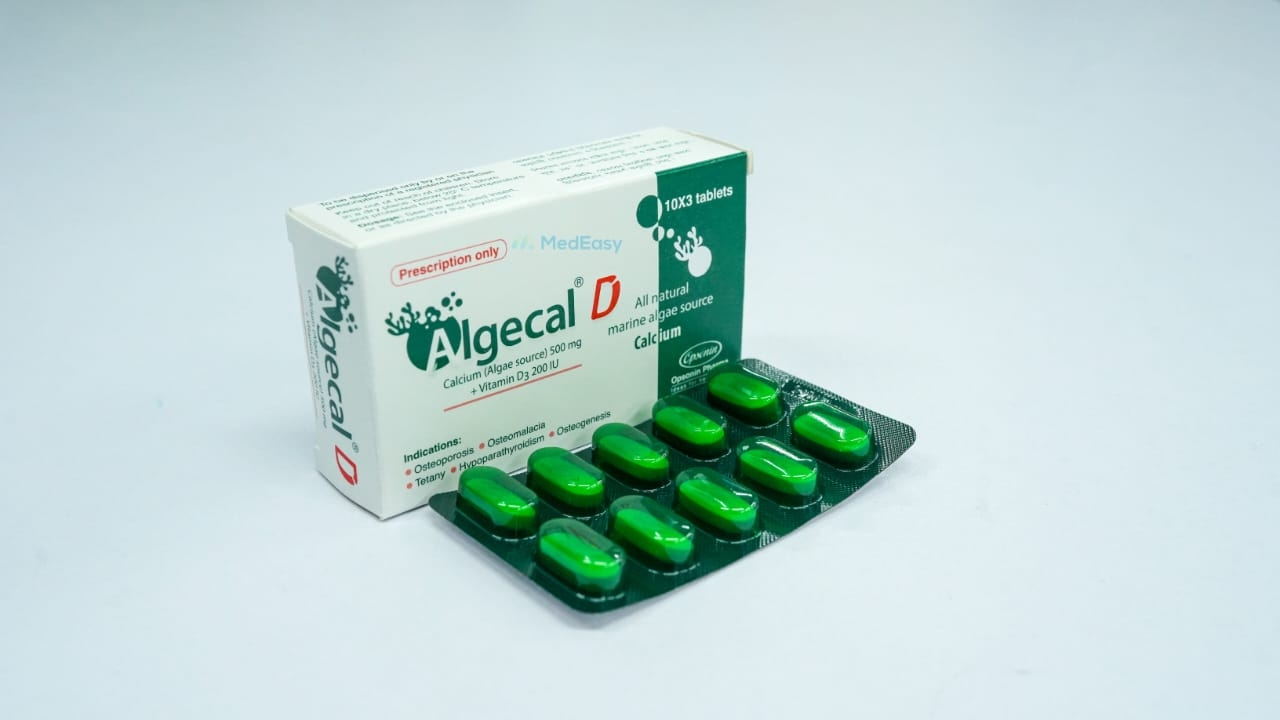
Algecal D500 mg+200
Opsonin Pharma Ltd.
৳99.00
Add to cart
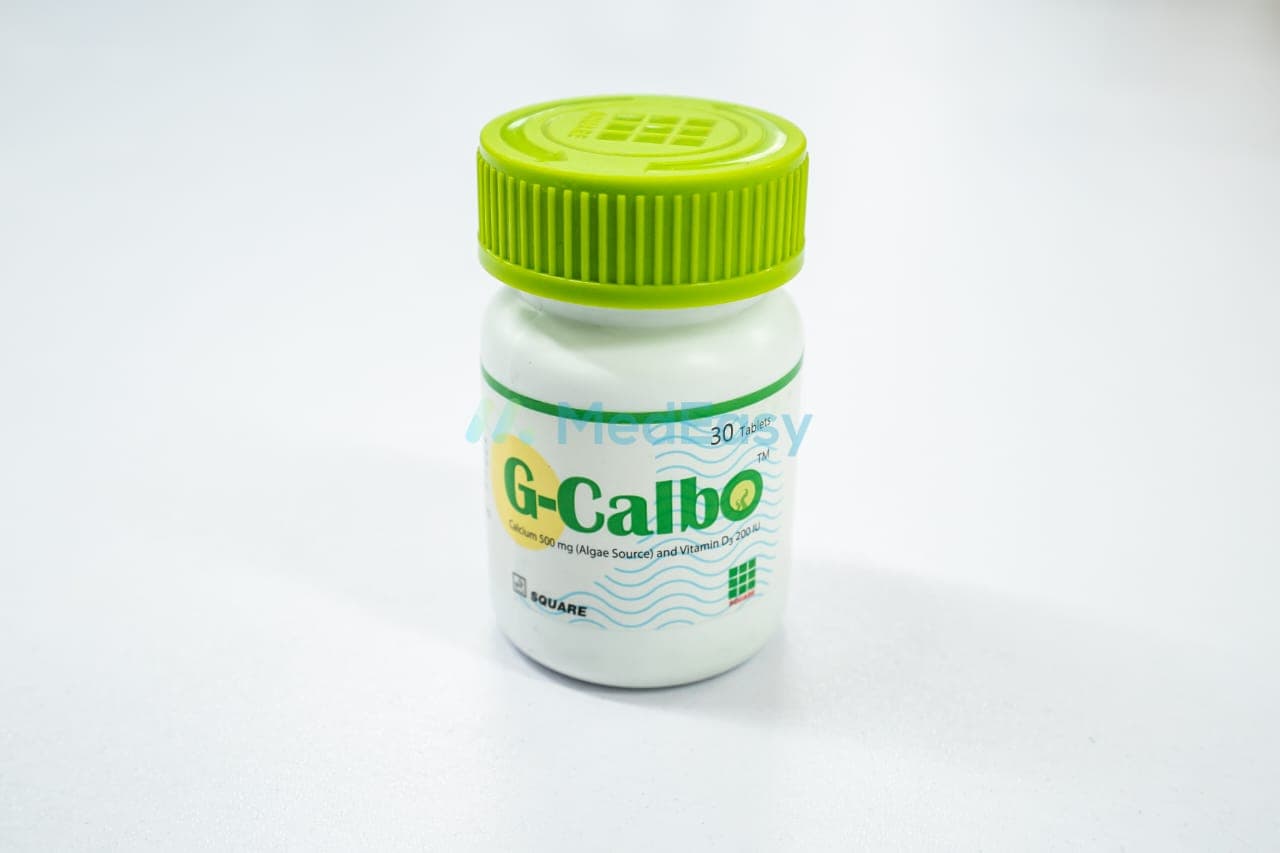

G-Calbo is indicated for the following:
These are established, guideline-supported uses; G-Calbo is a nutritional supplement and is not a substitute for disease-specific therapy where one is indicated.
Each tablet of Calcium Carbonate [Egg sheel] + Vitamin D3 contains Calcium Carbonate derived from purified eggshell source (equivalent to a specified amount of elemental calcium) and Vitamin D3 (Cholecalciferol). Strength and exact composition vary by manufacturer/brand; refer to the specific product label for exact elemental calcium (mg) and Vitamin D3 (IU) content per tablet.
G-Calbo is a calcium and vitamin D combination supplement in which the calcium carbonate component is sourced from purified, processed eggshell (a naturally occurring, highly bioavailable form of calcium carbonate), combined with vitamin D3 (cholecalciferol) to enhance intestinal calcium absorption.
Calcium is essential for the development and maintenance of healthy bones and teeth, and plays a role in normal muscle contraction, nerve transmission, and blood clotting. When dietary or supplemental calcium intake is inadequate, the body draws calcium from skeletal reserves, which over time can weaken bone structure. Vitamin D3 is required for efficient absorption of calcium from the gastrointestinal tract and for maintaining normal serum calcium and phosphate levels, supporting healthy bone mineralization.
G-Calbo is used as a dietary supplement and adjunct therapy for calcium deficiency states and bone health maintenance.
G-Calbo belongs to the therapeutic class of calcium and vitamin D combination supplements, used as minerals/vitamins for bone health and management of calcium deficiency.
Calcium Carbonate [Egg sheel] + Vitamin D3 combines an elemental calcium source with vitamin D3 to support calcium homeostasis and bone metabolism.
Calcium carbonate dissociates in the acidic environment of the stomach to release free calcium ions, which are absorbed primarily in the duodenum and proximal jejunum via both active (vitamin D-dependent) and passive transport. Absorbed calcium is used for bone mineralization, neuromuscular function, cardiac function, and coagulation, with excess calcium excreted renally.
Vitamin D3 is hydroxylated in the liver to 25-hydroxyvitamin D and then in the kidney to the active form, 1,25-dihydroxyvitamin D (calcitriol). Calcitriol increases intestinal absorption of calcium and phosphate, promotes renal calcium reabsorption, and works with parathyroid hormone to regulate serum calcium concentration and normal bone mineralization.
Together, the components of Calcium Carbonate [Egg sheel] + Vitamin D3 improve net calcium absorption and support skeletal calcium balance more effectively than calcium supplementation alone.
| Indication/Population | Typical Dose |
|---|---|
| Adults - calcium deficiency / bone health maintenance | One tablet once or twice daily (morning and/or night), or as directed by the physician, depending on product strength. |
| Adjunct in osteoporosis | One tablet twice daily along with specific anti-osteoporotic therapy, or as directed by the physician. |
| Pregnancy and lactation | As directed by the physician, based on individual calcium requirement. |
| Children (rickets/deficiency states) | Only under direct medical supervision; dose individualized by age, weight, and severity of deficiency. |
Tablets should preferably be taken with or after meals to improve tolerability and absorption. Exact strength (elemental calcium and Vitamin D3 content) varies by brand; always follow the dose printed on the specific product label or as directed by the physician.
Take G-Calbo orally, preferably with or shortly after meals, with a full glass of water, to enhance absorption and reduce gastrointestinal discomfort. Swallow the tablet whole; do not crush or chew unless the product is specifically formulated as a chewable tablet.
G-Calbo has the following clinically significant interactions:
Calcium Carbonate [Egg sheel] + Vitamin D3 is contraindicated in:
Common side effects of G-Calbo are generally mild and gastrointestinal in nature:
Less common effects, usually associated with excessive or prolonged intake, include:
G-Calbo is commonly used during pregnancy and lactation to meet increased calcium requirements, but supplementation should be used only under medical supervision and at doses appropriate for the individual, since excessive calcium or vitamin D intake carries risk of maternal hypercalcemia. Use only if clearly needed and as directed by a physician; the potential benefit should justify any potential risk. Vitamin D3 is generally considered compatible with breastfeeding at recommended doses; consult a physician before use.
Use G-Calbo with caution in the following situations:
Overdose of G-Calbo may cause hypercalcemia and, with prolonged excessive intake, vitamin D toxicity. Symptoms may include nausea, vomiting, constipation, abdominal pain, excessive thirst, frequent urination, confusion, muscle weakness, and irregular heartbeat. In severe cases, this can progress to renal impairment or cardiac arrhythmia. If overdose is suspected, discontinue the product immediately and seek immediate medical attention or contact a poison control center; do not attempt home treatment.
Store at room temperature (below 30°C), away from light and moisture. Keep out of reach of children.
Use only under medical supervision to meet increased calcium requirements; avoid exceeding recommended doses (see Pregnancy and Lactation).
Commonly used for prevention and management of age-related bone loss; renal function should be monitored, as elderly patients may have reduced ability to excrete excess calcium.
Use with caution in mild-to-moderate renal impairment with close monitoring; contraindicated in severe renal impairment (see Contraindications).
No specific dose adjustment is well established; use with general caution and physician guidance.
See Pediatric Uses section.
Duration of G-Calbo therapy depends on the indication and individual calcium/vitamin D status, and is typically determined by the physician - ranging from short-term supplementation during pregnancy/lactation to long-term maintenance therapy in osteoporosis or chronic deficiency states. Periodic monitoring of serum calcium is advised with prolonged use.
Calcium supplement; Vitamin D analogue; Bone health/mineral supplement combination.
Calcium Carbonate [Egg sheel] + Vitamin D3 works through two complementary mechanisms: calcium carbonate dissociates in gastric acid to provide elemental calcium ions that are absorbed in the small intestine and incorporated into bone mineral matrix (hydroxyapatite) and used for neuromuscular and cardiac function; vitamin D3 is converted in the liver and kidney to its active metabolite, calcitriol, which upregulates intestinal calcium-binding proteins to enhance active calcium absorption, promotes renal calcium reabsorption, and facilitates normal bone mineralization, thereby increasing the net utilization of the supplemented calcium.
Use of G-Calbo in children should be under direct physician supervision, individualized by age, body weight, and the degree of calcium/vitamin D deficiency (e.g., in rickets or documented dietary deficiency). Safety and efficacy of specific fixed-dose combination strengths have not been formally established for all pediatric age groups; use the lowest effective dose and monitor for signs of hypercalcemia with prolonged use. Consult a pediatrician before use in infants and young children.
Q: What is G-Calbo 500 mg+200 IU Tablet used for?
A: G-Calbo 500 mg+200 IU Tablet is used to prevent and treat calcium deficiency, and as an adjunct in the management of osteoporosis, osteomalacia, and other conditions where calcium and vitamin D supplementation is needed.
Q: Can I take G-Calbo 500 mg+200 IU Tablet if I have a history of kidney stones?
A: Caution is advised. G-Calbo 500 mg+200 IU Tablet should be used carefully in people with a history of kidney stones, with adequate hydration and physician monitoring, and it is contraindicated in severe renal impairment or active nephrolithiasis with hypercalciuria.
Q: Is G-Calbo 500 mg+200 IU Tablet safe during pregnancy?
A: G-Calbo 500 mg+200 IU Tablet is commonly recommended during pregnancy to meet increased calcium needs, but it should be used only as directed by a physician, since excessive intake can cause maternal hypercalcemia; use only if clearly needed and the benefit justifies the risk.
Q: How should I take G-Calbo 500 mg+200 IU Tablet?
A: Take G-Calbo 500 mg+200 IU Tablet orally with or after meals, with a full glass of water, generally once or twice daily as directed by the physician or as printed on the product label.
Q: Can I take G-Calbo 500 mg+200 IU Tablet with antibiotics like doxycycline?
A: No, not at the same time. Calcium in G-Calbo 500 mg+200 IU Tablet binds to tetracycline and fluoroquinolone antibiotics and reduces their absorption; separate the doses by at least 2-3 hours.
Q: What happens if I take too much G-Calbo 500 mg+200 IU Tablet?
A: Taking more than the recommended dose of G-Calbo 500 mg+200 IU Tablet can cause hypercalcemia and vitamin D toxicity, with symptoms like nausea, vomiting, confusion, and irregular heartbeat. Seek immediate medical attention or contact a poison control center if overdose is suspected.
Disclaimer
The information provided is accurate to the best of our knowledge, but it does not replace professional medical advice. We cannot guarantee its completeness or accuracy, and the absence of specific information about a drug should not be taken as an endorsement. We are not responsible for any consequences arising from this information, so please consult a healthcare professional for any concerns or questions.
