
10% Off
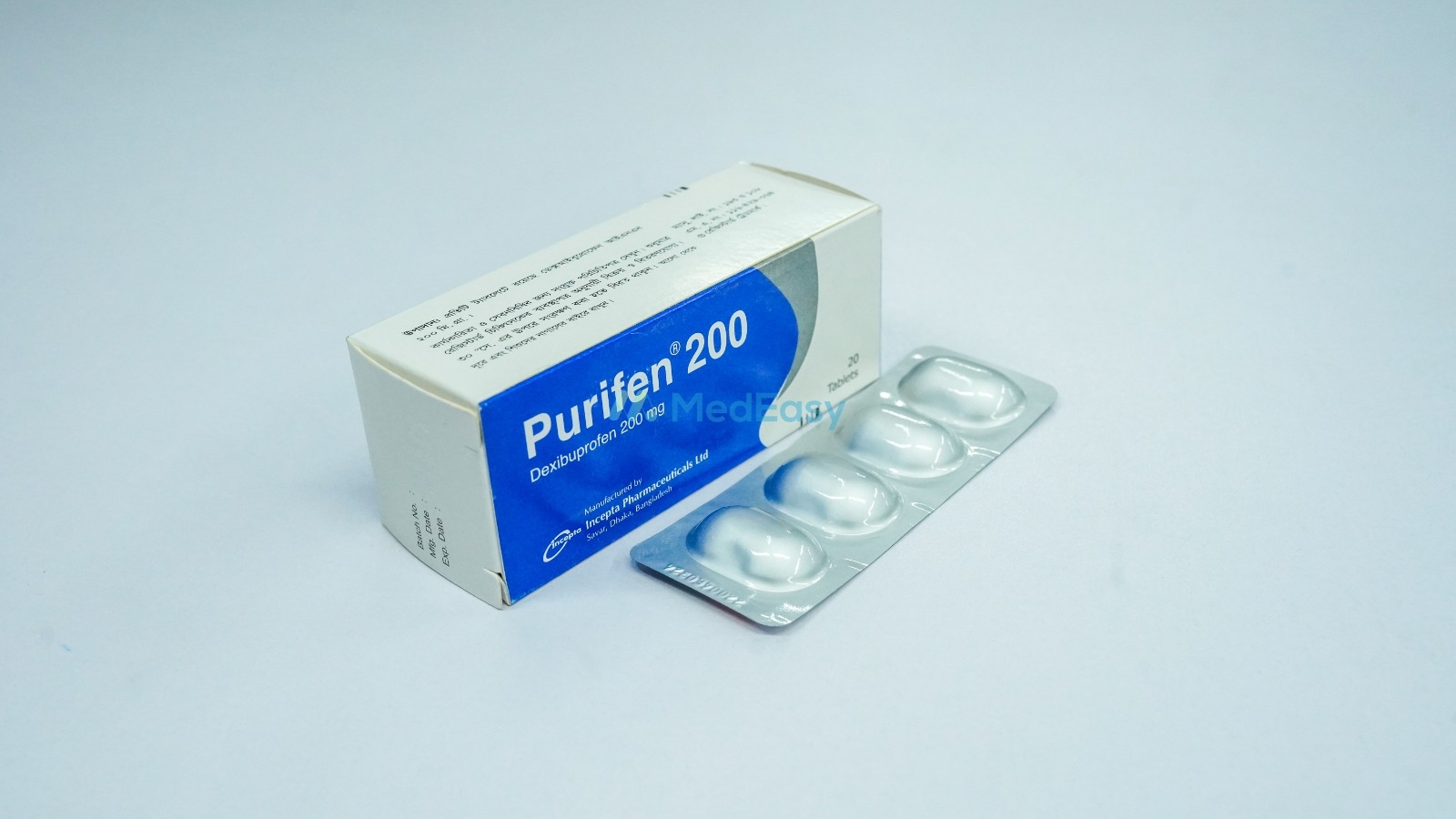
Purifen200 mg
Incepta Pharmaceuticals Ltd.
৳3.60
Add to cart


Inflam-D is a nonsteroidal anti-inflammatory drug (NSAID), the active dextrorotatory (S(+)) enantiomer of racemic ibuprofen, indicated for the relief of pain and inflammation in a range of acute and chronic musculoskeletal and other conditions.
In chronic inflammatory joint disease, Inflam-D is often used as an adjunct to disease-modifying therapy for symptom control rather than as a disease-modifying agent itself.
Each tablet contains Dexibuprofen as the active ingredient, typically available in strengths of 200 mg and 400 mg. Formulations may be immediate-release or sustained/modified-release film-coated tablets, along with standard pharmaceutical excipients (fillers, binders, coating agents).
Inflam-D is a propionic acid derivative NSAID and is the single active enantiomer of the racemic mixture ibuprofen (which contains equal parts R(-) and S(+) ibuprofen). Only the S(+) enantiomer, Inflam-D, is pharmacologically active as a cyclooxygenase inhibitor; the R(-) form contributes little to anti-inflammatory activity. Because the entire dose is pharmacologically active, Inflam-D is generally administered at approximately half the milligram dose of racemic ibuprofen to achieve a comparable analgesic and anti-inflammatory effect.
Inflam-D is used for its analgesic, anti-inflammatory, and antipyretic properties in the management of pain and inflammatory musculoskeletal conditions.
Nonsteroidal Anti-Inflammatory Drug (NSAID) – Propionic acid derivative; Inflam-D is the active enantiomer of ibuprofen.
Dexibuprofen exerts its anti-inflammatory, analgesic and antipyretic effects by nonselective, reversible inhibition of cyclooxygenase (COX-1 and COX-2) enzymes, thereby reducing the synthesis of prostaglandins and thromboxanes from arachidonic acid. Reduced prostaglandin production at sites of tissue injury decreases sensitization of pain receptors and reduces the local inflammatory response; central prostaglandin inhibition contributes to its antipyretic effect.
| Indication | Typical Adult Dose |
|---|---|
| Osteoarthritis / Rheumatoid arthritis | 200–400 mg two to three times daily |
| Mild-to-moderate pain (musculoskeletal, dental, postoperative) | 200–400 mg every 4–6 hours as needed |
| Primary dysmenorrhoea | 200–400 mg every 4–6 hours as needed, starting at onset of symptoms |
Maximum recommended total daily dose is generally 1200 mg, though some prescribers limit chronic use to lower totals. The lowest effective dose should be used for the shortest duration consistent with treatment goals (see Precautions and Warnings for cardiovascular and gastrointestinal risk).
Use with caution and at the lowest effective dose in mild-to-moderate renal or hepatic impairment; Inflam-D is contraindicated in severe renal or hepatic impairment (see Contraindications).
Safety and efficacy of Inflam-D have not been well established in children; it is generally not recommended for pediatric use (see Use in Special Populations).
Inflam-D should be taken orally, preferably with food, milk, or an antacid to reduce the risk of gastrointestinal irritation. Tablets should be swallowed whole with a full glass of water and not crushed or chewed unless the formulation is specifically designed for that purpose. Sustained-release formulations must not be split or crushed.
Inflam-D, like other NSAIDs, has clinically significant interactions with the following:
Dexibuprofen is contraindicated in patients with:
Serious cardiovascular thrombotic events (heart attack, stroke) and serious gastrointestinal events (bleeding, ulceration, perforation) can occur at any time during use of Inflam-D, with or without warning symptoms, and risk increases with duration of use (see Precautions and Warnings).
Inflam-D should be avoided during the third trimester of pregnancy, as NSAIDs at this stage are associated with premature closure of the fetal ductus arteriosus and can cause oligohydramnios and fetal renal dysfunction. Use during the first and second trimesters, and around conception, should be avoided unless clearly necessary; if used, the lowest effective dose for the shortest possible duration should be employed, only if the potential benefit justifies the potential risk to the fetus, and under medical supervision.
Small amounts of Inflam-D may pass into breast milk. Use during breastfeeding should only occur if considered essential by a physician, weighing the benefit to the mother against potential risk to the infant; a physician should be consulted before use in nursing mothers.
NSAIDs, including Inflam-D, may increase the risk of serious cardiovascular thrombotic events, including myocardial infarction and stroke, which can be fatal. This risk may increase with duration of use and may be higher in patients with existing cardiovascular disease or risk factors. Inflam-D is contraindicated for the treatment of pain in the setting of coronary artery bypass graft (CABG) surgery.
NSAIDs, including Inflam-D, can cause serious gastrointestinal adverse events including bleeding, ulceration, and perforation of the stomach or intestines, which can be fatal. These events can occur at any time during use, without warning symptoms, and are more common in elderly patients, those with a prior history of peptic ulcer disease or GI bleeding, and those taking anticoagulants, corticosteroids, or other NSAIDs concurrently (see Interactions).
Long-term use of Inflam-D can impair renal function, particularly in patients with pre-existing renal impairment, heart failure, liver dysfunction, volume depletion, or in the elderly. Adequate hydration should be maintained and renal function monitored in at-risk patients.
Elevations of liver enzymes may occur; discontinue if signs of liver dysfunction develop.
Inflam-D can cause serious skin reactions and anaphylactoid reactions, even without prior exposure; discontinue at first appearance of skin rash or other signs of hypersensitivity.
Use the lowest effective dose for the shortest duration necessary. Use with caution in patients with asthma, fluid retention, hypertension, or a history of gastrointestinal disease.
Symptoms of Inflam-D overdose may include nausea, vomiting, abdominal pain, drowsiness, dizziness, headache, tinnitus, and in severe cases, gastrointestinal bleeding, hypotension, respiratory depression, metabolic acidosis, renal impairment, and, rarely, seizures or coma.
If overdose is suspected, seek immediate medical attention or contact a poison control center / emergency services right away. Treatment is supportive and symptomatic; management should only be carried out by qualified medical personnel in a healthcare facility. Do not attempt home treatment.
Store at room temperature (below 30°C), away from light and moisture. Keep out of reach of children.
Elderly patients are at greater risk for serious gastrointestinal, cardiovascular and renal adverse effects with Inflam-D; use the lowest effective dose for the shortest duration and monitor closely.
Use with caution in mild-to-moderate renal impairment; contraindicated in severe renal impairment (see Contraindications).
Use with caution in mild-to-moderate hepatic impairment; contraindicated in severe hepatic impairment (see Contraindications).
See Pregnancy and Lactation section.
Safety and efficacy have not been well established in children; use is generally not recommended in this population (see Pediatric Uses).
Inflam-D should be used for the shortest duration consistent with the treatment goal. For acute pain (e.g., dental, musculoskeletal, dysmenorrhoea), a few days of use is usually sufficient. For chronic inflammatory conditions such as osteoarthritis or rheumatoid arthritis, longer-term use may be required under regular medical review, with periodic reassessment of the need for continued therapy given cardiovascular and gastrointestinal risks that increase with duration of use.
Nonsteroidal Anti-Inflammatory Drugs (NSAIDs); Propionic acid derivatives
Dexibuprofen nonselectively and reversibly inhibits cyclooxygenase-1 (COX-1) and cyclooxygenase-2 (COX-2) enzymes, blocking conversion of arachidonic acid to prostaglandin precursors. This reduces the synthesis of prostaglandins that mediate pain, inflammation, and fever, producing analgesic, anti-inflammatory, and antipyretic effects.
Safety and efficacy of Inflam-D have not been well established in pediatric patients, and it is generally not recommended for use in children. If pain or fever management is needed in a child, alternative agents with established pediatric dosing and safety data should be considered under medical guidance.
Q: What is Inflam-D 200 mg Tablet used for?
A: Inflam-D 200 mg Tablet is a nonsteroidal anti-inflammatory drug (NSAID) used to relieve pain and inflammation associated with conditions such as osteoarthritis, rheumatoid arthritis, musculoskeletal injuries, dental pain, and painful menstrual periods (dysmenorrhoea).
Q: How should I take Inflam-D 200 mg Tablet?
A: Inflam-D 200 mg Tablet is usually taken orally, 200–400 mg two to three times a day, preferably with food or milk to reduce stomach upset, and should not exceed a total daily dose of 1200 mg unless directed otherwise by your physician. Always follow your doctor's or pharmacist's specific instructions.
Q: Can I take Inflam-D 200 mg Tablet during pregnancy?
A: Inflam-D 200 mg Tablet should be avoided during the third trimester of pregnancy because it can cause premature closure of a blood vessel in the fetal heart (ductus arteriosus) and reduce amniotic fluid. In earlier pregnancy, Inflam-D 200 mg Tablet should be used only if clearly needed, at the lowest effective dose, and after consulting a physician, since the potential benefit must justify the potential risk to the fetus.
Q: Who should not take Inflam-D 200 mg Tablet?
A: Inflam-D 200 mg Tablet should not be taken by people who are allergic to Inflam-D 200 mg Tablet, other NSAIDs, or aspirin (including those with a history of asthma, hives, or swelling triggered by these medicines), or by those with active stomach ulcers or bleeding, severe heart failure, severe kidney or liver impairment, or who are in the third trimester of pregnancy.
Q: What are the common side effects of Inflam-D 200 mg Tablet?
A: The most common side effects of Inflam-D 200 mg Tablet include stomach upset, indigestion, nausea, headache, and dizziness. Less commonly, Inflam-D 200 mg Tablet can cause more serious effects such as stomach bleeding, kidney problems, or high blood pressure, so report any unusual symptoms to your doctor promptly.
Q: Can Inflam-D 200 mg Tablet be taken with other painkillers or blood thinners?
A: Inflam-D 200 mg Tablet should not be combined with other NSAIDs or aspirin, as this increases the risk of stomach bleeding without added benefit. Combining Inflam-D 200 mg Tablet with blood thinners (anticoagulants) also raises bleeding risk significantly. Always tell your doctor about all medicines you are taking before starting Inflam-D 200 mg Tablet.
Disclaimer
The information provided is accurate to the best of our knowledge, but it does not replace professional medical advice. We cannot guarantee its completeness or accuracy, and the absence of specific information about a drug should not be taken as an endorsement. We are not responsible for any consequences arising from this information, so please consult a healthcare professional for any concerns or questions.

