
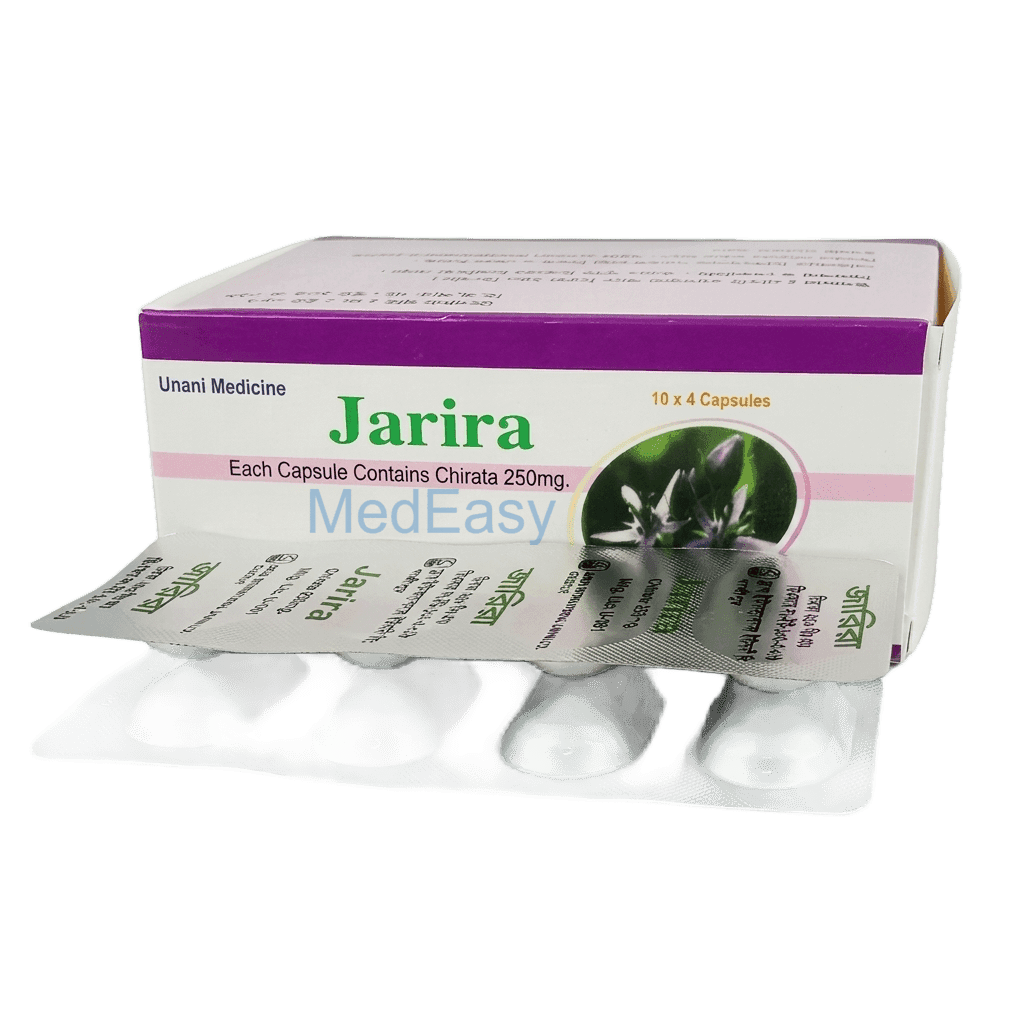

Medicine overview
Indications of Jarira
Jarira (Swertia chirata, also known as chiretta) is a herbal/botanicalpreparation used traditionally in Ayurvedic and South Asian traditional medicine. It is not anFDA-approved pharmaceutical, and rigorous modern clinical trial evidence supporting its use isgenerally limited. It should be understood as a traditional remedy rather than a proven medicaltreatment, and its use should be conservative and evidence-limited in framing.
- Traditional/folk use: digestive support and relief of minor indigestion or loss of appetite.
- Traditional/folk use: appetite stimulation, particularly during convalescence or after minor illness.
- Traditional/folk use: supportive remedy for mild fever, used alongside (not in place of) standard medical care.
- Traditional/folk use: general "bitter tonic" for digestive wellness in traditional and Ayurvedic practice.
These uses are supported mainly by traditional practice and limited preliminary studies ratherthan large, controlled clinical trials. Jarira should not be relied upon as the soletreatment for persistent or significant illness; consult a physician or qualified traditionalmedicine practitioner for anything beyond short-term, minor digestive discomfort.
Composition
Chirata [Swertia Chirata] is prepared from the whole plant (or aerial parts/root) ofSwertia chirata (family Gentianaceae), a bitter herb traditionally used in South Asia.The plant material contains naturally occurring bitter principles, including secoiridoidglycosides such as amarogentin and swertiamarin, along with xanthones and other constituentsbelieved to contribute to its bitter, tonic properties.
Because Chirata [Swertia Chirata] is a botanical/herbal product rather than a single standardizedchemical entity, the exact composition, concentration of active constituents, and dosage form(e.g. tablet, syrup, decoction, or extract) can vary between manufacturers, and standardizedcomposition data could not be independently verified. Patients should check the specificproduct label for exact composition.
Description
Jarira is a herbal/botanical product derived from the plantSwertia chirata, commonly known as "chirata" or "chiretta." It has a long history oftraditional use in Ayurvedic and South Asian folk medicine as a bitter tonic, valued for itsintensely bitter taste, which is traditionally believed to stimulate digestive function andappetite.
In Bangladesh, Jarira is available as a traditional/herbal preparation, typicallymarketed for digestive support, appetite stimulation, and as a supportive remedy for mild fever.As with most traditional herbal products, scientific evidence from large, well-controlled humantrials is limited, and its composition and dosing are not standardized to the same degree asconventional pharmaceuticals. It should be used conservatively and under professional guidancefor anything beyond short-term, minor complaints.
Therapeutic Class
Jarira belongs to the category of herbal/traditionalmedicines, specifically classified as a bitter tonic and digestive stimulant used withinAyurvedic and traditional South Asian medicine systems. It is not classified within aconventional pharmaceutical therapeutic class, as it has not undergone the same regulatoryevaluation as licensed drugs.
Pharmacology
The traditional pharmacological rationale for Chirata [Swertia Chirata] centers onits intensely bitter taste, attributed mainly to secoiridoid glycosides (e.g. amarogentin,swertiamarin) and xanthone derivatives present in Swertia chirata. In traditionalmedicine theory, bitter-tasting substances are believed to stimulate salivary and gastricsecretions and reflexively enhance appetite and digestion when taken before meals.
Some small preliminary/preclinical studies have explored possible hepatoprotective,antipyretic, and mild blood-glucose-lowering (hypoglycemic) effects of Swertia chirataconstituents, but this evidence is limited in scale and rigor, has not been confirmed in largecontrolled human trials, and should not be interpreted as established clinical efficacy. Thefull pharmacokinetics (absorption, metabolism, elimination) of Chirata [Swertia Chirata] in humanshave not been well characterized.
Dosage & Administration of Jarira
There is no universally standardized, clinically validated dosingregimen for Jarira, as formulations and concentrations vary by manufacturer.Patients should follow the specific dosing instructions on the product label or the advice of aphysician or qualified traditional medicine practitioner. General guidance by indication issummarized below, but this is not a substitute for individualized professional advice.
| Indication | General Guidance |
|---|---|
| Minor digestive discomfort / poor appetite (adults) | Typically taken as a short course as directed on the product label (e.g. as a decoction, tablet, or extract), generally before meals. Not intended for prolonged, unsupervised use. |
| Mild fever (adults), as a supportive/adjunct measure | Used only as a supportive remedy alongside standard medical evaluation and care, not as a replacement for antipyretic medication or medical assessment of fever. |
| Children | Not recommended without the specific guidance of a physician or qualified practitioner, due to limited safety data in this age group (see Pediatric Use). |
Jarira should be used only for short-term relief of minor digestive discomfortunless a qualified physician or traditional medicine practitioner has advised otherwise; persistentor high fever, or significant digestive symptoms, warrant prompt medical evaluation rather thanreliance on a traditional remedy alone.
Administration of Jarira
Jarira is generally taken by the oral route, most commonlybefore meals in its traditional forms (decoction, infusion, tablet, or liquid extract), inkeeping with its traditional use for digestive stimulation. It may be taken with water. Patientsshould follow the specific administration instructions provided with the product they are using,and should not exceed the recommended duration of use without consulting a physician or qualifiedtraditional medicine practitioner.
Interaction of Jarira
Formal, well-verified drug-interaction studies for Jarira arelacking. However, some traditional and preliminary sources suggest that Swertia chiratamay have a mild blood-glucose-lowering effect.
- Antidiabetic medications (insulin, oral hypoglycemic agents): concurrent useof Jarira with prescribed antidiabetic therapy may theoretically have an additiveblood-glucose-lowering effect. Patients with diabetes who use Jarira shouldmonitor their blood glucose closely and inform their physician.
Because comprehensive interaction data are not available, patients taking other prescriptionmedications should inform their physician before using Jarira.
Contraindications
Chirata [Swertia Chirata] is contraindicated in:
- Known hypersensitivity/allergy to Chirata [Swertia Chirata] or any component of the specificproduct formulation.
- Pregnancy and breastfeeding, due to a lack of adequate safety data (see Pregnancy andLactation).
- Young children, due to a lack of adequate safety data in this age group (see PediatricUse).
Side Effects of Jarira
Because Jarira has not been studied in large, well-controlledclinical trials, a complete and verified side-effect profile is not available. Reported ortheoretical effects, based on traditional use and limited data, may include:
- Mild gastrointestinal upset (e.g. nausea, stomach discomfort) in some individuals, particularlyat higher intake.
- Lowering of blood glucose, which could cause symptoms of hypoglycemia in susceptibleindividuals, especially those also taking antidiabetic medication (see Interactions).
- Allergic reactions (e.g. skin rash, itching) in individuals sensitive to the plant or itsconstituents.
Patients should stop use and seek medical advice if they experience any concerning orpersistent symptoms while using Jarira.
Pregnancy & Lactation
Safety data on the use of Jarira during pregnancy andbreastfeeding are limited and have not been independently verified. Jarirashould be avoided during pregnancy and breastfeeding unless specifically advised and supervisedby a qualified physician, since the potential risks to the fetus or nursing infant cannot beadequately assessed with the currently available evidence. Use only if clearly needed and aphysician has determined that potential benefit justifies potential risk.
Precautions & Warnings
Because standardized composition and dosing information forJarira could not be independently verified, and rigorous clinical trial evidenceis generally limited, it should be used cautiously and conservatively:
- Patients with diabetes or those taking antidiabetic medications should monitor blood glucoseclosely when using Jarira, due to a possible mild blood-glucose-lowering effect(see Interactions).
- Jarira should be used only under the guidance of a qualified physician ortraditional medicine practitioner for anything beyond short-term relief of minor digestivediscomfort.
- Persistent or high fever, or significant digestive symptoms (e.g. severe abdominal pain,vomiting, blood in stool, prolonged diarrhea), warrant prompt medical evaluation rather thanreliance on Jarira or any traditional remedy alone.
- Product quality, purity, and standardization of herbal preparations can vary by manufacturer;patients should obtain Jarira from a reputable source.
- Not recommended for use in pregnancy, breastfeeding, or young children (seeContraindications).
Overdose Effects of Jarira
There is no well-established clinical data describing overdose withJarira. Taking substantially more than the recommended amount could theoreticallyworsen gastrointestinal side effects or increase the risk of hypoglycemia (low blood sugar),particularly in people with diabetes. If an overdose of Jarira is suspected, or ifsevere or unusual symptoms occur after taking it, seek immediate medical attention or contact apoison control center/emergency services rather than attempting home treatment.
Storage Conditions
Store at room temperature (below 30°C), away from light and moisture. Keep out of reach of children.
Use In Special Populations
Jarira requires particular caution in certainpopulations:
- Pregnant and breastfeeding women: avoid unless specifically advised by aphysician, due to limited safety data (see Pregnancy and Lactation).
- Children: safety and efficacy have not been established in young children;avoid without the specific guidance of a physician or qualified practitioner (seePediatric Use).
- Elderly patients: limited specific data exist; use cautiously and underprofessional guidance, particularly if other medications or chronic conditions are present.
- Patients with diabetes: monitor blood glucose closely due to a possible mildblood-glucose-lowering effect, especially if also taking antidiabetic medication (seeInteractions).
- Patients with hepatic or renal impairment: no well-established safety dataexist for this population; use only under medical supervision.
Duration Of Treatment
Jarira is intended for short-term use for minor,self-limiting digestive discomfort or temporary loss of appetite. It should not be used forprolonged periods without the specific guidance of a qualified physician or traditional medicinepractitioner. If symptoms persist beyond a few days, worsen, or are accompanied by high orpersistent fever, prompt medical evaluation is recommended rather than continued self-treatmentwith Jarira.
Drug Classes
Chirata [Swertia Chirata] is classified as a herbal supplement/traditionalbotanical medicine, specifically a bitter tonic and digestive stimulant used within Ayurvedic andSouth Asian traditional medicine practice. It is not part of a conventional pharmaceutical drugclass.
Mode Of Action
The traditional mode of action attributed to Chirata [Swertia Chirata] relates toits intensely bitter taste, derived from secoiridoid glycosides (such as amarogentin andswertiamarin) and xanthone compounds in Swertia chirata. Bitter substances are believed,per traditional medicine theory, to stimulate taste receptors that reflexively increase salivaryand gastric secretions, thereby supporting digestion and appetite when taken before meals.Some preliminary studies suggest additional hepatoprotective, antipyretic, or mildblood-glucose-lowering properties, but the precise mechanisms have not been fully elucidated orconfirmed through rigorous, well-controlled human research.
Pediatric Uses
Safety and efficacy of Jarira have not been established inchildren, and reliable pediatric safety data are lacking. Use in young children should be avoidedunless specifically directed and supervised by a physician or qualified traditional medicinepractitioner. Persistent digestive symptoms or fever in a child should be evaluated by apediatrician rather than treated with Jarira alone.
Frequently Asked Questions
Q: What is Jarira 250 mg Capsule used for?
A: Jarira 250 mg Capsule is a traditional herbal bitter tonic used mainly for digestive support, appetite stimulation, and as a supportive remedy for mild fever, particularly within Ayurvedic and traditional Bangladeshi/South Asian medicine. Evidence supporting these uses is limited, and it should be viewed as a traditional remedy rather than a proven medical treatment.
Q: Is Jarira 250 mg Capsule safe to use during pregnancy?
A: Jarira 250 mg Capsule should be avoided during pregnancy and breastfeeding unless specifically advised and supervised by a qualified physician, because safety data in this group are limited and potential risks to the fetus or nursing infant cannot be adequately assessed.
Q: Can children take Jarira 250 mg Capsule?
A: Jarira 250 mg Capsule is not recommended for young children because safety and efficacy have not been established in this age group. It should only be given to a child under the specific guidance of a physician or qualified traditional medicine practitioner.
Q: Can I take Jarira 250 mg Capsule if I have diabetes or take diabetes medication?
A: Use caution. Some traditional sources suggest Jarira 250 mg Capsule may have a mild blood-glucose-lowering effect, so combining it with prescribed antidiabetic medication could increase the risk of low blood sugar. Monitor your blood glucose closely and inform your physician if you use Jarira 250 mg Capsule while on diabetes treatment.
Q: What are the possible side effects of Jarira 250 mg Capsule?
A: Reported or theoretical effects include mild gastrointestinal upset, lowering of blood glucose (which could cause hypoglycemia symptoms, especially with antidiabetic medication), and allergic reactions such as rash or itching in sensitive individuals. Stop use and seek medical advice if concerning symptoms occur.
Q: How long can I use Jarira 250 mg Capsule for digestive discomfort or fever?
A: Jarira 250 mg Capsule should be used only for short-term relief of minor digestive discomfort. It is not a substitute for medical care, and persistent or high fever, or significant digestive symptoms, should be promptly evaluated by a physician rather than treated with Jarira 250 mg Capsule alone. Use beyond short-term minor complaints should only occur under the guidance of a qualified physician or traditional medicine practitioner.
Disclaimer
The information provided is accurate to the best of our knowledge, but it does not replace professional medical advice. We cannot guarantee its completeness or accuracy, and the absence of specific information about a drug should not be taken as an endorsement. We are not responsible for any consequences arising from this information, so please consult a healthcare professional for any concerns or questions.
