
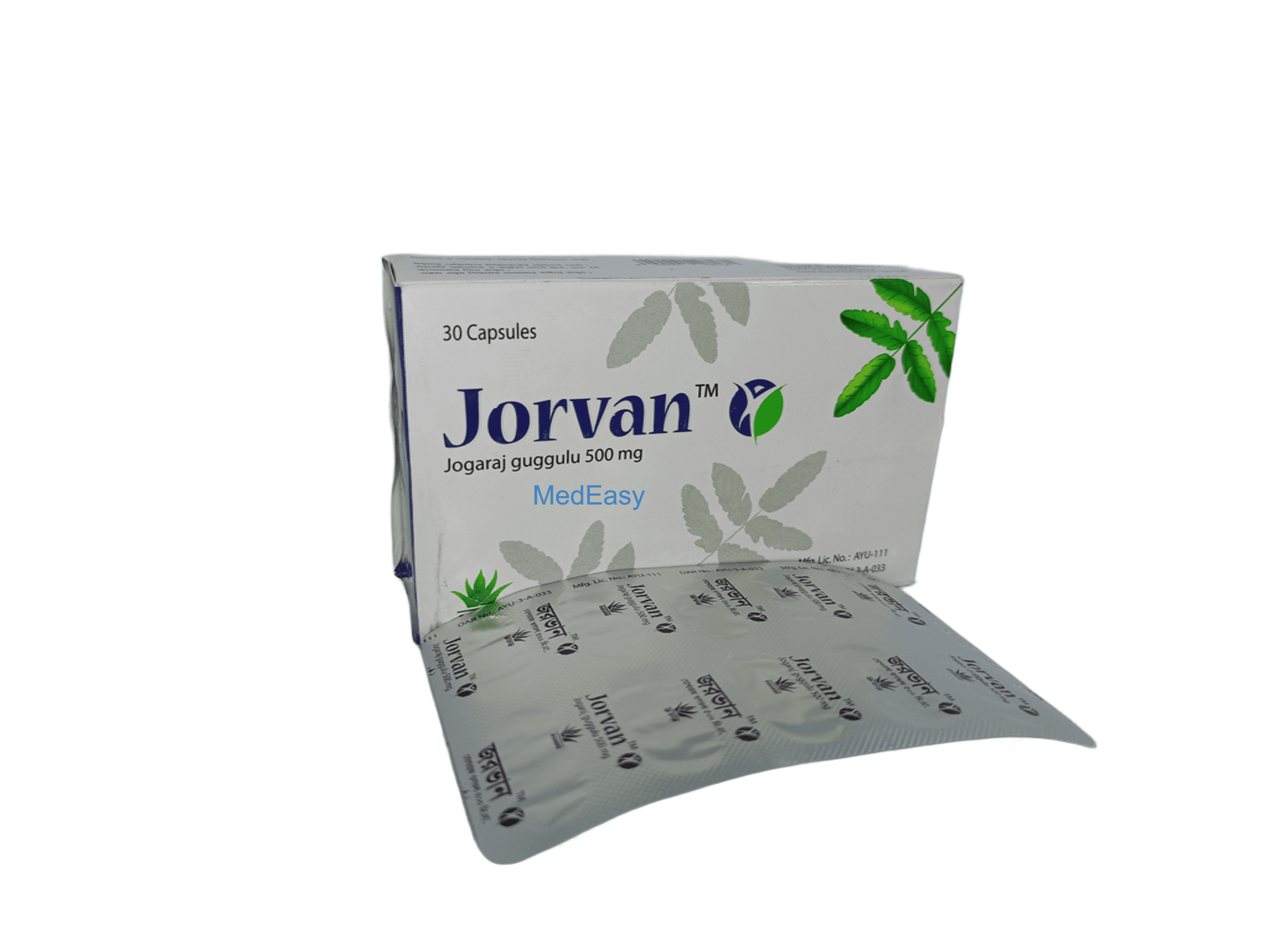

Medicine overview
Indications of Jorvan
Jorvan is a classical Ayurvedic herbo-mineral formulation. Its use is based ontraditional Ayurvedic practice and long-standing anecdotal experience rather than robust modernrandomized controlled trials, and it is not an FDA-approved or globally regulator-approvedpharmaceutical drug. Evidence should be understood as traditional/observational, not high-qualityclinical-trial evidence.
| Traditional use | Evidence basis |
|---|---|
| Symptomatic relief of joint pain, stiffness, and mild rheumatic/musculoskeletal discomfort ("Vata" disorders, Amavata-type presentations) | Traditional Ayurvedic use, anecdotal/experiential |
| General supportive use in chronic low-grade joint and muscular discomfort as an adjunct to lifestyle measures | Traditional use; not a substitute for disease-modifying therapy |
| Sciatica-type and lower-back discomfort (traditional Vata-Shamaka indication) | Traditional use only |
Jorvan is not a substitute for conventional diagnosis or treatment of inflammatoryarthritis, autoimmune joint disease, gout, infection, or fracture. Persistent, severe, or worseningjoint symptoms warrant evaluation by a physician rather than reliance on Jorvan alone.
Composition
Jogaraj Guggulu is a polyherbal/herbo-mineral compound formulated around purified guggul (resin ofCommiphora mukul) as the principal ingredient, combined — per classical Ayurvedicformularies — with a large number of supporting herbs and spices (such as components of Trikatu,Triphala, and other traditional Vata-pacifying herbs). The exact quantitative composition,number of ingredients, and standardization method vary by manufacturer, as Jogaraj Guggulu is a traditionalformulation rather than a single-molecule pharmaceutical product.
Because composition is not standardized across manufacturers, patients should check the specificproduct label of the Jogaraj Guggulu product they are using for its exact ingredient list and strength.
Description
Jorvan is a traditional Ayurvedic herbo-mineral tablet/pill preparation used in South Asiantraditional medicine systems for symptomatic support of joint, muscle, and mild rheumaticcomplaints. It belongs to the broader family of classical "Guggulu Kalpana" (guggul-based)formulations described in Ayurvedic texts for pacifying the Vata dosha.
Jorvan is manufactured and sold as a traditional/herbal medicine rather than as a modernallopathic pharmaceutical, and its use should generally be guided by a qualified Ayurvedicpractitioner or physician.
Therapeutic Class
Traditional Ayurvedic herbo-mineral formulation (Guggulu Kalpana / Vata-Shamaka category); Jorvan is not classified under a modern pharmacological drug class.
Pharmacology
Jogaraj Guggulu is described in Ayurvedic pharmacology as a Vata-pacifying ("Vata-Shamaka") and mildKapha-reducing formulation. Its principal component, guggul resin, contains plant sterols(guggulsterones) that have been studied in modern pharmacological research for anti-inflammatory,lipid-modulating, and mild analgesic properties in preclinical and limited clinical studies ofguggul extracts generally.
However, formulation-specific clinical pharmacology data for Jogaraj Guggulu as a whole compound (asopposed to isolated guggul) are limited, and its traditional mechanism of action ("balancingVata dosha") is a traditional medicine concept rather than a modern receptor- or enzyme-basedmechanism verified by controlled trials.
Dosage & Administration of Jorvan
General dosing
| Population | Typical traditional dose | Notes |
|---|---|---|
| Adults | Approximately 250–500 mg (commonly 1–2 tablets/pills) twice daily, taken after meals with warm water or as directed on the product label | Exact strength varies by manufacturer; follow the specific product label or a practitioner's advice |
| Elderly | Same general range, individualized | Use under practitioner guidance, particularly with comorbidities |
| Children | Not recommended without professional guidance | See Pediatric Use |
Duration of use should be determined by a qualified Ayurvedic practitioner or physician basedon response; Jorvan is generally not intended for indefinite, unsupervised long-term self-use.
Administration of Jorvan
Jorvan is taken orally, usually swallowed with warm water (sometimes milk, per traditional practice) after meals, unless the product label or a practitioner directs otherwise.
Interaction of Jorvan
Jorvan contains guggul, which has recognized pharmacological interactions:
- Thyroid medications (e.g., levothyroxine): guggul may stimulate thyroid activity and could alter the effect of thyroid hormone replacement or thyroid disease management; thyroid function and dosing may need monitoring.
- Anticoagulants/antiplatelet agents (e.g., warfarin, aspirin, clopidogrel): guggul has mild antiplatelet activity in some studies, which may theoretically increase bleeding risk when combined with Jorvan.
- Propranolol and diltiazem: guggul has been reported to reduce the bioavailability of these drugs, potentially reducing their effectiveness.
Patients on any prescription medication should inform their physician before starting Jorvan to avoid clinically significant interactions.
Contraindications
Jogaraj Guggulu is contraindicated in:
- Known hypersensitivity to guggul or any other component of the Jogaraj Guggulu formulation.
- Pregnancy — guggul has a traditional reputation as a uterine stimulant and Jogaraj Guggulu should be avoided in pregnant patients.
Side Effects of Jorvan
Reported side effects of Jorvan and guggul-based formulations include:
- Mild gastrointestinal upset, nausea, or diarrhea
- Skin rash or itching (allergic/hypersensitivity reactions)
- Headache
- Rarely, alteration of thyroid function with prolonged use
- Rare reports of liver enzyme changes with long-term, high-dose guggul use
Patients experiencing rash, jaundice, unusual bleeding, or persistent gastrointestinal symptomswhile taking Jorvan should stop use and seek medical advice.
Pregnancy & Lactation
Pregnancy: Jorvan should be avoided during pregnancy. Guggul, its principalingredient, has a traditional reputation as a uterine stimulant, and safety in pregnancy has notbeen established; use only if a qualified physician specifically advises it, which is uncommon.
Lactation: There is insufficient data on the safety of Jorvan duringbreastfeeding. Use only if clearly needed and a physician determines potential benefit justifiespotential risk to the infant; consult a physician before use while breastfeeding.
Precautions & Warnings
- Composition and standardization of Jorvan vary by manufacturer; use only products from areputable manufacturer and follow the specific product's labeled dose.
- Use Jorvan under the guidance of a qualified Ayurvedic practitioner or physician rather than asself-directed long-term therapy.
- Persistent, severe, or worsening joint pain, swelling, fever, or deformity warrants conventionalmedical evaluation rather than reliance on Jorvan alone (see Contraindications for pregnancy andhypersensitivity, and Interactions for thyroid medicine/anticoagulant caution).
- Use with caution in patients with known thyroid disorders or those on anticoagulant/antiplatelettherapy.
- Avoid use in children without specific professional guidance.
Overdose Effects of Jorvan
There is no well-established modern clinical dataset describing a specific overdose syndrome forJorvan. Excessive intake may worsen the gastrointestinal and hypersensitivity side effects describedabove. If accidental overdose or ingestion of a substantially larger-than-recommended amount ofJorvan is suspected, seek immediate medical attention or contact a poison control center/emergencyservices rather than attempting home treatment.
Storage Conditions
Store at room temperature (below 30°C), away from light and moisture. Keep out of reach of children.
Use In Special Populations
Pediatric: Safety and efficacy of Jorvan have not been established in children;avoid use unless specifically directed by a qualified Ayurvedic practitioner or pediatrician.
Elderly: Jorvan may be used per standard traditional dosing with practitionerguidance, with attention to comorbidities and concurrent medications (see Interactions).
Renal/hepatic impairment: Data are insufficient to establish a specific doseadjustment for Jorvan in renal or hepatic impairment; such patients should use Jorvan only undermedical supervision.
Duration Of Treatment
Duration of Jorvan use is variable and should be determined by the treating Ayurvedic practitioner or physician based on the condition being treated and response to therapy, typically reviewed after several weeks; Jorvan is not intended for indefinite, unsupervised long-term self-use.
Drug Classes
Traditional Ayurvedic Rasayana / Guggulu Kalpana (guggul-based, Vata-pacifying) herbo-mineral formulation; Jogaraj Guggulu does not belong to a conventional modern pharmacological drug class.
Mode Of Action
In traditional Ayurvedic doctrine, Jogaraj Guggulu is described as acting by pacifying the Vata dosha andsupporting healthy joint and musculoskeletal function. In modern pharmacological terms, itsprincipal ingredient guggul contains guggulsterones, which have shown anti-inflammatory and mildanalgesic activity in preclinical research; however, controlled clinical trial evidence specificallyvalidating the mode of action of the combined Jogaraj Guggulu formulation is limited.
Pediatric Uses
Safety and efficacy of Jorvan have not been established in pediatric patients. Jorvan should be avoided in children unless specifically recommended and supervised by a qualified Ayurvedic practitioner or physician.
Frequently Asked Questions
Q: What is Jorvan 500 mg Capsule used for?
A: Jorvan 500 mg Capsule is a traditional Ayurvedic herbo-mineral formulation used for symptomatic relief of joint pain, stiffness, and mild rheumatic or musculoskeletal discomfort. Its use is based on traditional Ayurvedic practice rather than robust modern clinical trial evidence, and it is not a substitute for conventional treatment of diagnosed joint disease.
Q: Can Jorvan 500 mg Capsule be taken during pregnancy?
A: No. Jorvan 500 mg Capsule should be avoided during pregnancy because its principal ingredient, guggul, has a traditional reputation as a uterine stimulant and safety in pregnancy has not been established.
Q: Does Jorvan 500 mg Capsule interact with other medicines?
A: Yes. Jorvan 500 mg Capsule may interact with thyroid medications (altering thyroid hormone effect), anticoagulant/antiplatelet drugs (potentially increasing bleeding risk), and propranolol or diltiazem (reduced effectiveness). Tell your physician about all medicines you take before starting Jorvan 500 mg Capsule.
Q: Is Jorvan 500 mg Capsule safe for children?
A: Safety and efficacy of Jorvan 500 mg Capsule have not been established in children, and it should be avoided in pediatric patients unless specifically directed and supervised by a qualified Ayurvedic practitioner or physician.
Q: What are the side effects of Jorvan 500 mg Capsule?
A: Jorvan 500 mg Capsule may cause mild gastrointestinal upset, diarrhea, skin rash or itching, headache, and, rarely, changes in thyroid function or liver enzymes with prolonged use. Stop use and seek medical advice if you develop rash, jaundice, unusual bleeding, or persistent gastrointestinal symptoms.
Q: What should I do if I take too much Jorvan 500 mg Capsule?
A: If you suspect an overdose or accidental excessive intake of Jorvan 500 mg Capsule, seek immediate medical attention or contact a poison control center or emergency services rather than attempting home treatment.
Disclaimer
The information provided is accurate to the best of our knowledge, but it does not replace professional medical advice. We cannot guarantee its completeness or accuracy, and the absence of specific information about a drug should not be taken as an endorsement. We are not responsible for any consequences arising from this information, so please consult a healthcare professional for any concerns or questions.
