
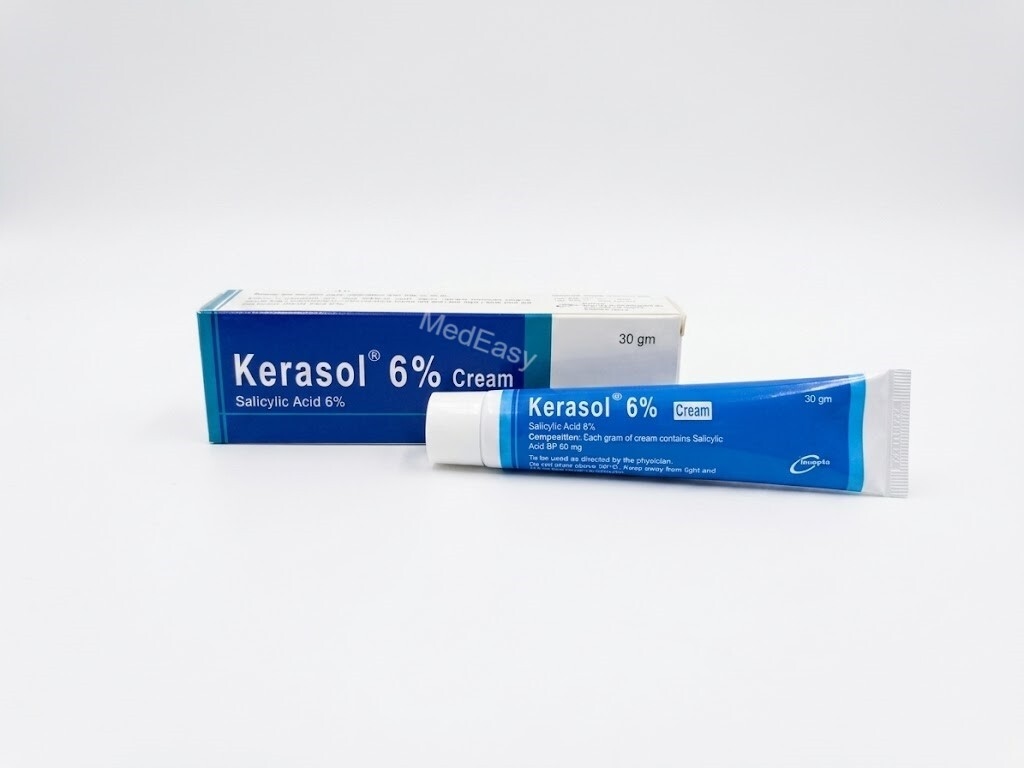
10% Off
Kerasol6%
Incepta Pharmaceuticals Ltd.
৳58.50
Add to cart


Keranil is a topical keratolytic (skin-peeling) agent used for a range of hyperkeratotic and scaling skin conditions. Its evidence and approved uses vary by concentration and formulation (gel, lotion, shampoo, plaster/pad, cream).
Each formulation of Salicylic Acid contains Salicylic Acid as the active ingredient in a concentration appropriate to its intended use, ranging from approximately 0.5% to 2% in acne washes/gels, 2%-3% in dandruff shampoos and psoriasis preparations, and 17% to 40% in wart-removal products and corn/callus plasters. It is formulated in vehicles such as gel, lotion, cream, foaming cleanser, medicated shampoo, collodion-based liquid, or adhesive plaster, often combined with excipients that aid penetration and skin adherence.
Keranil is a beta-hydroxy acid (BHA) derived from willow bark and related plants, used topically for its keratolytic (skin-softening and exfoliating) properties. It works by dissolving the intercellular cement that holds dead skin cells together, promoting shedding of the outer skin layer (desquamation) and softening of thickened, hardened, or excess keratin.
Keranil is available in numerous non-prescription and prescription-strength formulations for acne, warts, corns, calluses, dandruff, seborrheic dermatitis, and psoriasis, and it is also used at higher concentrations in professional chemical peels.
Topical keratolytic agent; Beta-hydroxy acid (BHA); Anti-acne and anti-dandruff/anti-psoriatic topical preparation.
Salicylic Acid exerts its keratolytic effect by dissolving the intercellular cementing substance that binds corneocytes within the stratum corneum, causing the outer layer of skin to soften, loosen, and shed. This reduces the thickness of hyperkeratotic skin (as in warts, corns, and calluses), helps clear follicular plugging in acne, and lifts adherent scale in dandruff, seborrheic dermatitis, and psoriasis.
At low concentrations it also has mild comedolytic and anti-inflammatory properties useful in acne. At higher concentrations used in chemical peels, it penetrates into the epidermis, is self-limiting due to precipitation on the skin surface ("frosting"), and promotes epidermal renewal. A small fraction of applied Salicylic Acid is absorbed systemically and metabolized similarly to orally administered salicylates, which is clinically relevant only with extensive application over large body surface areas or under occlusion.
| Indication | Typical Strength | Directions |
|---|---|---|
| Acne | 0.5%-2% gel/lotion/cleanser | Apply a thin layer to affected area(s) 1-2 times daily after cleansing; allow skin to fully dry before application. |
| Warts (common/plantar) | 17%-40% liquid, gel, or plaster | Soak the wart in warm water for 5 minutes, apply directly to the wart only (avoid surrounding skin), and cover as directed; repeat daily for up to 12 weeks. Higher-strength plasters are typically changed every 48 hours. |
| Dandruff/seborrheic dermatitis | 2%-3% shampoo | Massage into wet scalp, leave for several minutes, then rinse; use 2-3 times weekly or as directed. |
| Psoriasis scale/corns & calluses | 3%-6% (psoriasis); 40% plaster (corns/calluses) | Apply as directed by a physician, typically at night under occlusion for psoriasis scale removal; corn/callus plasters applied and changed per product instructions. |
Always follow the specific product's instructions or physician's directions, as concentration and vehicle strongly affect the correct regimen.
For external/topical use only. Wash and dry the area before application. Apply only to the affected skin, avoiding healthy surrounding skin, eyes, lips, mucous membranes, and open wounds. Do not apply to large body surface areas or use with other irritant topical products (e.g., retinoids, benzoyl peroxide) simultaneously without medical advice, as this increases irritation. Wash hands after application unless hands are the treated area.
Keranil is primarily used topically, so systemic drug interactions are uncommon but can occur with extensive application or in combination with other topical/systemic agents:
Salicylic Acid is contraindicated in:
Local skin reactions are the most common adverse effects of Keranil and are usually dose- and concentration-dependent:
Topical Keranil, when used on limited areas as directed, results in minimal systemic absorption; however, formal safety data in pregnancy and lactation are limited. As a general precaution, Keranil should be used during pregnancy and breastfeeding only if clearly needed, at the lowest effective concentration and over the smallest area, and only after consulting a physician, since higher-concentration or extensive-area use could result in systemic salicylate absorption. Application to the breast area should be avoided while breastfeeding to prevent inadvertent infant ingestion.
Use Keranil only as directed on the product label or by a physician. Avoid contact with eyes, lips, mouth, mucous membranes, and normal skin surrounding the treated area; rinse thoroughly with water if accidental contact occurs. Do not apply to large areas of the body or use for prolonged periods without medical supervision, as this increases the risk of systemic salicylate absorption and toxicity, particularly in children, the elderly, and patients with renal or hepatic impairment. Avoid use in children with chickenpox or influenza-like viral illness due to a theoretical association between salicylates and Reye's syndrome, although the systemic absorption from typical topical use is far lower than with oral aspirin. Discontinue use and consult a physician if excessive skin irritation, redness, swelling, or signs of infection develop. Do not use with a heating pad or bandage that increases absorption unless directed. Avoid concurrent use with other potentially irritating topical products unless advised by a physician.
Overdose or salicylate toxicity from topical Keranil is uncommon but can occur with extensive application over large body surface areas, prolonged occlusive use, or accidental ingestion. Symptoms may include ringing in the ears (tinnitus), nausea, vomiting, rapid or deep breathing, confusion, dizziness, or drowsiness. If accidental ingestion occurs or symptoms of systemic toxicity develop, seek immediate medical attention or contact a poison control center/emergency services right away. Do not attempt home treatment for suspected salicylate toxicity.
Store at room temperature (below 30°C), away from light and moisture. Keep out of reach of children. Keep the container tightly closed and avoid exposure to excessive heat or direct sunlight.
Elderly: Use with caution; elderly patients may have thinner skin and reduced peripheral circulation, increasing risk of irritation, ulceration, or systemic absorption - avoid use on the feet without medical supervision, especially with diabetes or vascular disease.
Renal or hepatic impairment: Use with caution and avoid extensive application, as impaired clearance of absorbed salicylate could increase systemic toxicity risk.
Diabetic patients: Avoid self-treatment of foot warts, corns, or calluses with Keranil; use only under direct medical supervision due to risk of poor wound healing and ulceration.
Duration varies by indication: acne preparations are typically used continuously for 6-12 weeks to assess benefit; wart-removal regimens are generally continued daily for up to 12 weeks or until the wart resolves; dandruff/seborrheic dermatitis shampoos are used 2-3 times weekly on an ongoing basis; psoriasis scale-softening use should follow physician direction. If no improvement is seen within the expected timeframe, or if irritation develops, discontinue and consult a physician.
Keratolytic agents; Beta-hydroxy acids (BHA); Topical anti-acne agents; Topical anti-psoriatic/anti-dandruff agents.
Salicylic Acid acts by dissolving the intercellular cement (desmosomal attachments) between corneocytes in the stratum corneum, leading to controlled desquamation of the outer skin layer. This reduces hyperkeratosis, softens thickened skin (as in warts, corns, and calluses), unclogs pilosebaceous follicles in acne, and loosens adherent scale in dandruff, seborrheic dermatitis, and psoriasis.
Use of Keranil in children requires caution due to a larger body-surface-area-to-weight ratio, which increases the risk of systemic salicylate absorption and toxicity compared with adults. Low-concentration acne products are generally not recommended below the age indicated on product labeling (commonly 12 years for many OTC formulations, per manufacturer directions). Wart-removal products at higher concentrations should be used in children only under adult supervision, applied strictly to the wart, and for limited duration. Keranil should not be used in infants under 2 years of age unless directed by a physician, and should be avoided in children with chickenpox or flu-like illness due to a theoretical Reye's syndrome concern. Safety and efficacy of higher-concentration professional peel formulations have not been established in children.
Q: What is Keranil 6% Cream used for?
A: Keranil 6% Cream is a topical keratolytic used mainly to treat acne, remove common and plantar warts, reduce dandruff and seborrheic dermatitis scaling, soften corns and calluses, and as an adjunct in managing psoriasis scale.
Q: Can I use Keranil 6% Cream if I have diabetes?
A: People with diabetes should not use Keranil 6% Cream on their feet without direct medical supervision, because reduced circulation and nerve sensation increase the risk of skin ulceration, poor wound healing, and infection.
Q: Is Keranil 6% Cream safe during pregnancy or breastfeeding?
A: Keranil 6% Cream should be used during pregnancy and breastfeeding only if clearly needed, at the lowest effective concentration over the smallest area, and after consulting a physician, since systemic absorption is possible with extensive or prolonged use; breast-area application should be avoided while breastfeeding.
Q: Can children use Keranil 6% Cream?
A: Keranil 6% Cream should be used in children only as directed by a physician or product labeling, avoided in infants under 2 years unless a doctor advises otherwise, and avoided in children with chickenpox or flu-like illness due to a theoretical link between salicylates and Reye's syndrome.
Q: What should I do if I accidentally swallow Keranil 6% Cream or apply too much?
A: If accidental ingestion occurs or you notice ringing in the ears, nausea, rapid breathing, or confusion after extensive use of Keranil 6% Cream, seek immediate medical attention or contact a poison control center/emergency services right away.
Q: What side effects can Keranil 6% Cream cause?
A: Common side effects of Keranil 6% Cream include burning, stinging, redness, dryness, and peeling at the application site; excessive use, high concentrations, or use on broken skin can rarely cause chemical burns or skin ulceration.
Disclaimer
The information provided is accurate to the best of our knowledge, but it does not replace professional medical advice. We cannot guarantee its completeness or accuracy, and the absence of specific information about a drug should not be taken as an endorsement. We are not responsible for any consequences arising from this information, so please consult a healthcare professional for any concerns or questions.
