
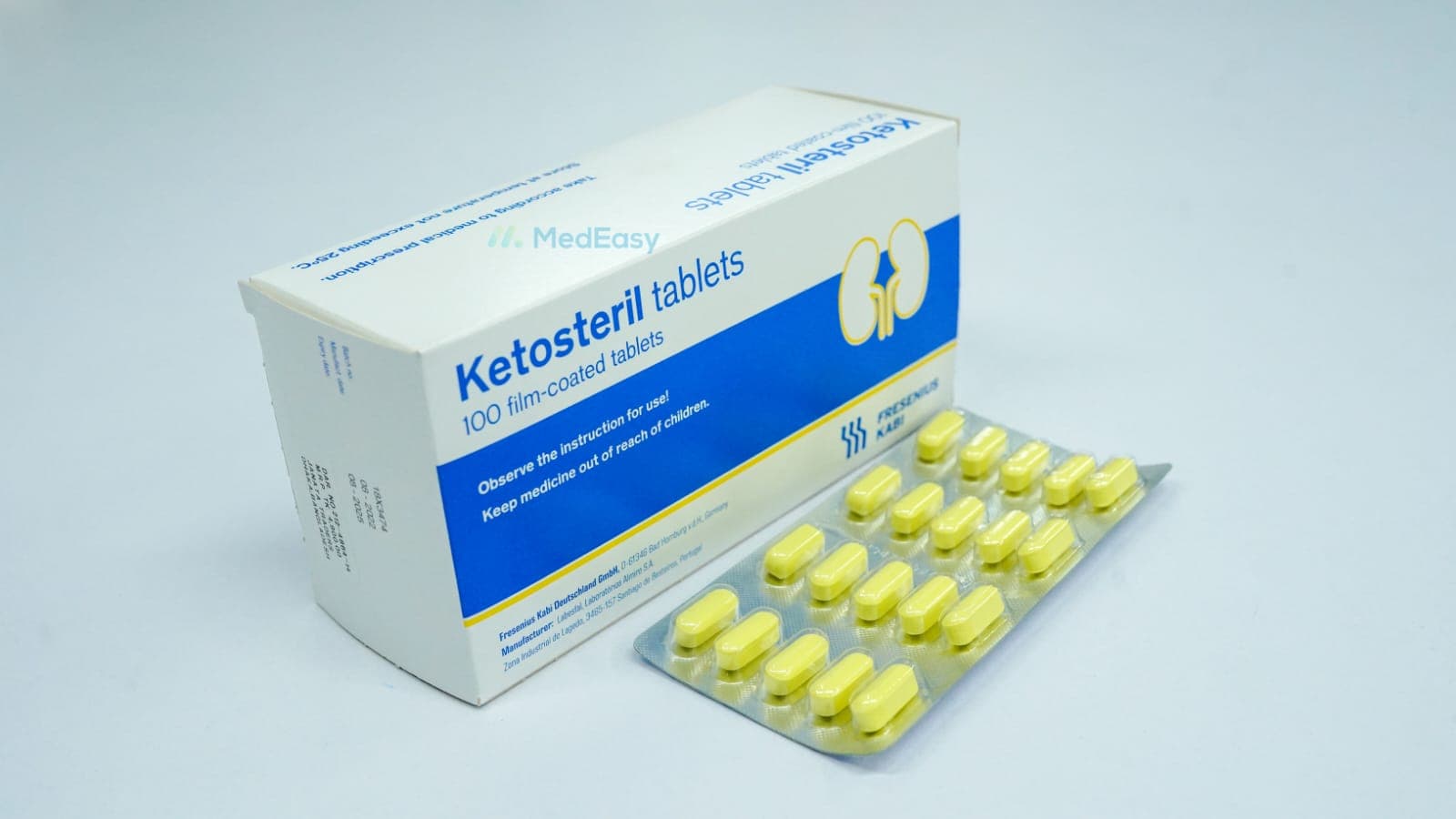

Medicine overview
Indications of Ketosteril
Ketosteril is a combination nutritional supplement (a mixture of essential and non-essential amino acids together with elemental calcium) used to support nutritional status and calcium intake. It is not a substitute for a prescription medicine used to treat a specific disease.
- General nutritional support: for individuals with increased protein/amino acid and calcium requirements (e.g., convalescence after illness or surgery, poor dietary intake, general debility).
- Calcium intake support: as an adjunct to support daily calcium intake when dietary calcium is insufficient, often marketed for bone health support.
- Recovery/convalescence support: as an adjunct nutritional aid during recovery from illness, surgery, or periods of catabolic stress, alongside adequate diet.
- Growth and maintenance support: in growing children, pregnant/lactating women, and elderly individuals with increased nutritional demand, used under medical or nutritional guidance.
Ketosteril does not replace a balanced diet or specific medical treatment for a diagnosed nutritional deficiency, osteoporosis, or metabolic bone disease; such conditions require individualized medical management.
Composition
Amino acid + Calcium is formulated as a combination of essential and non-essential amino acids (such as lysine, arginine, glycine, and others, depending on the specific brand/formulation) together with elemental calcium, usually provided as a calcium salt (e.g., calcium carbonate, calcium lactate, or calcium gluconate). Exact amino acid profile and calcium strength vary by manufacturer and product presentation (tablet, capsule, or oral liquid/syrup). Always check the product label/pack insert for the exact composition and strength of the specific brand dispensed.
Description
Ketosteril is an oral nutritional supplement that combines a blend of amino acids with calcium. Amino acids are the building blocks of body proteins and are involved in tissue repair, enzyme and hormone synthesis, and general metabolism, while calcium is an essential mineral required for bone and teeth mineralization, muscle contraction, nerve signaling, and blood clotting. Ketosteril is intended to supplement dietary intake of these nutrients and is available over the counter as tablets, capsules, or oral liquid, typically used alongside, not instead of, a balanced diet.
Therapeutic Class
Nutritional supplement – Amino acid and mineral (calcium) combination; Ketosteril belongs to the class of multi-nutrient dietary supplements.
Pharmacology
Amino acids in Amino acid + Calcium act as substrates for protein synthesis, supporting tissue repair and maintenance, enzyme and hormone production, and nitrogen balance, particularly during periods of increased demand such as illness, surgery, or growth.
Calcium is absorbed mainly in the small intestine (an active, vitamin D-dependent process, supplemented by passive diffusion at higher intakes) and is essential for bone mineralization, muscle contraction, neurotransmission, and coagulation. Absorption efficiency decreases as intake increases and is influenced by concurrent vitamin D status, dietary factors, and gastric acidity.
Together, the combination in Amino acid + Calcium is intended to support overall protein and calcium nutritional status rather than to produce a specific pharmacologic/therapeutic drug effect.
Dosage & Administration of Ketosteril
| Population/Use | Typical Dosing |
|---|---|
| Adults | As directed on the product label or by a physician/nutritionist, typically 1 tablet/capsule or one measured dose of liquid, once or twice daily, preferably with or after meals. |
| Elderly | Similar to adult dosing; consider individual calcium requirements and renal function; use under medical guidance. |
| Children | Only under medical or pediatric-nutritionist guidance; dose is individualized by age, weight, and nutritional need. Safety and dosing of Ketosteril in infants and young children have not been formally established for self-directed use. |
| Pregnancy/Lactation | Use only on the advice of a physician, taking into account total dietary calcium intake (see Pregnancy and Lactation section). |
Ketosteril should be taken with adequate fluids. If a dose is combined with certain medicines that interact with calcium (see Interactions), dosing should be separated by at least 2 hours. Do not exceed the dose recommended on the product label or by a healthcare professional; total calcium intake from Ketosteril plus diet and any other supplements should stay within recommended daily limits.
Administration of Ketosteril
Ketosteril is administered orally. Tablets/capsules should be swallowed with a glass of water, preferably with or shortly after meals to improve tolerability and calcium absorption. Oral liquid formulations should be measured using the calibrated cup/spoon provided and may be taken directly or mixed with water/juice as directed on the label. Doses should be separated by at least 2 hours from interacting medicines (see Interactions).
Interaction of Ketosteril
The calcium component of Ketosteril can reduce the absorption of several medicines if taken at the same time, by forming insoluble complexes in the gut:
- Tetracyclines and fluoroquinolone antibiotics (e.g., doxycycline, ciprofloxacin) – reduced antibiotic absorption and efficacy; separate dosing by at least 2–3 hours.
- Bisphosphonates (e.g., alendronate) – markedly reduced absorption; bisphosphonates should be taken well before Ketosteril or other calcium-containing products, per bisphosphonate labeling.
- Thyroid hormone replacement (levothyroxine) – reduced absorption of levothyroxine; separate administration by at least 4 hours.
- Oral iron supplements – calcium can reduce iron absorption; separate dosing if both are required.
Amino acid supplementation is generally not associated with major clinically significant drug interactions, but very high protein/amino acid intake could theoretically affect dosing of drugs with a narrow therapeutic index handled by protein-sensitive pathways; consult a physician if taking multiple medicines.
Contraindications
Amino acid + Calcium is contraindicated in individuals with:
- Known hypersensitivity/allergy to any amino acid component, calcium, or any excipient in the specific product formulation.
- Hypercalcemia (elevated blood calcium) or conditions predisposing to hypercalcemia (e.g., hyperparathyroidism, certain malignancies), where additional calcium intake could worsen the condition.
- Severe renal impairment, in which both amino acid/protein load and calcium excretion are significantly compromised, unless specifically directed and monitored by a physician.
Side Effects of Ketosteril
Ketosteril is generally well tolerated when used as directed. Reported side effects are usually mild and related to the calcium component:
- Mild gastrointestinal upset – nausea, bloating, flatulence, or constipation.
- Rarely, with excessive/prolonged intake beyond recommended limits – symptoms of hypercalcemia (see Overdose section).
Report persistent or severe side effects to a physician or pharmacist.
Pregnancy & Lactation
Amino acid and calcium requirements increase during pregnancy and lactation, and supplementation is sometimes recommended by physicians as part of antenatal/postnatal nutritional care. However, Ketosteril should be used during pregnancy and breastfeeding only if clearly needed and on the advice of a physician, who can account for total dietary calcium intake and individual nutritional status; the potential benefit should justify any potential risk. Avoid exceeding the recommended total daily calcium intake from all combined dietary and supplement sources during pregnancy and lactation.
Precautions & Warnings
- Use with caution in patients with renal impairment, as both amino acid/protein load and calcium excretion may be affected; medical supervision is advised (see Contraindications for severe renal impairment).
- Avoid exceeding the recommended daily calcium intake from all combined dietary and supplement sources, as excess calcium intake over time may increase the risk of hypercalcemia, kidney stones, or vascular calcification.
- Separate dosing of Ketosteril from interacting medicines such as tetracyclines, fluoroquinolones, bisphosphonates, and thyroid hormone (see Interactions).
- Ketosteril does not replace a balanced diet or specific medical nutrition therapy for a diagnosed nutritional deficiency or bone disease; it is intended as a dietary adjunct.
- Mild gastrointestinal upset may occur; taking doses with food can improve tolerability.
Overdose Effects of Ketosteril
Excessive or prolonged intake of Ketosteril beyond recommended amounts may lead to hypercalcemia, with symptoms such as nausea, vomiting, constipation, abdominal pain, excessive thirst, frequent urination, muscle weakness, or confusion; very high amino acid/protein intake may cause gastrointestinal upset. If overdose is suspected or these symptoms occur, stop the product and seek immediate medical attention or contact a poison control center/emergency services; do not attempt specific home treatment.
Storage Conditions
Store at room temperature (below 30°C), away from light and moisture. Keep out of reach of children.
Use In Special Populations
- Renal impairment: Use Ketosteril with caution and under medical supervision, as clearance of both calcium and amino acid load may be affected; contraindicated in severe renal impairment (see Contraindications).
- Hepatic impairment: No well-established dose adjustment is defined; use amino acid-containing supplements cautiously and under medical advice in significant hepatic impairment.
- Elderly: Commonly used to support age-related increased calcium and protein needs; monitor total calcium intake and renal function.
- Pediatric: Use only under medical or pediatric-nutritionist guidance with age-appropriate dosing (see Pediatric Uses).
- Pregnancy/Lactation: Use only if clearly needed and advised by a physician (see Pregnancy and Lactation).
Duration Of Treatment
The duration of use of Ketosteril depends on the underlying nutritional need and should be determined by a physician or nutritionist; it is often used for a defined period during recovery/convalescence or reassessed periodically (e.g., every few months) when used for ongoing nutritional or calcium support. It is not intended for indefinite use without periodic medical review of continued need and total calcium intake.
Drug Classes
Amino acid supplements; Calcium supplements; Combination nutritional/dietary supplements
Mode Of Action
Amino acid + Calcium does not have a single pharmacologic mechanism of action in the drug sense; rather, its amino acid component supplies substrates for protein synthesis and tissue repair, while its calcium component is absorbed in the intestine and utilized for bone mineralization, neuromuscular transmission, and coagulation, thereby supporting overall nutritional and mineral status when dietary intake is insufficient.
Pediatric Uses
Ketosteril may be used in children under medical or pediatric-nutritionist supervision to support growth-related nutritional and calcium needs, particularly when dietary intake is inadequate, with dosing individualized by age and weight. Safety and efficacy of self-directed use of Ketosteril in infants and young children have not been formally established, and such use should always be guided by a pediatrician or qualified healthcare provider rather than parental discretion alone.
Frequently Asked Questions
Q: What is Ketosteril . Tablet used for?
A: Ketosteril . Tablet is a nutritional supplement combining amino acids and calcium, used to support general nutrition, calcium intake, bone health, and recovery/convalescence when dietary intake is insufficient. It is not a treatment for a specific disease.
Q: Can I take Ketosteril . Tablet with other medicines?
A: The calcium in Ketosteril . Tablet can reduce the absorption of certain medicines, including tetracycline/fluoroquinolone antibiotics, bisphosphonates, and thyroid hormone (levothyroxine). If you take any of these, separate your dose of Ketosteril . Tablet by at least 2–4 hours and inform your physician or pharmacist about all medicines and supplements you use.
Q: Is Ketosteril . Tablet safe during pregnancy and breastfeeding?
A: Ketosteril . Tablet should be used during pregnancy or breastfeeding only if clearly needed and advised by a physician, who will consider your total dietary calcium intake and nutritional status; the potential benefit should outweigh any potential risk.
Q: Who should not take Ketosteril . Tablet?
A: Ketosteril . Tablet should not be used by people with known hypersensitivity to any of its components, hypercalcemia (high blood calcium), or severe renal impairment, unless specifically directed and monitored by a physician.
Q: What happens if I take too much Ketosteril . Tablet?
A: Taking more Ketosteril . Tablet than recommended, especially over time, can lead to hypercalcemia with symptoms such as nausea, vomiting, constipation, excessive thirst, or confusion. If you suspect an overdose or notice these symptoms, stop the product and seek immediate medical attention.
Q: Can children take Ketosteril . Tablet?
A: Ketosteril . Tablet can be used in children only under the guidance of a physician or pediatric nutritionist, with the dose individualized by age and weight; it should not be given to infants or young children without medical advice.
Disclaimer
The information provided is accurate to the best of our knowledge, but it does not replace professional medical advice. We cannot guarantee its completeness or accuracy, and the absence of specific information about a drug should not be taken as an endorsement. We are not responsible for any consequences arising from this information, so please consult a healthcare professional for any concerns or questions.
