
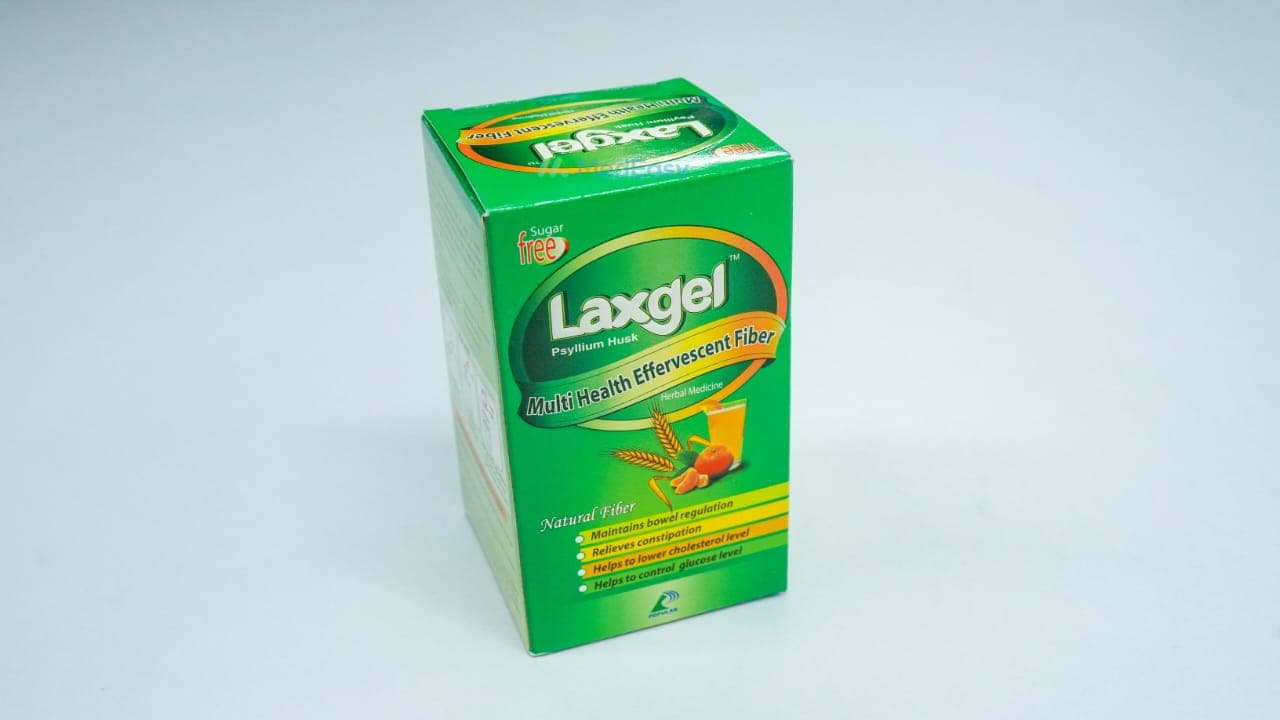

Medicine overview
Indications of Laxgel
Laxgel is a natural, soluble dietary fiber derived from the seed husks of Plantago ovata. It is indicated for the following uses, classified by strength of evidence:
Established/FDA-recognized uses
- Occasional constipation - as a bulk-forming laxative to restore and maintain regular bowel movement.
- General fiber supplementation - to increase dietary fiber intake and support bowel regularity.
Guideline-supported/adjunct uses
- Irritable bowel syndrome (IBS) - as an adjunct to help regulate stool consistency in both constipation-predominant and diarrhea-predominant IBS.
- Hyperlipidemia - as an adjunct to diet (not a substitute for dietary modification, exercise, or lipid-lowering medication) to produce a modest reduction in LDL cholesterol.
- Glycemic control support in diabetes - as an adjunct to diet and standard antidiabetic therapy to help moderate post-prandial blood glucose rise; it does not replace prescribed antidiabetic treatment.
- Hemorrhoids and anal fissures - to soften stool and reduce straining during defecation.
Use of Laxgel for cholesterol or glycemic benefits requires an adequate, consistent daily dose over several weeks and should be discussed with a physician, especially when other medications are also being taken.
Composition
Each dose of Psyllium Husk typically contains purified husk (mucilage) of Plantago ovata seeds, standardized to a defined soluble fiber content (commonly supplied as approximately 3-3.5 g of psyllium husk per sachet/spoonful in effervescent powder, granules, or capsule form). Formulations may be plain, sugar-free, or flavored, and may include effervescent agents, sweeteners, and flavoring excipients.
Description
Laxgel is a natural, non-fermentable (or minimally fermentable) soluble dietary fiber obtained from the outer coating (husk) of Plantago ovata seeds. It is classified as a bulk-forming laxative and fiber supplement. When mixed with water, Laxgel absorbs fluid and swells to form a viscous gel/mucilage that increases stool bulk and water content, promoting softer, easier-to-pass stools. It is available in Bangladesh and internationally as effervescent powder sachets, granules, and capsules, and is widely used both as an over-the-counter remedy for constipation and as a dietary fiber supplement.
Therapeutic Class
Laxgel belongs to the therapeutic class of bulk-forming laxatives and is also categorized as a dietary fiber supplement.
Pharmacology
Psyllium Husk consists of approximately 70-80% soluble fiber (arabinoxylan-based mucilage). When taken with adequate water, the husk particles absorb fluid many times their own weight and swell into a gelatinous mass within the intestinal lumen.
- Laxative effect: The increased stool bulk and moisture stimulate peristalsis (via mechanoreceptor stretch), producing a softer, bulkier stool that is easier to pass. Onset of laxative action typically occurs within 12 to 72 hours.
- Lipid-lowering effect: The viscous gel binds bile acids in the intestinal lumen, increasing their fecal excretion. This promotes hepatic conversion of cholesterol to bile acids, lowering circulating LDL cholesterol modestly with regular use.
- Glycemic effect: The gel slows gastric emptying and delays glucose absorption in the small intestine, blunting post-prandial blood glucose spikes.
Psyllium Husk is not significantly absorbed systemically; its action is largely confined to the gastrointestinal tract.
Dosage & Administration of Laxgel
| Indication | Adult Dose | Pediatric Dose |
|---|---|---|
| Constipation / general fiber supplementation | One dose (approx. 3-3.5 g Laxgel, e.g., one sachet or one heaped spoonful) mixed in a full glass of water (at least 150-240 mL), taken 1 to 3 times daily, preferably with meals | Children 6-12 years: half to one adult dose, once or twice daily, with a full glass of water. Children under 6 years: use only on physician advice |
| Adjunct for hyperlipidemia / glycemic control | Same dosing as above, taken consistently 2-3 times daily with meals for several weeks; continue alongside prescribed diet/medication | Not routinely established; use only under physician supervision |
Administration instructions
- Mix the prescribed dose (powder/granules) thoroughly in a full glass of water or other liquid (at least 150-240 mL) and stir briskly until it forms a smooth suspension.
- Drink promptly after mixing, before it thickens into a gel.
- Follow with an additional full glass of water.
- Laxgel must always be taken with adequate fluid to reduce the risk of choking or intestinal/esophageal obstruction (see Precautions and Warnings).
- If taking other oral medicines, separate dosing of Laxgel from other drugs by at least 1-2 hours (see Interaction).
Administration of Laxgel
Mix each dose of Laxgel thoroughly in a full glass (at least 150-240 mL) of water or other liquid, stir briskly, and drink immediately, followed by another glass of water. Do not swallow the dry powder or take with insufficient fluid.
Interaction of Laxgel
Laxgel can physically bind or delay the absorption of certain oral medications if taken at the same time, potentially reducing their effectiveness. Clinically notable interactions include:
- Reduced absorption of concurrently administered oral drugs in general (including some antidiabetic agents, lithium, carbamazepine, digoxin, and certain vitamins/minerals) due to physical entrapment within the fiber gel.
- Antidiabetic medications and insulin: may have an additive blood-glucose-lowering effect; blood glucose should be monitored to avoid hypoglycemia when used together.
- Anticoagulants (e.g., warfarin): altered fiber intake can affect vitamin K absorption/gut transit and may influence anticoagulant response; monitor INR if Laxgel use is started, stopped, or changed significantly.
To minimize interaction risk, take Laxgel at least 1-2 hours apart from other oral medications, unless a physician advises otherwise.
Contraindications
Psyllium Husk is contraindicated in patients with:
- Known hypersensitivity to psyllium or any component of the formulation, including rare but serious anaphylactic reactions (hypersensitivity has been reported more frequently with repeated occupational/inhalational exposure to psyllium powder, such as in healthcare workers, but oral hypersensitivity can also occur).
- Intestinal obstruction or fecal impaction, or any condition causing suspected or actual narrowing/obstruction of the gastrointestinal tract.
- Difficulty swallowing or esophageal narrowing/obstruction, due to the risk of the swollen fiber mass lodging in the esophagus and causing choking.
Side Effects of Laxgel
The most common side effects of Laxgel, especially at the start of treatment, are:
- Bloating
- Flatulence (gas)
- Abdominal distension/fullness
- Mild abdominal cramping
These effects are usually mild and tend to improve with continued use and adequate hydration; starting at a lower dose and gradually increasing can help minimize them.
Less common but more serious effects include gastrointestinal obstruction (usually related to inadequate fluid intake) and hypersensitivity reactions, including rare anaphylaxis (see Contraindications and Precautions and Warnings).
Pregnancy & Lactation
Laxgel is a non-absorbed dietary fiber and is generally considered a preferred option for constipation during pregnancy and breastfeeding because of its minimal systemic absorption. However, as with any product used during pregnancy or lactation, Laxgel should be used only if clearly needed, with the understanding that potential benefit should justify any potential risk; a physician or pharmacist should be consulted before use, particularly for prolonged use or in the presence of other medical conditions.
Precautions & Warnings
Adequate fluid intake is essential. Laxgel must always be taken with a full glass of water or more. Taking it with insufficient fluid can cause the fiber to swell and block the throat or esophagus, leading to choking, or can contribute to intestinal obstruction. Patients with any difficulty swallowing should not use Laxgel (see Contraindications).
- Drug absorption interference: May reduce absorption of other oral medications if taken simultaneously; separate dosing by 1-2 hours (see Interaction).
- New or worsening symptoms: Discontinue and consult a physician if abdominal pain, nausea, vomiting, difficulty swallowing or breathing, chest pain, or rectal bleeding occurs, or if constipation persists beyond 7 days, as these may indicate a more serious underlying condition.
- Diabetic patients: Monitor blood glucose, as Laxgel may lower blood glucose and enhance the effect of antidiabetic therapy.
- Hypersensitivity: Discontinue immediately and seek medical attention if signs of an allergic reaction (rash, itching, swelling, difficulty breathing) occur.
- Sugar-free/flavored formulations may contain sweeteners or excipients; patients with phenylketonuria or specific dietary restrictions should check the product label.
Overdose Effects of Laxgel
Excessive intake of Laxgel, particularly without adequate fluid, may lead to abdominal bloating, cramping, or intestinal or esophageal obstruction/choking. If choking, severe abdominal pain, vomiting, inability to pass stool or gas, or breathing difficulty occurs after taking Laxgel, seek immediate medical attention or contact emergency services/poison control. Do not attempt to self-treat a suspected obstruction at home.
Storage Conditions
Store at room temperature (below 30°C), away from light and moisture. Keep the container tightly closed and out of reach of children.
Use In Special Populations
Elderly patients: Laxgel is commonly used in elderly patients for constipation, but adequate fluid intake is especially important as elderly patients may have reduced thirst sensation and higher risk of swallowing difficulty or dehydration.
Renal impairment: No specific dose adjustment is generally required, but patients with fluid restriction should use Laxgel under medical supervision because of the fluid needed for safe administration.
Hepatic impairment: No well-established dose adjustment is required, as Laxgel is not systemically absorbed or hepatically metabolized.
Diabetic patients: May be used as an adjunct to help moderate blood glucose, but should be monitored for additive glucose-lowering effect with antidiabetic drugs (see Interaction).
Duration Of Treatment
For occasional constipation, Laxgel may be used until regular bowel movement is restored, generally not exceeding 7 days of self-directed use without medical advice. For chronic fiber supplementation, or adjunct use in hyperlipidemia or glycemic control, Laxgel may be used long-term/indefinitely under medical guidance, with periodic reassessment of benefit and tolerability.
Drug Classes
Bulk-forming laxative; soluble dietary fiber supplement.
Mode Of Action
Psyllium Husk absorbs water in the gastrointestinal tract and swells to form a viscous gel, increasing stool bulk and water content, which mechanically stimulates peristalsis and eases stool passage. The same gel-forming property binds intestinal bile acids (promoting their fecal loss and increasing hepatic LDL clearance) and slows gastric emptying/glucose absorption, underlying its adjunct lipid-lowering and glycemic effects.
Pediatric Uses
Laxgel may be used in children 6 years and older for constipation, generally at half to one adult dose, mixed with a full glass of water, once or twice daily. Use in children under 6 years is not recommended except under direct physician guidance, as safety and appropriate dosing have not been well established in this age group. As with adults, adequate fluid intake is essential to reduce the risk of choking or obstruction in children.
Frequently Asked Questions
Q: How quickly does Laxgel 120 gm/container Effervescent Powder work for constipation?
A: Laxgel 120 gm/container Effervescent Powder typically produces a bowel movement within 12 to 72 hours of regular use. It is not a fast-acting stimulant laxative, so it should be used consistently rather than expecting immediate relief.
Q: Can I take Laxgel 120 gm/container Effervescent Powder without mixing it in water?
A: No. Laxgel 120 gm/container Effervescent Powder must always be mixed in a full glass of water (or another liquid) and taken with an additional glass of water afterward. Taking it dry or with too little fluid can cause it to swell in the throat or esophagus, leading to choking, or can contribute to intestinal obstruction.
Q: Can Laxgel 120 gm/container Effervescent Powder be taken together with my other medicines?
A: Laxgel 120 gm/container Effervescent Powder can reduce the absorption of some oral medications if taken at the same time. It is generally recommended to take other medicines at least 1-2 hours before or after Laxgel 120 gm/container Effervescent Powder. Discuss your specific medications with your doctor or pharmacist.
Q: Is Laxgel 120 gm/container Effervescent Powder safe during pregnancy and breastfeeding?
A: Laxgel 120 gm/container Effervescent Powder is not significantly absorbed into the bloodstream and is often considered a preferred fiber option during pregnancy and breastfeeding. Even so, it should be used only if clearly needed, and a physician should be consulted before use, especially for ongoing or prolonged use.
Q: Why am I experiencing gas and bloating after starting Laxgel 120 gm/container Effervescent Powder?
A: Bloating and flatulence are common side effects of Laxgel 120 gm/container Effervescent Powder, especially when starting treatment. These effects usually improve with continued use and adequate water intake. If symptoms are severe or persistent, consult your physician.
Q: What should I do if I think I have taken too much Laxgel 120 gm/container Effervescent Powder or it feels stuck?
A: If you experience choking, severe abdominal pain, vomiting, inability to pass stool or gas, or difficulty breathing after taking Laxgel 120 gm/container Effervescent Powder, seek immediate medical attention or contact emergency services, as this may indicate an obstruction.
Disclaimer
The information provided is accurate to the best of our knowledge, but it does not replace professional medical advice. We cannot guarantee its completeness or accuracy, and the absence of specific information about a drug should not be taken as an endorsement. We are not responsible for any consequences arising from this information, so please consult a healthcare professional for any concerns or questions.
