10% Off
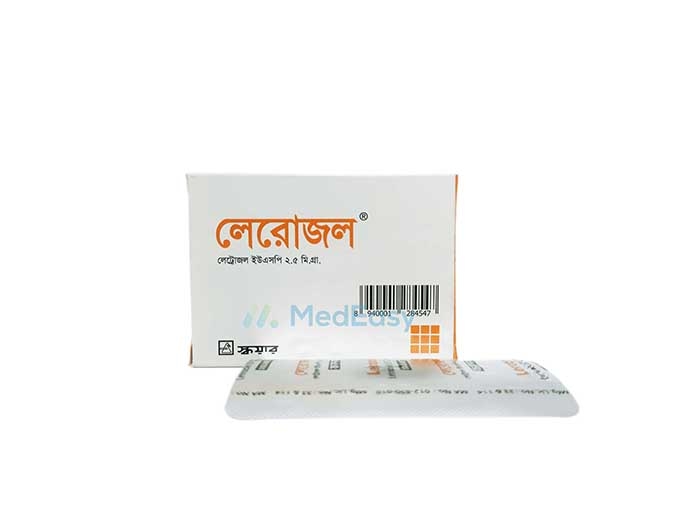
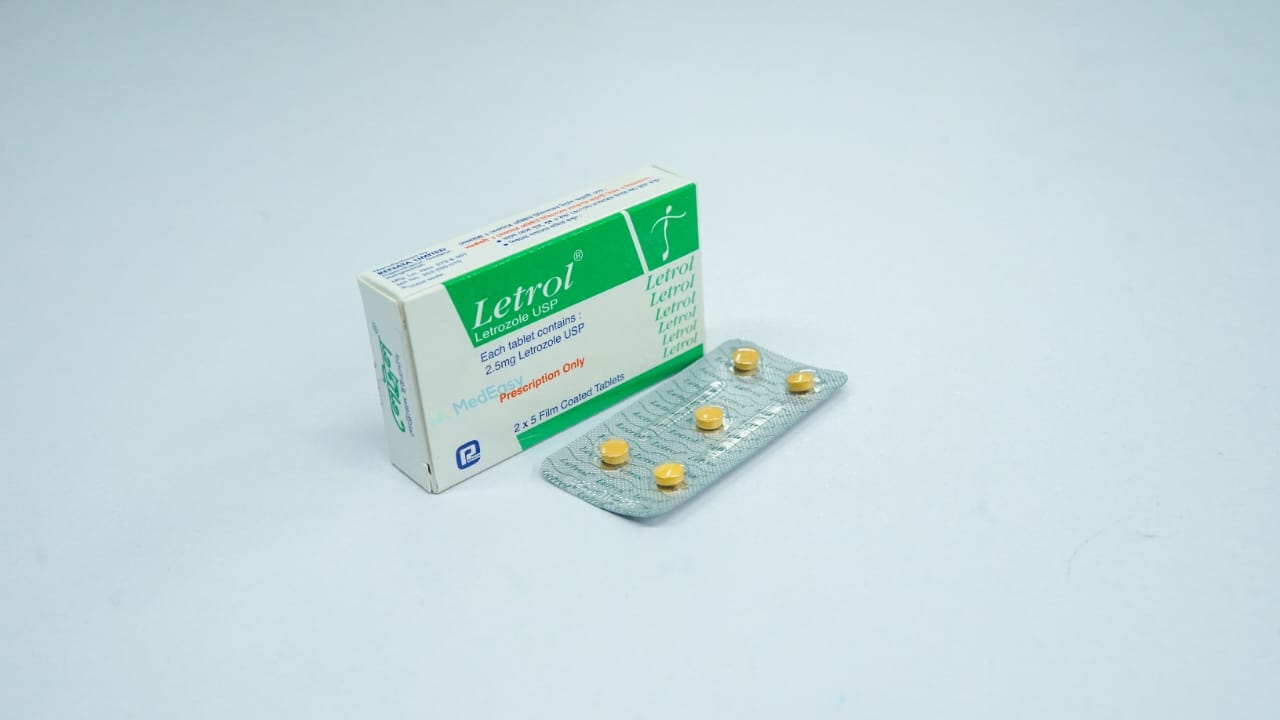
Letrol2.5 mg
Renata Limited
৳189.00
Add to cart


Letrozol is a nonsteroidal aromatase inhibitor with established and guideline-supported uses classified below by strength of evidence.
Letrozol is not indicated and is not effective for breast cancer in premenopausal women, because its mechanism of estrogen suppression depends on the postmenopausal hormonal state.
Each film-coated tablet contains Letrozole 2.5 mg as the active ingredient, along with pharmaceutically inert excipients (fillers, binders, coating agents).
Letrozol is a nonsteroidal, competitive aromatase inhibitor belonging to the class of hormonal antineoplastic agents. It is used mainly in postmenopausal women with hormone receptor-positive breast cancer, and, on a guideline-supported off-label basis, for ovulation induction in infertility. Letrozol is supplied as an oral 2.5 mg tablet.
Letrozol belongs to the aromatase inhibitor class of drugs, a subgroup of hormonal (endocrine) antineoplastic agents.
Letrozole works by competitively and reversibly binding to the heme group of the aromatase enzyme (CYP19), which is responsible for converting androgens (androstenedione and testosterone) into estrogens (estrone and estradiol) in peripheral tissues.
Letrozole is well absorbed orally, extensively metabolized in the liver (primarily via CYP3A4 and CYP2A6) to an inactive metabolite, and has an elimination half-life of approximately 2 days.
| Indication | Typical Dose | Duration |
|---|---|---|
| Adjuvant treatment, early breast cancer | 2.5 mg orally once daily | Approximately 5 years, as directed by the oncologist |
| Extended adjuvant treatment (after tamoxifen) | 2.5 mg orally once daily | As determined by the oncologist |
| Advanced or metastatic breast cancer | 2.5 mg orally once daily | Until disease progression or unacceptable toxicity |
| Ovulation induction (off-label, fertility specialist-supervised) | Commonly 2.5-7.5 mg orally once daily, starting around cycle day 3-5, for 5 days | Per treatment cycle, as directed and monitored by the fertility specialist (e.g. with ultrasound follicle tracking) |
| Severe hepatic impairment (cirrhosis) | 2.5 mg orally every other day | As directed by physician |
No dose adjustment is required for elderly patients or for renal impairment when creatinine clearance exceeds 10 mL/min. Letrozol may be taken with or without food, preferably at the same time each day.
Letrozol tablets are taken orally, with or without food, swallowed whole with water, ideally at approximately the same time each day to maintain consistent blood levels.
Only clinically significant, well-verified interactions are listed here.
No clinically significant interactions with common CYP450 inhibitors/inducers have been firmly established, but patients should inform their physician of all medicines being taken.
Letrozole is contraindicated in:
Important distinction regarding menopausal status: for the breast cancer indication, Letrozole is contraindicated / not indicated in premenopausal women, because its mechanism of action (suppressing peripheral aromatization) requires the postmenopausal hormonal state to be effective and its benefit has not been demonstrated in premenopausal patients. This is separate from the guideline-supported fertility indication, in which Letrozole is deliberately used in premenopausal women for ovulation induction under specialist supervision, provided the patient is not already pregnant.
Adverse effects of Letrozol vary somewhat by indication but commonly include:
Pregnancy: Letrozol is contraindicated during pregnancy. It can cause fetal harm, and animal studies have shown congenital malformations and pregnancy loss at doses well below the human therapeutic dose. Letrozol must not be used by pregnant women, and women of reproductive potential should be confirmed not to be pregnant before starting therapy and should use effective non-hormonal contraception during treatment and for a period after stopping, as advised by their physician.
Ovulation induction context: when Letrozol is used off-label for ovulation induction, it is given deliberately to women trying to conceive, but strictly before ovulation/conception is confirmed and under fertility-specialist supervision; it must be discontinued once pregnancy is confirmed, and is not to be continued into or resumed during an established pregnancy.
Lactation: it is not known whether Letrozol passes into human breast milk; because of the potential for serious adverse effects in a nursing infant, breastfeeding is not recommended during treatment with Letrozol. A physician should be consulted regarding breastfeeding.
Letrozol lowers estrogen levels and is associated with decreased bone mineral density and increased fracture risk with long-term use. Bone mineral density should be assessed at baseline and monitored periodically during treatment; calcium/vitamin D supplementation or bone-protective therapy may be considered per physician judgment.
Hypercholesterolemia has been observed more frequently with Letrozol than with comparator therapy. Periodic monitoring of serum cholesterol is advised, particularly in patients with pre-existing cardiovascular risk factors, who should be monitored for cardiovascular events during treatment.
In patients with severe hepatic impairment (cirrhosis), exposure to Letrozol is increased; a reduced dosing frequency is recommended (see Dosage and Administration). Use with caution in mild-to-moderate hepatic impairment.
Letrozol has been associated with fatigue and dizziness; patients should exercise caution when driving or operating machinery until they know how they respond to the medicine.
Because of the medical complexity of the conditions treated, Letrozol should be prescribed and monitored by an oncologist (for breast cancer) or a fertility specialist (for ovulation induction), with dosing individualized and adjusted based on response and tolerability.
Limited clinical experience with overdose exists. In the event of a suspected overdose of Letrozol, seek immediate medical attention or contact a poison control center / emergency services promptly. Management is supportive, including monitoring of vital signs and general symptomatic care; there is no specific antidote. Do not attempt unsupervised home treatment of an overdose.
Store at room temperature (below 30°C), away from light and moisture. Keep out of reach of children.
Treatment duration with Letrozol depends on the indication and is determined by the treating physician: adjuvant breast cancer therapy is typically continued for about 5 years; extended adjuvant and advanced/metastatic disease therapy continues as long as clinical benefit is seen and toxicity is acceptable, per oncologist assessment; ovulation induction courses are short (typically 5 days per cycle), repeated over a limited number of cycles as directed by the fertility specialist.
Letrozole is classified as a nonsteroidal aromatase inhibitor, within the broader category of hormonal (endocrine) antineoplastic agents.
Letrozole reversibly inhibits the aromatase enzyme, blocking the conversion of androgens into estrogens, which substantially lowers circulating and tissue estrogen levels — reducing estrogen-driven stimulation of hormone receptor-positive breast cancer cells, and, in the reproductive context, reducing negative feedback on the pituitary to stimulate FSH release and follicular development.
X
The safety and efficacy of Letrozol have not been established in pediatric patients. Letrozol is not recommended for use in children outside of specialist research protocols.
Q: What is Letrozol 2.5 mg Tablet used for?
A: Letrozol 2.5 mg Tablet is primarily used to treat hormone receptor-positive breast cancer in postmenopausal women, as adjuvant, extended adjuvant, or first/second-line therapy for advanced disease. It is also used off-label, under fertility-specialist supervision, to help induce ovulation in women with conditions such as polycystic ovary syndrome (PCOS).
Q: Can Letrozol 2.5 mg Tablet be used during pregnancy?
A: No. Letrozol 2.5 mg Tablet is contraindicated during pregnancy because it can cause fetal harm, including congenital malformations, based on animal studies. Women who could become pregnant should confirm they are not pregnant before starting Letrozol 2.5 mg Tablet and use effective non-hormonal contraception during and after treatment as advised by their physician.
Q: Why can Letrozol 2.5 mg Tablet be used in premenopausal women for fertility but not for breast cancer?
A: For breast cancer, Letrozol 2.5 mg Tablet works by suppressing estrogen produced from peripheral conversion of androgens, a mechanism that depends on the postmenopausal state, so it is not effective (and is contraindicated) for breast cancer in premenopausal women. For ovulation induction, doctors deliberately use the same estrogen-lowering effect in premenopausal women to trigger increased FSH and follicle development; this is an entirely different, physician-supervised clinical use, given only before pregnancy is achieved.
Q: What are the most common side effects of Letrozol 2.5 mg Tablet?
A: The most common side effects of Letrozol 2.5 mg Tablet are hot flashes and joint pain/stiffness (arthralgia), which can sometimes be significant enough to affect treatment. Fatigue, nausea, headache, and night sweats are also common. With long-term use, Letrozol 2.5 mg Tablet can cause bone density loss (raising osteoporosis and fracture risk) and elevated cholesterol, so bone health and cholesterol should be monitored periodically.
Q: Does Letrozol 2.5 mg Tablet affect bone health?
A: Yes. Letrozol 2.5 mg Tablet lowers estrogen, and long-term use is associated with decreased bone mineral density and an increased risk of osteoporosis and fractures. Physicians typically monitor bone density during treatment and may recommend calcium, vitamin D, or bone-protective therapy.
Q: What should I do if I take too much Letrozol 2.5 mg Tablet (overdose)?
A: If an overdose of Letrozol 2.5 mg Tablet is suspected, seek immediate medical attention or contact emergency services / a poison control center right away. Do not try to treat an overdose at home; treatment is supportive and should be managed by medical professionals.
Disclaimer
The information provided is accurate to the best of our knowledge, but it does not replace professional medical advice. We cannot guarantee its completeness or accuracy, and the absence of specific information about a drug should not be taken as an endorsement. We are not responsible for any consequences arising from this information, so please consult a healthcare professional for any concerns or questions.