
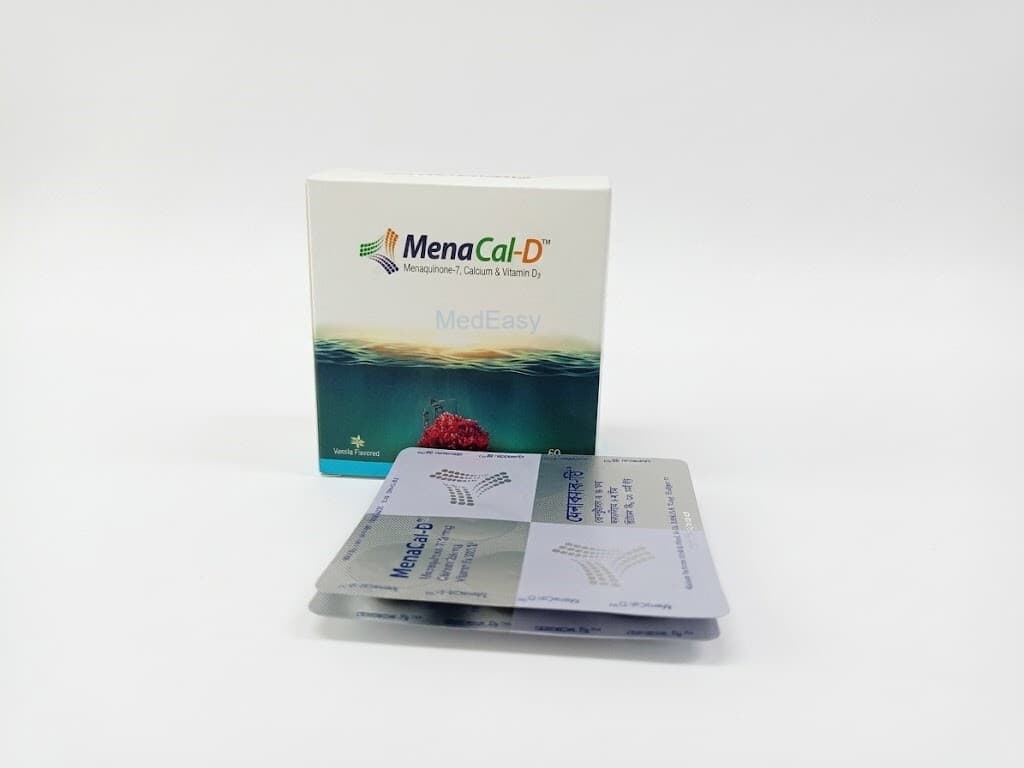

Medicine overview
Indications of MenaCal-D
MenaCal-D is a combination dietary supplement containing vitamin K2 (as menaquinone-7), calcium derived from marine algae, and vitamin D3, formulated to support bone health and bone mineral metabolism.
Established Uses
- Dietary supplementation for calcium and vitamin D3 in individuals with inadequate dietary intake or at risk of deficiency, to support normal bone structure and reduce the risk of osteoporosis-related bone loss, particularly in postmenopausal women and older adults.
- Adjunct support for bone mineral density maintenance alongside a balanced diet, weight-bearing exercise, and (where prescribed) other bone-directed therapy.
Evidence-Limited / Emerging Use
- The vitamin K2 (menaquinone-7) component is proposed to support bone mineralization (by activating osteocalcin) and to help direct calcium toward bone rather than soft tissue/vascular deposits, with possible cardiovascular calcium-regulation benefit. Evidence for these specific claims is still evolving and is not as strong or as universally accepted as the evidence for calcium and vitamin D3 alone; MenaCal-D should not be presented as a substitute for prescribed anticoagulation, bone-specific medication, or established osteoporosis therapy.
MenaCal-D is a supplement, not a treatment for diagnosed osteoporosis or fracture; it does not replace individualized medical evaluation or prescribed bone-active medication when these are indicated.
Composition
Menaquinone-7 + Algae Calcium + Vitamin D3 is typically formulated per dose unit (tablet/capsule) to provide:
- Menaquinone-7 (Vitamin K2): commonly 45-90 mcg, a long-acting, highly bioavailable form of vitamin K2.
- Algae Calcium (calcium derived from marine algae, e.g. Lithothamnium species): providing elemental calcium, commonly in the range of 200-600 mg per dose unit, along with trace marine minerals.
- Vitamin D3 (Cholecalciferol): commonly 200-1000 IU per dose unit, to support intestinal calcium absorption.
Exact strengths vary by manufacturer and product presentation; always check the specific product label/pack insert for the precise composition of the brand dispensed.
Description
MenaCal-D is a combination nutritional supplement that brings together three complementary bone-health ingredients: menaquinone-7 (a form of vitamin K2), calcium sourced from marine algae, and vitamin D3 (cholecalciferol).
Vitamin D3 promotes intestinal absorption of calcium, algae calcium supplies the elemental calcium needed for bone structure, and vitamin K2 is proposed to help activate proteins (such as osteocalcin) that direct calcium into bone. MenaCal-D is intended as a supportive supplement for bone health, generally used alongside adequate diet, physical activity, and any physician-directed treatment for bone or mineral disorders, rather than as a stand-alone treatment for diagnosed disease.
Therapeutic Class
MenaCal-D belongs to the category of vitamin and mineral combination supplements for bone health: a fat-soluble vitamin (vitamin K2/menaquinone-7), a calcium supplement (algae-sourced), and vitamin D3 (cholecalciferol).
Pharmacology
Vitamin D3 (Cholecalciferol)
Vitamin D3 in Menaquinone-7 + Algae Calcium + Vitamin D3 is hydroxylated in the liver to 25-hydroxyvitamin D and then in the kidney to the active form, calcitriol, which increases intestinal absorption of calcium and phosphate and supports normal bone mineralization and neuromuscular and immune function.
Algae Calcium
Algae-sourced calcium provides elemental calcium in a porous, mineral-rich matrix (along with trace marine minerals such as magnesium) that is used for bone and teeth structure, muscle contraction, nerve transmission, and blood clotting. Its absorption depends on adequate vitamin D status, which Menaquinone-7 + Algae Calcium + Vitamin D3 also supplies.
Menaquinone-7 (Vitamin K2)
Menaquinone-7 is a long-chain, long-acting form of vitamin K2 that acts as a cofactor for the gamma-carboxylation of vitamin K-dependent proteins. This includes osteocalcin, a bone protein that, once carboxylated, is proposed to help bind calcium within the bone matrix, and matrix Gla-protein, which is proposed to help limit calcium deposition in blood vessel walls. This proposed synergy between vitamin K2, calcium, and vitamin D3 for bone mineralization and cardiovascular calcium regulation is biologically plausible and supported by some clinical studies, but the evidence base for K2-specific outcome benefits is still evolving and less robust than that for calcium/vitamin D3 alone.
Because it is a vitamin K analog, menaquinone-7 also participates in the same carboxylation pathway used to activate certain clotting factors, which is the basis for its interaction with vitamin K antagonist anticoagulants (see Interactions).
Dosage & Administration of MenaCal-D
MenaCal-D should be taken as directed on the product label or by a physician/pharmacist, as part of an overall plan for bone health.
| Population | Typical Dosing |
|---|---|
| Adults (general bone health support) | One tablet/capsule once daily, or as directed on the product label, generally with a meal |
| Postmenopausal women / older adults at risk of bone loss | As directed by a physician, individualized to total calcium/vitamin D intake from diet and other supplements |
| Children | Not generally intended for pediatric use unless specifically directed by a physician (see Pediatric Uses) |
Take MenaCal-D with food to enhance absorption of the fat-soluble vitamins (D3 and K2) and reduce the chance of stomach upset. Do not exceed the recommended daily dose, and account for calcium and vitamin D3 obtained from diet, fortified foods, and any other supplements or medicines when deciding on total daily intake.
Administration of MenaCal-D
Take MenaCal-D orally, generally with a meal, to support absorption of its fat-soluble vitamin components (vitamin D3 and vitamin K2) and to minimize gastrointestinal discomfort. Swallow the tablet/capsule with a glass of water; do not chew unless the product is specifically formulated as a chewable. If also taking oral bisphosphonates, iron, thyroid hormone, or certain antibiotics (see Interactions), separate dosing by the interval recommended for that medicine, since calcium can reduce their absorption. Take MenaCal-D at approximately the same time each day for consistent supplementation.
Interaction of MenaCal-D
MenaCal-D has one clinically important interaction and several other interactions relevant to its individual components that should be reviewed with a physician or pharmacist, especially if other medicines are used regularly.
- Warfarin and other vitamin K antagonist (VKA) anticoagulants: this is the most important interaction. The menaquinone-7 (vitamin K2) component of MenaCal-D can reduce the anticoagulant effect of warfarin/VKAs by supplying additional substrate for clotting factor activation, potentially lowering INR and reducing anticoagulant efficacy. Patients on warfarin or other VKAs should not start or stop MenaCal-D (or change its dose) without informing their prescriber, and INR should be monitored closely with any change, as dose adjustment of the anticoagulant may be needed.
- Bisphosphonates (e.g., alendronate, risedronate) and levothyroxine: calcium can reduce absorption of these medicines if taken together; separate dosing by at least 2-4 hours (or per the specific medicine's instructions).
- Tetracycline or fluoroquinolone antibiotics: calcium can chelate these antibiotics and reduce their absorption; separate dosing by at least 2-3 hours.
- Thiazide diuretics: can reduce renal calcium excretion and add to the effect of the calcium/vitamin D3 components, increasing the risk of hypercalcemia; monitoring is advised with concurrent use.
- Digoxin: hypercalcemia arising from excess calcium/vitamin D intake can increase the risk of digoxin toxicity and cardiac arrhythmia.
- Other vitamin D, calcium, or vitamin K-containing supplements or fortified foods: concurrent use increases the risk of exceeding recommended total daily intake; account for all sources when using MenaCal-D.
Contraindications
Menaquinone-7 + Algae Calcium + Vitamin D3 is contraindicated in:
- Known hypersensitivity to menaquinone-7/vitamin K2, algae-sourced calcium, vitamin D3, or any excipient of the formulation.
- Hypercalcemia (pathologically elevated blood calcium).
- Hypervitaminosis D (vitamin D toxicity).
Side Effects of MenaCal-D
MenaCal-D is generally well tolerated when taken at recommended doses. Reported side effects include:
Common
- Mild gastrointestinal upset: nausea, bloating, or constipation
- Mild stomach discomfort if taken on an empty stomach
Uncommon/With Excess Intake
- Symptoms of hypercalcemia with prolonged excess intake (see Overdose Effects)
- Hypersensitivity reactions (rash, itching) in sensitive individuals, though uncommon
Report persistent or severe side effects to a physician or pharmacist.
Pregnancy & Lactation
Calcium and vitamin D3 are routinely recommended in appropriate doses during pregnancy and lactation as part of standard prenatal/nutritional care. However, MenaCal-D as a fixed combination product, including its menaquinone-7 (vitamin K2) component, has not been specifically well studied in pregnancy or breastfeeding, and the evidence for K2-specific benefit claims remains limited in this population. MenaCal-D should therefore be used during pregnancy or lactation only if clearly needed and only under medical advice, with the physician weighing potential benefit against potential risk and ensuring total calcium/vitamin D intake from all sources (diet, prenatal vitamins, and MenaCal-D) does not exceed recommended limits. Consult a physician before use in pregnancy or while breastfeeding.
Precautions & Warnings
MenaCal-D should be used with the following precautions:
- Warfarin/vitamin K antagonist therapy: do not use MenaCal-D without informing the prescriber, as the vitamin K2 component can reduce anticoagulant effectiveness (see Interactions); INR monitoring and possible anticoagulant dose adjustment may be required if combined use is deemed necessary.
- Renal impairment: use with caution and under physician supervision, since calcium and vitamin D handling and excretion are altered in kidney disease, increasing the risk of hypercalcemia and vascular/soft-tissue calcification.
- Avoid exceeding recommended daily calcium and vitamin D intake from all combined sources (diet, fortified foods, other supplements, and MenaCal-D), as excess intake raises the risk of hypercalcemia, hypercalciuria, and kidney stones.
- Conditions predisposing to hypercalcemia (e.g., hyperparathyroidism, sarcoidosis, certain malignancies): use only under medical supervision with calcium monitoring.
- Evidence for vitamin K2 (menaquinone-7)-specific bone and cardiovascular benefit claims is still evolving; MenaCal-D should be regarded as a supportive supplement and not as a proven treatment for osteoporosis, fracture, or cardiovascular calcification, and should not replace physician-directed therapy for these conditions.
Overdose Effects of MenaCal-D
Excessive or prolonged intake of MenaCal-D beyond recommended doses can lead to hypercalcemia and vitamin D toxicity, with symptoms such as nausea, vomiting, constipation, loss of appetite, excessive thirst, frequent urination, weakness, confusion, and, in severe or prolonged cases, kidney stones or kidney injury and abnormal heart rhythm.
If overdose of MenaCal-D is suspected, seek immediate medical attention or contact emergency services/a poison control center right away. Do not attempt specific home treatment beyond general supportive measures; management (including stopping the supplement and any needed monitoring or treatment of hypercalcemia) should be directed by a physician.
Storage Conditions
Store at room temperature (below 30°C), away from light and moisture. Keep out of reach of children.
Use In Special Populations
- Elderly: MenaCal-D is commonly used in this population for bone health support; total calcium/vitamin D intake should be individualized against dietary sources and any other supplements/medicines.
- Renal impairment: use with caution and physician supervision; altered calcium/vitamin D handling increases the risk of hypercalcemia (see Precautions and Warnings).
- Hepatic impairment: no well-established specific dose adjustment; use with general caution, as hepatic hydroxylation of vitamin D3 may be affected in significant liver disease.
- Pediatric patients: safety and efficacy of MenaCal-D as a fixed combination have not been established; not generally recommended unless specifically directed by a physician (see Pediatric Uses).
- Patients on warfarin/vitamin K antagonists: use only with physician knowledge and INR monitoring (see Interactions and Precautions).
- Pregnancy and lactation: see Pregnancy and Lactation section.
Duration Of Treatment
MenaCal-D is generally intended for ongoing, long-term use as part of routine bone health maintenance, as directed by a physician or the product label. There is no fixed treatment course; duration should be individualized based on dietary calcium/vitamin D intake, bone health status, and any laboratory monitoring (e.g., serum calcium, vitamin D levels) the physician considers appropriate. Periodic reassessment of the need for continued supplementation is advisable, particularly in patients with risk factors for hypercalcemia or those on anticoagulant therapy.
Drug Classes
Vitamin K2 (menaquinone-7); Calcium supplement (algae-sourced); Vitamin D3 (cholecalciferol) analog; Bone health combination supplement
Mode Of Action
Menaquinone-7 + Algae Calcium + Vitamin D3 acts through three complementary mechanisms: vitamin D3 increases intestinal absorption of calcium; algae-sourced calcium supplies the elemental calcium required for bone mineralization; and menaquinone-7 (vitamin K2) acts as a cofactor for carboxylation of bone proteins such as osteocalcin, proposed to help direct calcium into bone and support cardiovascular calcium regulation (see Pharmacology for full detail).
Pediatric Uses
Safety and efficacy of MenaCal-D as a fixed combination have not been formally established in children and adolescents. Calcium and vitamin D3 are commonly used in children under physician/dietitian guidance when dietary intake is inadequate, using age-appropriate, weight-based dosing, but the addition of menaquinone-7 (vitamin K2) has not been well studied in pediatric populations. MenaCal-D should be used in children only if specifically recommended by a physician.
Frequently Asked Questions
Q: What is MenaCal-D 75 mcg+264 mg+200 IU Chewable Tablet used for?
A: MenaCal-D 75 mcg+264 mg+200 IU Chewable Tablet is a combination dietary supplement used to support bone health by providing vitamin K2 (menaquinone-7), calcium from marine algae, and vitamin D3, which work together to support bone mineralization and normal calcium metabolism.
Q: Can I take MenaCal-D 75 mcg+264 mg+200 IU Chewable Tablet if I am on warfarin or another blood thinner?
A: Talk to your physician before combining MenaCal-D 75 mcg+264 mg+200 IU Chewable Tablet with warfarin or another vitamin K antagonist anticoagulant. The vitamin K2 (menaquinone-7) component can reduce the anticoagulant's effectiveness, so INR monitoring and possible dose adjustment of the anticoagulant may be needed if your physician decides the combination is appropriate.
Q: Is it true that vitamin K2 in MenaCal-D 75 mcg+264 mg+200 IU Chewable Tablet improves bone and heart health?
A: Vitamin K2 (menaquinone-7) is proposed to help direct calcium into bone and away from blood vessels, which could support bone and cardiovascular health. However, the scientific evidence for these specific benefits is still evolving and is not as strong as the evidence for calcium and vitamin D3 alone, so MenaCal-D 75 mcg+264 mg+200 IU Chewable Tablet should be seen as a supportive supplement rather than a proven treatment.
Q: How should I take MenaCal-D 75 mcg+264 mg+200 IU Chewable Tablet?
A: Take MenaCal-D 75 mcg+264 mg+200 IU Chewable Tablet orally, generally with a meal to help absorption of its fat-soluble vitamins, at the dose stated on the product label or as directed by your physician. Do not exceed the recommended daily dose, and count any other calcium, vitamin D, or vitamin K supplements or fortified foods toward your total daily intake.
Q: Who should not take MenaCal-D 75 mcg+264 mg+200 IU Chewable Tablet?
A: MenaCal-D 75 mcg+264 mg+200 IU Chewable Tablet should not be used by anyone with a known allergy to any of its components, or by people with hypercalcemia (high blood calcium) or hypervitaminosis D (vitamin D toxicity). People with kidney disease should use it only under medical supervision.
Q: What happens if I take too much MenaCal-D 75 mcg+264 mg+200 IU Chewable Tablet?
A: Taking more than the recommended dose of MenaCal-D 75 mcg+264 mg+200 IU Chewable Tablet over time can cause hypercalcemia and vitamin D toxicity, with symptoms such as nausea, vomiting, weakness, confusion, or kidney stones. If you suspect an overdose, seek immediate medical attention or contact a poison control center/emergency services right away.
Disclaimer
The information provided is accurate to the best of our knowledge, but it does not replace professional medical advice. We cannot guarantee its completeness or accuracy, and the absence of specific information about a drug should not be taken as an endorsement. We are not responsible for any consequences arising from this information, so please consult a healthcare professional for any concerns or questions.
