
Key facts
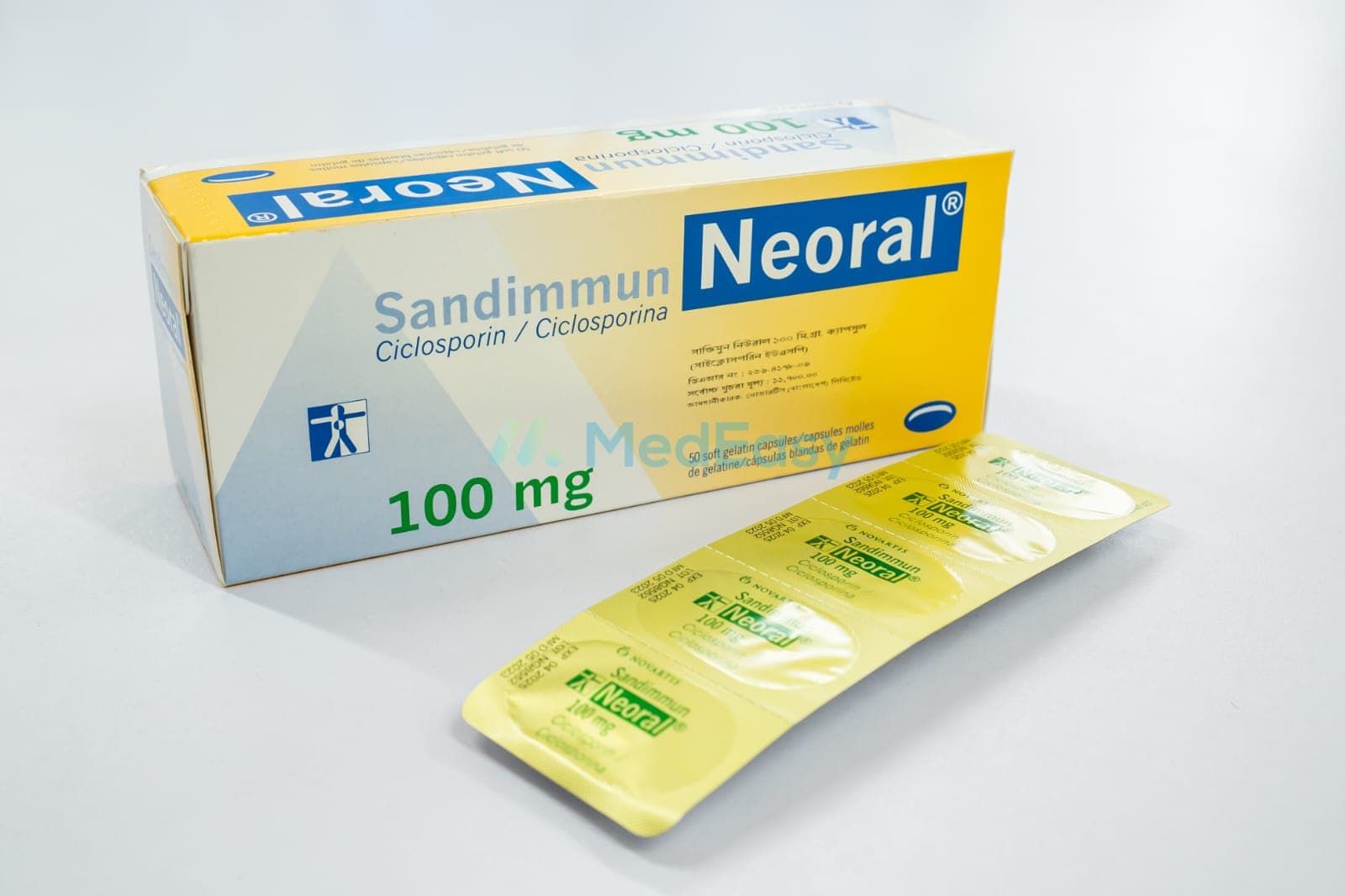
Neoral 100 mg Capsule is available on MedEasy for ৳1805.00 per 5's Strip, with home delivery anywhere in Bangladesh. It is manufactured by Novartis (Bangladesh) Ltd. Its generic name is Cyclosporine.
- Pack sizes
- 5's Strip, 50's Pack
- Prescription
- Required. Upload a valid doctor's prescription at checkout; a MedEasy pharmacist verifies it before dispatch.
- Delivery
- Home delivery across Bangladesh. Same-day delivery in Dhaka, Chattogram, Sylhet and Bogura city areas; 2-3 days elsewhere.
- Payment
- Cash on delivery, bKash, cards and mobile banking.
- Brand
- Neoral
- Generic name
- Cyclosporine
- Manufacturer
- Novartis (Bangladesh) Ltd.
- Form & strength
- Capsule 100 mg
- Availability
- In stock
- Authenticity
- Sourced from licensed suppliers and the manufacturer's authorised distributors in Bangladesh.

Medicine overview
Indications of Neoral
Neoral is used for the following indications, classified by strength of evidence:
- Established/approved: Prophylaxis of organ rejection in kidney, liver, and heart transplantation, used in combination with corticosteroids and/or other immunosuppressants.
- Guideline-supported, second-line: Severe active rheumatoid arthritis in patients who have not responded adequately to methotrexate or other disease-modifying antirheumatic drugs; often used in combination with methotrexate.
- Guideline-supported, second-line: Severe, recalcitrant plaque psoriasis in non-immunocompromised adults who have failed at least one systemic therapy.
- Approved (ophthalmic formulation): Chronic dry eye disease (keratoconjunctivitis sicca) believed to be due to ocular inflammation, to increase tear production.
Neoral is not indicated for use outside these settings without specialist evaluation.
Composition
Each formulation of Cyclosporine contains cyclosporine, a cyclic polypeptide immunosuppressant, as the active ingredient. Cyclosporine is available as oral capsules (soft gelatin, non-modified and modified/microemulsion forms, commonly 25 mg and 100 mg), an oral solution (commonly 100 mg/mL), a concentrate for intravenous infusion, and an ophthalmic emulsion (commonly 0.05% and 0.09%) for chronic dry eye disease. Non-modified and modified (microemulsion) oral formulations of Cyclosporine are not bioequivalent and must not be interchanged without physician supervision and monitoring.
Description
Neoral is a calcineurin-inhibitor immunosuppressant derived from the fungus Tolypocladium inflatum. It is used to prevent the body's immune system from rejecting a transplanted organ and, in selected patients, to control severe autoimmune and inflammatory conditions such as rheumatoid arthritis and plaque psoriasis. An ophthalmic emulsion form of Neoral is used to increase tear production in chronic dry eye disease believed to be caused by ocular inflammation. Because it suppresses the immune system, Neoral should only be prescribed and monitored by a physician experienced in systemic immunosuppressive therapy and the management of transplant patients or the relevant autoimmune condition.
Therapeutic Class
Neoral belongs to the calcineurin-inhibitor class of immunosuppressant drugs.
Pharmacology
Cyclosporine binds to the intracellular protein cyclophilin, forming a complex that inhibits calcineurin, a calcium-dependent phosphatase. By blocking calcineurin, Cyclosporine prevents dephosphorylation and nuclear translocation of the nuclear factor of activated T-cells (NFAT), which suppresses transcription of interleukin-2 (IL-2) and other cytokines required for T-lymphocyte activation and proliferation. This results in selective, reversible inhibition of T-cell-mediated immune responses without generalized cytotoxic suppression of bone marrow. In the eye, topical Cyclosporine is thought to reduce T-cell-mediated inflammation of the lacrimal gland and ocular surface, thereby increasing tear production in dry eye disease.
Cyclosporine is variably and incompletely absorbed after oral administration; absorption depends on the specific formulation (modified microemulsion products have more predictable, bile-independent absorption than non-modified formulations). It is extensively distributed into tissues and blood cells, is highly protein-bound, and is metabolized mainly by hepatic and intestinal CYP3A4, with excretion primarily in bile/feces.
Dosage & Administration of Neoral
Dosing of Neoral must be individualized based on indication, formulation, organ function, and blood concentration monitoring. Non-modified and modified (microemulsion) formulations of Neoral are not bioequivalent; any conversion between formulations must be done gradually under close physician supervision with blood level monitoring.
| Indication | Typical Adult Dosing |
|---|---|
| Organ transplant rejection prophylaxis (kidney, liver, heart) | Initial dose commonly 9-15 mg/kg/day (modified formulation, in divided doses) given a few hours before transplantation and continued with corticosteroids, tapering to a maintenance dose (often 3-10 mg/kg/day) guided by trough blood levels, renal function and clinical response. |
| Severe active rheumatoid arthritis (second-line, after inadequate response to methotrexate or other disease-modifying agents) | Initial 2.5 mg/kg/day in two divided doses; may be increased gradually (by up to 0.5-0.75 mg/kg/day) at 8-week intervals to a maximum of about 4 mg/kg/day, based on efficacy and tolerability; often combined with methotrexate. |
| Severe plaque psoriasis (second-line, in immunocompetent patients who have failed at least one systemic therapy) | Initial 2.5 mg/kg/day in two divided doses; may be increased after 4 weeks by up to 0.5 mg/kg/day if response is insufficient, to a maximum of 4 mg/kg/day; treatment courses are generally kept as short as possible. |
| Chronic dry eye disease (ophthalmic emulsion) | One drop in each affected eye twice daily, approximately 12 hours apart. |
Regular monitoring of blood pressure, serum creatinine, and (for oral/systemic use) Neoral trough blood concentrations is required throughout treatment to guide dose adjustments and reduce toxicity risk.
Administration of Neoral
Neoral oral capsules and solution should be taken consistently either with or without food, and at the same time relative to meals every day, since food affects absorption. Do not switch between brands or formulations of Neoral (e.g., non-modified to modified/microemulsion) without a physician's explicit instruction and monitoring, as they are not interchangeable. Oral solution should be measured with the provided dosing device, mixed with room-temperature orange or apple juice to improve palatability, and taken immediately; avoid mixing with grapefruit juice. Avoid grapefruit and grapefruit juice throughout treatment as they can raise blood levels of Neoral. The ophthalmic emulsion should be instilled after removing contact lenses (which may be reinserted 15 minutes later) and applied before any other eye drops if multiple products are used. Do not touch the dropper tip to the eye or any surface. Intravenous Neoral is administered only under close medical supervision, typically as a slow infusion.
Interaction of Neoral
Neoral is a substrate of CYP3A4 and P-glycoprotein, making it prone to clinically significant drug interactions:
- CYP3A4 inhibitors (e.g., ketoconazole, itraconazole, clarithromycin, erythromycin, diltiazem, verapamil, protease inhibitors, grapefruit juice) can substantially raise Neoral blood levels, increasing nephrotoxicity risk; dose reduction and level monitoring are needed.
- CYP3A4 inducers (e.g., rifampin, phenytoin, carbamazepine, St. John's Wort) can lower Neoral levels, risking under-immunosuppression and transplant rejection.
- Other nephrotoxic drugs (NSAIDs, aminoglycoside antibiotics, amphotericin B, tacrolimus) may have additive kidney toxicity when combined with Neoral.
- Potassium-sparing diuretics or potassium supplements combined with Neoral can cause dangerous hyperkalemia.
- HMG-CoA reductase inhibitors (statins) combined with Neoral raise the risk of myopathy/rhabdomyolysis; lower statin doses and monitoring are advised.
- Live attenuated vaccines should be avoided during treatment with Neoral because of blunted immune response and theoretical risk of vaccine-strain infection.
Always inform your physician of all prescription, over-the-counter, and herbal products before starting Neoral.
Contraindications
Cyclosporine is contraindicated in:
- Patients with known hypersensitivity to cyclosporine or to any component of the specific formulation (including polyoxyethylated castor oil in some injectable forms).
- Concurrent use with excessive ultraviolet light exposure or PUVA (psoralen plus UVA) phototherapy, when Cyclosporine is used for psoriasis, because of markedly increased skin cancer risk.
- Simultaneous administration with tacrolimus (due to additive nephrotoxicity and lack of established safety).
For the ophthalmic emulsion, Cyclosporine is contraindicated in patients with active or suspected ocular or periocular infection.
Side Effects of Neoral
Common side effects of systemic Neoral include:
- Kidney function impairment (nephrotoxicity) and elevated serum creatinine
- High blood pressure (hypertension)
- Tremor and headache
- Excessive hair growth (hirsutism)
- Gum overgrowth (gingival hyperplasia)
- High cholesterol/triglycerides (hyperlipidemia)
- Nausea, vomiting, diarrhea, abdominal discomfort
- Increased susceptibility to infections
- Fatigue and leg cramps
Less common but serious effects include liver dysfunction, electrolyte disturbances (e.g., high potassium, low magnesium), and - with long-term use - increased risk of malignancies such as lymphoma and skin cancer (see Precautions and Warnings).
With the ophthalmic emulsion, the most common effects are burning or stinging at the site of instillation, eye redness, discharge, watering, eye pain, and blurred vision, which are usually mild and localized.
Pregnancy & Lactation
Neoral crosses the placenta and is associated with risks including preterm delivery and low birth weight, largely related to the severity of the underlying maternal condition requiring treatment. Neoral should be used during pregnancy only if clearly needed - such as to maintain a transplanted organ or control a severe, disease-threatening condition - and only if the potential benefit justifies the potential risk to the fetus; pregnant patients on Neoral require close specialist monitoring. Neoral passes into breast milk; breastfeeding is generally not recommended during treatment because of the potential for immunosuppression and other adverse effects in the nursing infant, unless a physician determines the benefits clearly outweigh the risks. Always consult a physician before using Neoral during pregnancy or while breastfeeding.
Precautions & Warnings
Neoral carries important safety concerns that require careful physician oversight:
- Only physicians experienced in systemic immunosuppressive therapy and management of the relevant condition (transplant rejection, rheumatoid arthritis, or psoriasis) should prescribe Neoral, with access to adequate laboratory and monitoring facilities.
- Increased risk of infection and malignancy: Chronic immunosuppression with Neoral increases susceptibility to bacterial, viral, fungal, and parasitic infections, and raises the risk of malignancies, particularly lymphoma and skin cancers (especially with psoriasis treatment or excessive sun/UV exposure).
- Nephrotoxicity and hypertension: Neoral can cause dose-related, sometimes irreversible, kidney damage and structural kidney changes with long-term use, and frequently causes or worsens high blood pressure. Regular monitoring of renal function, blood pressure, and blood Neoral levels is essential.
- Hepatotoxicity: Liver function should be monitored periodically during treatment.
- Live vaccines should be avoided (see Interactions).
- Use caution in patients with pre-existing renal impairment, uncontrolled hypertension, or active infection, and in patients using the ophthalmic form who wear contact lenses.
Overdose Effects of Neoral
Overdose with Neoral may worsen its typical adverse effects, particularly kidney function impairment. If an overdose of Neoral is suspected, seek immediate medical attention or contact a poison control center right away. There is no specific antidote; management is supportive and may include monitoring of vital signs, kidney function, and general supportive care in a medical facility. Gastric decontamination and hemodialysis are of limited benefit due to the drug's properties and should only be considered by medical professionals if clinically indicated.
Storage Conditions
Store Neoral capsules and oral solution at room temperature (below 30°C), away from direct light and moisture; do not refrigerate the oral solution, and use opened oral solution within the timeframe stated on the label (typically 2 months). Once opened, the ophthalmic emulsion vials are for single use and should be discarded after use; store unopened ophthalmic emulsion at room temperature away from light. Keep all forms of Neoral out of reach of children.
Use In Special Populations
Renal impairment: Because Neoral itself is nephrotoxic, dosing in patients with pre-existing kidney impairment requires particularly close monitoring of renal function and blood levels; dose reduction may be needed if kidney function declines.
Hepatic impairment: Patients with significant liver impairment may have reduced clearance of Neoral and require dose adjustment and closer monitoring of blood levels and liver function.
Elderly: Use with caution; elderly patients may be more susceptible to infection, malignancy, and blood pressure effects - monitor renal function closely (see Precautions and Warnings).
Pediatric: See Pediatric Uses.
Duration Of Treatment
Duration of treatment with Neoral depends on the indication. For organ transplant rejection prophylaxis, Neoral is generally continued long-term/indefinitely as part of maintenance immunosuppression, under regular monitoring. For rheumatoid arthritis and psoriasis, treatment courses are individualized and kept to the shortest effective duration given cumulative toxicity risks, with periodic reassessment of continued need; total lifetime use for psoriasis is often limited (commonly not exceeding about 1-2 years of continuous treatment, per physician judgment). For dry eye disease, the ophthalmic emulsion is typically used long-term as needed, with effect building over weeks to months. Do not stop or change the duration of Neoral therapy without consulting your physician.
Drug Classes
Cyclosporine belongs to the drug classes: Calcineurin inhibitor; Immunosuppressant.
Mode Of Action
Cyclosporine works by binding to cyclophilin inside T-lymphocytes, and the resulting complex inhibits calcineurin phosphatase activity. This prevents activation of the transcription factor NFAT and blocks production of interleukin-2 and other cytokines needed for T-cell activation, resulting in targeted suppression of the cellular immune response responsible for transplant rejection and certain autoimmune/inflammatory processes.
Pregnancy
C
Pediatric Uses
Use of Neoral in children should be guided by a specialist physician. Neoral is used in pediatric organ transplant recipients (kidney, liver, heart) as part of standard combination immunosuppressive regimens, with dosing individualized by body weight and blood level monitoring, similar in principle to adult dosing; pediatric patients often require relatively higher mg/kg doses than adults due to differences in drug handling. Safety and efficacy of Neoral for rheumatoid arthritis and psoriasis have not been established in children, and the ophthalmic emulsion has not been studied in pediatric dry eye disease; use in these settings should be avoided unless specifically directed by a specialist. Close monitoring of growth, renal function, blood pressure, and infection risk is essential in pediatric patients receiving Neoral.
Frequently Asked Questions
Q: What is Neoral 100 mg Capsule used for?
A: Neoral 100 mg Capsule is mainly used to prevent the body from rejecting a transplanted kidney, liver, or heart, usually combined with other immunosuppressant medicines. It is also used in some patients with severe rheumatoid arthritis or severe plaque psoriasis who have not responded well to other treatments, and as an eye drop (ophthalmic emulsion) to treat chronic dry eye disease.
Q: How should I take Neoral 100 mg Capsule?
A: Take Neoral 100 mg Capsule exactly as prescribed by your physician, at the same time each day, and consistently either with or without food. Do not switch between different brands or formulations of Neoral 100 mg Capsule without your doctor's approval, since they are not interchangeable. Avoid grapefruit or grapefruit juice, which can raise blood levels of Neoral 100 mg Capsule.
Q: What are the most serious risks of Neoral 100 mg Capsule?
A: Neoral 100 mg Capsule can cause kidney damage, high blood pressure, and - because it suppresses the immune system - an increased risk of serious infections and certain cancers, including lymphoma and skin cancer. For this reason, Neoral 100 mg Capsule should only be prescribed by a physician experienced in immunosuppressive therapy, with regular blood tests and monitoring.
Q: Can I take Neoral 100 mg Capsule during pregnancy or while breastfeeding?
A: Neoral 100 mg Capsule should be used in pregnancy only if clearly needed, such as to protect a transplanted organ, since it may increase the risk of preterm delivery and low birth weight; benefits and risks must be weighed by your physician. Neoral 100 mg Capsule passes into breast milk, and breastfeeding is generally discouraged during treatment unless your doctor advises otherwise.
Q: What should I do if I miss a dose or take too much Neoral 100 mg Capsule?
A: If you miss a dose of Neoral 100 mg Capsule, take it as soon as you remember unless it is close to your next dose - do not double the dose. If you or someone else has taken too much Neoral 100 mg Capsule, seek immediate medical attention or contact a poison control center right away.
Q: Can Neoral 100 mg Capsule be used in children?
A: Neoral 100 mg Capsule is used in children who have received an organ transplant, under specialist supervision, with doses individualized by body weight. Its use for rheumatoid arthritis, psoriasis, or dry eye disease in children has not been established as safe and effective, so it should generally be avoided for those conditions in pediatric patients.
Disclaimer
The information provided is accurate to the best of our knowledge, but it does not replace professional medical advice. We cannot guarantee its completeness or accuracy, and the absence of specific information about a drug should not be taken as an endorsement. We are not responsible for any consequences arising from this information, so please consult a healthcare professional for any concerns or questions.