
10% Off
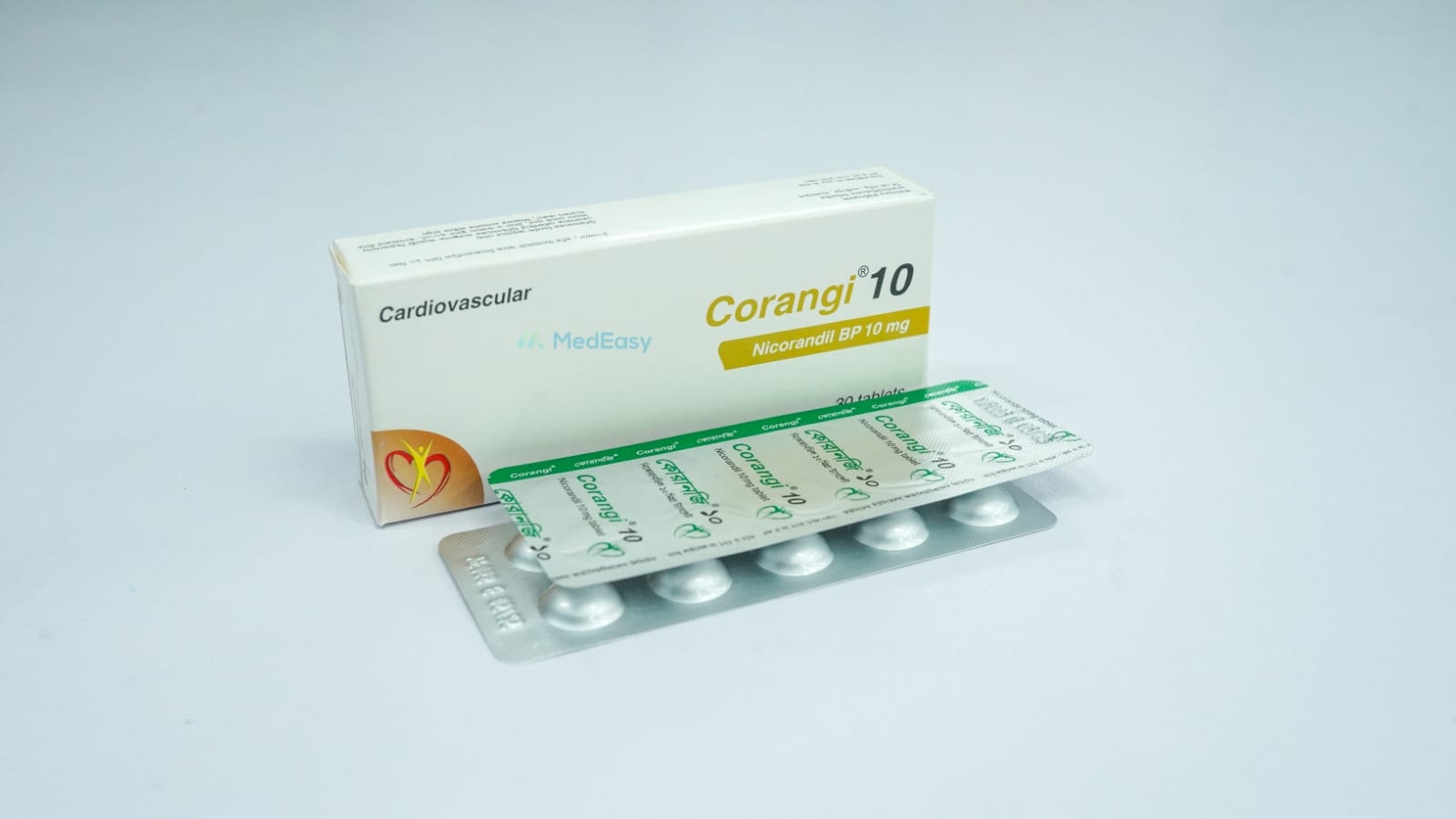
Corangi10 mg
Unimed Unihealth MFG. Ltd.
৳54.00
Add to cart
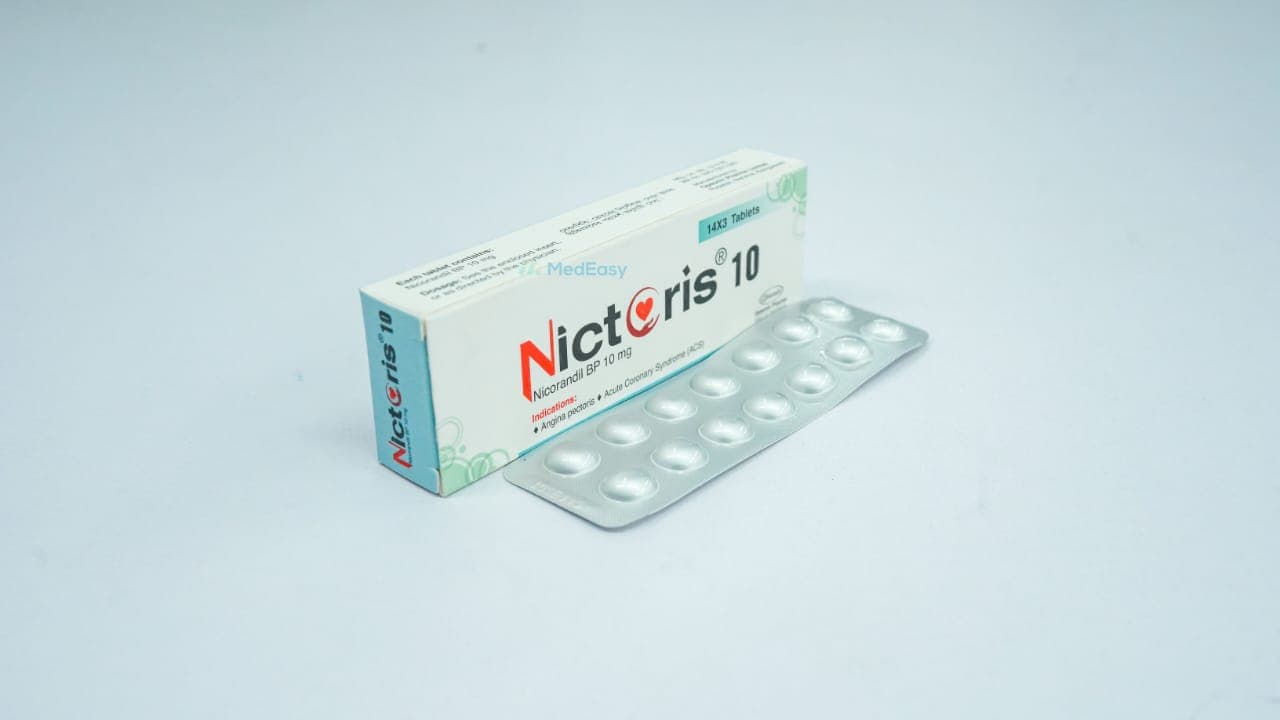
Nictoris 10 mg Tablet is available on MedEasy for ৳77.28 per 14's Strip, with home delivery anywhere in Bangladesh. It is manufactured by Opsonin Pharma Ltd. Its generic name is Nicorandil.

Nictoris is indicated for the prevention and long-term treatment of chronic stable angina pectoris.
Nictoris is not indicated for the treatment of acute myocardial infarction or unstable angina.
Nictoris is an oral anti-anginal medicine that belongs to a unique class of drugs combining potassium-channel-opening activity with a nitrate-like (nicotinamide nitrate ester) action. This dual mechanism produces both arterial and venous vasodilation, helping to reduce the workload of the heart and improve blood flow to the heart muscle in patients with angina.
Potassium channel activator (with nitrate-like vasodilating properties); anti-anginal agent.
Nicorandil has a dual mechanism of action:
Together, these actions reduce myocardial oxygen demand while improving coronary blood flow, without causing significant tolerance (tachyphylaxis) with continued use, unlike conventional nitrates.
| Step | Dose |
|---|---|
| Usual starting dose | 10 mg twice daily (morning and evening) |
| Patients prone to headache | 5 mg twice daily to start |
| Maintenance/titration | Increased as needed and tolerated, up to 20 mg twice daily; some patients may require up to 40 mg twice daily under close medical supervision |
No specific dose adjustment is mandated, but the lowest effective starting dose is recommended with careful monitoring due to greater sensitivity to hypotensive effects.
No specific dose adjustment is established; use with caution and monitor blood pressure.
Dose reduction may be necessary; use with caution, particularly in severe hepatic impairment.
Use of Nictoris in children is not recommended; safety and efficacy have not been established.
Nictoris tablets should be swallowed, generally without regard to food, at the same times each day.
Nictoris tablets are taken orally, twice daily (morning and evening), swallowed whole with water, generally without regard to meals. Doses should be taken at consistent times each day to maintain steady blood levels.
Nictoris has clinically significant interactions with the following:
No clinically significant interactions have been established with beta-blockers, calcium channel blockers, digoxin, warfarin, rifampicin, or cimetidine.
Nicorandil is contraindicated in the following conditions:
Common side effects of Nictoris include:
Important safety concern - ulceration: Nictoris is associated with a recognized risk of ulceration, including gastrointestinal (mouth, anal, and intestinal), skin, and mucosal (including ocular/corneal) ulceration. These ulcers can be serious, may be associated with complications such as perforation, fistula, abscess, or bleeding, and may not resolve until Nictoris is discontinued. Any unexplained ulceration occurring during treatment should prompt discontinuation and medical evaluation (see Precautions and Warnings).
Less common effects include hypotension, syncope, myalgia, and, rarely, angioedema or hepatic dysfunction.
Pregnancy: There is limited human data on the use of Nictoris during pregnancy. Animal studies have not shown clear evidence of teratogenicity, but embryotoxic effects have been observed at high doses. Nictoris should be used during pregnancy only if clearly needed and if the potential benefit justifies the potential risk to the fetus; a physician should be consulted before use.
Lactation: It is not known whether Nictoris is excreted in human breast milk. Because of the potential for adverse effects in the nursing infant, breastfeeding is generally not recommended during treatment with Nictoris unless advised by a physician.
Ulceration (important safety concern): Nictoris use is associated with gastrointestinal, anal, skin, and mucosal ulceration, which can be serious and may lead to complications such as perforation, fistula, or abscess. If unexplained ulceration (including mouth ulceration or stomatitis) develops at any site during treatment, Nictoris should be discontinued promptly and the patient evaluated medically, as these ulcers may not resolve while treatment continues.
Hypotension risk: Use with caution in patients with hypovolemia or low systolic blood pressure, as Nictoris can cause significant blood pressure reduction.
Pulmonary edema: Use with relative caution in patients with acute pulmonary edema.
Gastrointestinal disease: Use with caution in patients with diverticular disease or those taking corticosteroids or NSAIDs concurrently, due to increased risk of gastrointestinal ulceration/perforation.
Glaucoma: Use with caution due to potential effects on intraocular pressure.
Driving and operating machinery: Nictoris may cause dizziness, particularly when treatment is initiated; patients should be cautious until they know how the medicine affects them.
Abrupt discontinuation: Avoid sudden withdrawal; dose should be tapered gradually if discontinuation is required, to avoid rebound angina.
Overdose with Nictoris is expected to cause pronounced peripheral vasodilation, resulting in marked hypotension and reflex tachycardia, and possibly headache.
If overdose is suspected, seek immediate medical attention or contact a poison control center/emergency services right away. Management is supportive and may include cardiac monitoring, keeping the patient supine with legs elevated, intravenous fluid replacement, and use of vasopressor agents in cases of severe or life-threatening hypotension. There is no specific antidote.
Store at room temperature (below 30°C), in a cool and dry place, protected from light and moisture. Keep out of reach of children.
Elderly: Use the lowest effective starting dose with careful monitoring, as elderly patients may be more sensitive to the hypotensive effects of Nictoris.
Renal impairment: No specific dose adjustment is established; use with caution and monitor blood pressure and renal function.
Hepatic impairment: Dose reduction may be necessary, especially in severe impairment; use with caution.
Pediatric patients: Not recommended; safety and efficacy have not been established in children.
Pregnant and breastfeeding women: See Pregnancy and Lactation section.
Nictoris is generally used as a long-term, maintenance therapy for chronic stable angina, continued for as long as clinically indicated to control symptoms, under regular physician review. Treatment should not be stopped abruptly; if discontinuation is needed, the dose should be tapered gradually under medical supervision.
Potassium channel activators; anti-anginal agents.
Nicorandil dilates blood vessels through a dual mechanism: activation of ATP-sensitive potassium channels causes arterial (including coronary) vasodilation, reducing afterload, while its nitrate-like component stimulates guanylate cyclase to increase cyclic GMP, producing venodilation and reducing preload. This combined action decreases the heart's oxygen demand while improving coronary blood flow, relieving angina symptoms.
The use of Nictoris in children and adolescents is not recommended, as safety and efficacy have not been established in this population. Nictoris should only be used in adults for the approved indication of angina pectoris.
Q: What is Nictoris 10 mg Tablet used for?
A: Nictoris 10 mg Tablet is used to prevent and treat chronic stable angina pectoris (chest pain caused by reduced blood flow to the heart), particularly when other anti-anginal medicines are not suitable, not tolerated, or not fully effective on their own.
Q: How should I take Nictoris 10 mg Tablet?
A: Nictoris 10 mg Tablet is usually taken twice daily, in the morning and evening, swallowed whole with water. Take it at the same times each day as directed by your physician, and do not stop taking it suddenly without medical advice, as this can cause your angina to worsen.
Q: Can I take Nictoris 10 mg Tablet with medicines for erectile dysfunction such as sildenafil?
A: No. Nictoris 10 mg Tablet must not be taken together with phosphodiesterase-5 (PDE5) inhibitors such as sildenafil, tadalafil, or vardenafil, because this combination can cause a severe and potentially life-threatening drop in blood pressure. Tell your physician about all medicines you are taking before starting Nictoris 10 mg Tablet.
Q: What are the most common side effects of Nictoris 10 mg Tablet?
A: The most common side effect is headache, especially when starting treatment or after a dose increase; it often improves with continued use. Other common effects include flushing, dizziness, and nausea. Nictoris 10 mg Tablet is also associated with a risk of mouth, skin, or gastrointestinal ulcers - if you notice any unusual or persistent ulceration anywhere on your body while taking this medicine, contact your physician promptly, as the medicine may need to be stopped.
Q: Is Nictoris 10 mg Tablet safe during pregnancy or breastfeeding?
A: Data on the use of Nictoris 10 mg Tablet during pregnancy are limited, so it should be used only if clearly necessary and if your physician determines the potential benefit outweighs any potential risk to the baby. It is not known whether Nictoris 10 mg Tablet passes into breast milk, so breastfeeding is generally not recommended during treatment unless your physician advises otherwise.
Q: What should I do if I take too much Nictoris 10 mg Tablet?
A: An overdose of Nictoris 10 mg Tablet can cause a significant drop in blood pressure and a fast heart rate. Seek immediate medical attention or contact emergency services/poison control if an overdose is suspected, even if the person seems well, as symptoms may develop or worsen.
Disclaimer
The information provided is accurate to the best of our knowledge, but it does not replace professional medical advice. We cannot guarantee its completeness or accuracy, and the absence of specific information about a drug should not be taken as an endorsement. We are not responsible for any consequences arising from this information, so please consult a healthcare professional for any concerns or questions.