
10% Off
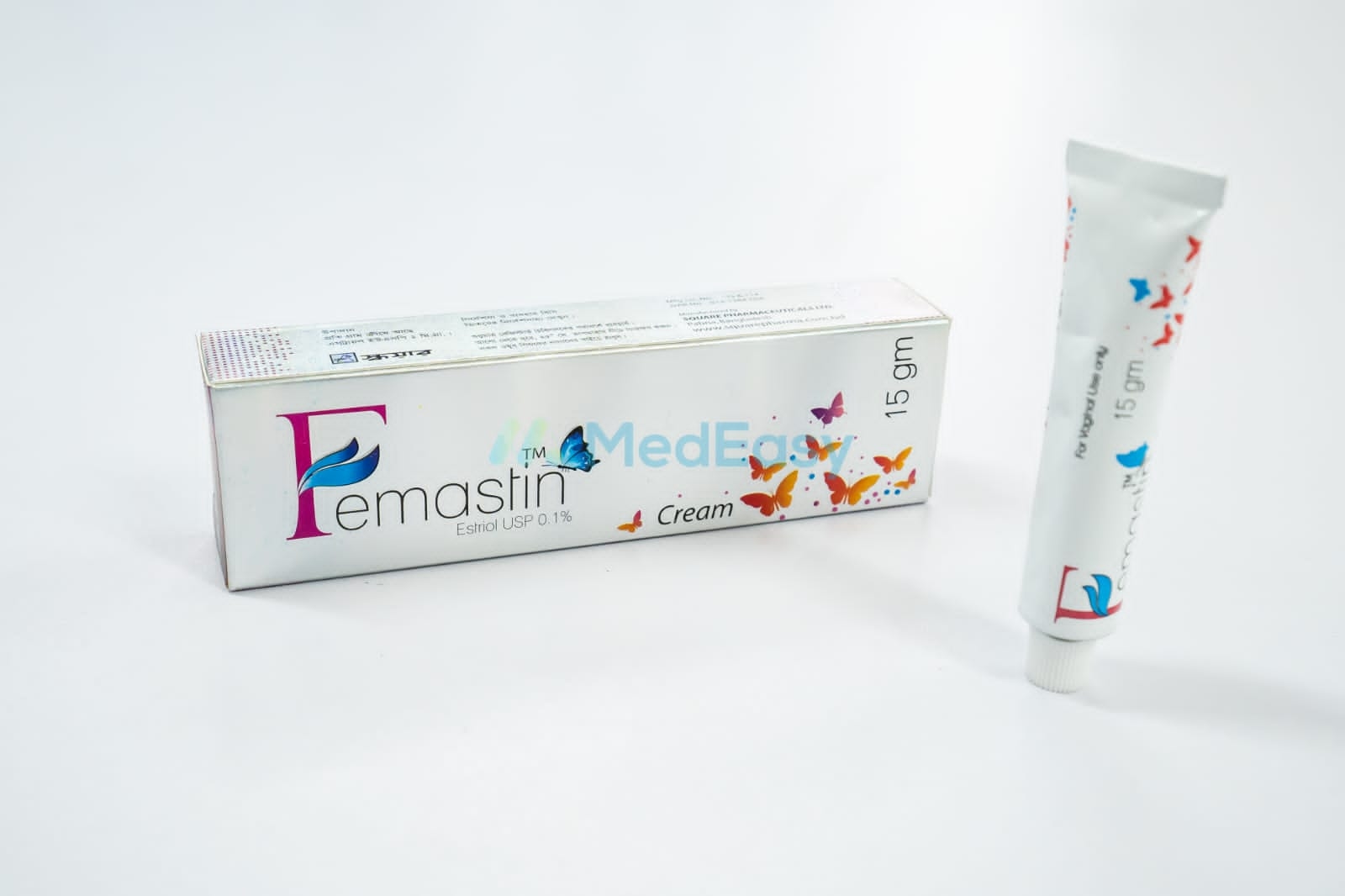
Femastin0.1%
Square Pharmaceuticals PLC.
৳900.00
Add to cart


Ovestin is a weak, short-acting natural estrogen used mainly by the vaginal route, and in some markets orally, for the following indications:
Ovestin is not indicated for prevention of cardiovascular disease or dementia, and its use should be individualized based on symptoms, risk factors, and physician assessment.
Estriol is available in the following strengths and dosage forms (formulation availability varies by market):
Ovestin is one of the three major naturally occurring endogenous estrogens (along with estradiol and estrone). It is the weakest and shortest-acting of the three, with low binding affinity for estrogen receptors compared with estradiol.
Because of its short duration of action and predominantly local effect when applied vaginally, Ovestin is widely used as a low-systemic-exposure option to treat vaginal and urinary symptoms of menopause, while oral formulations are used where systemic estrogenic effect is desired for climacteric symptoms or selected fertility indications.
Estrogen; topical/systemic hormone replacement agent used for urogenital atrophy (Ovestin is a natural, weak, short-acting estrogen).
Mechanism of action: Estriol acts as an agonist at estrogen receptors ERα and ERβ, though with substantially lower receptor binding affinity than estradiol. This weak, short-acting agonist activity is sufficient to restore the vaginal and urethral epithelium, increase vaginal blood flow and lubrication, and normalize vaginal pH and flora, which underlies its benefit in urogenital atrophy.
Pharmacokinetics: Estriol is absorbed from the vagina and gastrointestinal tract. It is metabolized mainly by conjugation (glucuronidation and sulfation) in the liver and excreted chiefly in urine. Its affinity for sex hormone-binding globulin is low, and it does not accumulate in tissue estrogen receptors for as long as estradiol, which explains its short duration of biological action and requirement for more frequent dosing.
Vaginal administration produces predominantly local effects on the genital epithelium with comparatively low systemic absorption relative to oral or systemic estrogen products, although some systemic absorption still occurs, particularly with prolonged or high-dose use.
Dosing of Ovestin depends on the indication, dosage form, and formulation strength available; the following reflects typical prescribing patterns and must be individualized by the treating physician.
| Indication | Form | Typical dosing |
|---|---|---|
| Vaginal atrophy / urogenital symptoms | Vaginal cream 0.1% | One applicator dose daily at bedtime for the first 2–3 weeks, then reduced to a maintenance dose of 1–2 applications per week, guided by response. |
| Preparation before vaginal surgery | Vaginal cream | Daily application for about 2 weeks before surgery. |
| Preparation before a cervical (Pap) smear in atrophic tissue | Vaginal cream | Daily application for about 7 days before the procedure. |
| Urogenital atrophy / climacteric complaints | Oral tablet 1 mg | Initial dose of 4–8 mg per day (taken as a single daily dose), then reduced to a maintenance dose of 1–2 mg per day once symptoms improve. |
| Peri-operative use before vaginal surgery (oral) | Oral tablet | 4–8 mg daily pre-operatively, then 1–2 mg daily post-operatively. |
| Infertility due to cervical mucus hostility (specialist use) | Oral tablet | 1–8 mg daily on specific days of the menstrual cycle, as directed by a fertility specialist. |
The lowest effective dose should be used for the shortest duration consistent with treatment goals, with periodic reassessment (see Duration of Treatment).
Vaginal cream: Wash hands before use. Fill the applicator to the prescribed mark. Lie down, insert the applicator gently and deeply into the vagina, and slowly push the plunger to deposit the cream. Use preferably at bedtime. Wash the applicator with mild soap and water after use.
Oral tablets: Swallow the tablet whole with water. The total daily dose of Ovestin is usually taken as a single dose, with or without food, at approximately the same time each day.
Do not increase the dose or frequency of Ovestin beyond what is prescribed.
The following interactions with Ovestin are clinically relevant:
Because systemic absorption of vaginal Ovestin is comparatively low, clinically significant interactions are less likely with vaginal use than with oral use, but cannot be excluded, especially with prolonged or high-dose therapy.
Estriol is contraindicated in patients with any of the following:
Common side effects of Ovestin include:
Less common but serious effects (more relevant with prolonged or systemic/oral use) include venous thromboembolism, gallbladder disease, changes in liver function, and, rarely, endometrial hyperplasia with unopposed long-term use. Patients should seek urgent medical attention for calf pain/swelling, chest pain, sudden breathlessness, severe headache, visual disturbance, or jaundice.
Pregnancy: Ovestin is contraindicated in known or suspected pregnancy. It should not be used during pregnancy; if pregnancy occurs during treatment, Ovestin must be discontinued immediately and the patient should consult her physician.
Lactation: Ovestin is generally not recommended during breastfeeding, as estrogens can reduce milk quantity and quality, and small amounts may pass into breast milk. Use only if clearly needed and the potential benefit justifies the potential risk to the infant, and only after consulting a physician.
Before starting Ovestin, a complete medical and family history should be taken, including a general and gynaecological examination.
Acute overdose with Ovestin is unlikely to be life-threatening. Possible features of overdose include nausea, vomiting, breast tenderness, abdominal discomfort, drowsiness, and withdrawal bleeding in women. There is no specific antidote.
In case of suspected overdose, seek immediate medical attention or contact a poison control center; treatment should be symptomatic and supportive, provided under medical supervision.
Store at room temperature (below 30°C), away from light and moisture. Keep out of reach of children.
Hepatic impairment: Ovestin is contraindicated in patients with severe hepatic impairment or active liver disease (see Contraindications); use with caution and close monitoring in milder hepatic conditions.
Renal impairment: No specific dose adjustment is well established; use with caution and physician judgment, as there is limited formal data.
Elderly: Ovestin is primarily used in postmenopausal women; use the lowest effective dose and monitor regularly for cardiovascular and thromboembolic risk factors.
Children: Ovestin is not indicated for use in children; safety and efficacy in the pediatric population have not been established.
Ovestin should be used at the lowest effective dose for the shortest duration consistent with the treatment goals. For vaginal atrophy, an initial course of 2–3 weeks is typically followed by a reduced maintenance regimen, which may be continued longer term under medical supervision because systemic exposure with vaginal use is comparatively low. For peri-procedural use (before surgery or a Pap smear), treatment is short-course only. Treatment duration and continued need should be reviewed periodically (e.g., annually) by the prescribing physician.
Estrogens; Natural steroidal estrogens; Topical/systemic hormone replacement therapy agents
Estriol is a weak, short-acting agonist at estrogen receptors ERα and ERβ, restoring vaginal and urethral epithelial integrity, vaginal blood flow, lubrication, and normal vaginal pH/flora in estrogen-deficient postmenopausal women.
X
Ovestin is not indicated for use in children or adolescents. Safety and efficacy in the pediatric population have not been established, and it should not be used in this group outside of specialist/research settings.
Q: What is Ovestin 0.1% Vaginal Cream used for?
A: Ovestin 0.1% Vaginal Cream is mainly used to treat vaginal dryness, irritation, and painful intercourse caused by low estrogen levels after menopause, and to prepare the vagina before certain gynaecological procedures. Oral forms are also used for broader menopausal (climacteric) symptoms and, in specialist settings, for cervical mucus-related infertility.
Q: Can I use Ovestin 0.1% Vaginal Cream during pregnancy?
A: No. Ovestin 0.1% Vaginal Cream is contraindicated in known or suspected pregnancy and should not be used if you are or may be pregnant. If you become pregnant while using Ovestin 0.1% Vaginal Cream, stop it and contact your physician immediately.
Q: Is Ovestin 0.1% Vaginal Cream safe while breastfeeding?
A: Ovestin 0.1% Vaginal Cream is generally not recommended during breastfeeding because estrogens can reduce milk supply and small amounts may pass into breast milk. It should only be used if clearly needed and after consulting your physician.
Q: How long does it take for Ovestin 0.1% Vaginal Cream vaginal cream to work?
A: Many women notice improvement in vaginal dryness and discomfort within a few weeks of starting Ovestin 0.1% Vaginal Cream, with an initial daily course of about 2–3 weeks typically followed by a lower maintenance dose.
Q: What are the serious side effects to watch for with Ovestin 0.1% Vaginal Cream?
A: Seek urgent medical attention if you develop calf pain or swelling, chest pain, sudden breathlessness, severe headache, vision changes, or jaundice, as these may indicate blood clots, cardiovascular problems, or liver dysfunction associated with estrogen therapy.
Q: Who should not use Ovestin 0.1% Vaginal Cream?
A: Ovestin 0.1% Vaginal Cream should not be used by anyone with known or suspected breast cancer or other estrogen-dependent cancer, undiagnosed vaginal bleeding, active blood clots or a history of them, severe liver disease, or known pregnancy, and by anyone allergic to Ovestin 0.1% Vaginal Cream.
Disclaimer
The information provided is accurate to the best of our knowledge, but it does not replace professional medical advice. We cannot guarantee its completeness or accuracy, and the absence of specific information about a drug should not be taken as an endorsement. We are not responsible for any consequences arising from this information, so please consult a healthcare professional for any concerns or questions.
