
10% Off
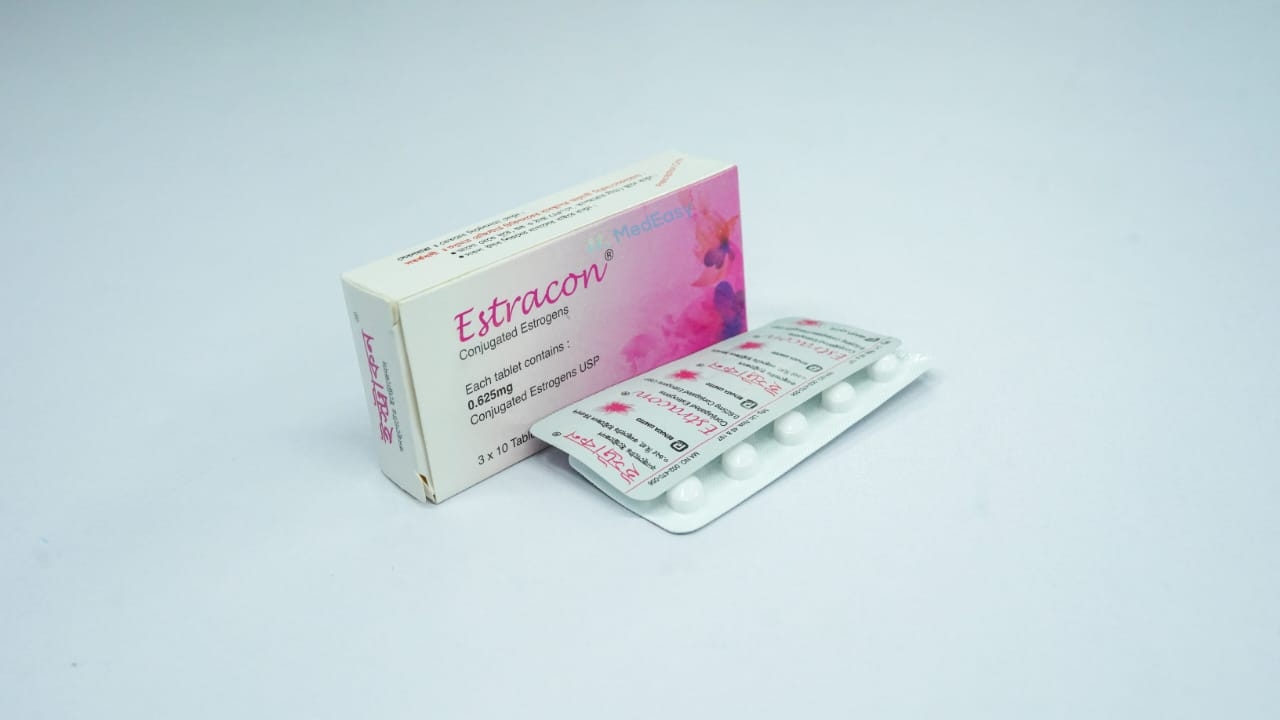
Estracon0.625 mg
Renata Limited
৳180.00
Add to cart

Premarin 0.625 mg Tablet is available on MedEasy for ৳1700.00 per 28's pack, with home delivery anywhere in Bangladesh. It is manufactured by Wyeth-Ayerst Laboratories. Its generic name is Conjugated Estrogens.

Premarin is indicated for the following conditions, classified by strength of evidence:
Premarin is not indicated for prevention of cardiovascular disease or dementia, and is not a contraceptive.
Each tablet contains Conjugated Estrogens, a mixture of naturally derived, water-soluble conjugated estrogenic substances obtained from natural sources, principally composed of estrone sulfate and equilin sulfate along with smaller amounts of other related estrogenic compounds (e.g., 17α-dihydroequilin, 17α-estradiol, and 17β-dihydroequilin sulfates). Conjugated Estrogens tablets are commonly available in strengths such as 0.3 mg, 0.45 mg, 0.625 mg, 0.9 mg, and 1.25 mg for oral use.
Premarin is a mixture of estrogenic substances used as hormone replacement therapy in postmenopausal women. It relieves symptoms caused by declining natural estrogen levels, such as hot flashes and vaginal dryness, and helps prevent postmenopausal bone loss (osteoporosis).
Premarin works by supplementing the body's estrogen levels, restoring hormonal balance in women whose ovaries no longer produce adequate estrogen due to menopause, surgical removal of the ovaries, or primary ovarian failure. It is administered orally and is available in multiple strengths to allow individualized dosing.
Premarin belongs to the therapeutic class of Estrogens / Hormone Replacement Therapy (HRT) agents, used for the management of estrogen-deficiency states in women.
Mechanism of action: Conjugated Estrogens bind to nuclear estrogen receptors (ER-alpha and ER-beta) present inestrogen-responsive tissues such as the female genital tract, breast, pituitary, hypothalamus, and bone. Thehormone-receptor complex binds to specific DNA sequences (estrogen response elements), regulating transcriptionof estrogen-responsive genes and producing the diverse physiological effects of estrogen.
Pharmacodynamics: Conjugated Estrogens reduce elevated gonadotropin (LH and FSH) levels seen after menopause,relieve vasomotor symptoms, promote maturation of the vaginal epithelium, and reduce bone resorption, helpingmaintain bone mineral density.
Pharmacokinetics: After oral administration, the estrogenic components are absorbed from thegastrointestinal tract, undergo hepatic conjugation/deconjugation (enterohepatic recirculation), and are metabolizedprimarily via hepatic cytochrome P450 3A4 (CYP3A4) and by sulfation/glucuronidation. Metabolites are excreted mainlyin urine, with some biliary excretion.
The dose of Premarin must be individualized to the lowest effective dose for the shortestduration consistent with treatment goals, risks, and patient preference. Attempt to taper or discontinueperiodically (e.g., every 3-6 months) to assess continued need.
| Indication | Typical Adult Dosing |
|---|---|
| Moderate-to-severe vasomotor symptoms | Start at 0.3 mg orally once daily; adjust based on response (continuous or cyclic regimen, e.g., 25 days on/5 days off, as directed by physician). |
| Vulvar and vaginal atrophy | Start at 0.3 mg orally once daily; adjust based on response. |
| Hypoestrogenism (hypogonadism) | 0.3 mg to 0.625 mg daily, cyclically (e.g., 3 weeks on, 1 week off), adjusted to symptom control. |
| Hypoestrogenism (castration or primary ovarian failure) | 1.25 mg daily, cyclically, adjusted as needed. |
| Prevention of postmenopausal osteoporosis | Start at 0.3 mg orally once daily; adjust based on bone mineral density response. |
| Palliative therapy, advanced prostate cancer (specialist-directed) | 1.25 mg to 2.5 mg three times daily. |
| Palliative therapy, metastatic breast cancer (specialist-directed) | 10 mg three times daily for a minimum of 3 months. |
Pediatric use: only for induction of puberty in adolescents with pubertal delay, under specialist supervision (see Use in Special Populations / Pediatric Uses).
Renal/hepatic impairment: Premarin are contraindicated in patients with hepatic impairment or disease; no specific renal dose adjustment is established, but use with caution in renal dysfunction due to potential fluid retention.
Take Premarin tablets orally, exactly as prescribed by the physician, at approximately the sametime each day, with or without food. Swallow the tablet whole; do not crush or chew unless advised.
Premarin are metabolized mainly by hepatic CYP3A4, giving rise to clinically significant interactions:
Conjugated Estrogens are contraindicated in patients with any of the following:
Common side effects of Premarin (occurring in ≥5% of users) include:
Less common but serious effects (see Precautions and Warnings for full detail) include venous thromboembolism, stroke,myocardial infarction, gallbladder disease, endometrial hyperplasia/cancer, and breast cancer risk with prolonged use.Other reported effects include melasma (skin darkening), hair loss or hirsutism, elevated blood pressure, elevatedtriglycerides, and hypersensitivity reactions.
Pregnancy: Premarin are contraindicated in pregnancy and are not indicated for use in pregnant women.There is no clinical benefit of estrogen therapy during pregnancy, and available epidemiological data do not supporta significant teratogenic risk from inadvertent early-pregnancy exposure to combined hormonal products; nevertheless,Premarin should be discontinued immediately if pregnancy occurs or is suspected, and the patient should consult herphysician promptly.
Lactation: Premarin can reduce the quantity and quality of breast milk and may pass into breast milk.Use during breastfeeding is generally not recommended; if therapy is considered necessary, the potential benefit tothe mother should be weighed against possible effects on milk supply and the nursing infant, and only under medicalsupervision.
Overdose of Premarin may cause nausea, vomiting, breast tenderness, abdominal pain, drowsiness/fatigue,and withdrawal bleeding in women. There is no specific antidote.
In case of a suspected overdose, seek immediate medical attention or contact a poison control center/emergencyservices. Treatment is supportive and symptomatic, and generally involves discontinuing the medicine under medicalsupervision.
Store at room temperature (below 30°C), away from light and moisture. Keep out of reach of children.
Hepatic impairment: Premarin are contraindicated in patients with known liver impairment or disease,as estrogens are extensively metabolized by the liver.
Renal impairment: No formal dose adjustment is established; use with caution due to a tendencyfor fluid retention, which may worsen renal dysfunction.
Elderly (65 years and older): Increased risk of stroke, invasive breast cancer, and probabledementia has been observed in this age group (see Precautions and Warnings); Premarin should be used at the lowesteffective dose with close monitoring.
Pediatric population: see Pediatric Uses.
Premarin should be used at the lowest effective dose for the shortest duration consistent with the treatment goalsand the individual patient's risks and benefits. The physician should re-evaluate the need for continued therapyperiodically, generally every 3 to 6 months, and consider tapering or discontinuation when appropriate, particularlyfor vasomotor symptom management. Duration for osteoporosis prevention or specialist-directed oncologic palliationshould be individualized under continued medical supervision.
Estrogens; Hormone Replacement Therapy (HRT) agents; Steroid hormones
Conjugated Estrogens act by binding to estrogen receptors in target tissues, activating estrogen-responsive gene transcription. This restores physiological estrogen activity in estrogen-deficient women, relieving vasomotor and vaginal atrophic symptoms and reducing osteoclast-mediated bone resorption to slow postmenopausal bone loss.
X
Premarin may be used under specialist (pediatric endocrinology) supervision for induction of pubertyin carefully selected adolescents with pubertal delay. Outside of this specific use, the safety and effectivenessof Premarin in pediatric patients have not been established.
Large or repeated doses of Premarin in growing children can accelerate epiphyseal (growth plate) closure, potentiallyresulting in reduced adult height if treatment is started before completion of puberty. In girls, Premarin may inducepremature breast development and vaginal cornification and may cause irregular vaginal bleeding. In boys, Premarin mayalter the normal pubertal process and cause gynecomastia. Pediatric use requires specialist supervision and periodicmonitoring of growth and bone age.
Q: What is Premarin 0.625 mg Tablet used for?
A: Premarin 0.625 mg Tablet is used mainly to relieve moderate-to-severe menopausal symptoms suchas hot flashes and vaginal dryness, to help prevent postmenopausal osteoporosis in women at significant risk, and totreat hypoestrogenism caused by ovarian failure, surgical removal of the ovaries, or hypogonadism. It is also used, underspecialist guidance, as palliative therapy in certain advanced prostate and breast cancers.
Q: Can Premarin 0.625 mg Tablet be taken during pregnancy?
A: No. Premarin 0.625 mg Tablet is contraindicated in pregnancy. If pregnancy occurs oris suspected while taking Premarin 0.625 mg Tablet, stop the medicine and contact a physician immediately.
Q: Is Premarin 0.625 mg Tablet safe while breastfeeding?
A: Premarin 0.625 mg Tablet can reduce breast milk quantity and quality and may pass intobreast milk, so it is generally not recommended during breastfeeding. If needed, it should only be used under medicalsupervision after weighing benefits and risks.
Q: What are the most serious risks of Premarin 0.625 mg Tablet?
A: Premarin 0.625 mg Tablet carries boxed warnings for increased risk of endometrialcancer (when used without a progestin in women with a uterus), cardiovascular events (stroke, heart attack, bloodclots), invasive breast cancer with prolonged combined use, and probable dementia in women over 65. These risksincrease with dose and duration, which is why the lowest effective dose for the shortest necessary time is recommended.
Q: Who should not take Premarin 0.625 mg Tablet?
A: Premarin 0.625 mg Tablet should not be used by women with undiagnosed vaginal bleeding, a historyof breast cancer or estrogen-dependent cancer, active or past blood clots (DVT/PE) or stroke/heart attack, known liverdisease, certain clotting disorders, known hypersensitivity to the medicine, or those who are pregnant. SeeContraindications for the complete list.
Q: What should I do if I miss a dose of Premarin 0.625 mg Tablet?
A: Take the missed dose as soon as you remember on the sameday. If it is almost time for your next dose, skip the missed dose and continue your regular schedule — do not takea double dose. Contact your physician if you miss doses frequently.
Disclaimer
The information provided is accurate to the best of our knowledge, but it does not replace professional medical advice. We cannot guarantee its completeness or accuracy, and the absence of specific information about a drug should not be taken as an endorsement. We are not responsible for any consequences arising from this information, so please consult a healthcare professional for any concerns or questions.