
8% Off
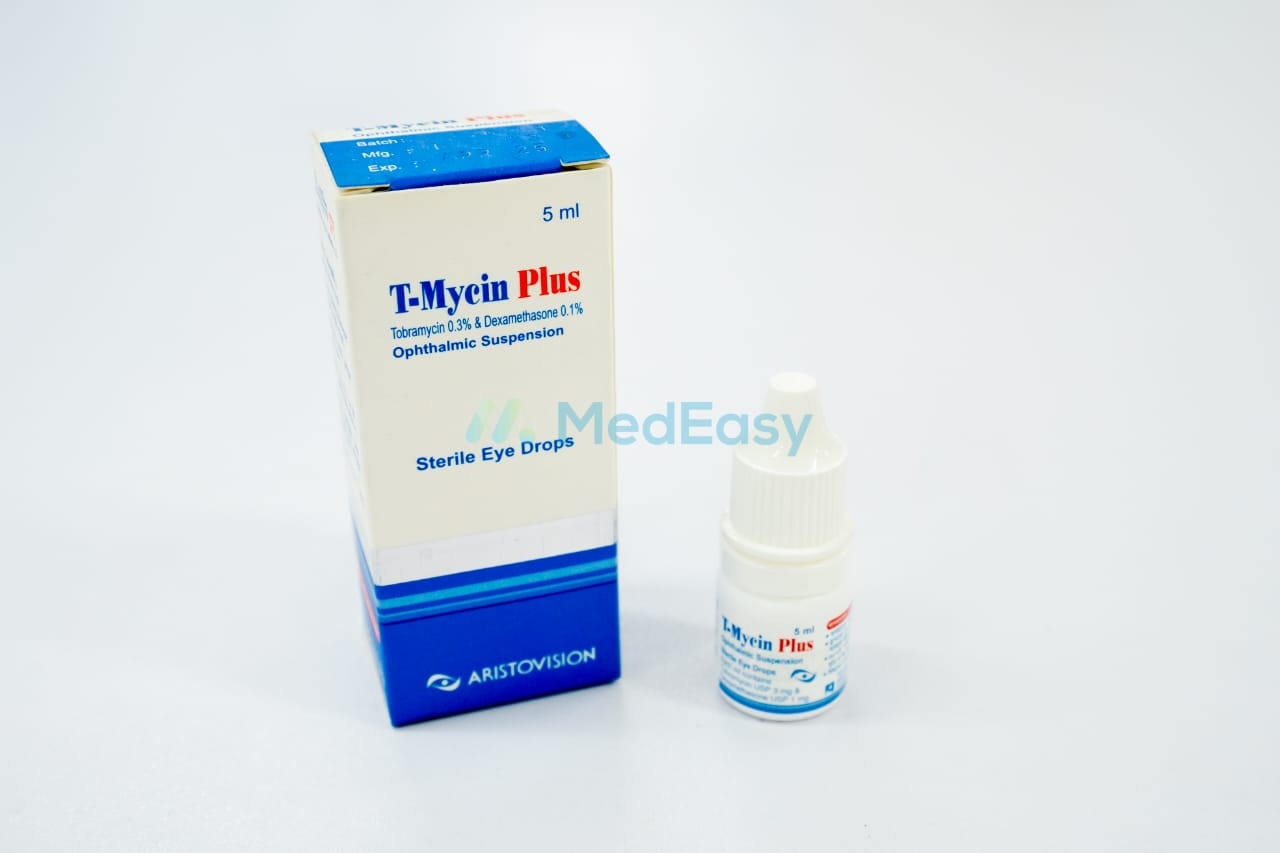
T-Mycin Plus0.1%+0.3%
Aristopharma Ltd.
৳138.00
Add to cart
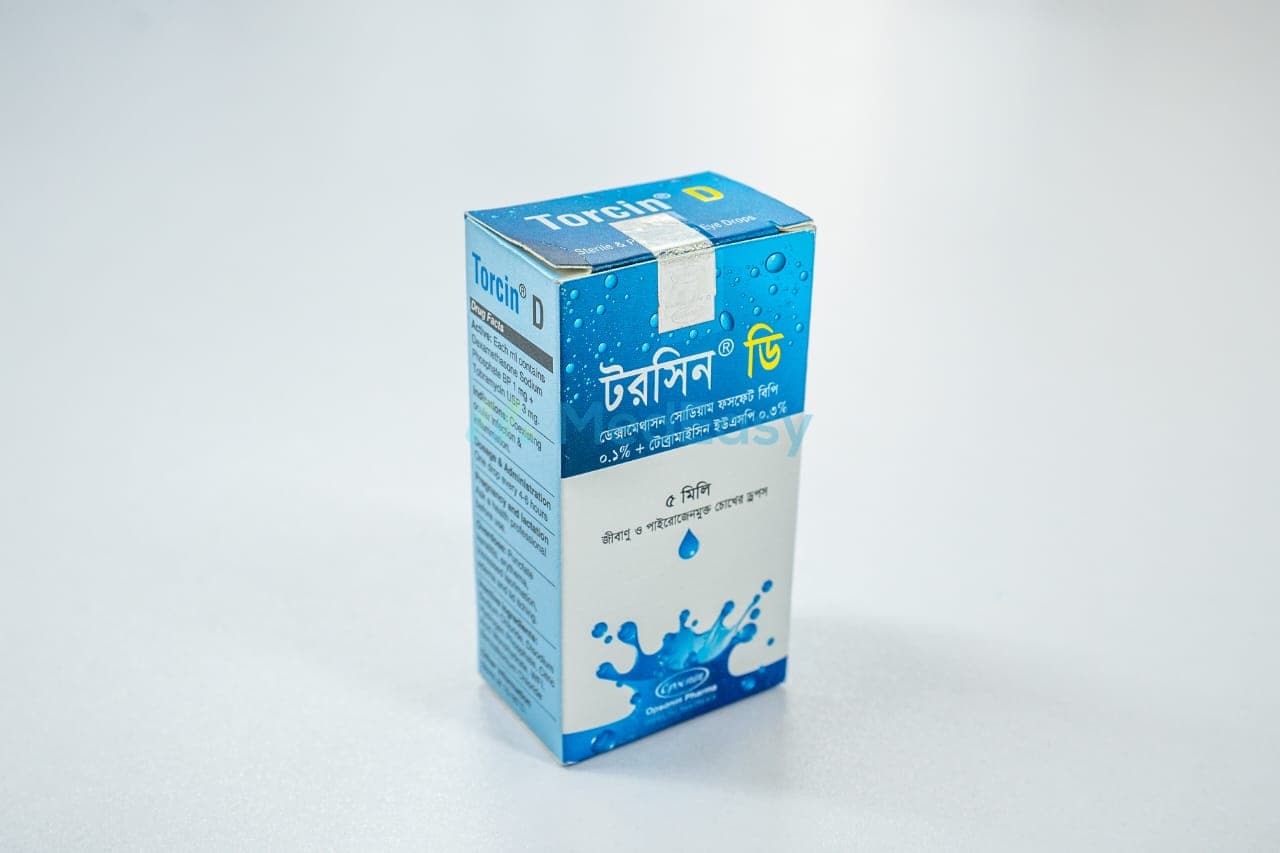

Torcin D is a combination ophthalmic corticosteroid-antibiotic product indicated for:
Torcin D is intended for short-term, physician-supervised topical ophthalmic use only. It is not indicated for infections without an inflammatory component, and it is not a substitute for an antibiotic alone when no steroid-responsive inflammation is present.
Each formulation of Dexamethasone + Tobramycin combines two active ingredients in a topical ophthalmic base:
It is available as a sterile ophthalmic suspension (eye drops) and as an ophthalmic ointment, along with inactive/preservative ingredients such as benzalkonium chloride.
Torcin D is a fixed-dose combination eye medication that pairs an aminoglycoside antibiotic (tobramycin) with a corticosteroid (dexamethasone). It is formulated as a sterile ophthalmic suspension (eye drops) or ointment for topical application to the eye.
The combination is designed for conditions where ocular inflammation needs to be controlled with a corticosteroid, while simultaneously covering or preventing susceptible bacterial infection with the antibiotic component. Torcin D is available in Bangladesh from multiple manufacturers as eye drops (0.1%+0.3%) and eye ointment (0.1%+0.3%).
Torcin D belongs to the therapeutic class of ophthalmic corticosteroid and antibiotic combination preparations, combining an aminoglycoside antibacterial (tobramycin) with a glucocorticoid anti-inflammatory agent (dexamethasone) for topical ocular use.
Dexamethasone + Tobramycin combines two complementary mechanisms of action:
Together, Dexamethasone + Tobramycin reduces ocular inflammation while providing antibacterial coverage against organisms susceptible to tobramycin, and topical absorption into the systemic circulation is generally low with normal use.
Shake well before use. Instill 1-2 drops into the conjunctival sac of the affected eye(s) every 4-6 hours. During the initial 24-48 hours of an acute condition, the dosing frequency may be increased to every 2 hours as directed by a physician, then tapered gradually as clinical improvement occurs.
Apply a small (approximately 1-1.5 cm) ribbon into the conjunctival sac of the affected eye(s) 3-4 times daily. The ointment may also be used at night as an adjunct to daytime drop therapy. Keep the eyes closed for 1-2 minutes after application.
Torcin D is administered topically into the conjunctival sac of the affected eye(s). Tilt the head back, pull down the lower eyelid to form a pocket, instill the drop or ointment without touching the tip to the eye or lashes, then close the eye gently for 1-2 minutes. Wash hands before and after application.
Formal drug-interaction studies with Torcin D have not been conducted. Clinically relevant considerations include:
Dexamethasone + Tobramycin is contraindicated in:
Adverse effects reported with Torcin D include:
Report any unusual or persistent eye symptoms to a physician promptly.
Pregnancy: There are no adequate and well-controlled studies of Torcin D in pregnant women. Topical ocular corticosteroids and aminoglycosides have limited systemic absorption; however, Torcin D should be used during pregnancy only if the potential benefit justifies the potential risk to the fetus, and only under a physician's direction.
Lactation: It is not known whether topical ophthalmic administration of Torcin D results in detectable levels in human milk. Caution should be exercised, and a physician should be consulted, when Torcin D is administered to a nursing mother.
Torcin D should be used with the following precautions:
Topical ocular overdose of Torcin D is unlikely to cause systemic toxicity, but excessive or prolonged use increases the risk of steroid-related ocular adverse effects (raised IOP, cataract, delayed healing). If accidental oral ingestion occurs, or if excessive instillation or a severe reaction is suspected, seek immediate medical attention or contact a poison control center/emergency services. Do not attempt unsupervised home treatment for a suspected overdose.
Store at room temperature (below 30°C, or as specified 2-25°C on the product label), away from light and moisture. Keep the container tightly closed and shake the suspension well before each use. Keep out of reach of children. Discard any remaining product after the course of treatment is completed or per the expiry/discard date on the label.
Pediatric use: Safety and effectiveness of Torcin D in children below 2 years of age have not been established. Use in children 2 years and older should be under close physician supervision.
Geriatric use: No overall differences in safety or effectiveness have been observed between elderly and younger adult patients; no special dosage adjustment is required based on age alone.
Hepatic/renal impairment: Because systemic absorption of Torcin D following topical ophthalmic use is minimal, no specific dosage adjustment is established for hepatic or renal impairment; use with routine physician supervision.
Treatment with Torcin D should generally be limited to the shortest effective duration as determined by the treating physician, typically a few days to about 2 weeks. If improvement is not seen within a few days, or if treatment must continue beyond 10 days, intraocular pressure should be monitored due to the risk of steroid-induced glaucoma. Do not use for longer than prescribed.
Dexamethasone + Tobramycin belongs to the drug class of ophthalmic corticosteroid/antibiotic combinations, specifically pairing an aminoglycoside antibiotic (tobramycin) with a glucocorticoid corticosteroid (dexamethasone).
In Dexamethasone + Tobramycin, tobramycin acts by binding to the bacterial 30S ribosomal subunit, disrupting bacterial protein synthesis and causing bactericidal activity against susceptible organisms. Dexamethasone acts by inhibiting phospholipase A2 and downstream inflammatory mediators, reducing capillary permeability, leukocyte infiltration, and other components of the ocular inflammatory response.
Torcin D is generally not recommended for children under 2 years of age, as safety and efficacy in this age group have not been established. In children 2 years and older, it may be used under a physician's direction with the same general dosing principles as adults, with close monitoring for local irritation and, in cases of prolonged use, intraocular pressure.
Q: What is Torcin D 0.1%+0.3% Eye Drop used for?
A: Torcin D 0.1%+0.3% Eye Drop is used to treat steroid-responsive inflammatory conditions of the eye when there is also a superficial bacterial infection or a risk of one, such as certain cases of allergic conjunctivitis, uveitis, or inflammation following eye injury or surgery.
Q: How should I use Torcin D 0.1%+0.3% Eye Drop eye drops?
A: Shake the bottle well, then instill 1-2 drops of Torcin D 0.1%+0.3% Eye Drop into the affected eye every 4-6 hours, or as directed by your physician. During the first 24-48 hours of severe inflammation, your doctor may instruct you to use it as often as every 2 hours before gradually reducing the frequency.
Q: Can I use Torcin D 0.1%+0.3% Eye Drop for more than 10 days?
A: Torcin D 0.1%+0.3% Eye Drop should only be used for as long as your physician prescribes. Because prolonged use (beyond 10 days) can raise eye pressure and increase the risk of glaucoma and cataracts, your doctor may want to check your intraocular pressure if treatment continues beyond this period.
Q: Is Torcin D 0.1%+0.3% Eye Drop safe during pregnancy or breastfeeding?
A: There are no adequate studies of Torcin D 0.1%+0.3% Eye Drop in pregnant or breastfeeding women. It should be used during pregnancy only if the potential benefit clearly justifies the potential risk to the fetus, and nursing mothers should consult their physician before use, as it is not known whether it passes into breast milk in detectable amounts.
Q: What are the main side effects of Torcin D 0.1%+0.3% Eye Drop?
A: Common side effects of Torcin D 0.1%+0.3% Eye Drop include temporary stinging, burning, itching, eyelid swelling, and redness. With prolonged use, corticosteroid-related effects such as increased eye pressure, glaucoma, and cataract formation can occur, so regular follow-up is important.
Q: Who should not use Torcin D 0.1%+0.3% Eye Drop?
A: Torcin D 0.1%+0.3% Eye Drop should not be used by people with viral eye infections such as herpes simplex keratitis, vaccinia, or varicella, mycobacterial or fungal eye infections, or those with known hypersensitivity to tobramycin, dexamethasone, or other aminoglycoside antibiotics.
Disclaimer
The information provided is accurate to the best of our knowledge, but it does not replace professional medical advice. We cannot guarantee its completeness or accuracy, and the absence of specific information about a drug should not be taken as an endorsement. We are not responsible for any consequences arising from this information, so please consult a healthcare professional for any concerns or questions.
