
10% Off
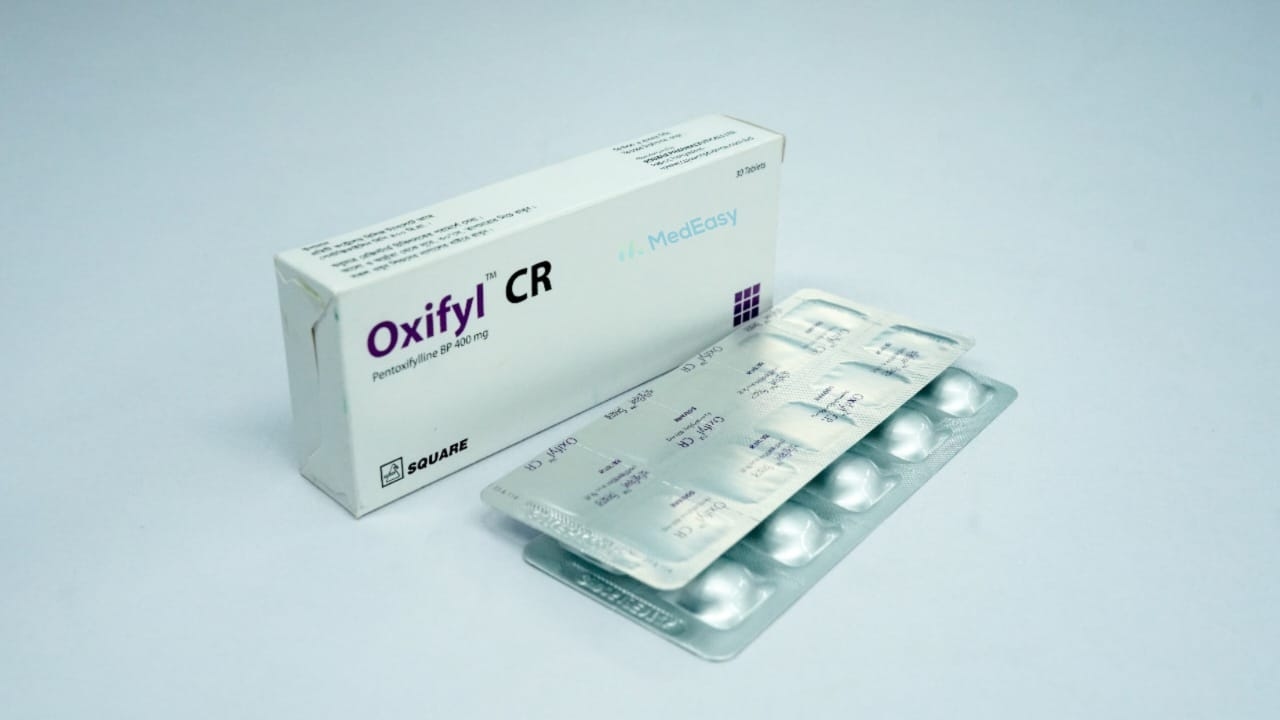
Oxifyl CR400 mg
Square Pharmaceuticals PLC.
৳6.34
Add to cart


Trental is a hemorheologic (blood flow-improving) agent with the following evidence-based uses:
The decision to use Trental for any off-label indication should be individualized by a qualified physician.
Each extended-release film-coated tablet contains Pentoxifylline USP 400 mg as the active ingredient, along with standard pharmaceutical excipients used for extended-release formulation. Pentoxifylline is chemically a dimethylxanthine derivative (a methylxanthine, structurally related to theophylline and caffeine).
Trental is a hemorheologic agent belonging to the methylxanthine class of compounds. Unlike theophylline and caffeine, Trental does not have significant central nervous system stimulant or bronchodilator activity; instead, its clinically relevant effect is on blood rheology (flow properties).
Trental is used primarily to improve blood flow in patients with peripheral arterial disease who experience intermittent claudication (pain, cramping, or fatigue in the legs during walking that is relieved by rest).
Hemorheologic agent (peripheral blood flow modifier); methylxanthine derivative used in the management of intermittent claudication associated with Trental-responsive peripheral arterial disease.
Pentoxifylline improves the flow properties of blood by reducing its viscosity. Proposed mechanisms include:
Pentoxifylline is well absorbed after oral administration, undergoes extensive first-pass hepatic metabolism to several active metabolites, and is eliminated mainly renally. It has a short plasma half-life, which is why extended-release formulations are used to maintain therapeutic effect with less frequent dosing.
| Population | Recommended dose |
|---|---|
| Adults | 400 mg (one extended-release tablet) three times daily with meals. If gastrointestinal or central nervous system side effects occur, reduce to 400 mg twice daily. |
| Renal impairment | Dose reduction may be needed in patients with severe renal impairment; use with caution and physician supervision (see Use in Special Populations). |
| Hepatic impairment | Use with caution; dose reduction may be required as hepatic clearance is reduced (see Use in Special Populations). |
| Pediatric | Safety and efficacy have not been established (see Pediatric Uses). |
A therapeutic trial of at least 8 weeks is generally recommended before concluding that Trental is not effective for an individual patient (see Duration of Treatment).
Trental extended-release tablets should be taken with or immediately after meals to reduce the chance of gastrointestinal upset. Swallow the tablet whole with a full glass of water; do not crush, chew, or split it, as this destroys the extended-release mechanism and may cause too much drug to be released at once.
Pregnancy: Trental should be used during pregnancy only if clearly needed and if the potential benefit justifies the potential risk to the fetus. Adequate, well-controlled human studies are lacking; a physician should be consulted before use in pregnancy.
Lactation: Trental and its metabolites are excreted into human breast milk in small amounts. Caution is advised when Trental is administered to a breastfeeding woman, and a physician should be consulted to weigh benefits against potential risk to the infant.
Reported symptoms of Trental overdose include flushing, hypotension, seizures, drowsiness, agitation, fever, and loss of consciousness; symptoms may be delayed for several hours. There is no specific antidote.
If overdose is suspected, seek immediate medical attention or contact emergency services/poison control right away. Treatment is supportive and symptomatic, and must be provided by qualified medical personnel; do not attempt specific home treatment.
Store at room temperature (below 30°C), away from light and moisture. Keep out of reach of children.
A therapeutic trial of Trental for at least 8 weeks is generally needed to assess symptomatic benefit in intermittent claudication. If no improvement in walking distance or symptoms is seen after 8 weeks, the physician should reassess continued use. If benefit is seen, Trental may be continued long-term under periodic physician review, alongside ongoing exercise and risk-factor management.
Hemorheologic agents; methylxanthine derivatives. Pentoxifylline is the representative agent of this class used for peripheral arterial disease.
Pentoxifylline lowers blood viscosity and improves microcirculatory flow by increasing red blood cell flexibility, reducing plasma fibrinogen, enhancing fibrinolysis, and inhibiting platelet aggregation, via non-selective phosphodiesterase inhibition. The net effect is improved delivery of oxygen to poorly perfused tissues, such as the calf muscles in patients with peripheral arterial disease.
C
Safety and efficacy of Trental have not been established in pediatric patients. Trental is therefore not recommended for use in children and adolescents outside of specialist supervision.
Q: What is Trental 400 mg Tablet used for?
A: Trental 400 mg Tablet is used mainly for the symptomatic treatment of intermittent claudication (leg pain, cramping, or fatigue on walking) caused by peripheral arterial disease. It improves blood flow and is used together with exercise and other standard measures, not as a stand-alone cure.
Q: How should I take Trental 400 mg Tablet?
A: Take Trental 400 mg Tablet extended-release tablets with or right after meals, swallowing them whole with water. Do not crush, chew, or split the tablet, as this can release the medicine too quickly and increase side effects.
Q: How long does it take for Trental 400 mg Tablet to work?
A: Improvement in walking distance may take time. A trial of at least 8 weeks is usually needed before your doctor can judge whether Trental 400 mg Tablet is helping you; do not stop early without discussing it with your physician.
Q: Can I take Trental 400 mg Tablet with blood thinners like warfarin or aspirin?
A: Trental 400 mg Tablet can add to the blood-thinning/antiplatelet effect of drugs such as warfarin, aspirin, or clopidogrel, increasing the risk of bleeding. If you are on any of these medicines, tell your doctor before starting Trental 400 mg Tablet so you can be monitored for bleeding.
Q: Is Trental 400 mg Tablet safe during pregnancy or breastfeeding?
A: Trental 400 mg Tablet should be used in pregnancy only if clearly needed, as there isn't enough human data to confirm safety, and it should be used cautiously during breastfeeding since small amounts pass into breast milk. Always consult your physician before using Trental 400 mg Tablet if you are pregnant or nursing.
Q: What should I do if I miss a dose or take too much Trental 400 mg Tablet?
A: If you miss a dose, take it as soon as you remember unless it is close to your next dose — do not double up. If you or someone else has taken too much Trental 400 mg Tablet and shows symptoms like severe flushing, low blood pressure, seizures, or drowsiness, seek immediate medical attention or contact emergency services/poison control right away.
Disclaimer
The information provided is accurate to the best of our knowledge, but it does not replace professional medical advice. We cannot guarantee its completeness or accuracy, and the absence of specific information about a drug should not be taken as an endorsement. We are not responsible for any consequences arising from this information, so please consult a healthcare professional for any concerns or questions.
