10% Off
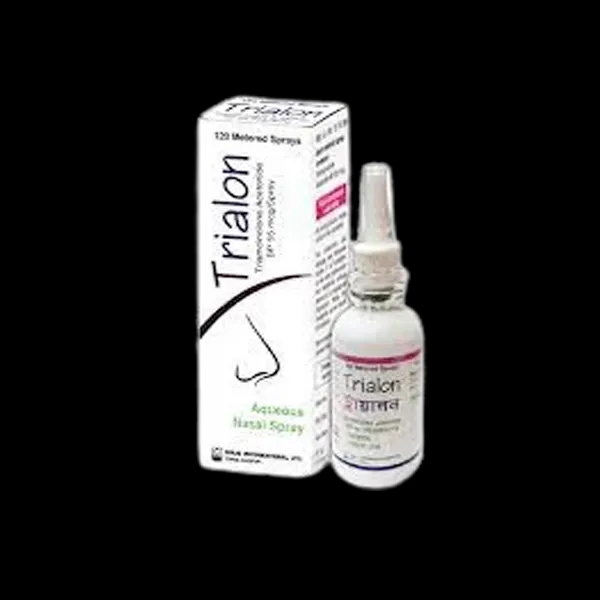
Cortefin55 mcg/spr
ACI Limited
৳180.00
Add to cart


In allergic rhinitis, Trispray 55 mcg/spray nasal spray is often used together with, or as an alternative to, oral antihistamines depending on symptom severity. Intra-articular Trispray 55 mcg/spray is used as an adjunct to rest, physiotherapy, and other standard measures for localized joint inflammation, not as monotherapy for the underlying disease.
Not all forms of Trispray 55 mcg/spray are marketed for every indication above in every country; use only the form and indication prescribed by your physician.
Trispray 55 mcg/spray is a synthetic glucocorticoid corticosteroid available in several dosage forms and strengths, including:
Trispray 55 mcg/spray is a synthetic corticosteroid with potent anti-inflammatory, antipruritic, and immunosuppressive properties. It is formulated in several ways to target different clinical problems: a topical preparation for inflammatory skin disease, an intranasal spray for allergic rhinitis, an adhesive oral paste for mouth ulcers/oral inflammatory lesions, and an injectable suspension for intramuscular, intra-articular, or intralesional use when a localized or short-term systemic corticosteroid effect is needed.
Regardless of the form used, Trispray 55 mcg/spray works by suppressing the inflammatory response at the cellular level, which underlies its effectiveness across these different indications.
Corticosteroid (topical, intranasal, dental/oral, and injectable glucocorticoid) — Trispray 55 mcg/spray belongs to the synthetic glucocorticoid class of corticosteroids.
Trispray 55 mcg/spray is a synthetic glucocorticoid that binds to intracellular glucocorticoid receptors, altering gene transcription to produce anti-inflammatory, antipruritic, vasoconstrictive, and immunosuppressive effects. It inhibits the release of inflammatory mediators (prostaglandins, leukotrienes, cytokines), reduces capillary permeability, decreases infiltration of inflammatory cells (neutrophils, eosinophils, lymphocytes) into affected tissue, and stabilizes lysosomal membranes.
Apply a thin layer to the affected skin area 2–3 times daily (or as directed). Gently rub in. Occlusive dressings are not routinely recommended and should only be used under medical supervision for limited periods due to increased risk of systemic absorption. Avoid use on the face, groin, or axillae for prolonged periods.
| Population | Dose |
|---|---|
| Adults and children ≥12 years | 2 sprays (110 mcg total) in each nostril once daily (max 220 mcg/day); may reduce to 1 spray/nostril once symptoms controlled |
| Children 2–11 years | 1 spray (55 mcg) in each nostril once daily |
Apply a small amount (approximately 1/4 inch) to the lesion without rubbing, preferably at bedtime for prolonged overnight contact, and 2–3 times daily after meals if needed. Reassess if no improvement within 7 days.
| Use | Typical adult dose |
|---|---|
| Intramuscular (systemic effect) | Initially 60 mg by deep IM injection into the gluteal muscle; subsequent doses adjusted (commonly 40–80 mg) based on patient response and duration of relief |
| Intra-articular (large joints, e.g., knee) | 5–15 mg per joint |
| Intra-articular (small joints) | 2.5–5 mg per joint |
| Intralesional (dermatologic lesions) | Up to 1 mg per injection site, depending on lesion |
Pediatric injectable dosing is generally weight-based (approximately 0.03–0.2 mg/kg/day IM, or as directed by the treating physician) and should be individualized; consult a pediatric specialist.
The injectable suspension is for intramuscular, intra-articular, or intralesional use only. It must never be given intravenously, and must not be given by the epidural or intrathecal route (see Precautions and Warnings).
Dosage of Trispray 55 mcg/spray depends on the formulation and indication: topical preparations are applied thinly 2–3 times daily; the intranasal spray is typically 1–2 sprays per nostril once daily; the dental paste is applied as a thin film at the lesion up to 2–3 times daily; and the injectable suspension dose (commonly 40–80 mg IM, or 2.5–15 mg intra-articularly) is individualized by the prescribing physician. See Dosage and Administration for full details.
Trispray 55 mcg/spray is contraindicated in:
Common: burning, itching, irritation, dryness at the application site. Less common: folliculitis, hypertrichosis, acneiform eruptions, hypopigmentation, skin atrophy, striae, telangiectasia, perioral dermatitis, and allergic contact dermatitis, particularly with prolonged or occlusive use.
Headache, nasal irritation/dryness, epistaxis (nosebleed), sore throat, and cough. Rarely, nasal septal perforation with prolonged use.
Local burning, stinging, dryness, blistering or peeling of oral mucosa; secondary oral fungal infection (candidiasis) with prolonged use.
Injection-site reactions (pain, atrophy, hypopigmentation), and — particularly with repeated or systemic-dose use — fluid retention, hypertension, hyperglycemia, mood/behavioral changes, increased susceptibility to infection, menstrual irregularities, and (with long-term use) osteoporosis, cushingoid features, and adrenal suppression.
Pregnancy: Corticosteroids, including Trispray 55 mcg/spray, have been shown to be teratogenic in animal studies when given systemically. Adequate, well-controlled studies in pregnant women are lacking. Trispray 55 mcg/spray should be used during pregnancy only if the potential benefit justifies the potential risk to the fetus, particularly with the injectable (systemic-exposure) form; topical, intranasal, and dental-paste forms carry lower systemic exposure but should still be used only as directed by a physician, in the smallest effective amount, for the shortest necessary duration. Consult a physician before use during pregnancy.
Lactation: It is not known whether topically or locally applied Trispray 55 mcg/spray is excreted in human breast milk in clinically significant amounts, though systemic corticosteroids are excreted in breast milk in small quantities. Caution is advised; avoid applying topical Trispray 55 mcg/spray directly to the breast/nipple area before breastfeeding, and use the lowest effective dose. Consult a physician before use while breastfeeding.
Acute overdose with Trispray 55 mcg/spray is unlikely to be immediately life-threatening with a single topical, intranasal, or dental-paste application, but chronic excessive use of any form may lead to systemic corticosteroid effects, including HPA-axis suppression and cushingoid features. Accidental ingestion of topical or dental preparations, or inadvertent excessive injectable dosing, should be treated as a medical concern. If overdose or accidental ingestion is suspected, seek immediate medical attention or contact a poison control center; do not attempt unsupervised home treatment. Management is supportive and symptomatic, guided by a healthcare professional.
Store at room temperature (below 30°C), away from light and moisture. Keep the container tightly closed and out of reach of children. Do not freeze the nasal spray or injectable suspension. Discard any injectable suspension vial as directed by your pharmacist once opened.
Duration of Trispray 55 mcg/spray therapy depends on the form and indication. Topical use is generally limited to the shortest period necessary to control symptoms (commonly up to 2–3 weeks continuously; re-evaluate if longer treatment is being considered). Dental paste is used until lesions resolve, with medical reassessment if no improvement within 7 days. Intranasal spray may be used for the duration of allergic symptom exposure (e.g., a pollen season) under medical guidance, with periodic reassessment for longer-term use. Injectable Trispray 55 mcg/spray doses are typically spaced at intervals determined by the treating physician (repeat intra-articular injections are generally limited in frequency per joint per year) to reduce cumulative systemic and local risk.
Corticosteroids; Glucocorticoids; Topical/Intranasal/Injectable Anti-inflammatory Agents
Trispray 55 mcg/spray is a synthetic glucocorticoid that binds to glucocorticoid receptors and modulates gene expression, suppressing the synthesis and release of inflammatory mediators (prostaglandins, leukotrienes, cytokines), reducing vascular permeability and inflammatory cell infiltration, and producing anti-inflammatory, antipruritic, and immunosuppressive effects at the site of application or systemically after injection.
C
Use of Trispray 55 mcg/spray in children should follow formulation-specific guidance:
Q: What is Trispray 55 mcg/spray used for?
A: Trispray 55 mcg/spray is a corticosteroid used in several forms: topical cream/ointment for inflammatory skin conditions such as eczema and psoriasis, a nasal spray for allergic rhinitis, an oral paste for mouth ulcers and oral inflammatory lesions, and an injectable suspension for joint inflammation or other conditions requiring corticosteroid therapy when oral treatment is not suitable.
Q: Can I use Trispray 55 mcg/spray cream on my face for a long time?
A: Prolonged use of Trispray 55 mcg/spray cream on the face or other thin-skinned areas is not recommended. Extended or occlusive use increases the risk of skin thinning, striae, and absorption of the drug into the body, which can suppress the adrenal glands. Use only as directed by your physician and for the shortest necessary duration.
Q: Is Trispray 55 mcg/spray safe during pregnancy?
A: Trispray 55 mcg/spray should be used during pregnancy only if your physician determines the potential benefit justifies the potential risk to the baby. This is especially important for the injectable form, which has greater systemic absorption than topical, nasal, or dental-paste forms. Always consult your physician before using Trispray 55 mcg/spray if you are pregnant or planning pregnancy.
Q: What should I avoid while using Trispray 55 mcg/spray nasal spray?
A: Avoid spraying Trispray 55 mcg/spray nasal spray directly onto the nasal septum, and do not use it for longer than directed without medical review, as prolonged use has rarely been associated with nasal septal perforation. Report persistent nosebleeds, nasal sores, or crusting to your physician.
Q: Can Trispray 55 mcg/spray injection be given intravenously?
A: No. The injectable suspension form of Trispray 55 mcg/spray must never be given intravenously, and must not be given by the epidural or intrathecal route, as this has been associated with serious neurologic events. It should only be administered by a qualified healthcare professional via the intramuscular, intra-articular, or intralesional route, as prescribed.
Q: What should I do if I accidentally use too much Trispray 55 mcg/spray?
A: If you suspect an overdose or accidental excessive use of Trispray 55 mcg/spray — for example, a child swallowing the cream or dental paste, or an inadvertent excess injectable dose — seek immediate medical attention or contact a poison control center rather than attempting home treatment.
Disclaimer
The information provided is accurate to the best of our knowledge, but it does not replace professional medical advice. We cannot guarantee its completeness or accuracy, and the absence of specific information about a drug should not be taken as an endorsement. We are not responsible for any consequences arising from this information, so please consult a healthcare professional for any concerns or questions.