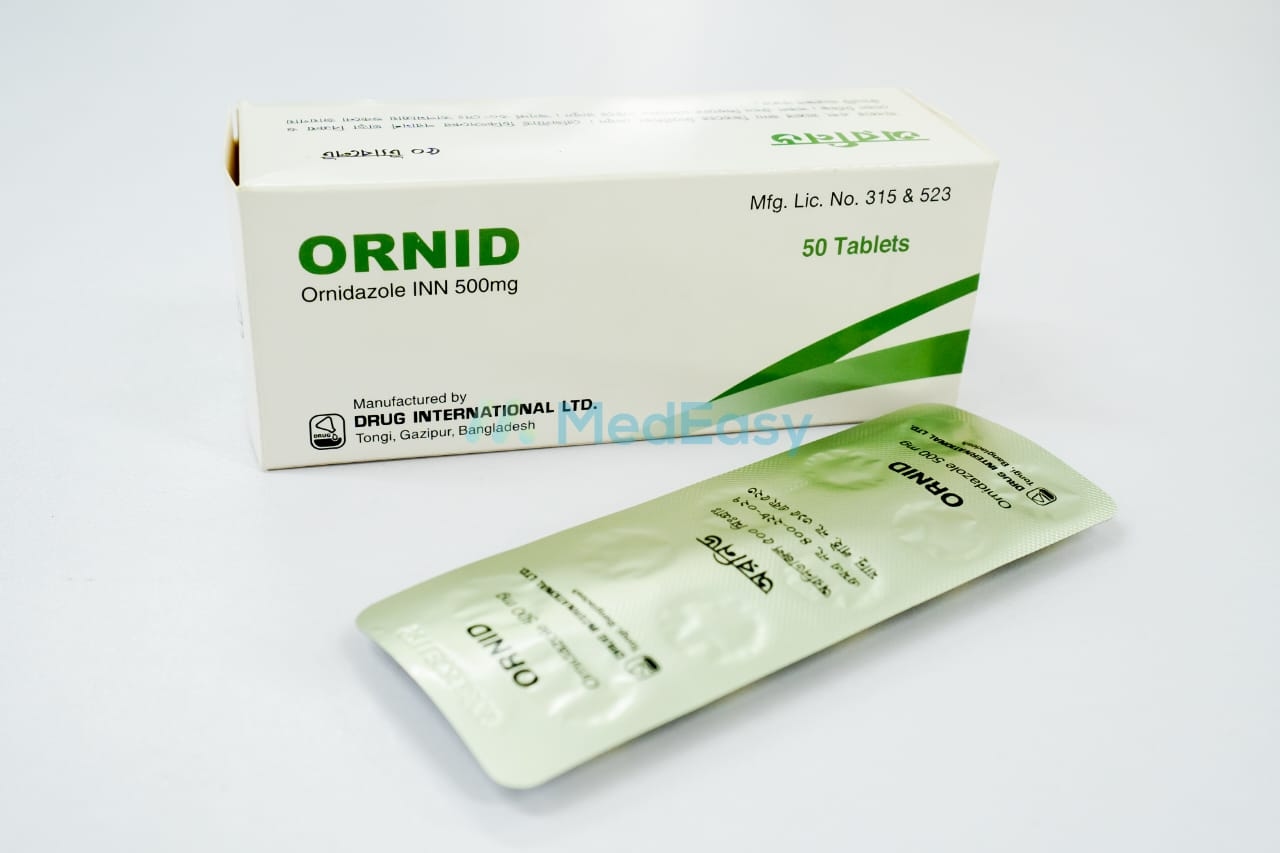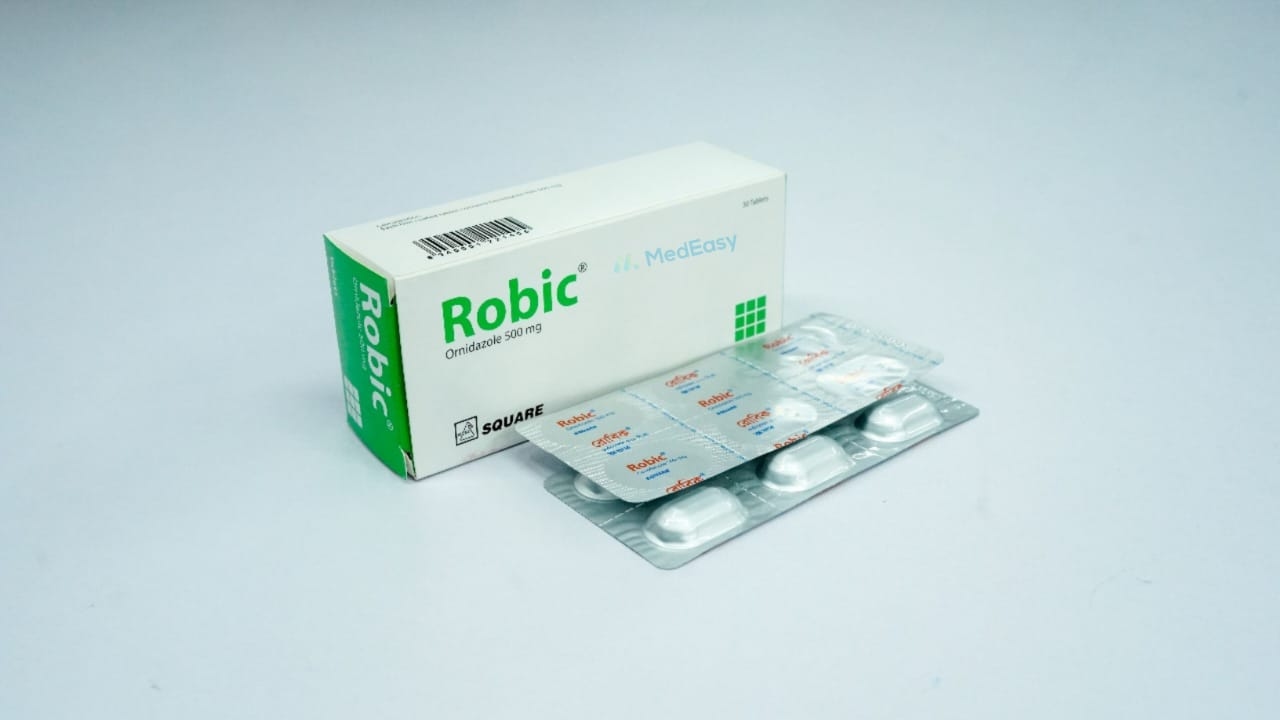
10% Off
Robic500 mg
Square Pharmaceuticals PLC.
৳6.32
Add to cart


Troniz is a nitroimidazole derivative with antiprotozoal and antibacterial (anti-anaerobic) activity. Its uses can be classified by strength of evidence as follows:
Troniz is not approved or marketed in the United States, so it does not carry a US FDA label; the uses above reflect established international prescribing practice and guideline-supported indications, including use in South Asian countries such as Bangladesh.
Each formulation contains Ornidazole INN (International Nonproprietary Name) as the active pharmaceutical ingredient. Ornidazole is manufactured and marketed in several dosage forms, including:
Exact strength, excipients, and pack size vary by manufacturer and brand; always check the product label of the specific formulation dispensed.
Troniz is a synthetic 5-nitroimidazole derivative, structurally related to metronidazole and tinidazole, developed to treat protozoal and anaerobic bacterial infections. It exhibits broad activity against protozoan parasites (such as Entamoeba histolytica, Giardia lamblia, and Trichomonas vaginalis) as well as many obligate anaerobic bacteria.
Compared with metronidazole, Troniz has a longer plasma half-life, which allows shorter treatment courses (including single-dose regimens) for some indications, and it is generally considered to be well tolerated. It is available for oral and intravenous use and is widely prescribed across South Asia, Southeast Asia, and other regions, including Bangladesh, though it is not marketed in the United States.
Nitroimidazole derivative — Antiprotozoal and antibacterial (anti-anaerobic) agent. Troniz belongs to the same pharmacological group as metronidazole, tinidazole, and secnidazole.
Ornidazole diffuses into susceptible anaerobic and microaerophilic organisms, where its nitro group is reduced by intracellular redox (ferredoxin-like electron transport) proteins that are present only in anaerobic/microaerophilic metabolism. This reduction generates reactive intermediates that bind to and damage microbial DNA, disrupting its helical structure and inhibiting nucleic acid synthesis, which leads to cell death of the parasite or bacterium. Aerobic human cells and aerobic bacteria lack this reducing environment, giving the drug selective toxicity against anaerobes and protozoa.
Dosage of Troniz should always be individualised by the prescribing physician based on the indication, severity of infection, patient age, weight, and renal/hepatic function. The following is general dosing guidance:
| Indication | Adult Dose | Paediatric Dose | Typical Duration |
|---|---|---|---|
| Intestinal amoebiasis (amoebic dysentery) | 500 mg twice daily | 25-40 mg/kg/day in divided doses | 5-7 days |
| Amoebic liver abscess | 500 mg twice daily | 25-40 mg/kg/day in divided doses | 5-10 days |
| Giardiasis | Single dose of 1.5 g, or 500 mg twice daily | 40 mg/kg as a single dose (max as per adult dose) | 1-2 days |
| Trichomoniasis / Bacterial vaginosis | Single dose of 1.5 g, or 500 mg twice daily; treat sexual partner concurrently | Not routinely indicated | 1-5 days |
| Anaerobic bacterial infections | 500-1000 mg every 12 hours (oral or IV), usually with an agent active against aerobes | Individualised by weight; specialist guidance advised | 5-10 days depending on response |
| Surgical prophylaxis (anaerobic coverage) | 500-1000 mg IV as a single dose, 30-60 minutes before surgery | Not routinely used | Single dose (occasionally 1-2 further doses post-op) |
Antimicrobial stewardship: Take Troniz exactly as prescribed by your physician; do not stop, extend, skip doses, or share this medicine with others without medical advice, even if symptoms improve before the course is finished.
See Precautions & Warnings for hepatic dose adjustment, and Use in Special Populations for renal impairment and elderly dosing considerations.
Troniz tablets may be taken with or without food, though taking them with food or a full glass of water can reduce stomach upset. Tablets should be swallowed whole and not crushed or chewed unless the product labelling states otherwise. Oral suspension should be shaken well and measured using the calibrated measuring device provided.
The intravenous (IV) infusion form of Troniz is administered by slow intravenous infusion under medical supervision (typically over 30-60 minutes) and must not be given as a rapid IV push. It should be inspected visually for particulate matter or discolouration before use.
Avoid alcohol during treatment with Troniz and for at least 3 days after the last dose (see Interactions and Precautions).
The following are clinically significant interactions with Troniz:
Inform your physician about all medicines, supplements, and alcohol use before starting Troniz.
Ornidazole is contraindicated in the following situations:
Most adverse effects of Troniz are mild and transient. Reported side effects include:
Seek medical attention promptly if severe rash, breathing difficulty, unusual bleeding/bruising, or persistent numbness/tingling occurs.
Pregnancy: Troniz is contraindicated in the first trimester of pregnancy. In the second and third trimesters, Troniz should be used only if clearly needed and if the potential benefit justifies the potential risk to the fetus; a physician must be consulted before use at any stage of pregnancy, and alternative agents may be preferred where possible.
Lactation: Troniz is excreted into breast milk. Breastfeeding mothers should consult their physician before use; a temporary interruption of breastfeeding during treatment and for a short period afterward may be advised, depending on the dose and duration of therapy.
Overdose of Troniz may cause exaggerated side effects such as nausea, vomiting, ataxia, disorientation, and, rarely, seizures. There is no specific antidote.
If overdose is suspected, seek immediate medical attention or contact a poison control centre/emergency services right away. Management is supportive and symptomatic, and should be carried out under medical supervision; do not attempt specific home treatment.
Store at room temperature (below 30°C), away from light and moisture. Keep out of reach of children. Do not use after the expiry date printed on the pack.
Duration of Troniz therapy depends on the indication: single-dose regimens are used for uncomplicated giardiasis and trichomoniasis; 5-7 days for intestinal amoebiasis; up to 10 days for amoebic liver abscess or anaerobic bacterial infections; and a single peri-operative dose for surgical prophylaxis. The treating physician determines the exact duration, and the full prescribed course should always be completed even if symptoms improve earlier.
Nitroimidazoles; Antiprotozoal agents; Antibacterial agents (anti-anaerobic)
Ornidazole is selectively reduced inside anaerobic and microaerophilic organisms, generating cytotoxic intermediates that damage microbial DNA and inhibit nucleic acid synthesis, leading to parasite/bacterial cell death. Aerobic human cells are not affected in the same way, giving the drug its selective antimicrobial action.
Troniz is used in children for amoebiasis and giardiasis with weight-based dosing (generally 25-40 mg/kg/day, divided as appropriate for the indication, or as a single dose for giardiasis), under the supervision of a paediatrician. Oral suspension formulations facilitate accurate weight-based dosing in younger children who cannot swallow tablets.
Safety and efficacy in neonates and infants below the age typically studied have not been well established; use in this age group should be undertaken only when clearly necessary and under close medical supervision. As with adults, the full prescribed course should be completed, and the medicine should not be shared or dosed without medical advice.
Q: What is Troniz 500 mg Tablet used for?
A: Troniz 500 mg Tablet is used to treat protozoal infections such as intestinal amoebiasis (amoebic dysentery), amoebic liver abscess, giardiasis, and trichomoniasis, as well as infections caused by anaerobic bacteria. It is also used as a single pre-operative dose to prevent anaerobic infection during certain surgeries.
Q: Can I drink alcohol while taking Troniz 500 mg Tablet?
A: No. Alcohol should be avoided during treatment with Troniz 500 mg Tablet and for at least 3 days after finishing the course, because it can cause a disulfiram-like reaction with symptoms such as flushing, headache, nausea, vomiting, and a fast heartbeat.
Q: Is Troniz 500 mg Tablet safe during pregnancy?
A: Troniz 500 mg Tablet is contraindicated in the first trimester of pregnancy. In later trimesters it should be used only if a physician judges it clearly necessary and the potential benefit outweighs potential risk to the baby. Always consult your physician before taking Troniz 500 mg Tablet if you are pregnant or planning pregnancy.
Q: Can I stop taking Troniz 500 mg Tablet once I feel better?
A: No. You should complete the full course of Troniz 500 mg Tablet exactly as prescribed by your physician, even if your symptoms improve earlier. Stopping early, skipping doses, or sharing the medicine with others can allow the infection to persist or recur, so always finish the course and follow medical advice.
Q: What are the common side effects of Troniz 500 mg Tablet?
A: Common side effects include nausea, vomiting, a metallic or bitter taste, headache, dizziness, and drowsiness. These are usually mild and temporary. Seek medical attention if you experience severe rash, breathing difficulty, unusual bleeding, persistent numbness/tingling, or other severe symptoms.
Q: Is Troniz 500 mg Tablet safe for children?
A: Troniz 500 mg Tablet can be used in children for amoebiasis and giardiasis with dosing calculated by body weight under a paediatrician's supervision. Safety in very young infants and neonates has not been well established, so use in this age group should only occur when clearly necessary and under close medical supervision.
Disclaimer
The information provided is accurate to the best of our knowledge, but it does not replace professional medical advice. We cannot guarantee its completeness or accuracy, and the absence of specific information about a drug should not be taken as an endorsement. We are not responsible for any consequences arising from this information, so please consult a healthcare professional for any concerns or questions.