
10% Off
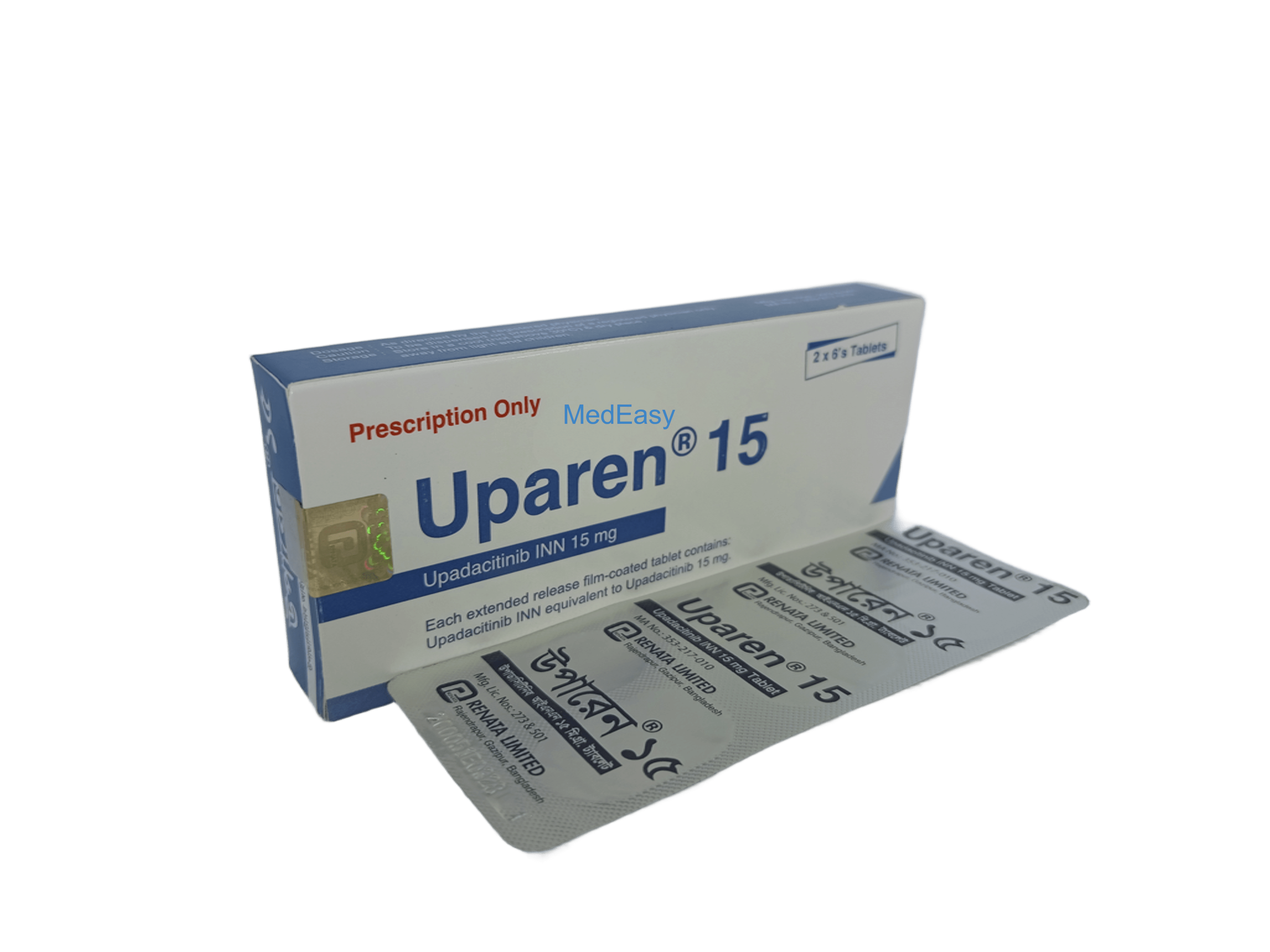
Uparen15 mg
Renata Limited
৳1512.00
Add to cart
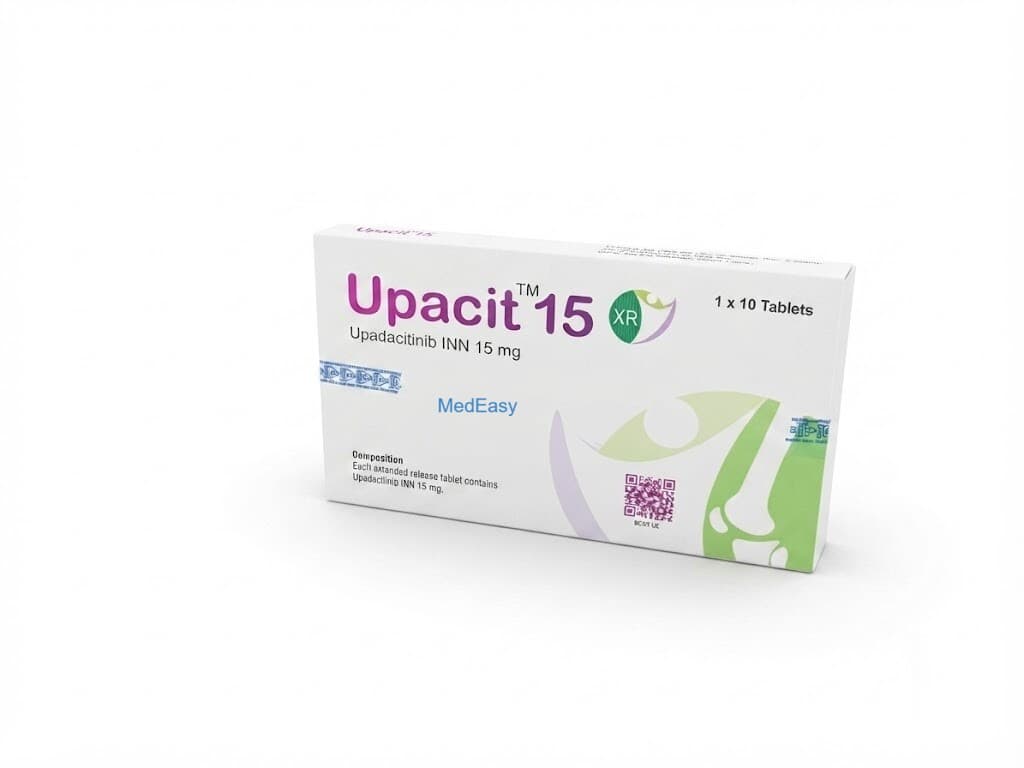

Upacit XR is a Janus kinase (JAK) inhibitor approved for the treatment of several chronic inflammatory and autoimmune conditions. Its indications are classified below by strength of evidence.
Upacit XR is generally reserved for patients who have already tried and had an inadequate response to a TNF blocker; it is not recommended in combination with biologic DMARDs, other JAK inhibitors, or potent immunosuppressants such as azathioprine or cyclosporine.
Each extended-release tablet of Upadacitinib contains Upadacitinib (as hemihydrate) in strengths of 15 mg, 30 mg, or 45 mg, along with pharmaceutically inert excipients that form the extended-release matrix. A pediatric oral solution formulation of Upadacitinib is also available in some markets.
Upacit XR is a selective, reversible, oral Janus kinase (JAK) inhibitor with preferential activity against JAK1 over JAK2, JAK3, and TYK2. It belongs to a class of targeted synthetic disease-modifying agents used to treat chronic inflammatory and autoimmune diseases. Upacit XR is formulated as an extended-release tablet taken once daily and is used when conventional or biologic therapies have not provided adequate disease control.
Upacit XR belongs to the therapeutic class of Janus Kinase (JAK) inhibitors, a subgroup of targeted synthetic disease-modifying antirheumatic drugs (tsDMARDs) and immunomodulators used in rheumatology, gastroenterology, and dermatology.
Upadacitinib works by selectively and reversibly inhibiting Janus kinase 1 (JAK1), with less activity against JAK2, JAK3, and TYK2. JAK enzymes transmit signals from cytokine and growth factor receptors on the cell surface through phosphorylation of signal transducers and activators of transcription (STATs). By blocking JAK1-mediated signaling, Upadacitinib reduces the activation and function of multiple pro-inflammatory cytokines (such as IL-6, IL-7, IL-15, IL-21, interferons, and GM-CSF) that drive the inflammatory processes seen in rheumatoid arthritis, psoriatic arthritis, spondyloarthritis, inflammatory bowel disease, and atopic dermatitis.
Upadacitinib is rapidly absorbed after oral administration, with peak plasma concentration reached within about 2-4 hours for the extended-release formulation. It is metabolized primarily via CYP3A4 (with minor contribution from CYP2D6) and eliminated with an effective half-life of approximately 8-14 hours, supporting once-daily dosing. Elimination occurs via both renal and hepatic/fecal routes.
Before starting Upacit XR, patients must be screened for active and latent tuberculosis, viral hepatitis, and baseline blood counts and liver function; vaccinations should be brought up to date. Upacit XR extended-release tablets should be swallowed whole with or without food, at approximately the same time each day, and must not be split, crushed, or chewed.
| Indication | Adult dose |
|---|---|
| Rheumatoid arthritis, Psoriatic arthritis, Ankylosing spondylitis, Non-radiographic axial spondyloarthritis | 15 mg orally once daily |
| Atopic dermatitis | 15 mg once daily; may be increased to 30 mg once daily if response is inadequate (adults under 65 years) |
| Ulcerative colitis | 45 mg once daily for 8 weeks (induction), then 15 mg once daily maintenance (30 mg may be used in select refractory/severe cases) |
| Crohn's disease | 45 mg once daily for 12 weeks (induction), then 15 mg once daily maintenance (30 mg may be used in select refractory/severe cases) |
No dose adjustment is needed for RA, PsA, AS, or nr-axSpA in mild-to-moderate renal or hepatic impairment. For severe renal impairment, lower induction doses are used for ulcerative colitis and Crohn's disease as directed by the prescriber. Upacit XR is not recommended in severe hepatic impairment (Child-Pugh C) or end-stage renal disease. See Contraindications and Precautions for infection screening requirements.
Upacit XR extended-release tablets should be swallowed whole with a glass of water, with or without food, at about the same time each day. Do not crush, split, or chew the tablet, as this destroys the extended-release mechanism. Do not stop or change the dose of Upacit XR without consulting the prescribing physician.
Upacit XR is metabolized mainly by the CYP3A4 enzyme, making it susceptible to clinically significant drug interactions.
Upadacitinib is contraindicated in patients with:
Other risk factors such as prior thrombosis, malignancy, older age with cardiovascular risk factors, or hepatic/renal impairment are important precautions requiring careful risk-benefit assessment rather than absolute contraindications; see Precautions and Warnings.
Patients should seek prompt medical attention for signs of infection, unusual bleeding/swelling in a limb, chest pain, shortness of breath, or sudden severe abdominal pain while taking Upacit XR.
Upacit XR should be avoided during pregnancy. Animal studies have shown evidence of embryo-fetal toxicity and malformations at clinically relevant exposures, and adequate human data are lacking. Pregnancy status should be verified before starting treatment, and women of reproductive potential should use effective contraception during treatment with Upacit XR and for at least 4 weeks after the final dose. Upacit XR should be used in pregnancy only if clearly needed and the potential benefit is judged by a physician to outweigh the potential risk to the fetus.
Upacit XR passes into breast milk in animal studies, and breastfeeding is not recommended during treatment and for at least 6 days after the final dose. A physician should be consulted to weigh the benefits of breastfeeding against the mother's need for treatment.
Upacit XR carries a boxed warning for: serious infections (including tuberculosis reactivation, invasive fungal, and other opportunistic infections); increased risk of all-cause mortality including sudden cardiovascular death (observed with another JAK inhibitor in an RA cardiovascular outcomes trial); malignancies including lymphoma; major adverse cardiovascular events (MACE); and thrombosis (deep vein thrombosis, pulmonary embolism, arterial thrombosis). These risks are increased in patients over 50 years of age with at least one cardiovascular risk factor, and require careful individual risk-benefit assessment before and during therapy.
There is limited clinical experience with Upacit XR overdose. In case of a suspected overdose of Upacit XR, seek immediate medical attention or contact a poison control center/emergency services right away. Management should be supportive, monitoring the patient for signs and symptoms of adverse reactions such as infection, unusual bleeding, or cardiovascular symptoms, with appropriate symptomatic treatment as directed by medical professionals. Do not attempt to manage a suspected overdose at home.
Store Upacit XR at room temperature (below 30°C), away from light and moisture. Keep out of reach of children.
Upacit XR is approved for atopic dermatitis in patients 12 years and older weighing at least 40 kg; safety and efficacy for other indications (RA, PsA, AS, nr-axSpA, UC, CD) have not been established in pediatric patients.
No difference in efficacy has been observed, but elderly patients, especially those with cardiovascular risk factors, have higher observed rates of serious infection, malignancy, and major cardiovascular events with Upacit XR; use with caution and at the lowest effective dose (see Precautions and Warnings, Boxed Warning).
No adjustment needed for mild-to-moderate impairment in RA/PsA/AS/nr-axSpA; dose reduction may apply for IBD indications in severe impairment; avoid in end-stage renal disease.
No adjustment needed in mild-to-moderate impairment; Upacit XR is not recommended in severe hepatic impairment (Child-Pugh C).
See Pregnancy and Lactation section above.
Duration of treatment with Upacit XR depends on the indication and clinical response, and is determined by the treating physician. For inflammatory bowel disease, higher induction dosing is generally limited to 8 weeks (ulcerative colitis) or 12 weeks (Crohn's disease), followed by long-term maintenance dosing if a response is achieved. For rheumatologic and dermatologic indications, treatment with Upacit XR is typically continued long-term as a chronic disease-modifying therapy, with periodic reassessment of ongoing need, response, and safety monitoring.
Upadacitinib belongs to the Janus Kinase (JAK) inhibitor class, specifically a JAK1-preferential inhibitor, within the broader category of targeted synthetic disease-modifying antirheumatic drugs (tsDMARDs)/immunomodulators.
Upadacitinib selectively and reversibly inhibits Janus kinase 1 (JAK1), blocking downstream phosphorylation of STAT proteins that mediate signaling from multiple pro-inflammatory cytokines. This interrupts the intracellular signaling cascade responsible for chronic inflammation in autoimmune and inflammatory diseases, reducing immune cell activation, inflammatory mediator production, and tissue damage.
Upacit XR is approved for use in pediatric patients 12 years of age and older (weighing at least 40 kg) specifically for refractory, moderate-to-severe atopic dermatitis that is not adequately controlled by other systemic therapies. Safety and efficacy of Upacit XR in children under 12 years of age, and for any indication other than atopic dermatitis in adolescents, have not been established, and its use in these settings is not recommended outside specialist supervision. Pediatric patients on Upacit XR require the same infection screening, vaccination review, and laboratory monitoring recommended for adults.
Q: What is Upacit XR 15 mg Tablet (Extended Release) used for?
A: Upacit XR 15 mg Tablet (Extended Release) is used to treat moderate to severe rheumatoid arthritis, psoriatic arthritis, ankylosing spondylitis, non-radiographic axial spondyloarthritis, ulcerative colitis, Crohn's disease, and atopic dermatitis in patients who have not responded well to other treatments such as TNF blockers.
Q: How should I take Upacit XR 15 mg Tablet (Extended Release)?
A: Upacit XR 15 mg Tablet (Extended Release) extended-release tablets should be swallowed whole, once daily, at about the same time each day, with or without food. Do not crush, split, or chew the tablet, and do not change your dose without consulting your physician.
Q: Is Upacit XR 15 mg Tablet (Extended Release) safe during pregnancy?
A: Upacit XR 15 mg Tablet (Extended Release) should be avoided during pregnancy because animal studies showed it can harm the developing fetus. Women who can become pregnant should use effective contraception during treatment and for at least 4 weeks after stopping Upacit XR 15 mg Tablet (Extended Release), and should discuss any pregnancy plans with their physician, who will weigh potential benefits against potential risks.
Q: What are the most serious risks of Upacit XR 15 mg Tablet (Extended Release)?
A: Upacit XR 15 mg Tablet (Extended Release) carries a boxed warning for serious infections (including tuberculosis), increased risk of death, cancer (including lymphoma), major heart problems (heart attack, stroke), and blood clots. These risks are higher in patients over 50 years old with existing heart disease risk factors. Contact your doctor immediately if you develop signs of infection, chest pain, shortness of breath, leg swelling, or unusual bleeding.
Q: Can I get vaccinated while taking Upacit XR 15 mg Tablet (Extended Release)?
A: Live or live-attenuated vaccines should be avoided while taking Upacit XR 15 mg Tablet (Extended Release) because it suppresses the immune response needed to safely handle a live vaccine. Non-live (inactivated) vaccines can generally be given; ask your doctor for guidance and try to complete recommended vaccinations before starting treatment.
Q: What should I do if I take too much Upacit XR 15 mg Tablet (Extended Release)?
A: If an overdose of Upacit XR 15 mg Tablet (Extended Release) is suspected, seek immediate medical attention or contact emergency services/poison control right away. Do not try to treat an overdose at home.
Disclaimer
The information provided is accurate to the best of our knowledge, but it does not replace professional medical advice. We cannot guarantee its completeness or accuracy, and the absence of specific information about a drug should not be taken as an endorsement. We are not responsible for any consequences arising from this information, so please consult a healthcare professional for any concerns or questions.
