
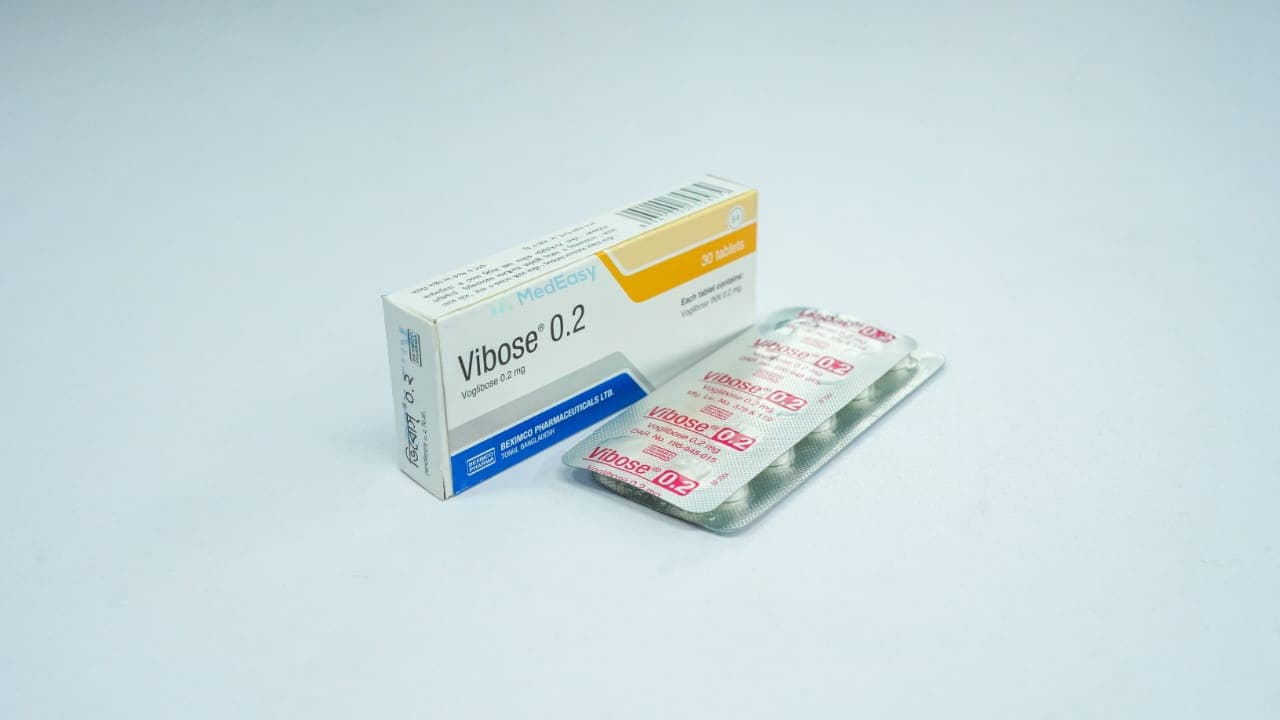

Medicine overview
Indications of Vibose
Vibose is an oral alpha-glucosidase inhibitor used in the management of type 2 diabetes mellitus (T2DM). Its evidence-based uses are summarized below.
Established / Guideline-supported use
- Type 2 diabetes mellitus: Vibose is indicated, alone or in combination with other oral anti-diabetic agents or insulin, to reduce post-prandial (after-meal) blood glucose spikes as part of a comprehensive diabetes management plan that includes diet and exercise.
Combination therapy
- Vibose is commonly added to metformin, sulfonylureas, or insulin when post-meal glucose control remains inadequate despite these agents; it complements them by targeting carbohydrate absorption rather than insulin secretion or sensitivity.
Off-label / less established uses
- Vibose has been studied for delaying progression from impaired glucose tolerance (IGT) to overt type 2 diabetes, and in reactive (post-prandial) hypoglycemia syndromes. These uses are not universally established and should only be undertaken under specialist supervision.
Vibose is not a substitute for insulin in type 1 diabetes or in acute metabolic decompensation.
Composition
Each tablet of Voglibose is formulated as an oral, immediate-release tablet. Voglibose is commonly available in strengths of 0.2 mg and 0.3 mg per tablet, along with standard pharmaceutical excipients (diluents, binders, disintegrants, and lubricants) that do not affect its glucose-lowering activity.
Description
Vibose is a synthetic alpha-glucosidase inhibitor belonging to the class of oral anti-diabetic (anti-hyperglycemic) medicines. Unlike sulfonylureas or insulin, Vibose does not stimulate insulin release; instead, it acts locally within the small intestine to slow the breakdown and absorption of dietary carbohydrates, thereby blunting the sharp rise in blood glucose that normally follows a meal.
Vibose is used as part of an overall treatment strategy for type 2 diabetes that also includes appropriate diet, exercise, and weight management, and is often combined with other anti-diabetic agents for patients whose post-meal glucose remains elevated.
Therapeutic Class
Vibose belongs to the alpha-glucosidase inhibitor class of oral anti-diabetic (anti-hyperglycemic) agents, a category that also includes acarbose and miglitol. These agents act in the gut rather than systemically to control blood glucose.
Pharmacology
Voglibose works by competitively and reversibly inhibiting alpha-glucosidase enzymes (such as maltase, sucrase, and other disaccharidases) located in the brush border of the small intestinal mucosa.
- These enzymes are normally responsible for breaking down complex carbohydrates and disaccharides into absorbable monosaccharides (glucose).
- By inhibiting this step, Voglibose delays carbohydrate digestion and glucose absorption, shifting it to more distal parts of the small intestine.
- The net effect is a flattened, delayed rise in post-prandial blood glucose, without an increase in insulin secretion.
Because Voglibose acts locally in the gut and is minimally absorbed systemically, it does not cause hypoglycemia when used as monotherapy. Long-term use is associated with modest reductions in HbA1c, primarily through control of post-meal glucose excursions.
Dosage & Administration of Vibose
Dosing by indication and population
| Population / Situation | Recommended Vibose dose |
|---|---|
| Adults with type 2 diabetes (initial) | 0.2 mg orally, three times daily, taken immediately before each main meal |
| Adults with type 2 diabetes (if response inadequate) | May be increased to 0.3 mg three times daily, based on physician assessment after 2–3 months |
| Elderly patients | Consider starting at a lower dose (e.g. 0.1–0.2 mg) with close blood glucose monitoring |
| Renal impairment | No specific dose adjustment is generally required given minimal systemic absorption; use with monitoring in significant renal impairment |
| Hepatic impairment | Use with caution; periodic liver function monitoring is reasonable (see Precautions) |
| Pediatric use | Safety and efficacy not established (see Pediatric Use) |
Important: Vibose must be taken immediately before meals. It is not effective if taken after a meal, well before a meal, or on an empty stomach without a subsequent meal.
Administration of Vibose
Vibose tablets should be swallowed with a small amount of water immediately before the start of a meal (within a few minutes). Taking Vibose after eating or without a following meal reduces its effectiveness, because its action depends on being present in the intestine at the same time as ingested carbohydrates. Do not crush or chew unless specifically instructed, and take doses consistently with each main meal as prescribed.
Interaction of Vibose
Clinically significant interactions
- Insulin and sulfonylureas: Combination with Vibose increases the risk of hypoglycemia. If hypoglycemia occurs, it must be corrected with oral glucose (dextrose), not sucrose (table sugar) or sucrose-containing food/drink, because Vibose delays the breakdown of sucrose and would blunt/delay the glucose response.
- Digestive enzyme preparations (amylase, pancreatin) and antacids: May reduce the efficacy of Vibose by promoting carbohydrate breakdown before it reaches the site of enzyme inhibition; concurrent use should be monitored.
- Drugs that can raise blood glucose (e.g. corticosteroids, thiazide diuretics, thyroid hormones): May reduce the glucose-lowering effect of Vibose and require dose reassessment of the overall regimen.
- Beta-blockers: May mask the adrenergic warning symptoms (tremor, palpitations) of hypoglycemia when Vibose is combined with insulin or sulfonylureas; monitor glucose closely.
Always inform the physician or pharmacist of all other medicines being taken before starting Vibose.
Contraindications
Voglibose is contraindicated in the following situations (true absolute contraindications):
- Known hypersensitivity to Voglibose or any component of the formulation.
- Diabetic ketoacidosis (DKA).
- Diabetic coma or pre-coma.
- Severe infection, pre- or post-surgical states, or serious trauma — situations in which insulin therapy, not oral agents, is required for glycemic control.
- Inflammatory bowel disease.
- Intestinal obstruction, or a predisposition to intestinal obstruction.
- Chronic intestinal diseases associated with marked disorders of digestion or absorption.
- Conditions that may deteriorate due to increased intestinal gas formation (e.g. large hernias).
Side Effects of Vibose
The most common side effects of Vibose relate to its local action on carbohydrate digestion in the gut:
- Very common/common: Flatulence (excess intestinal gas), abdominal bloating or distension, and diarrhea or loose stools — these arise from undigested carbohydrate reaching and fermenting in the colon, and often lessen with continued use.
- Common: Abdominal discomfort/pain, nausea.
- Uncommon: Constipation.
- Rare: Elevated liver enzymes, hepatitis, or liver dysfunction (see Precautions); skin rash or hypersensitivity reactions.
Patients should seek medical attention for severe or persistent gastrointestinal symptoms, jaundice, or signs of an allergic reaction.
Pregnancy & Lactation
Pregnancy: The safety of Vibose in human pregnancy has not been well established. Because diabetes management in pregnancy generally requires insulin rather than oral agents, Vibose should be used in pregnancy only if clearly needed and if the potential benefit justifies the potential risk to the fetus, and only under close physician supervision.
Lactation: It is not established whether Vibose is excreted into human breast milk in clinically significant amounts. As a precaution, Vibose is not generally recommended during breastfeeding unless a physician determines the benefit outweighs the potential risk to the infant.
Always consult a physician before using Vibose during pregnancy or while breastfeeding.
Precautions & Warnings
- Not for insulin-dependent states: Vibose is not appropriate for type 1 diabetes, diabetic ketoacidosis, or diabetic coma/pre-coma (see Contraindications).
- Hepatic monitoring: Rare cases of elevated liver enzymes and hepatic dysfunction have been reported with alpha-glucosidase inhibitors. Periodic liver function monitoring is reasonable, particularly during the first months of therapy, and Vibose should be used cautiously in patients with pre-existing hepatic impairment.
- Hypoglycemia in combination therapy: Vibose alone does not cause hypoglycemia, but when combined with insulin or sulfonylureas, hypoglycemia can occur and must be treated with oral glucose (dextrose), not sucrose (see Interactions).
- Gastrointestinal conditions: Use with caution in patients with a history of intestinal or abdominal surgery, or partial intestinal obstruction, given the drug's local gastrointestinal effects.
- Elderly patients: Start with a lower dose and monitor closely due to potential differences in tolerability and comorbidities.
- Periodic reassessment: Response to Vibose should be reviewed periodically (e.g. every 2–3 months); therapy may be discontinued if adequate glycemic control is achieved through diet and lifestyle alone.
Overdose Effects of Vibose
Because Vibose works by delaying carbohydrate absorption rather than stimulating insulin release, overdose with Vibose alone is not expected to cause hypoglycemia. Instead, an overdose is likely to cause exaggerated gastrointestinal effects such as marked flatulence, abdominal bloating, and diarrhea.
If an overdose of Vibose is suspected — especially in combination with insulin or sulfonylureas where hypoglycemia risk is greater — seek immediate medical attention or contact emergency services/a poison control center. Do not attempt to manage a suspected overdose with home remedies; supportive care and monitoring by a healthcare professional is required.
Storage Conditions
Store at room temperature (below 30°C), away from light and moisture. Keep out of reach of children.
Use In Special Populations
- Elderly: Vibose can be used in elderly patients, generally starting at a lower dose with careful monitoring of blood glucose and gastrointestinal tolerability, as this population may have increased sensitivity and comorbidities.
- Renal impairment: Because Vibose is minimally absorbed systemically and excreted largely unchanged via the gut, significant dose adjustment is generally not required, but caution and monitoring are advised in severe renal impairment.
- Hepatic impairment: Use Vibose with caution, given rare reports of hepatic enzyme elevation; periodic liver function monitoring is reasonable (see Precautions).
- Pediatric patients: Safety and efficacy of Vibose have not been established in children; its use is not recommended in this population (see Pediatric Use).
- Pregnancy and breastfeeding: See Pregnancy and Lactation section.
Duration Of Treatment
Vibose is generally used long-term as part of chronic type 2 diabetes management, alongside diet and exercise. Glycemic response should be reassessed after approximately 2–3 months of therapy at a given dose; if adequate blood glucose control is achieved with diet and lifestyle modification alone, the physician may consider discontinuing Vibose. Any change in dose or discontinuation should be guided by a physician based on ongoing glucose monitoring.
Drug Classes
Alpha-glucosidase inhibitor; Oral anti-diabetic (anti-hyperglycemic) agent
Mode Of Action
Voglibose competitively and reversibly inhibits intestinal alpha-glucosidase enzymes (including maltase and sucrase) in the brush border of the small intestine. This slows the enzymatic breakdown of oligosaccharides and disaccharides into absorbable monosaccharides, delaying carbohydrate digestion and glucose absorption. The result is a lower and more delayed post-prandial blood glucose peak, achieved without stimulating insulin secretion.
Pediatric Uses
The safety and efficacy of Vibose have not been established in pediatric patients. Vibose is therefore not recommended for use in children and adolescents outside of specialist clinical settings, and clinical experience in this population is very limited.
Frequently Asked Questions
Q: What is Vibose 0.2 mg Tablet used for?
A: Vibose 0.2 mg Tablet is used to help control blood glucose levels after meals (post-prandial glucose) in adults with type 2 diabetes, usually alongside diet, exercise, and sometimes other diabetes medicines.
Q: How should I take Vibose 0.2 mg Tablet?
A: Vibose 0.2 mg Tablet should be taken immediately before the start of a main meal, exactly as prescribed. Taking it after eating or without a following meal reduces its effectiveness.
Q: Can Vibose 0.2 mg Tablet cause low blood sugar (hypoglycemia)?
A: Vibose 0.2 mg Tablet alone does not usually cause hypoglycemia because it does not increase insulin release. However, if it is combined with insulin or sulfonylureas, hypoglycemia can occur; if it does, it must be treated with oral glucose (dextrose) rather than table sugar (sucrose), because Vibose 0.2 mg Tablet delays the breakdown of sucrose.
Q: What are the most common side effects of Vibose 0.2 mg Tablet?
A: The most common side effects are gastrointestinal — flatulence, abdominal bloating, and diarrhea — caused by undigested carbohydrate reaching the colon. These often improve as the body adjusts to Vibose 0.2 mg Tablet.
Q: Can Vibose 0.2 mg Tablet be used during pregnancy or breastfeeding?
A: The safety of Vibose 0.2 mg Tablet in pregnancy and breastfeeding has not been well established. It should only be used in pregnancy or while breastfeeding if a physician determines the potential benefit outweighs the potential risk, since diabetes in pregnancy is usually managed with insulin.
Q: Who should not take Vibose 0.2 mg Tablet?
A: Vibose 0.2 mg Tablet should not be used by people with a known allergy to it, diabetic ketoacidosis or diabetic coma/pre-coma, severe infection or recent major surgery/trauma, inflammatory bowel disease, intestinal obstruction or a predisposition to it, chronic digestive/absorption disorders, or conditions worsened by excess intestinal gas such as large hernias.
Disclaimer
The information provided is accurate to the best of our knowledge, but it does not replace professional medical advice. We cannot guarantee its completeness or accuracy, and the absence of specific information about a drug should not be taken as an endorsement. We are not responsible for any consequences arising from this information, so please consult a healthcare professional for any concerns or questions.
