
10% Off
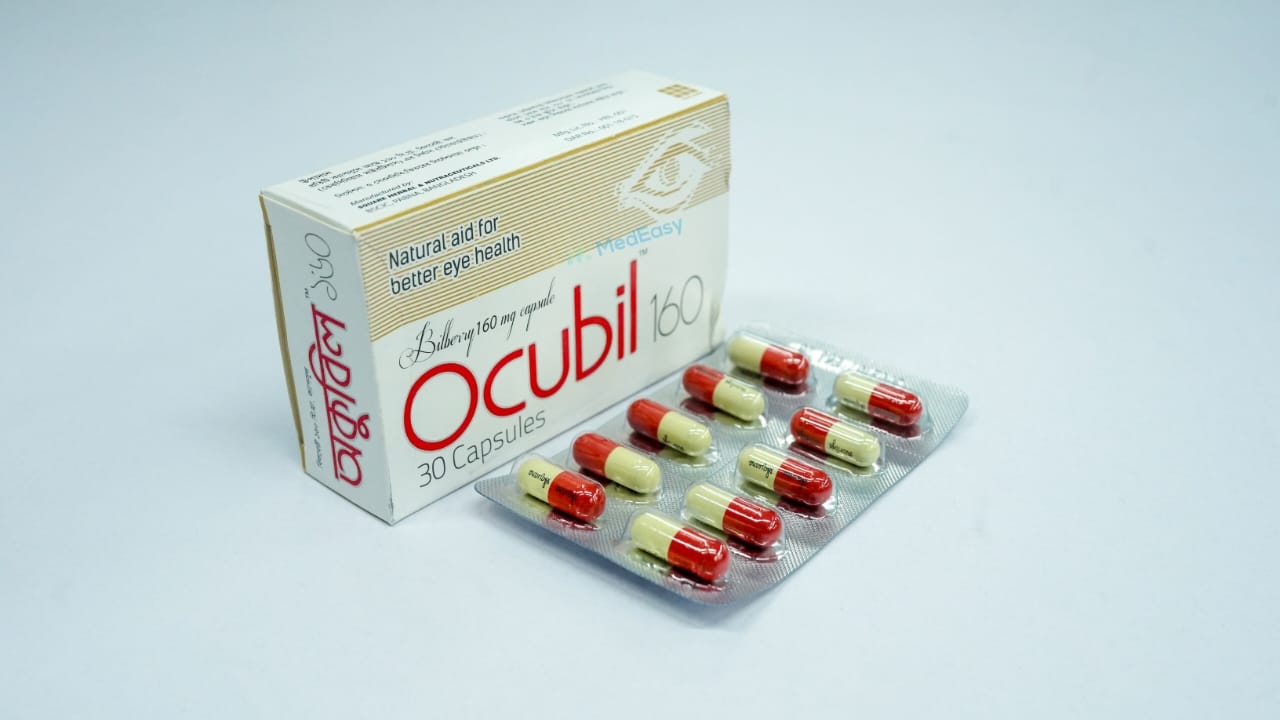
Ocubil160 mg
Square Pharmaceuticals PLC.
৳18.00
Add to cart
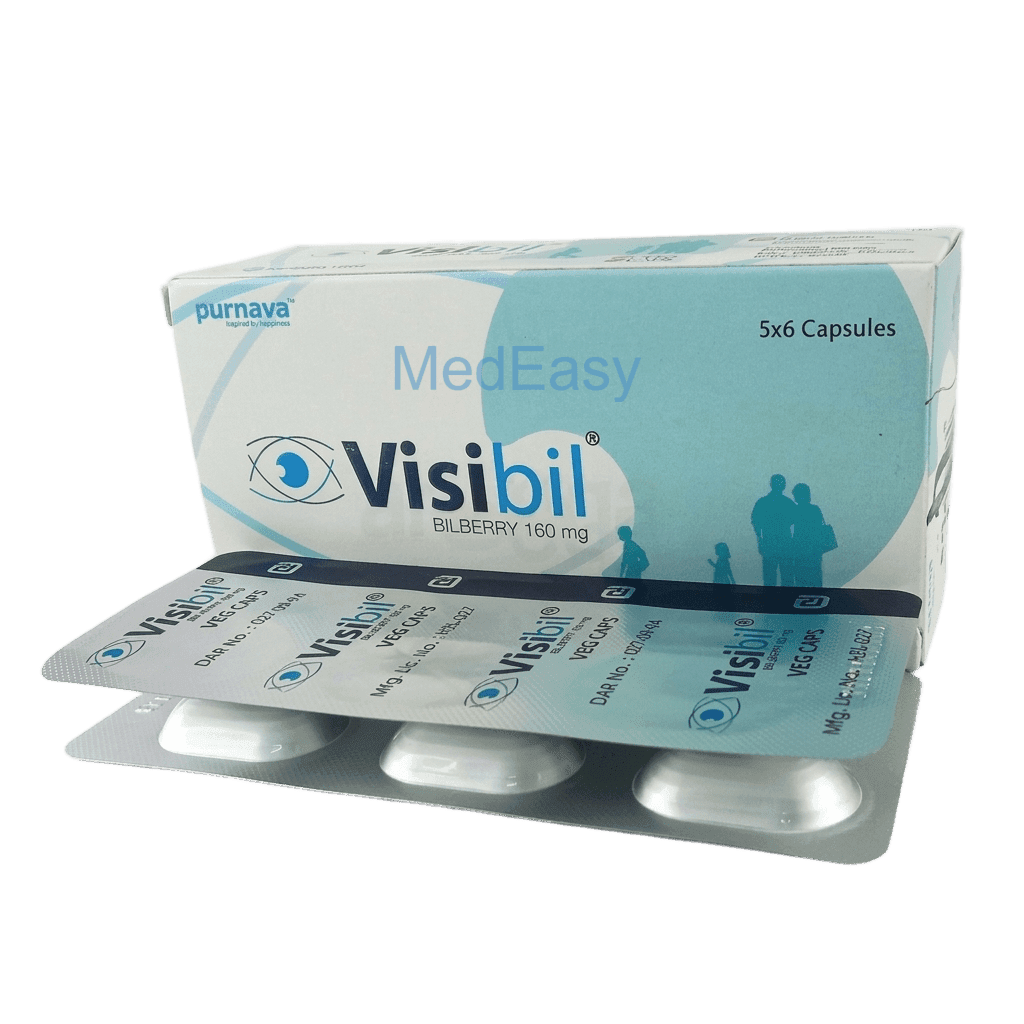

Visibil is a herbal (dietary supplement) product, not an FDA-approved conventional drug. Its traditional and commonly marketed uses, graded by strength of evidence, are as follows:
Overall clinical trial evidence for most of these claims is limited, of variable quality, and not sufficient to establish Visibil as a proven treatment for any diagnosed eye disease (e.g., cataract, macular degeneration, diabetic retinopathy, glaucoma) or vascular disorder. It should not be used as a substitute for conventional medical evaluation or treatment of such conditions.
Each unit of Bilberry fruit [Vaccinium myrtillus L] product typically contains standardized dried extract of the ripe fruit of Vaccinium myrtillus L., commonly standardized to contain approximately 25% anthocyanosides (anthocyanins), the principal active flavonoid constituents believed to be responsible for the plant's antioxidant and vascular effects. Exact strength and standardization vary by manufacturer and formulation (capsule, tablet, or extract).
Visibil is prepared from the ripe fruit of the bilberry shrub, a plant closely related to the blueberry, native to Europe, Asia, and parts of North America. The fruit is rich in flavonoid compounds called anthocyanosides, which give it antioxidant properties. It has a long history of traditional use in Europe for eye and circulatory health, and is available as a dietary/herbal supplement rather than a prescription medicine. It is not intended to diagnose, treat, cure, or prevent any disease.
Visibil belongs to the class of herbal/phytochemical dietary supplements, specifically the anthocyanoside-rich flavonoid group of botanicals used traditionally for ocular and vascular support.
The proposed pharmacological activity of Bilberry fruit [Vaccinium myrtillus L] is attributed mainly to its anthocyanoside (anthocyanin) content. Proposed mechanisms, based largely on preclinical and limited clinical data, include:
These mechanisms are not fully established in large, high-quality human trials, and Bilberry fruit [Vaccinium myrtillus L] should be regarded as having modest, evidence-limited pharmacological support rather than the well-characterized pharmacology of a conventional drug.
There is no single internationally standardized dose for Visibil; dosing varies by product strength and standardization. The following reflects commonly used ranges for standardized extract (approximately 25% anthocyanosides), for general reference only:
| Use | Typical Adult Dose | Notes |
|---|---|---|
| General eye/antioxidant support | 80-120 mg of standardized extract, 1-3 times daily | With food, per product labeling |
| Vascular/circulatory support | Up to 240-480 mg standardized extract per day, in divided doses | Per product labeling; not a substitute for prescribed treatment of venous disease |
| Pediatric use | Not established | See Use in Special Populations |
Always follow the specific product label or a physician's/qualified healthcare provider's advice, as concentration and standardization differ between brands.
Visibil capsules or tablets are usually taken by mouth with a glass of water, generally with meals to reduce the chance of stomach upset. Capsules/tablets should be swallowed whole and not crushed or chewed unless the product is specifically designed for chewing. Follow the dosing schedule and duration recommended on the product label or by a physician.
Visibil has clinically relevant potential interactions with the following:
Bilberry fruit [Vaccinium myrtillus L] is contraindicated in patients with known hypersensitivity to bilberry, other Vaccinium species, or any component of the formulation.
Visibil is generally well tolerated when used as directed. Reported side effects are usually mild and may include:
Allergic reactions are uncommon but possible (see Contraindications). Patients on anticoagulant/antiplatelet therapy or with diabetes should be alert to increased bleeding tendency or low blood sugar, respectively (see Interactions and Precautions).
Data on the safety of Visibil during pregnancy and breastfeeding are insufficient. As a general precaution applicable to herbal supplements with limited safety data, Visibil should be used during pregnancy or lactation only if clearly needed and after consulting a physician, who can weigh the potential benefit against the potential unknown risk to the fetus or infant.
The following precautions apply to the use of Visibil:
Specific human overdose data for Visibil are limited. Taking substantially more than the recommended dose may increase the likelihood of gastrointestinal upset, dizziness, or (in patients on anticoagulant/antiplatelet or antidiabetic therapy) increased bleeding tendency or low blood sugar. If an overdose is suspected or if severe or unusual symptoms occur, seek immediate medical attention or contact a poison control center rather than attempting home treatment.
Store at room temperature (below 30°C), away from light and moisture. Keep out of reach of children.
Specific dose-adjustment data for Visibil in renal impairment are not well established; use with caution and under medical advice.
Specific dose-adjustment data for Visibil in hepatic impairment are not well established; use with caution and under medical advice.
No specific dose adjustment is established for elderly patients; standard adult dosing precautions apply, with attention to concurrent medicines (see Interactions).
Safety and efficacy of Visibil have not been established in children; use in this population is not recommended without medical advice.
Duration of use of Visibil varies by product and intended purpose and is generally guided by the product label or a healthcare provider's advice. It is commonly used in defined courses (for example, several weeks at a time) with periodic reassessment, rather than indefinitely without medical review, particularly if used for vascular symptoms.
Bilberry fruit [Vaccinium myrtillus L] is classified as a herbal/dietary supplement within the anthocyanoside-rich flavonoid botanical group, rather than a conventional pharmaceutical drug class.
The anthocyanosides in Bilberry fruit [Vaccinium myrtillus L] are proposed to act as antioxidants that scavenge free radicals, help stabilize collagen and reduce capillary fragility/permeability in blood vessel walls, and support regeneration of retinal rhodopsin. These proposed actions underlie its traditional use for eye and vascular health, though robust confirmation in large human trials is limited.
Safety and efficacy of Visibil have not been established in pediatric patients. Use in children is not recommended unless specifically advised and supervised by a physician.
Q: What is Visibil 160 mg Capsule used for?
A: Visibil 160 mg Capsule is a herbal supplement traditionally used to support general eye health (including night vision) and vascular/circulatory health, and as a source of antioxidants. Clinical evidence for these uses is limited, and it is not a proven treatment for diagnosed eye or vascular disease.
Q: Can I take Visibil 160 mg Capsule with blood thinners?
A: Visibil 160 mg Capsule has mild antiplatelet activity and may increase bleeding risk when taken with anticoagulant or antiplatelet drugs such as warfarin, aspirin, or clopidogrel. Only use it together with these medicines under medical supervision, with monitoring for unusual bruising or bleeding.
Q: Is Visibil 160 mg Capsule safe for people with diabetes?
A: Visibil 160 mg Capsule may mildly lower blood glucose. People with diabetes, especially those on antidiabetic medicines or insulin, should monitor their blood sugar and consult a physician, since combined use could increase the risk of hypoglycemia.
Q: Can I take Visibil 160 mg Capsule during pregnancy or breastfeeding?
A: Safety data are insufficient. Visibil 160 mg Capsule should be used during pregnancy or breastfeeding only if clearly needed and after consulting a physician, who can weigh potential benefit against potential unknown risk.
Q: Should I stop Visibil 160 mg Capsule before surgery?
A: Because of its reported mild antiplatelet activity, it is generally advised to stop Visibil 160 mg Capsule about two weeks before elective surgery and to inform your surgical team that you have been taking it.
Q: What should I do if I take too much Visibil 160 mg Capsule?
A: If an overdose is suspected, or if severe or unusual symptoms (such as significant bleeding, severe dizziness, or very low blood sugar symptoms) occur, seek immediate medical attention or contact a poison control center rather than treating it at home.
Disclaimer
The information provided is accurate to the best of our knowledge, but it does not replace professional medical advice. We cannot guarantee its completeness or accuracy, and the absence of specific information about a drug should not be taken as an endorsement. We are not responsible for any consequences arising from this information, so please consult a healthcare professional for any concerns or questions.
