
10% Off
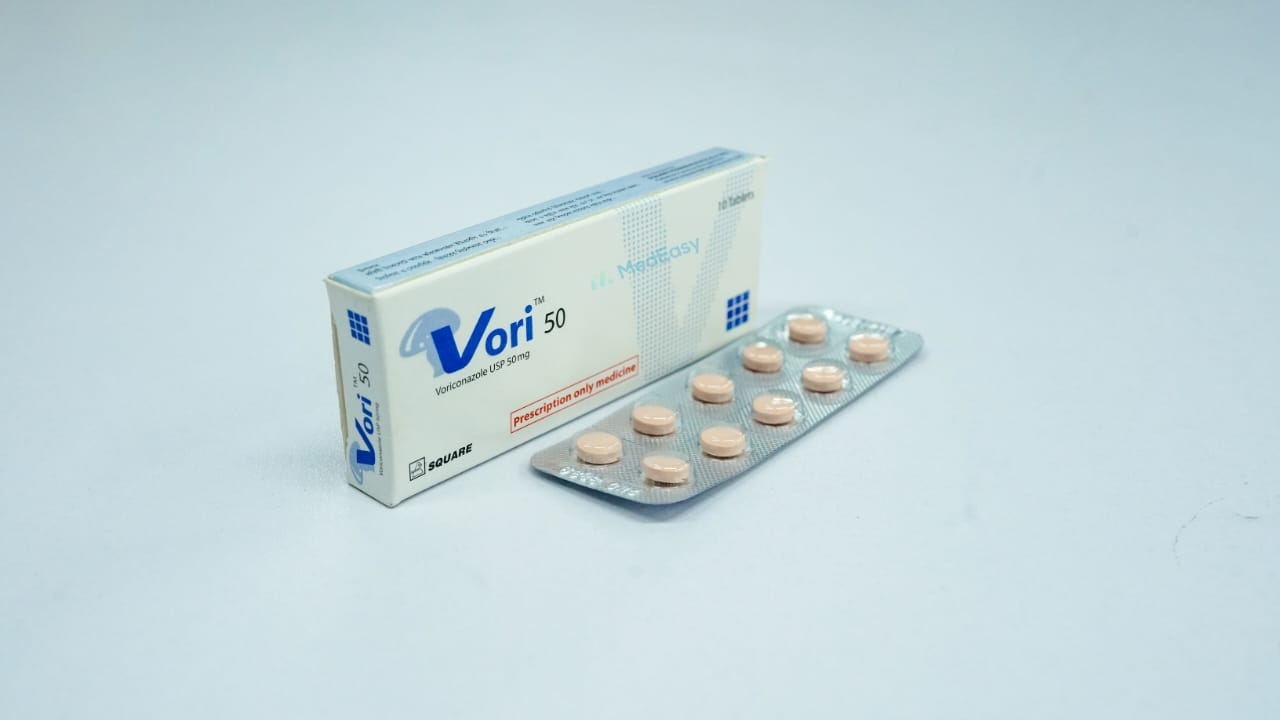
Vori50 mg
Square Pharmaceuticals PLC.
৳315.00
Add to cart

Vorizol 50 mg Tablet is available on MedEasy for ৳360.00 per 10's pack, with home delivery anywhere in Bangladesh. It is manufactured by Drug International Ltd. Its generic name is Voriconazole.

Vorizol is a broad-spectrum triazole antifungal agent. Evidence-based indications include:
Vorizol is not indicated for prophylaxis in patients with less profound immunosuppression and is not established for treatment of chronic disseminated candidiasis in non-neutropenic patients as a first-line option in all guidelines.
Each Voriconazole tablet typically contains Voriconazole USP equivalent to 50 mg or 200 mg. Powder for oral suspension provides 40 mg/mL after reconstitution. Powder for injection (lyophilized) provides 200 mg Voriconazole per vial with sulfobutyl ether beta-cyclodextrin sodium (SBECD) as a solubilizing excipient. Exact excipients vary by manufacturer/brand; refer to the specific product's package insert.
Vorizol is a second-generation synthetic triazole antifungal derived structurally from fluconazole. It has a broad spectrum of activity against yeasts and molds, including Aspergillus species, Candida species (including some fluconazole-resistant strains), and less common but often fatal molds such as Scedosporium and Fusarium. It is available as immediate-release tablets, oral suspension, and an intravenous formulation, allowing for step-down therapy from IV to oral treatment.
Triazole antifungal (systemic mycoses treatment)
Voriconazole inhibits fungal cytochrome P450-dependent enzyme lanosterol 14-alpha-demethylase, which is essential for the conversion of lanosterol to ergosterol, a key component of the fungal cell membrane. Depletion of ergosterol, together with accumulation of toxic sterol intermediates, disrupts fungal cell membrane structure and function, leading to inhibition of fungal growth (predominantly fungistatic, but fungicidal against Aspergillus species).
Pharmacokinetics: Voriconazole is well absorbed orally with high bioavailability (~96% in adults) but exhibits non-linear, saturable metabolism, mainly via hepatic CYP2C19 (major), CYP2C9, and CYP3A4. Genetic polymorphism of CYP2C19 causes marked interindividual variability in plasma levels. Oral absorption is reduced by high-fat meals, so it should be taken on an empty stomach.
Dosing is weight-based (pediatric) or fixed-dose (adult, based on body weight threshold) and is typically started with a loading dose to rapidly reach steady-state concentrations, followed by a maintenance dose. Vorizol tablets/suspension should be taken at least 1 hour before or 1 hour after a meal.
| Indication | Adult Dosing | Pediatric Dosing (2 to <12 yrs, or 12-14 yrs <50 kg) |
|---|---|---|
| Invasive aspergillosis, candidemia, Scedosporium/Fusarium infections | IV loading: 6 mg/kg every 12 hours for 24 hours; IV maintenance: 3-4 mg/kg every 12 hours; Oral maintenance: 200 mg every 12 hours (≥40 kg) or 100 mg every 12 hours (<40 kg) | IV loading: 9 mg/kg every 12 hours for 24 hours; IV maintenance: 8 mg/kg every 12 hours; Oral maintenance: 9 mg/kg every 12 hours (max 350 mg/dose) |
| Esophageal candidiasis | Oral: 200 mg every 12 hours (≥40 kg) or 100 mg every 12 hours (<40 kg) for a minimum of 14 days and at least 7 days after resolution of symptoms | IV: 4 mg/kg every 12 hours; Oral: 9 mg/kg every 12 hours (max 350 mg/dose) |
Patients aged 12 to 14 years weighing ≥50 kg, and all patients ≥15 years, should receive adult dosing.
In patients with moderate-to-severe renal impairment (creatinine clearance <50 mL/min), the IV formulation should be avoided if possible (due to accumulation of the SBECD vehicle) and the oral formulation used instead; no oral dose adjustment is required based on renal function alone.
In patients with mild-to-moderate hepatic cirrhosis (Child-Pugh Class A and B), the standard loading dose should be used, but the maintenance dose should be reduced by 50%. Vorizol has not been studied in severe hepatic cirrhosis (Child-Pugh Class C) and should be used only if benefit outweighs risk, with close monitoring.
Antifungal stewardship: Take Vorizol exactly as prescribed by your physician; do not stop, extend, skip doses, or share this medicine with others without medical advice, as inappropriate use may lead to treatment failure or resistant infections.
Oral tablets and suspension should be taken at least 1 hour before or 1 hour after a meal, swallowed whole (tablets) with water. The oral suspension should be shaken gently before use and not mixed with other medications or diluents. The IV formulation must be reconstituted and further diluted, then given by slow intravenous infusion over 1 to 2 hours at a rate not exceeding 3 mg/kg/hour; it must not be given as a bolus injection.
Vorizol is both a substrate and potent inhibitor of CYP2C19, CYP2C9, and CYP3A4, leading to numerous clinically significant drug interactions.
Voriconazole is contraindicated in:
Common side effects of Vorizol (may affect more than 1 in 10 people) include:
Less common but serious effects include severe hepatic reactions (hepatitis, jaundice, cholestasis, hepatic failure), QT prolongation and rare serious arrhythmias, severe skin reactions (Stevens-Johnson syndrome, toxic epidermal necrolysis), acute renal failure, and, with prolonged use, phototoxicity-related skin changes including risk of squamous cell skin cancer (see Precautions and Warnings).
Pregnancy: Vorizol can cause fetal harm based on animal reproduction data showing teratogenic and embryotoxic effects; adequate, well-controlled human studies are not available. Vorizol should be used during pregnancy only if the potential benefit to the mother clearly justifies the potential risk to the fetus, and only under close physician supervision. Women of childbearing potential should use effective contraception during treatment.
Lactation: It is not known whether Vorizol is excreted in human breast milk. Because many drugs are excreted in breast milk and the potential for serious adverse effects in a nursing infant is unknown, a decision should be made to discontinue breastfeeding or discontinue the drug, taking into account the importance of the drug to the mother, always in consultation with a physician.
Hepatotoxicity: Serious hepatic reactions, including fatal cases, have occurred during treatment. Liver function tests (AST, ALT, alkaline phosphatase, bilirubin) should be evaluated before starting therapy and monitored periodically during treatment. Patients who develop abnormal liver test results should be monitored for the development of more severe hepatic injury; therapy should be discontinued if clinical signs/symptoms of liver disease develop.
Visual disturbances: Transient visual changes (blurred vision, altered color perception, photophobia) are common, usually occur within 30 minutes of dosing, and typically resolve within the first weeks of therapy. Patients should be warned about driving at night or performing hazardous tasks requiring sharp/clear vision while affected.
QT prolongation: Vorizol prolongs the QT interval. Use with caution in patients with pro-arrhythmic conditions such as electrolyte disturbances (hypokalemia, hypomagnesemia, hypocalcemia), concomitant use of other QT-prolonging drugs, cardiomyopathy, bradycardia, or existing QT prolongation. Correct electrolyte abnormalities before and during treatment.
Phototoxicity and skin cancer risk: Photosensitivity/phototoxicity reactions can occur, especially with long-term therapy. Prolonged use (generally beyond 180 days) has been associated with squamous cell carcinoma of the skin and, rarely, other skin malignancies. Patients on long-term therapy should avoid direct sunlight, use protective clothing and broad-spectrum sunscreen, and undergo periodic dermatologic evaluation; discontinuation should be considered if skin lesions consistent with malignancy are found.
Adrenal/endocrine effects: Cases of adrenal insufficiency and Cushing syndrome have been reported with prolonged use, related to Vorizol's effect on steroid metabolism.
Infusion-related reactions: IV administration can cause anaphylactoid-type reactions (flushing, fever, sweating, tachycardia, chest tightness) shortly after starting the infusion; slow the infusion rate or discontinue if these occur.
Complete the full course of therapy as directed by your physician; do not stop, extend, skip doses, or share Vorizol with others without medical advice.
There is no known antidote for Vorizol overdose. Reported overdose experience is limited; symptoms may include exaggerated adverse effects such as visual disturbances and photophobia. In case of suspected overdose, seek immediate medical attention or contact emergency services/a poison control center. Management is supportive, with general symptomatic care and close monitoring; hemodialysis may help clear the intravenous vehicle (SBECD) but is of uncertain benefit for removing Vorizol itself. Do not attempt home treatment for a suspected overdose.
Store tablets and unreconstituted powder at room temperature (below 30°C), away from light and moisture. Reconstituted oral suspension should be stored at room temperature and used within 14 days (do not refrigerate or freeze). Reconstituted/diluted IV solution should be used promptly per product labeling. Keep out of reach of children.
Elderly: No dosage adjustment is required based on age alone, but elderly patients may have a higher incidence of adverse events; use with routine monitoring.
Renal impairment: Oral dosing does not require adjustment; the IV formulation should be avoided when possible in moderate-to-severe renal impairment due to accumulation of the SBECD excipient (see Dosage and Administration).
Hepatic impairment: Maintenance dose should be reduced by 50% in mild-to-moderate cirrhosis; use with caution and close monitoring in severe hepatic impairment (see Dosage and Administration).
Pediatric patients: Approved for use in children 2 years of age and older using weight-based dosing (see Pediatric Uses). Safety and efficacy in children under 2 years have not been established.
CYP2C19 poor metabolizers: Patients with reduced CYP2C19 activity (common in some Asian populations) may have significantly higher Vorizol exposure and greater risk of adverse effects; closer monitoring is advised.
Duration is individualized based on the severity of the underlying disease, clinical and mycological response, and immune status. Invasive aspergillosis and other invasive mold infections typically require a minimum of 6-12 weeks of therapy, often longer, guided by clinical/radiological resolution. Esophageal candidiasis is typically treated for at least 14 days and for at least 7 days after symptom resolution. Prophylactic use continues for the duration of the period of risk, as determined by the treating physician. Treatment beyond 180 days requires careful reassessment of ongoing benefit against risk of phototoxicity/skin malignancy.
Powder for injection: Reconstitute the 200 mg vial with 19 mL of Water for Injection to yield a concentrate of 10 mg/mL. This concentrate must then be further diluted with a compatible infusion fluid (e.g., 0.9% sodium chloride, 5% dextrose, lactated Ringer's) to a concentration of 0.5-5 mg/mL before slow IV infusion. Do not administer as an IV bolus.
Powder for oral suspension: Reconstitute by adding the specified amount of water to the bottle as directed on the label to yield a final concentration of 40 mg/mL; shake gently before each use. Do not add any other substance to the suspension.
Triazole antifungals (second-generation)
Voriconazole inhibits the fungal cytochrome P450 enzyme 14-alpha-lanosterol demethylase (encoded by the fungal ERG11/CYP51 gene), which is required for conversion of lanosterol to ergosterol. This blocks ergosterol synthesis, an essential component of the fungal cell membrane, and leads to accumulation of toxic 14-alpha-methylated sterol precursors, disrupting membrane integrity and function and inhibiting fungal cell growth and replication.
D
Vorizol is approved for use in pediatric patients 2 years of age and older for the treatment of invasive aspergillosis, candidemia and other deep tissue Candida infections, esophageal candidiasis, and serious infections due to Scedosporium apiospermum and Fusarium species.
Dosing is weight-based and differs from adult fixed dosing (see Dosage and Administration). Children generally require higher weight-based doses than adults due to more rapid clearance. Children aged 12-14 years weighing 50 kg or more, and all patients 15 years and older, should be dosed as adults.
Safety and efficacy in children younger than 2 years of age have not been established; use in this age group should only be considered by a specialist when no suitable alternative exists, with close therapeutic drug monitoring.
Pediatric patients should be monitored closely for the same adverse effects as adults, including hepatotoxicity, visual disturbances, and skin reactions with sun exposure.
Q: What is Vorizol 50 mg Tablet used for?
A: Vorizol 50 mg Tablet is a triazole antifungal medicine used to treat serious fungal infections such as invasive aspergillosis, candidemia and other Candida infections, esophageal candidiasis, and infections caused by Scedosporium and Fusarium species. It is also used to prevent fungal infections in certain high-risk patients, such as stem cell transplant recipients.
Q: How should I take Vorizol 50 mg Tablet?
A: Vorizol 50 mg Tablet tablets or oral suspension should be taken at least 1 hour before or 1 hour after a meal, exactly as prescribed by your physician. Do not stop, extend, skip doses, or share this medicine with others without medical advice, and complete the full prescribed course even if you start feeling better.
Q: Why does Vorizol 50 mg Tablet cause visual changes?
A: Vorizol 50 mg Tablet commonly causes temporary visual disturbances such as blurred vision, increased sensitivity to light, or altered color perception, usually starting within 30 minutes of a dose and improving over the first weeks of treatment. Because of this, avoid driving at night or performing hazardous tasks that require clear vision while these symptoms are present.
Q: Does Vorizol 50 mg Tablet affect the liver?
A: Yes, Vorizol 50 mg Tablet can cause liver problems, including rare but serious hepatic injury. Your physician will typically check liver function tests before you start Vorizol 50 mg Tablet and periodically during treatment. Report any yellowing of the skin/eyes, unusual tiredness, or dark urine to your physician immediately.
Q: Can I be in the sun while taking Vorizol 50 mg Tablet?
A: You should limit direct sun exposure while taking Vorizol 50 mg Tablet, as it can cause skin sensitivity to sunlight (phototoxicity). With long-term use (especially beyond 6 months), there is an increased risk of skin changes, including a rare risk of skin cancer. Use protective clothing and broad-spectrum sunscreen, and have your skin checked periodically if you are on long-term therapy.
Q: Is Vorizol 50 mg Tablet safe during pregnancy?
A: Vorizol 50 mg Tablet can potentially harm a developing fetus and is generally avoided during pregnancy unless the potential benefit to the mother clearly outweighs the risk to the baby, as determined by a physician. Women who could become pregnant should use effective contraception while taking Vorizol 50 mg Tablet. Always consult your physician if you are pregnant, planning pregnancy, or breastfeeding.
Disclaimer
The information provided is accurate to the best of our knowledge, but it does not replace professional medical advice. We cannot guarantee its completeness or accuracy, and the absence of specific information about a drug should not be taken as an endorsement. We are not responsible for any consequences arising from this information, so please consult a healthcare professional for any concerns or questions.
