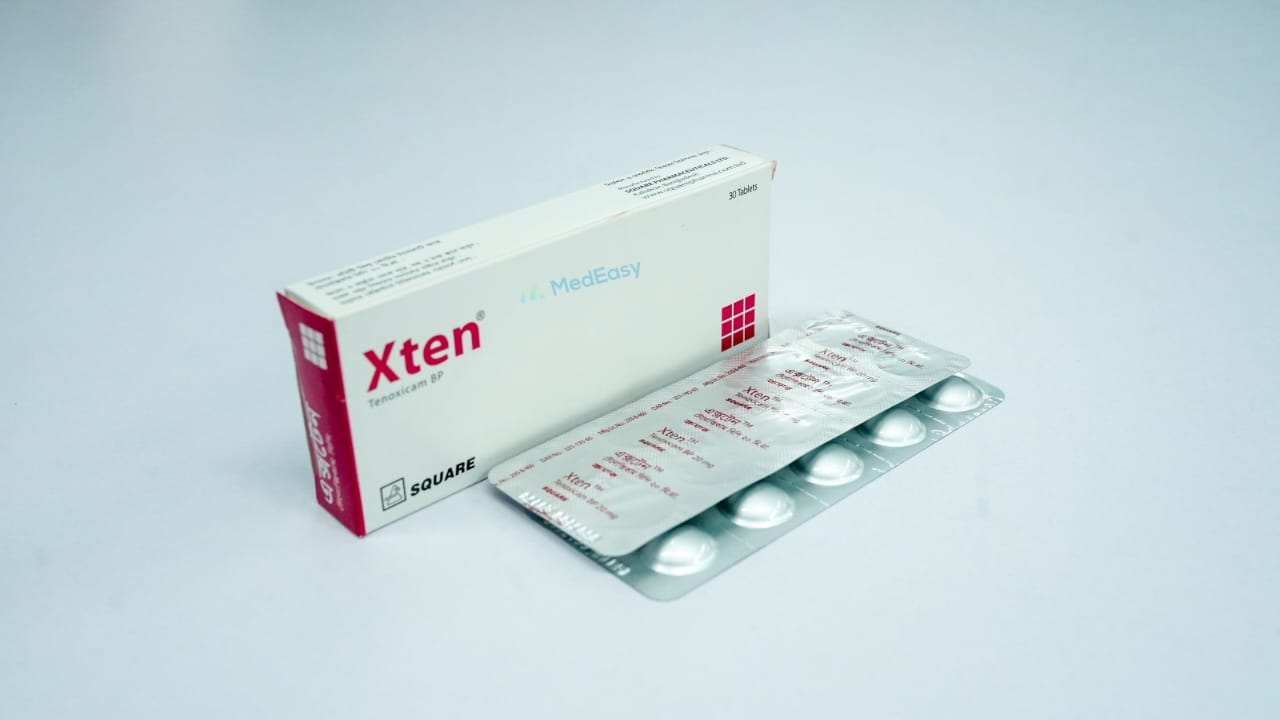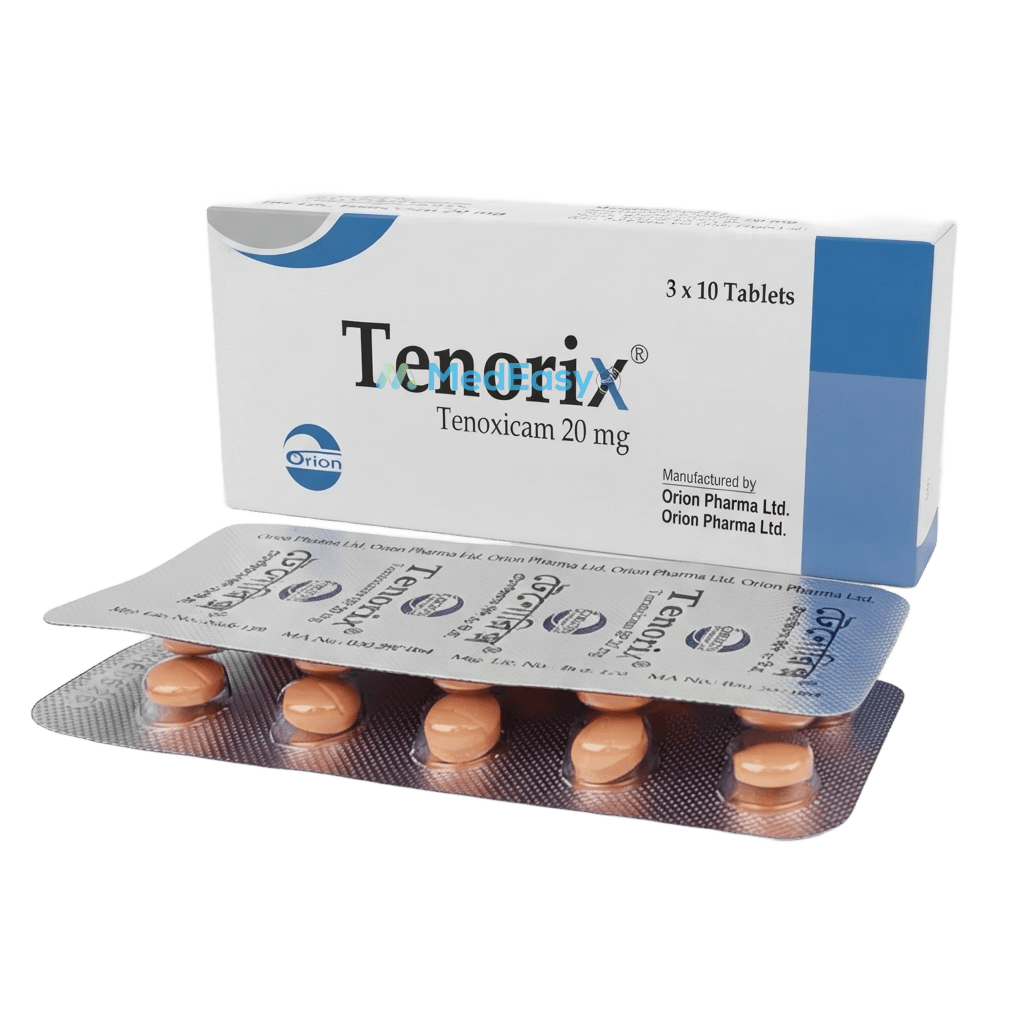
8% Off
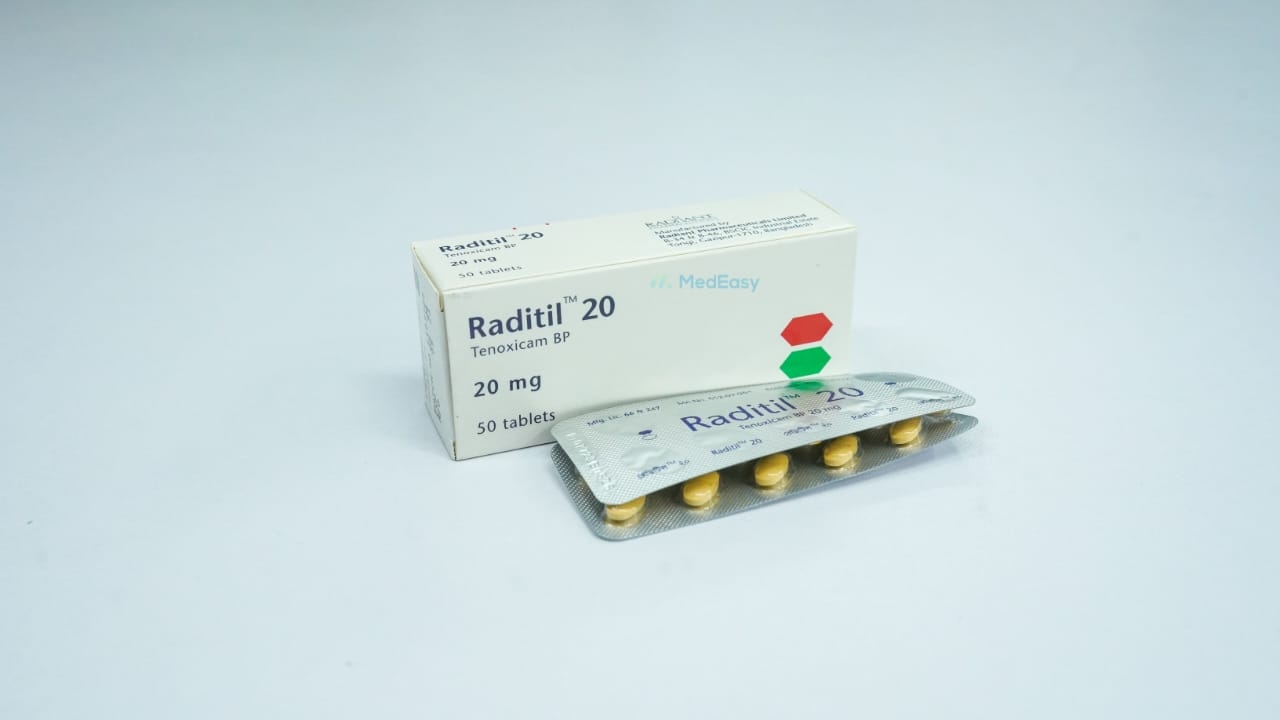
Raditil20 mg
Radiant Pharmaceuticals Ltd.
৳165.60
Add to cart
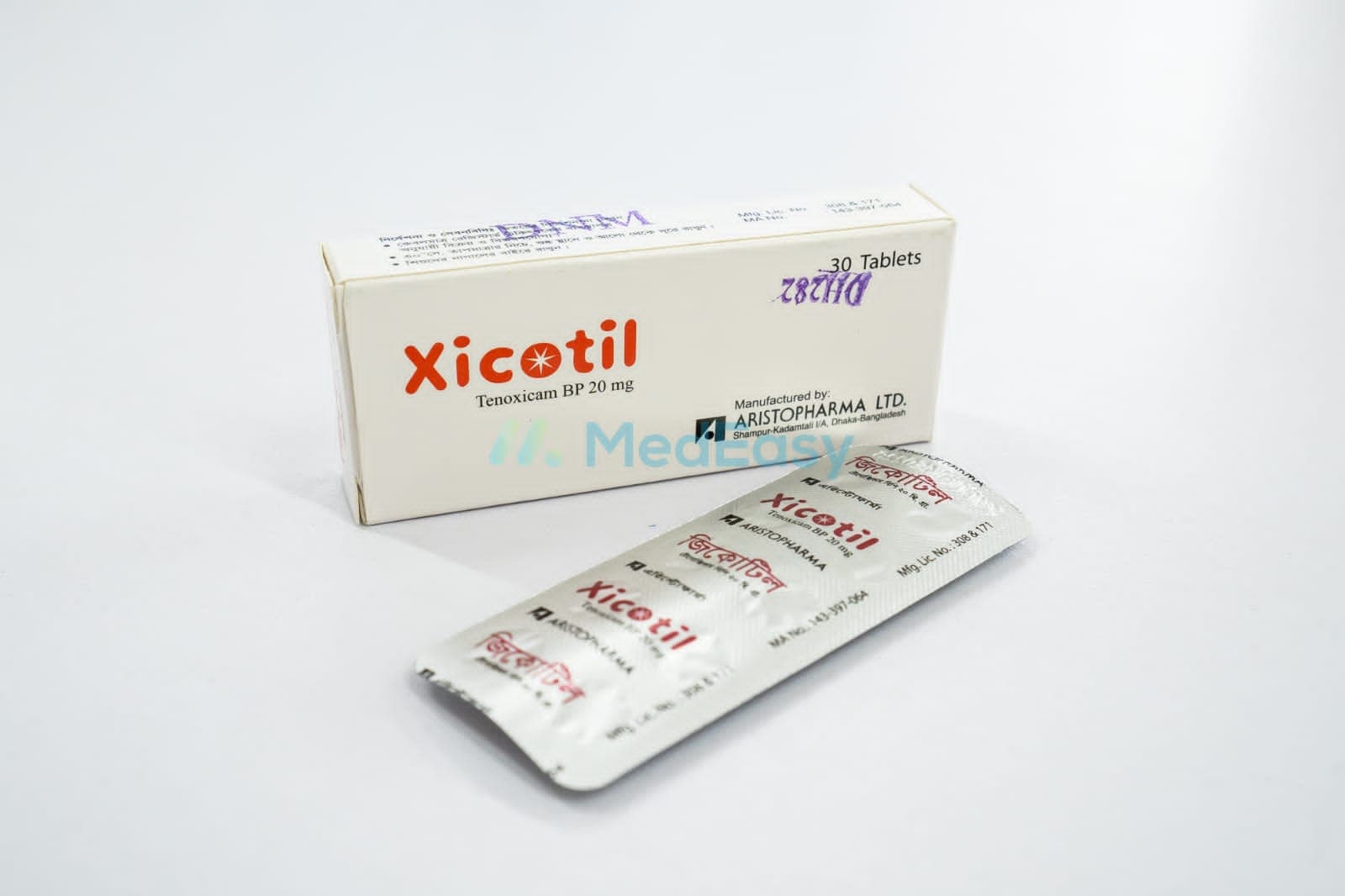
Xicotil 20 mg Tablet is available on MedEasy for ৳73.60 per 10's Strip, with home delivery anywhere in Bangladesh. It is manufactured by Aristopharma Ltd. Its generic name is Tenoxicam.

Xicotil is a non-steroidal anti-inflammatory drug (NSAID) of the oxicam class, used for the symptomatic relief of pain and inflammation in the following conditions:
Xicotil provides symptomatic relief of pain and inflammation; it does not alter the underlying course of arthritic disease.
Each tablet contains Tenoxicam 20 mg as the active ingredient. Tenoxicam is also available in some markets as a powder/lyophilisate for injection for short-term use in acute pain, reconstituted with the supplied diluent before administration.
Xicotil is a long-acting non-steroidal anti-inflammatory drug (NSAID) belonging to the oxicam class, chemically related to piroxicam. It is used to relieve pain, swelling, and stiffness associated with osteoarthritis, rheumatoid arthritis, ankylosing spondylitis, and acute musculoskeletal injuries.
A key feature of Xicotil is its long elimination half-life, which allows for convenient once-daily dosing while providing sustained anti-inflammatory and analgesic effect throughout the day.
Xicotil belongs to the Non-Steroidal Anti-Inflammatory Drug (NSAID) class, specifically the oxicam subgroup of NSAIDs, which also includes piroxicam and meloxicam.
Tenoxicam exerts its anti-inflammatory, analgesic, and antipyretic effects primarily through non-selective, reversible inhibition of cyclooxygenase (COX-1 and COX-2) enzymes, which reduces the synthesis of prostaglandins, key mediators of pain, inflammation, and fever.
| Indication | Recommended Dose |
|---|---|
| Maintenance therapy | 20 mg once daily, preferably taken with food or milk at the same time each day |
| Indication | Recommended Dose |
|---|---|
| Acute pain (sprains, strains, tendinitis, bursitis) | 40 mg once daily for up to 2 days, then continue with 20 mg once daily for a further 5-7 days as needed |
Tablets should be swallowed whole with a full glass of water, preferably with or after food, to reduce gastrointestinal irritation. The lowest effective dose should be used for the shortest duration consistent with treatment goals.
See Use in Special Populations for renal, hepatic, elderly, and pediatric dosing considerations.
Xicotil tablets should be taken orally, swallowed whole with a full glass of water, preferably with or immediately after food or milk to minimize gastrointestinal upset. Tablets should not be crushed or chewed unless specifically formulated for that purpose. Because of its long half-life, Xicotil should be taken at approximately the same time each day.
Xicotil has clinically significant interactions with the following drug classes:
Tenoxicam is contraindicated in patients with:
Side effects of Xicotil are generally dose- and duration-related and consistent with the NSAID class.
Pregnancy: Xicotil should be avoided during pregnancy unless clearly necessary. Use during the first and second trimesters should occur only if the potential benefit justifies the potential risk to the fetus, and only under medical supervision. Xicotil, like other NSAIDs, is contraindicated during the third trimester of pregnancy because of the risk of premature closure of the fetal ductus arteriosus, fetal renal impairment, and complications during labor and delivery.
Lactation: It is not established whether Xicotil is excreted in human breast milk; because many NSAIDs pass into breast milk, use during breastfeeding is not recommended unless a physician determines the benefit outweighs the potential risk to the infant.
Xicotil shares the cardiovascular and gastrointestinal risks common to the NSAID class:
For hypersensitivity, gastrointestinal bleeding, severe heart failure, severe renal/hepatic impairment, and third-trimester pregnancy, see Contraindications.
Symptoms of Xicotil overdose may include nausea, vomiting, abdominal pain, gastrointestinal bleeding, drowsiness, dizziness, headache, and in severe cases, hypotension, respiratory depression, seizures, or acute kidney injury.
There is no specific antidote for Xicotil overdose. In case of suspected overdose, seek immediate medical attention or contact emergency services / a poison control center. Treatment is supportive and symptomatic, and should be initiated promptly by qualified medical personnel; do not attempt to manage an overdose at home.
Store at room temperature (below 30°C), away from light and moisture. Keep out of reach of children.
Elderly patients are at greater risk for serious gastrointestinal, renal, and cardiovascular adverse effects with Xicotil. Use the lowest effective dose for the shortest duration and monitor closely.
Xicotil should be used with caution in patients with mild to moderate renal impairment, with close monitoring of renal function; it is contraindicated in severe renal impairment (see Contraindications).
Use with caution in mild to moderate hepatic impairment, with monitoring of liver function; Xicotil is contraindicated in severe hepatic impairment (see Contraindications).
Safety and efficacy of Xicotil in children have not been established; its use in the pediatric population is not recommended.
See Pregnancy and Lactation section for full details.
Xicotil should be used for the shortest duration consistent with the treatment goal. For acute musculoskeletal pain, treatment courses of about 7 days (including an initial higher-dose phase) are typical. For chronic conditions such as osteoarthritis, rheumatoid arthritis, or ankylosing spondylitis, treatment duration should be periodically reassessed by the prescribing physician to confirm continued need and to monitor for adverse effects.
Non-Steroidal Anti-Inflammatory Drug (NSAID), oxicam class
Tenoxicam works by non-selectively and reversibly inhibiting cyclooxygenase (COX-1 and COX-2) enzymes, thereby blocking the conversion of arachidonic acid to prostaglandins and thromboxanes. This reduction in prostaglandin synthesis underlies its analgesic, anti-inflammatory, and antipyretic effects, while inhibition of COX-1 in the gastric mucosa and platelets accounts for its gastrointestinal and bleeding-related adverse effects.
C (D in third trimester)
The safety and efficacy of Xicotil have not been established in children, and its use is not recommended in the pediatric population. Alternative analgesic/anti-inflammatory agents with established pediatric safety data should be used for children requiring NSAID therapy.
Q: What is Xicotil 20 mg Tablet used for?
A: Xicotil 20 mg Tablet is a non-steroidal anti-inflammatory drug (NSAID) used to relieve pain, swelling, and stiffness caused by osteoarthritis, rheumatoid arthritis, ankylosing spondylitis, and acute musculoskeletal injuries such as sprains, strains, tendinitis, and bursitis.
Q: How should I take Xicotil 20 mg Tablet?
A: Xicotil 20 mg Tablet is usually taken as one tablet (20 mg) once daily, at about the same time each day, with food or milk to reduce stomach upset. For acute pain, a physician may prescribe a short higher-dose course (40 mg daily for up to 2 days) followed by the usual maintenance dose. Always follow your physician's specific instructions.
Q: Can I take Xicotil 20 mg Tablet during pregnancy or while breastfeeding?
A: Xicotil 20 mg Tablet should be avoided during pregnancy unless your physician determines it is clearly necessary, and it must not be used during the third trimester because it can harm the developing baby and cause complications during delivery. Because it may pass into breast milk, Xicotil 20 mg Tablet is also not recommended during breastfeeding unless specifically advised by your physician.
Q: Who should not take Xicotil 20 mg Tablet?
A: Xicotil 20 mg Tablet should not be taken by people who are allergic to it or to other NSAIDs/aspirin (including those with a history of asthma or hives triggered by aspirin), those with active stomach ulcers or gastrointestinal bleeding, severe heart failure, severe kidney or liver disease, or women in the third trimester of pregnancy.
Q: What are the common side effects of Xicotil 20 mg Tablet?
A: The most common side effects of Xicotil 20 mg Tablet include indigestion, nausea, abdominal discomfort, headache, dizziness, and mild fluid retention (swelling). Less commonly, it can cause stomach ulcers, gastrointestinal bleeding, or affect kidney function, so it should be used at the lowest effective dose for the shortest time needed.
Q: What should I do if I take too much Xicotil 20 mg Tablet?
A: If you or someone else has taken more Xicotil 20 mg Tablet than prescribed, seek immediate medical attention or contact emergency services / a poison control center right away. Do not try to treat an overdose at home, as it can cause serious stomach, kidney, or other complications.
Disclaimer
The information provided is accurate to the best of our knowledge, but it does not replace professional medical advice. We cannot guarantee its completeness or accuracy, and the absence of specific information about a drug should not be taken as an endorsement. We are not responsible for any consequences arising from this information, so please consult a healthcare professional for any concerns or questions.