

10% Off
Daily Fresh SUD0.2%
Aristopharma Ltd.
৳135.00
Add to cart
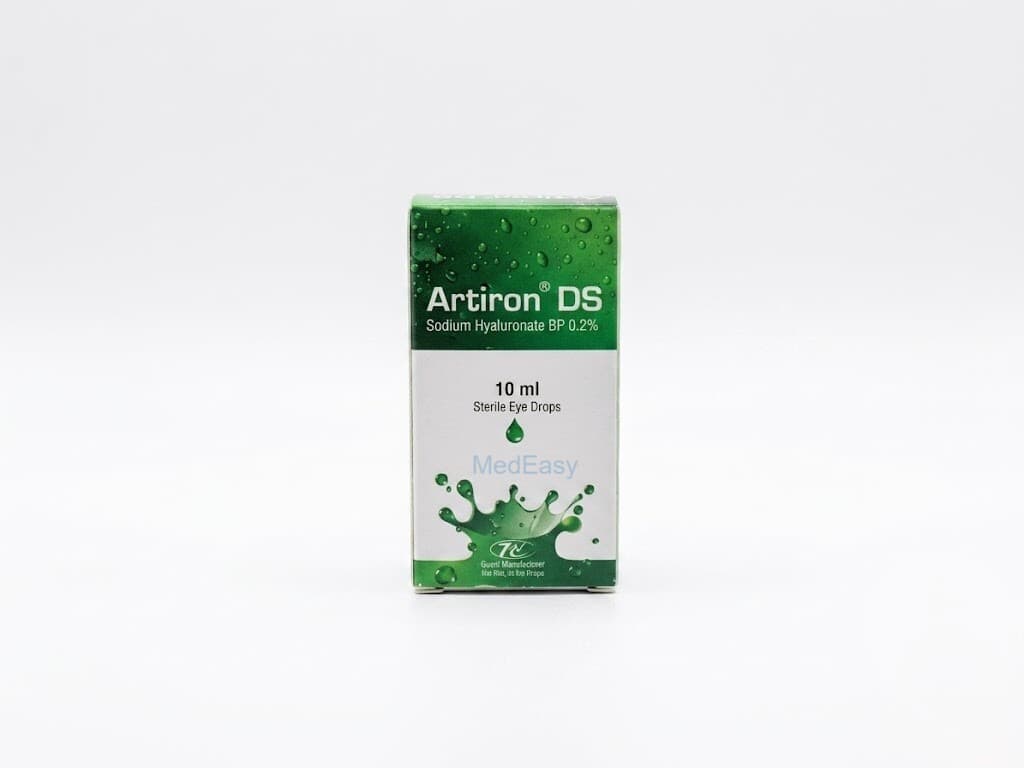

Artiron DS is a naturally occurring viscoelastic polysaccharide (glycosaminoglycan) used in several distinct clinical settings depending on formulation and route of administration:
Intra-articular Artiron DS is generally used as an adjunct after, or in combination with, first-line measures (weight management, physical therapy, oral or topical analgesics/NSAIDs) rather than as initial monotherapy.
Some formulations of Artiron DS injection are also used off-label at other joints (e.g., hip, shoulder) by specialists, although knee osteoarthritis remains the primary evidence-based and labeled indication.
Each formulation contains Sodium Hyaluronate (the sodium salt of hyaluronic acid) as the active ingredient, at a concentration and molecular weight that varies by product and intended route:
Exact strength, molecular weight, and pack size should be confirmed on the specific product label, as these differ between manufacturers.
Artiron DS is the sodium salt of hyaluronic acid, a naturally occurring, non-sulfated glycosaminoglycan found throughout the body in connective tissue, skin, synovial (joint) fluid, and the vitreous humor of the eye. It is highly hygroscopic and viscoelastic, meaning it can bind large amounts of water and behaves as a lubricant and shock absorber under mechanical stress.
Pharmaceutical-grade Artiron DS is manufactured either by extraction from animal tissue (e.g., rooster combs) or by bacterial fermentation, and is formulated into sterile products for three main clinical uses: as lubricating eye drops for dry eye, as a viscoelastic surgical aid during eye surgery, and as an injectable viscosupplement for osteoarthritic joints.
Artiron DS belongs to the class of ophthalmic lubricants/artificial tear preparations (for eye drop formulations), ophthalmic viscosurgical devices (for surgical formulations), and viscosupplementation agents/anti-osteoarthritis agents (for intra-articular injectable formulations). It is classified pharmacologically as a glycosaminoglycan-based viscoelastic agent rather than a conventional small-molecule drug.
Sodium Hyaluronate does not act through a receptor-mediated pharmacological pathway; its effects are primarily physicochemical (mechanical/lubricating), arising from its viscoelastic and water-binding properties:
Systemic absorption after ophthalmic or intra-articular administration of Sodium Hyaluronate is minimal, and it is ultimately metabolized locally and systemically via normal hyaluronic acid turnover pathways (hyaluronidase-mediated degradation).
| Indication | Typical adult dosing |
|---|---|
| Dry eye / ocular lubrication | Instill 1-2 drops of Artiron DS ophthalmic solution into the affected eye(s) as needed, typically 3-4 times daily, or as directed by the prescriber. Preservative-free single-dose units may be used more frequently if needed. |
| Ophthalmic surgical aid | Administered only by the operating ophthalmic surgeon intraoperatively, injected into the anterior chamber or relevant ocular space in the amount required to achieve the desired surgical effect; not a patient-administered dose. |
| Knee osteoarthritis (viscosupplementation) | Administered by a physician as an intra-articular injection directly into the knee joint, usually as a course of 1 to 5 weekly injections (regimen depends on the specific product), commonly around 2-2.5 mL per injection. A repeat course may be considered after approximately 6 months if needed, per physician judgment. |
Artiron DS ophthalmic drops are self-administered topically into the conjunctival sac of the affected eye(s). Artiron DS intra-articular injections and ophthalmic surgical viscoelastic preparations must be administered only by a qualified physician/ophthalmic surgeon under sterile conditions; they are never self-injected or self-administered by the patient.
Artiron DS has minimal potential for clinically significant systemic drug interactions. This is because its formulations act locally (on the ocular surface, within the eye during surgery, or within the joint space) with negligible systemic absorption, and because its mechanism of action is physicochemical (lubricating/viscoelastic) rather than receptor- or enzyme-mediated.
Sodium Hyaluronate is contraindicated in:
Generally well tolerated intraoperatively; transient postoperative increase in intraocular pressure has been reported and is usually managed by the surgical team.
Formal controlled studies of Artiron DS in pregnant or breastfeeding women are limited. Because ophthalmic and intra-articular Artiron DS preparations act locally with minimal systemic absorption, the theoretical risk to the fetus or nursing infant is considered low; however, Artiron DS should be used during pregnancy and lactation only if clearly needed, and only after the potential benefit is judged by a physician to justify any potential risk. Pregnant or breastfeeding patients should consult their physician before using any Artiron DS product, particularly injectable or surgical formulations.
Significant systemic overdose of Artiron DS is unlikely given its local routes of administration (ophthalmic, intraocular, intra-articular) and minimal systemic absorption. Accidental excessive ophthalmic use may cause temporary blurred vision or ocular irritation, which typically resolves without treatment. Excessive intra-articular volume administered by a healthcare provider may cause increased joint swelling or discomfort. If accidental ingestion or a significant excessive dose occurs, or if severe or persistent symptoms develop after any use of Artiron DS, seek immediate medical attention or contact a poison control center; do not attempt unsupervised home treatment.
Store Artiron DS products at room temperature (below 30°C), protected from light and moisture, unless the specific product labeling directs refrigeration. Do not freeze injectable Artiron DS pre-filled syringes. Keep out of reach of children. Discard opened multi-dose ophthalmic products and single-use vials/syringes after the labeled in-use period or after a single use, as directed on the product label.
See Pregnancy and Lactation section - use only if clearly needed, with physician guidance.
Safety and efficacy of intra-articular Artiron DS for osteoarthritis have not been established in pediatric patients, as knee osteoarthritis is primarily a disease of adults. Ophthalmic Artiron DS lubricant drops may be used in children for dry eye or ocular surface protection under medical supervision, but pediatric-specific dosing data are limited.
Artiron DS is commonly used in elderly patients, who represent the majority of patients with knee osteoarthritis and dry eye disease; no specific dose adjustment is required based on age alone, though overall clinical status should guide use.
No dose adjustment is required for Artiron DS in renal or hepatic impairment, as its local routes of administration result in minimal systemic exposure and metabolism.
Duration of Artiron DS treatment depends on indication: ophthalmic lubricant drops may be used chronically, on an as-needed basis, for as long as symptomatic dry eye persists. Intra-articular knee injections are typically given as a short course (commonly 1 to 5 weekly injections depending on the specific product), with symptom relief often lasting several months; repeat courses may be considered no more often than approximately every 6 months, based on physician assessment. Ophthalmic surgical use of Artiron DS is limited to the duration of the surgical procedure itself.
Sodium Hyaluronate is classified as a glycosaminoglycan-based viscoelastic agent, encompassing the therapeutic categories of ophthalmic lubricant/artificial tear, ophthalmic viscosurgical device (OVD), and viscosupplementation/anti-osteoarthritis agent, depending on the formulation and route used.
Sodium Hyaluronate works through physicochemical rather than receptor-mediated mechanisms: it is highly hygroscopic and viscoelastic, forming a lubricating, water-retaining film on the ocular surface (dry eye), cushioning and protecting delicate tissues while maintaining space during eye surgery, and supplementing the viscoelastic properties of osteoarthritic joint fluid to reduce friction and mechanical stress, with possible secondary anti-inflammatory and analgesic effects in the joint. See Pharmacology for full detail.
The safety and efficacy of intra-articular Artiron DS injection for osteoarthritis have not been established in pediatric patients, as this indication is specific to adult degenerative joint disease. Artiron DS ophthalmic lubricant drops may be used in children under medical supervision for dry eye or ocular surface protection when clinically indicated, although controlled pediatric efficacy data are limited; use in children should be guided by a physician.
Q: What is Artiron DS 0.2% Ophthalmic Solution used for?
A: Artiron DS 0.2% Ophthalmic Solution is used in several different ways depending on the formulation: as eye drops to relieve dryness, burning, and irritation of the eyes (dry eye); as a viscoelastic aid used by surgeons during eye operations such as cataract surgery; and as an injection given directly into the knee joint to relieve pain from osteoarthritis when other treatments have not worked well enough.
Q: How often should I use Artiron DS 0.2% Ophthalmic Solution eye drops?
A: Most people use Artiron DS 0.2% Ophthalmic Solution eye drops 3-4 times daily as needed for dry eye symptoms, or as directed by their doctor. Preservative-free single-dose vials of Artiron DS 0.2% Ophthalmic Solution can generally be used more frequently if required.
Q: Is Artiron DS 0.2% Ophthalmic Solution injection painful, and how many injections will I need?
A: Artiron DS 0.2% Ophthalmic Solution knee injections may cause brief discomfort, mild swelling, or warmth at the injection site, which usually resolves within a few days. Depending on the specific product, a course typically involves 1 to 5 weekly injections, and your physician will advise on the exact schedule best suited to you.
Q: Can Artiron DS 0.2% Ophthalmic Solution be used if I have an infection in my joint or at the injection site?
A: No. Artiron DS 0.2% Ophthalmic Solution intra-articular injection must not be given into an infected joint or through skin that is infected or inflamed at the planned injection site, as this is a recognized contraindication. Tell your doctor immediately if you notice redness, warmth, worsening pain, or fever, as this could indicate infection.
Q: Is Artiron DS 0.2% Ophthalmic Solution safe during pregnancy or breastfeeding?
A: Data on Artiron DS 0.2% Ophthalmic Solution use during pregnancy and breastfeeding are limited. Because it is used locally (in the eye or joint) with minimal absorption into the bloodstream, the risk is generally considered low, but Artiron DS 0.2% Ophthalmic Solution should still be used during pregnancy or lactation only if clearly needed and after discussing the potential benefits and risks with your physician.
Q: What should I do if I think I've had too much Artiron DS 0.2% Ophthalmic Solution or a bad reaction to it?
A: If you experience severe eye pain, marked vision changes, severe joint swelling, signs of infection, or any severe or persistent reaction after using Artiron DS 0.2% Ophthalmic Solution, seek immediate medical attention or contact emergency services/poison control rather than trying to manage it at home.
Disclaimer
The information provided is accurate to the best of our knowledge, but it does not replace professional medical advice. We cannot guarantee its completeness or accuracy, and the absence of specific information about a drug should not be taken as an endorsement. We are not responsible for any consequences arising from this information, so please consult a healthcare professional for any concerns or questions.
