
10% Off
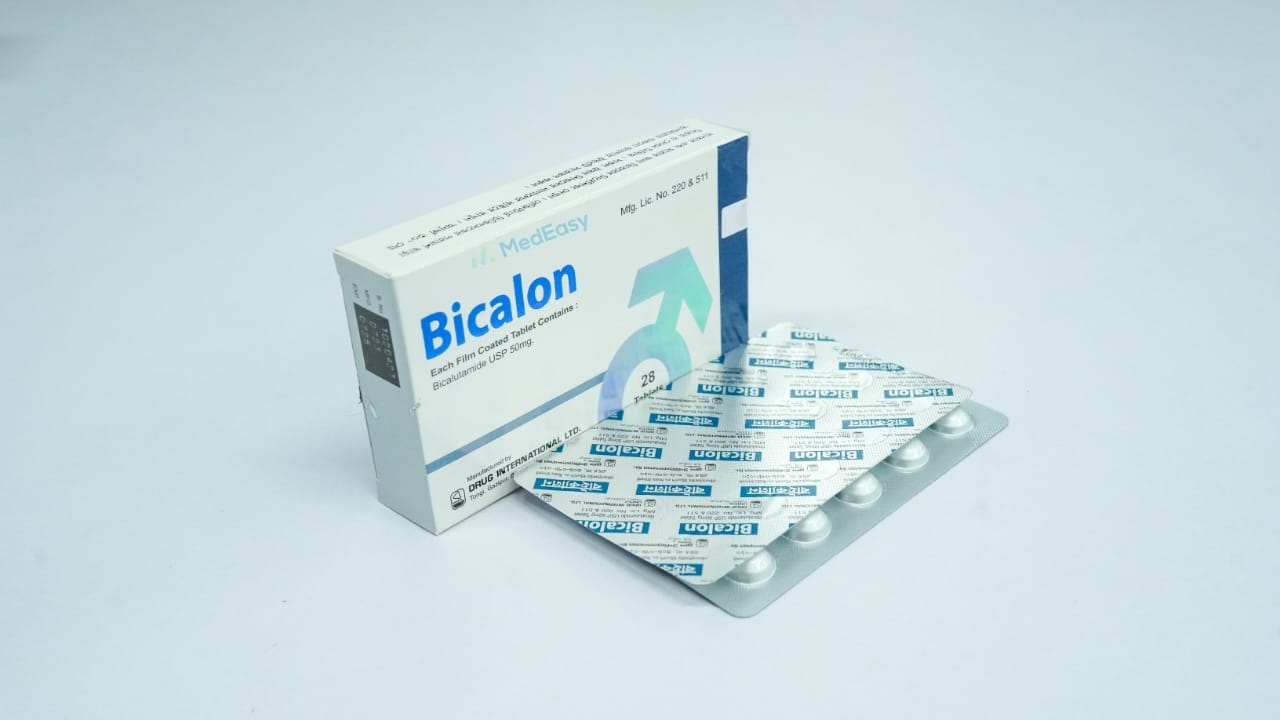
Bicalon50 mg
Drug International Ltd.
৳378.00
Add to cart


Bical is indicated, in combination with a luteinizing hormone-releasing hormone (LHRH) analog, for the treatment of Stage D2 metastatic carcinoma of the prostate.
Bical is not indicated for use in women and has no established role outside the management of prostate cancer.
Each film-coated tablet contains Bicalutamide as the active pharmaceutical ingredient, commonly available in a 50 mg strength (150 mg is used in some specialist-directed regimens outside the approved indication). Tablets also contain standard pharmaceutical excipients such as lactose, povidone, sodium starch glycollate, magnesium stearate, and film-coating agents.
Bical is a non-steroidal antiandrogen used in the management of prostate cancer. It works by blocking the action of androgens (male hormones) at the androgen receptor in prostate tissue, thereby slowing the growth of hormone-sensitive prostate cancer cells. Bical is typically administered once daily by mouth, usually in combination with an LHRH analog as part of combined androgen blockade therapy.
Bical belongs to the therapeutic class of non-steroidal antiandrogens (hormonal antineoplastic agents), used in the hormonal management of prostate cancer.
Bicalutamide is a racemic mixture; its antiandrogenic activity resides almost entirely in the R-enantiomer, which competitively binds to and inhibits the androgen receptor in prostate cancer cells, blocking the stimulatory effect of androgens (testosterone and dihydrotestosterone) on tumor growth. When combined with an LHRH analog, Bicalutamide blocks the transient rise in testosterone ("flare") that can occur at the start of LHRH therapy.
Dosage of Bical should be individualized by a specialist physician based on indication and response. See the Dosage and Administration fields below for further detail.
| Indication | Adult Dose |
|---|---|
| Metastatic prostate cancer (Stage D2), combination therapy | 50 mg once daily, together with an LHRH analog |
| Locally advanced prostate cancer (specialist-directed regimens) | 150 mg once daily, alone or combined with an LHRH analog/radiotherapy, per oncology guidance |
No dosage adjustment is generally required for renal impairment or mild-to-moderate hepatic impairment; use with caution and monitor liver function in patients with severe hepatic impairment (see Precautions and Warnings).
Bical tablets should be swallowed whole with a glass of water, with or without food, at the same time each day to maintain consistent blood levels. Do not stop taking Bical or change the dose without consulting the prescribing physician, even if symptoms improve.
Bical can displace coumarin-type anticoagulants from plasma protein binding sites, increasing anticoagulant effect and bleeding risk. Prothrombin time/INR should be closely monitored when starting or stopping Bical in patients on these agents, with the anticoagulant dose adjusted as needed.
Bical inhibits the CYP3A4 enzyme (with weaker effects on CYP2C9, CYP2C19, and CYP2D6) and may increase plasma levels of drugs metabolized by this pathway (e.g., midazolam). Caution is advised when Bical is co-administered with narrow-therapeutic-index CYP3A4 substrates.
Inform your physician of all other medicines, including over-the-counter drugs and supplements, before starting Bical.
Hot flashes, generalized pain, back pain, weakness (asthenia), pelvic pain, constipation, and gynecomastia/breast tenderness (especially with monotherapy).
Nausea, peripheral edema, shortness of breath, nocturia, blood in urine, anemia, and infection.
Patients taking Bical should seek prompt medical attention for yellowing of the skin/eyes, severe abdominal pain, unusual bleeding, or breathing difficulty.
Bical is contraindicated in pregnancy; it is not intended for use in women, and animal data show it can affect male fetal genital development if a partner becomes pregnant during treatment. Men receiving Bical whose partner is or may become pregnant should use effective contraception during treatment and for a period after stopping Bical, as advised by a physician. Bical is not used in breastfeeding women; there is no established role for its use during lactation. Any exposure during pregnancy should be discussed immediately with a physician.
Rare but sometimes severe liver injury has been reported with Bical. Liver function tests should be checked before starting treatment, periodically during the first few months, and thereafter as clinically indicated. Bical should be discontinued if significant liver injury or jaundice occurs.
Gynecomastia and breast tenderness are common with Bical, particularly with monotherapy. Discuss preventive options with your specialist if this is a concern.
Rare cases of interstitial lung disease, including fatal cases, have been reported. Report new or worsening cough, chest pain, or breathlessness promptly.
See the Interactions field for details on increased bleeding risk with coumarin-type anticoagulants.
Regular clinical evaluation, including PSA monitoring, is recommended to assess response to Bical therapy and detect disease progression.
Bical must not be used in female patients (see Contraindications).
There is limited clinical experience with overdose of Bical; doses up to 200 mg daily have been tolerated in trials without life-threatening effects. There is no specific antidote. In case of a suspected overdose, seek immediate medical attention or contact a poison control center. Management is supportive and symptomatic. Bical is highly protein-bound and extensively metabolized, so dialysis is not expected to be effective in removing the drug.
Store Bical at room temperature (below 30°C), away from light and moisture. Keep out of reach of children.
Safety and efficacy of Bical have not been established in children. It is not indicated for routine pediatric use, except in rare specialist-directed circumstances (e.g., certain precocious puberty conditions) managed by a pediatric endocrinology or oncology specialist.
Bical is commonly used in older men, the typical population for prostate cancer; no dose adjustment based on age alone is required, though age-related hepatic or renal changes should be considered.
No dosage adjustment of Bical is required in renal impairment.
Bical should be used with caution in patients with moderate-to-severe hepatic impairment, with periodic monitoring of liver function, as elimination may be prolonged (see Precautions and Warnings).
Duration of Bical therapy is determined by the treating oncologist/urologist based on disease stage, response to treatment, and tolerability. It is generally continued long-term as part of ongoing hormonal management of prostate cancer unless disease progression, unacceptable side effects, or physician advice indicates otherwise.
Non-steroidal antiandrogen; hormonal antineoplastic agent (androgen receptor inhibitor).
Bicalutamide acts by competitively binding to androgen receptors in prostate tissue, blocking the binding and action of endogenous androgens (testosterone and dihydrotestosterone). This inhibits androgen-driven stimulation of prostate cancer cell growth. When used with an LHRH analog, Bicalutamide also blocks the initial testosterone surge ("flare") associated with starting LHRH therapy.
X
Safety and efficacy of Bical have not been established in the general pediatric population. Limited specialist experience exists in select conditions (e.g., certain forms of precocious puberty) under close endocrinology/oncology supervision, but routine pediatric use of Bical is not recommended outside such specialist settings.
Q: What is Bical 50 mg Tablet used for?
A: Bical 50 mg Tablet is used, usually together with an LHRH analog injection, to treat prostate cancer that has spread (metastatic prostate cancer) by blocking the effect of male hormones on cancer cell growth.
Q: How should I take Bical 50 mg Tablet?
A: Take Bical 50 mg Tablet exactly as prescribed, usually one tablet once daily at the same time each day, with or without food. Do not stop or change your dose without consulting your doctor.
Q: Can women take Bical 50 mg Tablet?
A: No. Bical 50 mg Tablet is not indicated for use in women and is contraindicated in pregnancy because it can harm fetal development, especially in a male fetus.
Q: What are the common side effects of Bical 50 mg Tablet?
A: Common side effects include hot flashes, weakness, back or pelvic pain, constipation, and breast swelling or tenderness (gynecomastia). Serious but less common effects include liver problems and lung inflammation, so report yellowing of the skin/eyes, unusual fatigue, or breathing difficulty to your doctor promptly.
Q: Does Bical 50 mg Tablet interact with blood thinners?
A: Yes. Bical 50 mg Tablet can increase the effect of coumarin-type anticoagulants (like warfarin), raising bleeding risk. Your doctor will monitor your blood clotting tests (INR) closely if you take both medicines.
Q: What should I do if I miss a dose or take too much Bical 50 mg Tablet?
A: If you miss a dose, take it as soon as you remember unless it is nearly time for the next dose; do not double up. If an overdose of Bical 50 mg Tablet is suspected, seek immediate medical attention or contact a poison control center right away.
Disclaimer
The information provided is accurate to the best of our knowledge, but it does not replace professional medical advice. We cannot guarantee its completeness or accuracy, and the absence of specific information about a drug should not be taken as an endorsement. We are not responsible for any consequences arising from this information, so please consult a healthcare professional for any concerns or questions.
