
10% Off
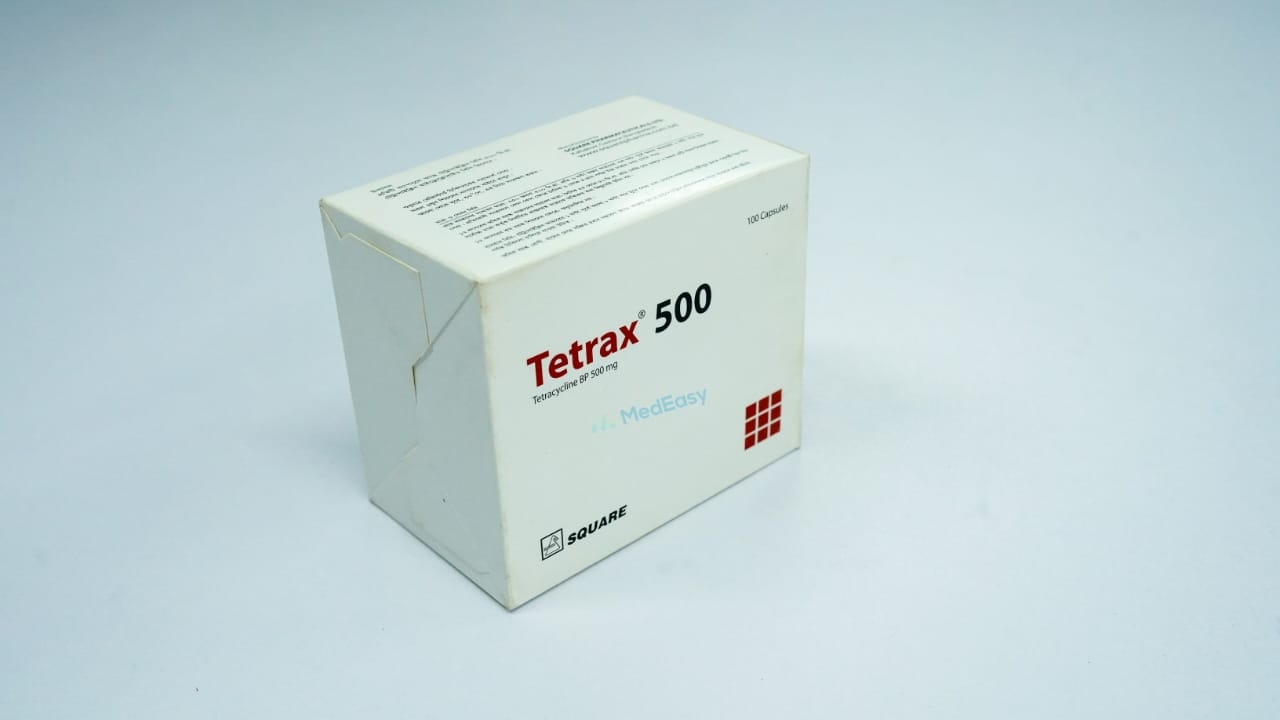
Tetrax500 mg
Square Pharmaceuticals PLC.
৳3.05
Add to cart


A-Tetra is a broad-spectrum tetracycline-class antibiotic used to treat a range of bacterial and certain non-bacterial infections. Because bacterial resistance to tetracyclines is common, it should be used only when the infecting organism is proven or strongly suspected to be susceptible.
A-Tetra is not effective against viral infections and inappropriate use increases the risk of drug-resistant bacteria.
Each capsule/tablet contains Tetracycline Hydrochloride as the active pharmaceutical ingredient, formulated as an oral solid dosage form (capsule or film-coated tablet) in commonly available strengths of 250 mg and 500 mg. Inactive ingredients vary by manufacturer and formulation.
A-Tetra is the hydrochloride salt of tetracycline, a naturally derived and semi-synthetic broad-spectrum antibiotic belonging to the tetracycline class. It is active against a wide range of Gram-positive and Gram-negative bacteria as well as atypical organisms such as chlamydiae, mycoplasmas, and rickettsiae.
It is supplied as oral capsules/tablets for systemic use and is one of the older, well-characterized members of the tetracycline family, distinguished from newer agents (e.g., doxycycline, minocycline) mainly by its shorter half-life and requirement for more frequent dosing.
Tetracycline-class antibiotic (broad-spectrum bacteriostatic antimicrobial)
Tetracycline Hydrochloride is a bacteriostatic antibiotic that inhibits bacterial protein synthesis. It binds reversibly to the 30S ribosomal subunit of susceptible bacteria, blocking the attachment of aminoacyl-tRNA to the mRNA-ribosome complex, thereby preventing addition of new amino acids to the growing peptide chain.
| Indication | Typical Adult Dose |
|---|---|
| General susceptible bacterial infections | 250-500 mg orally every 6 hours (up to 500 mg four times daily for severe infections) |
| Uncomplicated gonorrhea | 500 mg four times daily for at least 7 days (per treating physician's regimen) |
| Syphilis (penicillin-allergic patients) | 500 mg four times daily for 15-30 days as directed by physician |
| Brucellosis | 500 mg four times daily for 3 weeks, combined with streptomycin/an aminoglycoside |
| Moderate to severe acne (adjunct) | 250-500 mg once or twice daily, tapered as directed |
| H. pylori eradication | 500 mg four times daily as part of a combination regimen, per treating physician |
Only for children over 8 years of age (see Pediatric Use and Contraindications): 25-50 mg/kg/day in 4 divided doses, not to exceed the adult dose.
A-Tetra should be taken orally with a full glass of water, on an empty stomach (1 hour before or 2 hours after food), while remaining upright for at least 30 minutes afterward. Avoid concurrent intake of dairy products, antacids, or mineral supplements (calcium, iron, zinc, magnesium) — space these at least 2 hours apart from the dose. Complete the entire prescribed course exactly as directed.
Tetracycline Hydrochloride is contraindicated in:
Pregnancy: A-Tetra is contraindicated during pregnancy. It crosses the placenta and can cause permanent discoloration of the fetus's teeth, enamel hypoplasia, and inhibition of bone growth, particularly with exposure during the second and third trimesters. It should not be used during pregnancy unless the treating physician determines it is absolutely necessary and no safer alternative exists.
Lactation: A-Tetra is excreted into breast milk. Although calcium in milk may partially limit infant absorption, use during breastfeeding is generally not recommended due to the potential for tooth discoloration and effects on bone growth in the infant. Use only if clearly needed and the potential benefit justifies the potential risk to the infant; consult a physician before use while breastfeeding.
There is no specific antidote for A-Tetra overdose, and the drug is not effectively removed by dialysis. In case of a suspected overdose, discontinue the medication immediately and seek immediate medical attention or contact a poison control center/emergency services. Treatment is supportive and symptomatic, guided by a physician; do not attempt specific home treatment.
Store at room temperature (below 30°C), away from light and moisture, in a tightly closed, light-resistant container. Keep out of reach of children.
A-Tetra can further impair renal function and cause accumulation with resultant azotemia in patients with significant renal impairment; use with caution and under close medical supervision, with dose adjustment as directed by the physician if used at all.
Use with caution in patients with hepatic impairment; high-dose therapy has been associated with hepatotoxicity, particularly in pregnant women and those with pre-existing liver disease.
No specific dose adjustment is established for elderly patients with normal renal function, but age-related decline in renal function should be considered; monitor closely.
Contraindicated in children under 8 years except in special circumstances directed by a physician (see Contraindications and Pediatric Uses).
Duration varies by indication and is determined by the treating physician, typically ranging from 7 to 14 days for most bacterial infections, up to 3 weeks for conditions such as brucellosis, and longer, tapering courses for acne. Regardless of indication, the full prescribed course of A-Tetra should be completed even if symptoms improve before completion, to reduce the risk of relapse and antibiotic resistance.
Tetracyclines
Tetracycline Hydrochloride exerts a bacteriostatic effect by reversibly binding to the 30S ribosomal subunit of susceptible bacteria, thereby blocking binding of aminoacyl-tRNA to the mRNA-ribosome complex and inhibiting bacterial protein synthesis. This halts bacterial growth and replication, allowing host immune defenses to clear the infection.
D
A-Tetra is contraindicated in children under 8 years of age because it can cause permanent tooth discoloration, enamel hypoplasia, and inhibition of bone growth during the period of tooth and bone development. It may be used in this age group only in specific special circumstances (e.g., anthrax post-exposure prophylaxis when no alternative is suitable) strictly under a physician's direction after weighing risks and benefits.
In children over 8 years of age, safety and efficacy are established; the usual dose is 25-50 mg/kg/day in 4 divided doses, not to exceed the adult dose, with the same administration precautions (empty stomach, avoid dairy/mineral supplements, full glass of water) as in adults.
Q: What is A-Tetra 500 mg Capsule used for?
A: A-Tetra 500 mg Capsule is a broad-spectrum antibiotic used to treat various bacterial infections such as respiratory and urinary tract infections, chlamydial infections, rickettsial infections (e.g., Rocky Mountain spotted fever), and as an adjunct for moderate to severe acne, among other susceptible bacterial infections. It should only be used for infections confirmed or strongly suspected to be caused by susceptible bacteria.
Q: Can I take A-Tetra 500 mg Capsule with milk or dairy products?
A: No. Dairy products, as well as antacids and supplements containing calcium, iron, zinc, or magnesium, bind to A-Tetra 500 mg Capsule in the gut and significantly reduce its absorption, making the medicine less effective. Take A-Tetra 500 mg Capsule at least 1 hour before or 2 hours after such foods or products, separated by at least 2 hours from any mineral supplements or antacids.
Q: Is A-Tetra 500 mg Capsule safe during pregnancy?
A: No. A-Tetra 500 mg Capsule is contraindicated during pregnancy because it crosses the placenta and can cause permanent discoloration of the baby's teeth, enamel defects, and inhibition of bone growth. It should not be used during pregnancy unless a physician determines it is absolutely necessary and no safer alternative is available.
Q: Can children take A-Tetra 500 mg Capsule?
A: A-Tetra 500 mg Capsule is contraindicated in children under 8 years of age because it can cause permanent tooth discoloration and affect bone growth. It may only be used in this age group in specific circumstances directed by a physician. In children over 8 years, it may be used at a weight-based dose determined by the physician.
Q: What precautions should I take while on A-Tetra 500 mg Capsule?
A: Take A-Tetra 500 mg Capsule exactly as prescribed and complete the full course even if you feel better. Take it on an empty stomach with a full glass of water, remain upright for at least 30 minutes afterward, avoid dairy products/antacids/mineral supplements within 2 hours of dosing, and use sun protection since A-Tetra 500 mg Capsule can cause photosensitivity (exaggerated sunburn).
Q: What should I do if I miss a dose or accidentally take too much A-Tetra 500 mg Capsule?
A: If you miss a dose, take it as soon as you remember unless it is almost time for the next dose — do not double up. If you suspect you or someone else has taken too much A-Tetra 500 mg Capsule, stop the medication and seek immediate medical attention or contact a poison control center right away, as overdose requires prompt medical evaluation.
Disclaimer
The information provided is accurate to the best of our knowledge, but it does not replace professional medical advice. We cannot guarantee its completeness or accuracy, and the absence of specific information about a drug should not be taken as an endorsement. We are not responsible for any consequences arising from this information, so please consult a healthcare professional for any concerns or questions.

