
10% Off
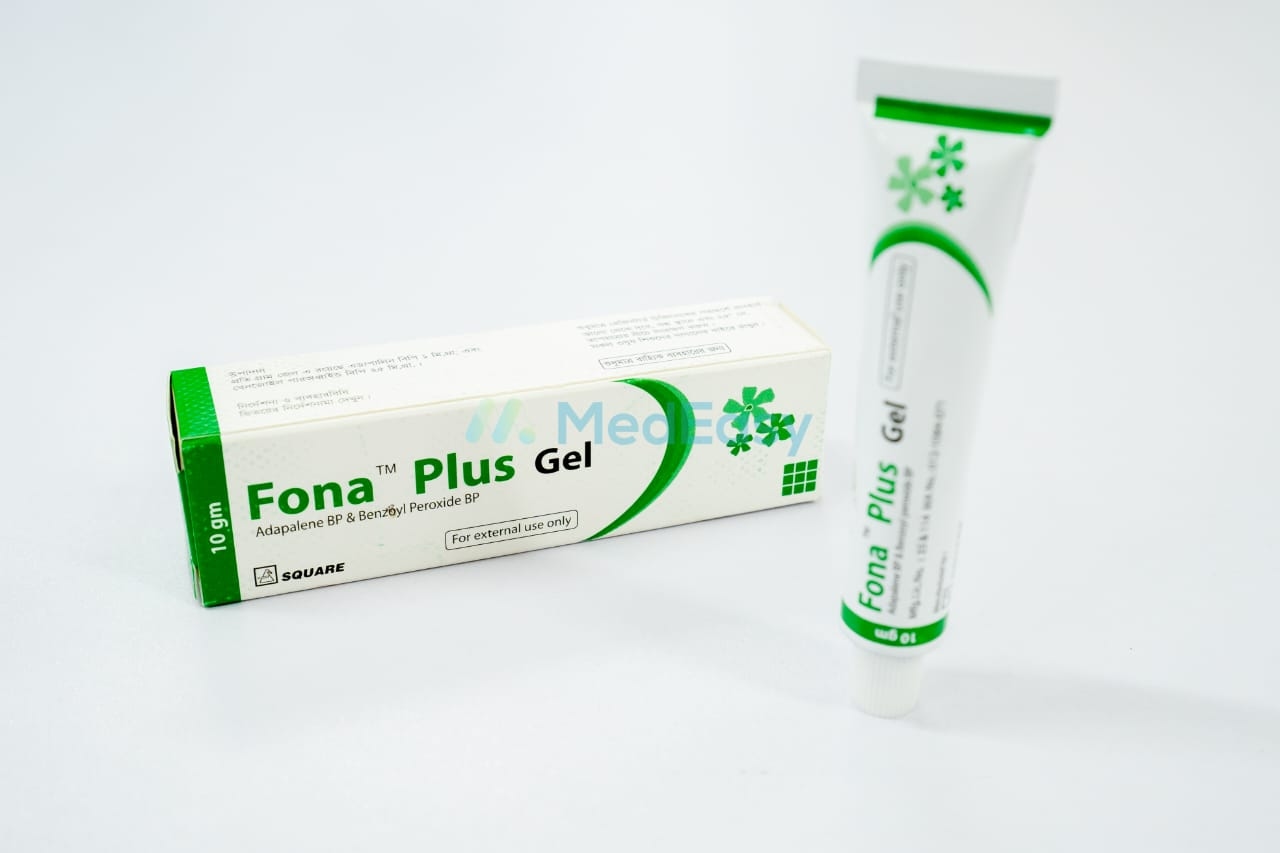
Fona Plus0.1%+2.5%
Square Pharmaceuticals PLC.
৳144.43
Add to cart


Aclene Plus is a fixed-dose combination topical gel indicated for the following use:
There is no well-established evidence base for using Aclene Plus in conditions other than acne vulgaris; it is not indicated for rosacea, other inflammatory dermatoses, or cosmetic skin lightening, and such uses are considered off-label and not recommended without direct physician guidance.
Each gram of Adapalene + Benzoyl peroxide gel typically contains Adapalene (a synthetic retinoid) 0.1% or 0.3% w/w, in combination with Benzoyl peroxide 2.5% w/w, in an aqueous gel base. Strength combinations and excipients vary by manufacturer/brand; check the specific product label for exact composition.
Aclene Plus is a fixed-dose combination topical medication used in dermatology for the treatment of acne vulgaris. It combines a third-generation topical retinoid (adapalene) with an antibacterial/keratolytic agent (benzoyl peroxide) in a single gel formulation, allowing simultaneous targeting of multiple factors involved in acne development, including abnormal follicular keratinization, inflammation, and proliferation of Cutibacterium acnes (formerly Propionibacterium acnes). Aclene Plus is applied once daily to affected skin and is available in different strength combinations for use in adolescents and adults.
Aclene Plus belongs to the therapeutic class of topical anti-acne combination agents, combining a topical retinoid-class drug with a topical antibacterial/keratolytic agent.
Adapalene + Benzoyl peroxide works through two complementary mechanisms:
Used together in Adapalene + Benzoyl peroxide, these mechanisms act on complementary steps of acne pathogenesis (keratinization, inflammation, and bacterial proliferation), which is why the combination is often more effective than either agent alone. Systemic absorption of both components through intact skin is minimal under normal use conditions.
Aclene Plus is for topical (external skin) use only and must not be taken by mouth or applied to mucous membranes.
| Indication | Recommended regimen |
|---|---|
| Acne vulgaris (adults and adolescents per approved age range) | Apply a thin, even layer once daily, in the evening, to the entire affected area of the face and/or trunk after washing gently with a mild cleanser and patting the skin dry. Avoid the eyes, lips, and mucous membranes. |
See also Duration of Treatment and Use in Special Populations for further detail.
Wash the affected area gently with a mild, non-medicated cleanser and pat dry before application. Apply a thin layer of Aclene Plus once daily in the evening, avoiding the eyes, lips, angles of the nose, and mucous membranes. Wash hands after application. Use a broad-spectrum sunscreen and protective clothing during the day, as skin treated with Aclene Plus may be more sensitive to sunlight (see Precautions and Warnings).
Aclene Plus has minimal systemic drug interactions given its topical use and minimal systemic absorption; the interactions of clinical relevance are primarily local/dermatologic:
Adapalene + Benzoyl peroxide is contraindicated in patients with known hypersensitivity to adapalene, benzoyl peroxide, or any excipient of the formulation.
The most common adverse effects of Aclene Plus are local skin reactions, which are typically most pronounced during the first few weeks of treatment and tend to decrease with continued use:
Severe allergic reactions (rash, swelling, severe itching, difficulty breathing) are rare; discontinue use and seek medical attention if these occur.
Pregnancy: Data on the use of Aclene Plus in pregnant women are limited. Topical retinoids as a class are generally advised to be avoided or used with caution during pregnancy because oral retinoids are known teratogens, even though systemic absorption of topical adapalene is low. As a conservative measure, Aclene Plus should be used during pregnancy only if clearly needed and if the potential benefit justifies the potential risk to the fetus; a physician should be consulted before use in pregnancy.
Lactation: It is not known whether topically applied adapalene or benzoyl peroxide are excreted in human milk in clinically significant amounts. Because systemic absorption is minimal, risk to a breastfed infant is expected to be low, but caution is advised - avoid application to the chest/breast area if breastfeeding, and consult a physician before use while breastfeeding.
The following precautions apply to the use of Aclene Plus:
Excessive topical application of Aclene Plus does not speed up improvement of acne and instead increases the risk of marked redness, peeling, and discomfort; it should be washed off with mild soap and water if applied in excess. Accidental oral ingestion of Aclene Plus gel (e.g., by a child) or a severe local reaction is not expected to be life-threatening from the small quantities typically used, but if ingestion occurs or a severe reaction develops, seek immediate medical attention or contact a poison control center/emergency services rather than attempting home treatment.
Store at room temperature (below 30°C), away from light and moisture. Keep the tube tightly closed. Keep out of reach of children.
Pediatric patients: See Pediatric Uses below.
Elderly patients: Acne vulgaris is uncommon in the elderly, and specific studies of Aclene Plus in this population are limited; use with the same precautions regarding skin fragility and irritation as in other adults.
Renal or hepatic impairment: No dose adjustment is expected to be necessary given minimal systemic absorption with topical use; however, specific data in patients with significant renal or hepatic impairment are limited, so use with routine caution.
Patients with sensitive or compromised skin (eczema, sunburn, open wounds): Avoid applying Aclene Plus to compromised, eczematous, or sunburned skin due to increased risk of irritation and absorption.
Visible improvement in acne with Aclene Plus is generally seen after several weeks of continuous once-daily use, with maximal benefit typically apparent after 12 weeks of therapy. Treatment duration should be guided by a physician and continued as long as needed to control acne, with periodic reassessment; long-term maintenance therapy may be recommended for chronic acne once initial improvement is achieved.
Topical retinoid (adapalene) combined with a topical antibacterial/keratolytic agent (benzoyl peroxide); classified overall as a topical anti-acne combination agent.
Adapalene + Benzoyl peroxide acts through the combined retinoid receptor-mediated normalization of follicular keratinization and anti-inflammatory activity (adapalene) together with oxidative, bactericidal, and keratolytic activity against Cutibacterium acnes (benzoyl peroxide); see Pharmacology for full detail.
The safety and efficacy of Aclene Plus have been established for the topical treatment of acne vulgaris in adolescent patients within the age range specified on the approved product label (commonly 9 years and older for lower-strength formulations, and 12 years and older for higher-strength formulations, depending on the specific product); consult the specific product labeling for the exact approved age. Safety and efficacy in children below the approved age range have not been established, and Aclene Plus should not be used in younger children without specific physician guidance.
Q: What is Aclene Plus 0.1%+2.5% Gel used for?
A: Aclene Plus 0.1%+2.5% Gel is a topical gel used to treat acne vulgaris. It works by normalizing skin cell turnover in hair follicles and killing acne-causing bacteria, treating both blackheads/whiteheads and inflamed acne lesions.
Q: How should I apply Aclene Plus 0.1%+2.5% Gel?
A: Wash the affected skin gently with a mild cleanser, pat dry, and apply a thin layer of Aclene Plus 0.1%+2.5% Gel once daily in the evening to the entire affected area, avoiding the eyes, lips, and mucous membranes.
Q: Why does my skin feel dry, red, or irritated after starting Aclene Plus 0.1%+2.5% Gel?
A: Dryness, redness, peeling, and burning are common, especially in the first few weeks of using Aclene Plus 0.1%+2.5% Gel, and usually improve with continued use. Using a gentle moisturizer and temporarily reducing frequency if needed can help; consult your physician if irritation is severe or persistent.
Q: Can Aclene Plus 0.1%+2.5% Gel bleach my clothes or hair?
A: Yes. The benzoyl peroxide component of Aclene Plus 0.1%+2.5% Gel can bleach hair, towels, clothing, and bedding. Allow the gel to dry completely and avoid contact with colored fabric.
Q: Is Aclene Plus 0.1%+2.5% Gel safe to use during pregnancy?
A: Topical retinoids like the adapalene component of Aclene Plus 0.1%+2.5% Gel are generally advised to be used with caution or avoided in pregnancy due to teratogenicity concerns associated with the retinoid class. Aclene Plus 0.1%+2.5% Gel should be used in pregnancy only if clearly needed, after consulting a physician, since the potential benefit must outweigh the potential risk to the fetus.
Q: Do I need to use sunscreen while using Aclene Plus 0.1%+2.5% Gel?
A: Yes. Aclene Plus 0.1%+2.5% Gel can increase skin sensitivity to sunlight. Use a broad-spectrum sunscreen, wear protective clothing, and minimize sun and tanning bed exposure while using this medication.
Disclaimer
The information provided is accurate to the best of our knowledge, but it does not replace professional medical advice. We cannot guarantee its completeness or accuracy, and the absence of specific information about a drug should not be taken as an endorsement. We are not responsible for any consequences arising from this information, so please consult a healthcare professional for any concerns or questions.

