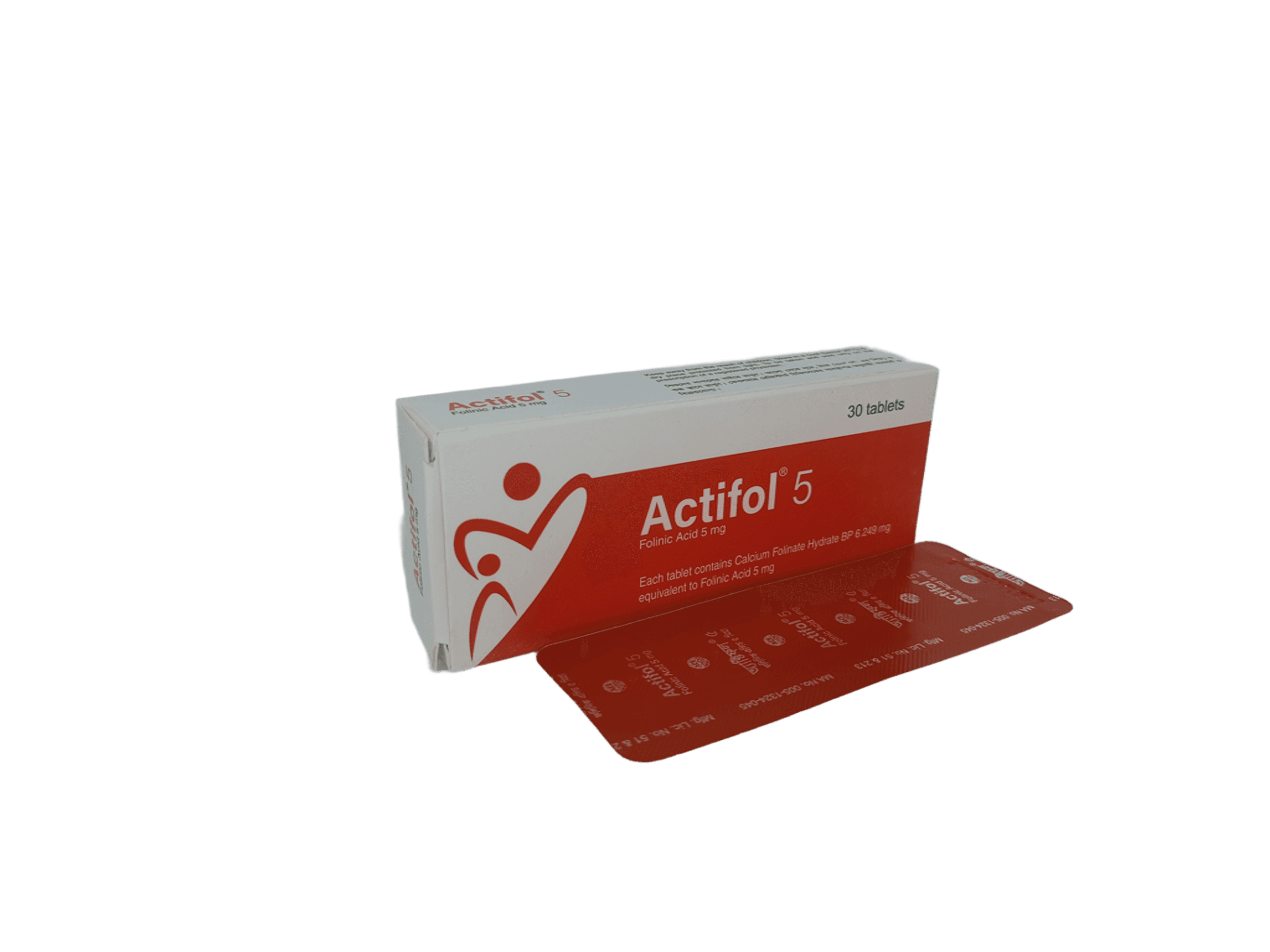
Product gallery

Actifol5 mg


MRP ৳ 90.008% Off
Best PriceTk 82.80/10's Strip
1
Section

Medicine overview

Indications of Actifol

Actifol is a reduced form of folate with several well-established clinical uses:

  • Methotrexate (folic acid antagonist) toxicity "rescue" therapy: This is an FDA-approved, guideline-supported use in which Actifol is given after high-dose methotrexate chemotherapy to reduce the toxicity of methotrexate to normal cells, and is also used in cases of accidental methotrexate overdosage.
  • Adjunct in colorectal cancer chemotherapy: Actifol is FDA-approved for use in combination with fluorouracil to enhance the efficacy of fluorouracil-based chemotherapy regimens in patients with advanced colorectal cancer. This is a combination-therapy use; Actifol is not used alone for this indication.
  • Megaloblastic anemia due to folate deficiency: Actifol is used when oral folic acid therapy is not appropriate or not tolerated (e.g., in certain malabsorption states), after vitamin B12 deficiency has been ruled out.
  • Impaired methotrexate elimination and inadvertent folic acid antagonist overdosage: Guideline-supported use for rescue after delayed methotrexate clearance (e.g., in renal impairment).

Actifol is not a substitute for folic acid in routine dietary folate supplementation and is not interchangeable with folic acid for methotrexate rescue.

Composition

Each formulation of Folinic Acid contains folinic acid (as calcium folinate/leucovorin calcium) as the active ingredient. Available strengths and forms marketed in Bangladesh include tablets (5 mg and 15 mg) and injections (10 mg/ml, for IM or IV use).

Description

Actifol (also known as leucovorin or calcium folinate) is the 5-formyl derivative of tetrahydrofolic acid, a reduced form of folic acid that does not require the enzyme dihydrofolate reductase for conversion to active folate cofactors. This property makes Actifol useful in counteracting the effects of drugs that inhibit dihydrofolate reductase, such as methotrexate.

Actifol is available as oral tablets and as an injectable solution for intramuscular or intravenous administration, and is used in oncology supportive care as well as in the treatment of certain anemias.

Therapeutic Class

Actifol belongs to the therapeutic class of folic acid derivatives / antidotes to folic acid antagonists. It is classified as a chemoprotective and hematopoietic (blood-forming) agent, and is also used as a chemotherapy adjunct/biomodulator.

Pharmacology

Folinic Acid is a reduced folate that is readily converted to other active folate cofactors without requiring the enzyme dihydrofolate reductase. This is the key mechanism distinguishing it from folic acid: folic acid antagonists such as methotrexate block dihydrofolate reductase, preventing folic acid from being converted to its active forms, but Folinic Acid bypasses this blocked step, restoring cellular folate pools needed for DNA synthesis and cell division.

In methotrexate rescue, Folinic Acid allows normal cells (particularly rapidly dividing bone marrow and gastrointestinal mucosal cells) to survive methotrexate's antifolate effect, while ideally still allowing methotrexate to act on tumor cells.

When combined with fluorouracil in colorectal cancer treatment, Folinic Acid stabilizes the binding of a fluorouracil metabolite to its target enzyme (thymidylate synthase), thereby enhancing the cytotoxic (and therapeutic) effect of fluorouracil on cancer cells — this also means it can enhance fluorouracil's toxicity.

Dosage & Administration of Actifol

Dosing of Actifol is highly indication-specific and must be individualized by the treating physician; the following reflects general prescribing conventions.

IndicationTypical Adult Dosing
Methotrexate rescue (after high-dose methotrexate)Approximately 10-15 mg/m² (commonly ~15 mg) orally, IM, or IV every 6 hours, starting approximately 24 hours after the start of the methotrexate infusion, for 10 or more doses, guided by methotrexate blood levels and renal function; exact timing and dose are set by the oncology protocol.
Accidental methotrexate overdosageA dose of Actifol equal to or greater than the methotrexate dose, given as soon as possible (ideally within one hour), then continued per methotrexate level monitoring.
Adjunct with fluorouracil (colorectal cancer)Given per specific chemotherapy protocol (e.g., prior to or with fluorouracil), IV; exact dose and schedule depend on the regimen used.
Megaloblastic anemia due to folate deficiency (when oral folic acid is unsuitable)Typically 5-15 mg orally, IM, or IV per day, not to exceed 1 mg/day is sometimes cited historically for this indication in some references; the treating physician determines exact dose and duration.

Critical safety note: In methotrexate rescue, the timing of Actifol administration is critical — delayed administration reduces its protective effectiveness and increases the risk of severe, potentially fatal methotrexate toxicity. Actifol must be given exactly according to the schedule and route prescribed by the treating physician; do not delay, skip, alter the dose, or discontinue rescue doses without medical guidance.

Administration of Actifol

Actifol may be given orally (tablets) or parenterally by intramuscular or intravenous injection/infusion, depending on the indication and clinical situation. Intravenous administration is typically used in oncology settings (methotrexate rescue, fluorouracil combination), particularly when oral intake is unreliable (e.g., vomiting) or higher, more rapid drug levels are required. Tablets may be used for oral megaloblastic anemia treatment or step-down rescue dosing when the patient can tolerate oral intake and gastrointestinal absorption is intact.

Interaction of Actifol

  • Methotrexate: This is not a harmful interaction but the basis of Actifol's therapeutic rescue use; however, timing is critical (see Dosage and Administration) as inappropriate timing can either negate methotrexate's antitumor effect (if given too early/too high a dose) or fail to prevent toxicity (if delayed).
  • Fluorouracil (5-FU): Actifol enhances both the therapeutic effect and the toxicity of fluorouracil, increasing the risk of severe fluorouracil-related gastrointestinal toxicity (including severe diarrhea, mucositis, and dehydration) and myelosuppression. This combination requires close monitoring under oncology supervision, often with dose adjustment of fluorouracil.
  • Antiepileptic drugs (phenytoin, phenobarbital, primidone, valproate): Folate compounds including Actifol may reduce serum concentrations of these anticonvulsants, potentially increasing seizure frequency; monitoring of anticonvulsant levels and seizure control is advised when Actifol is used concurrently.
  • Trimethoprim-sulfamethoxazole (cotrimoxazole): Concurrent use of Actifol has been reported to reduce the efficacy of cotrimoxazole against Pneumocystis jirovecii pneumonia; this combination should be used cautiously and only when specifically indicated.

Contraindications

Folinic Acid is contraindicated in patients with known hypersensitivity to folinic acid, calcium folinate, or any component of the formulation. Folinic Acid is also contraindicated for the treatment of pernicious anemia or other megaloblastic anemias caused by vitamin B12 deficiency, because Folinic Acid can improve the hematologic (blood count) abnormalities of B12 deficiency while allowing progressive, potentially irreversible neurological damage to continue undetected; vitamin B12 deficiency must be excluded or confirmed and treated before initiating Folinic Acid for anemia.

Side Effects of Actifol

Side effects of Actifol vary by the clinical context (e.g., alone versus combined with methotrexate or fluorouracil chemotherapy).

  • Common: Nausea, vomiting, diarrhea, stomatitis (mouth sores), and taste disturbances (more frequent when Actifol is combined with fluorouracil chemotherapy).
  • Blood-related: Leukopenia (low white blood cell count), which may be dose-limiting when Actifol is used with chemotherapy agents.
  • Allergic reactions: Rash, itching, and rarely, anaphylactoid/allergic reactions including urticaria and, very rarely, severe hypersensitivity reactions have been reported, mostly with parenteral Actifol.
  • Other: Fever, and rarely, seizures or syncope have been reported, particularly in the setting of concurrent chemotherapy.

Many of the more severe adverse effects seen with Actifol occur in the context of combination chemotherapy (e.g., with fluorouracil) rather than from Actifol alone.

Pregnancy & Lactation

Actifol should be used during pregnancy only if clearly needed and if the potential benefit justifies the potential risk to the fetus; this is particularly relevant since Actifol is most often used together with cytotoxic chemotherapy agents (such as methotrexate or fluorouracil) that carry their own significant fetal risks, so use in pregnancy should be directed by the treating oncologist with full risk-benefit discussion. It is not known whether Actifol itself is excreted in human breast milk; a decision on whether to discontinue breastfeeding or discontinue the associated chemotherapy should be made considering the importance of the underlying treatment to the mother, and only under medical supervision.

Precautions & Warnings

  • Vitamin B12 status: Confirm or exclude B12 deficiency before treating megaloblastic anemia with Actifol (see Contraindications).
  • Methotrexate rescue timing: Actifol rescue must follow the exact timing and dosing schedule prescribed for methotrexate rescue therapy; delayed or inadequate rescue increases the risk of serious, potentially life-threatening methotrexate toxicity (myelosuppression, mucositis, renal or hepatic injury). Adequate hydration and urine alkalinization, and monitoring of methotrexate levels and renal function, are important parts of the overall rescue protocol as directed by the treating physician.
  • Combination with fluorouracil: Actifol increases both the efficacy and toxicity of fluorouracil; this combination should be used only under close oncology supervision with appropriate dose adjustment and monitoring for gastrointestinal and hematologic toxicity.
  • Not a substitute for folic acid: Actifol is not interchangeable with folic acid for methotrexate rescue — Actifol bypasses the enzyme (dihydrofolate reductase) blocked by methotrexate, whereas folic acid does not provide the same rescue effect and must not be substituted in this context.
  • Calcium content: Injectable Actifol (as calcium folinate) should be given with caution and at a controlled rate in patients who require calcium restriction, due to its calcium content.
  • Route restriction: High-dose Actifol injection should generally not be given intrathecally.

Overdose Effects of Actifol

Overdosage of Actifol itself is not generally associated with specific toxicity of its own, but excessive doses may theoretically counteract the intended antineoplastic effect of concurrently administered folic acid antagonists (such as methotrexate), potentially reducing chemotherapy efficacy. If overdose of Actifol is suspected, or if there is any concern about mistimed or incorrect dosing during methotrexate rescue therapy, seek immediate medical attention or contact emergency/poison control services; do not attempt to self-manage a suspected overdose or dosing error at home.

Storage Conditions

Store at room temperature (below 30°C), away from light and moisture. Keep out of reach of children. Injectable formulations of Actifol should be stored and reconstituted/diluted according to the manufacturer's specific instructions on the product label.

Use In Special Populations

Renal impairment: Patients with impaired renal function have delayed methotrexate elimination and are at higher risk of methotrexate toxicity; Actifol rescue dosing and duration may need to be extended and intensified, with close monitoring of methotrexate levels and renal function, under specialist guidance.

Hepatic impairment: No specific well-established dose adjustment of Actifol itself is defined for hepatic impairment, but caution is warranted given that Actifol is typically used alongside hepatotoxic chemotherapy agents.

Elderly: No specific dose adjustment of Actifol is generally required based on age alone, though elderly patients may have reduced renal function affecting concurrent methotrexate clearance and rescue requirements.

Pediatric use: See Pediatric Uses section.

Duration Of Treatment

Duration of Actifol therapy is determined entirely by the indication and clinical protocol: methotrexate rescue typically continues for multiple doses over 1-3 days (or longer if methotrexate elimination is delayed) as guided by serum methotrexate levels; fluorouracil combination therapy follows the specific chemotherapy cycle schedule; and treatment of megaloblastic anemia continues until the anemia resolves and the underlying folate deficiency is corrected, as determined by the treating physician.

Reconstitution

Injectable powder formulations of Actifol (where supplied as a lyophilized powder rather than ready-to-use solution) must be reconstituted with the diluent specified by the manufacturer (typically sterile water for injection or bacteriostatic water for injection) immediately before use, following the specific volume and concentration instructions on the product label; any unused reconstituted solution should be handled per the manufacturer's stability and discard instructions.

Drug Classes

Folic acid derivative; vitamin B9 (folate) analog; antidote to folic acid antagonists; chemotherapy adjunct/biomodulating agent.

Mode Of Action

Folinic Acid is the reduced, biologically active form of folic acid (5-formyltetrahydrofolate) that can be directly converted to other active folate cofactors without needing the enzyme dihydrofolate reductase. Because folic acid antagonists like methotrexate work by inhibiting dihydrofolate reductase (blocking the normal activation pathway of folic acid), Folinic Acid circumvents this blockade and restores intracellular folate cofactor levels needed for purine and thymidylate synthesis, thereby protecting normal cells from antifolate toxicity. In combination with fluorouracil, Folinic Acid increases intracellular reduced folate levels, stabilizing the ternary complex between a fluorouracil metabolite and thymidylate synthase, thereby potentiating fluorouracil's cytotoxic action against tumor cells.

Pediatric Uses

Actifol is used in pediatric patients primarily for methotrexate rescue therapy following high-dose methotrexate chemotherapy for pediatric malignancies (e.g., acute lymphoblastic leukemia, osteosarcoma), with dosing calculated on a body-surface-area (mg/m²) basis similar to adult protocols and individualized by the pediatric oncology team based on methotrexate levels. Actifol has also been used off-label in some pediatric metabolic and neurologic conditions (e.g., cerebral folate deficiency syndromes) under specialist supervision; safety and efficacy for indications outside of established oncology rescue use have not been formally established in children, and pediatric dosing for non-oncology uses should be determined only by a specialist physician.

Frequently Asked Questions

Q: What is Actifol 5 mg Tablet used for?

A: Actifol 5 mg Tablet is mainly used to reduce the toxic side effects of methotrexate chemotherapy ("rescue" therapy), as an add-on to fluorouracil chemotherapy for colorectal cancer, and to treat certain types of anemia caused by folate deficiency when oral folic acid cannot be used.

Q: Is Actifol 5 mg Tablet the same as folic acid?

A: No. Although related, Actifol 5 mg Tablet is not interchangeable with folic acid, especially for methotrexate rescue. Actifol 5 mg Tablet is already in the active, reduced form of folate and bypasses the enzyme that methotrexate blocks, while ordinary folic acid needs that enzyme to become active and therefore cannot provide the same rescue effect.

Q: Why is the timing of Actifol 5 mg Tablet so important after methotrexate?

A: When Actifol 5 mg Tablet is used to rescue the body from methotrexate toxicity, it must be given at the exact time and dose prescribed by the treating physician. Giving it too late reduces its ability to protect normal cells and increases the risk of severe, potentially life-threatening methotrexate toxicity, such as bone marrow suppression and mouth/gut ulceration.

Q: Can Actifol 5 mg Tablet be used to treat vitamin B12-deficiency anemia?

A: No. Actifol 5 mg Tablet is contraindicated for anemia caused by vitamin B12 deficiency (such as pernicious anemia) because it can mask and worsen the underlying B12 deficiency by improving blood counts while nerve damage silently progresses. Vitamin B12 deficiency must be ruled out or treated before using Actifol 5 mg Tablet for anemia.

Q: What are the common side effects of Actifol 5 mg Tablet?

A: Common side effects of Actifol 5 mg Tablet include nausea, vomiting, diarrhea, mouth sores (stomatitis), and altered taste, especially when it is combined with fluorouracil chemotherapy. It can also lower white blood cell counts. Allergic reactions are uncommon but can occur.

Q: Is Actifol 5 mg Tablet safe during pregnancy?

A: Actifol 5 mg Tablet should be used in pregnancy only if clearly needed and if the expected benefit outweighs potential risks to the fetus, and only under close medical supervision — particularly because it is usually given together with chemotherapy drugs that carry their own risks in pregnancy. Always discuss this with your treating physician.

Disclaimer

The information provided is accurate to the best of our knowledge, but it does not replace professional medical advice. We cannot guarantee its completeness or accuracy, and the absence of specific information about a drug should not be taken as an endorsement. We are not responsible for any consequences arising from this information, so please consult a healthcare professional for any concerns or questions.


Doctor