
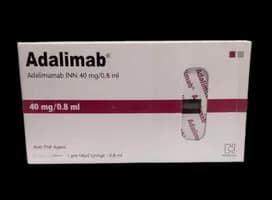

Medicine overview
Indications of Adalimab
Adalimab is a tumor necrosis factor-alpha (TNF-α) inhibitor biologic used to treat a range of chronic inflammatory and autoimmune conditions. Indications are classified below by strength of evidence.
Established / FDA-Approved Indications
- Moderately to severely active rheumatoid arthritis (RA), typically in combination with methotrexate or as monotherapy if methotrexate is not tolerated
- Active psoriatic arthritis
- Active ankylosing spondylitis
- Moderately to severely active polyarticular juvenile idiopathic arthritis (in patients 2 years of age and older)
- Moderately to severely active Crohn's disease (adults and pediatric patients 6 years and older)
- Moderately to severely active ulcerative colitis (adults and pediatric patients 5 years and older)
- Moderate to severe chronic plaque psoriasis in candidates for systemic therapy or phototherapy
- Moderate to severe hidradenitis suppurativa
- Non-infectious intermediate, posterior, and panuveitis
Adjunct / Combination Therapy Use
Adalimab is frequently used as an add-on to conventional disease-modifying antirheumatic drugs (e.g., methotrexate) in rheumatoid arthritis when response to conventional therapy alone is inadequate.
Off-Label Uses (Not FDA-Approved)
Adalimab is sometimes used off-label, under specialist supervision, for conditions such as sarcoidosis, Behçet's disease, and certain other refractory inflammatory conditions where evidence is more limited. Off-label use should only be undertaken by a specialist physician after standard therapies have failed.
Composition
Each pre-filled syringe or pre-filled pen of Adalimumab contains 40 mg of Adalimumab in 0.4 mL or 0.8 mL of a sterile, preservative-free solution for subcutaneous injection, depending on the formulation and strength marketed. Other strengths (e.g., 10 mg, 20 mg, 80 mg per fixed volume) are available for specific indications and pediatric weight-based dosing.
Description
Adalimab is a recombinant, fully human immunoglobulin G1 (IgG1) monoclonal antibody that specifically binds to and neutralizes tumor necrosis factor-alpha (TNF-α), a key pro-inflammatory cytokine involved in the pathogenesis of several chronic autoimmune and inflammatory diseases.
By blocking TNF-α, Adalimab reduces inflammation, joint damage, and disease activity in conditions such as rheumatoid arthritis, psoriatic arthritis, ankylosing spondylitis, inflammatory bowel disease, and plaque psoriasis. It is administered by subcutaneous injection, typically self-administered by the patient or a caregiver after appropriate training.
Therapeutic Class
Adalimab belongs to the class of Disease-Modifying Antirheumatic Drugs (DMARDs), specifically the biologic subclass known as Tumor Necrosis Factor-alpha (TNF-α) inhibitors.
Pharmacology
Adalimumab is a recombinant human IgG1 monoclonal antibody that binds specifically to TNF-α with high affinity, preventing it from interacting with its cell-surface receptors (p55 and p75). This neutralization reduces TNF-mediated inflammatory signaling.
Adalimumab also lyses surface TNF-expressing cells in the presence of complement and modulates biological responses induced or regulated by TNF, including changes in levels of adhesion molecules responsible for leukocyte migration (ELAM-1, VCAM-1, and ICAM-1), and it reduces levels of acute-phase reactants such as C-reactive protein (CRP) and erythrocyte sedimentation rate (ESR), as well as pro-inflammatory cytokines (IL-6).
Pharmacokinetically, Adalimumab is absorbed slowly after subcutaneous injection, reaching peak serum concentration in about 5 days, with an average terminal half-life of approximately 2 weeks (10-20 days).
Dosage & Administration of Adalimab
Dosing of Adalimab is individualized by indication, and in pediatric patients, often by body weight. The following table summarizes typical adult dosing regimens; a physician must confirm the exact regimen.
| Indication | Typical Adult Dosing |
|---|---|
| Rheumatoid arthritis, psoriatic arthritis, ankylosing spondylitis | 40 mg subcutaneously every other week (may increase to 40 mg weekly in RA if not on methotrexate, per physician assessment) |
| Crohn's disease / ulcerative colitis | Induction: 160 mg on Day 1, 80 mg on Day 15; Maintenance: 40 mg every other week starting Day 29 |
| Plaque psoriasis / non-infectious uveitis | Induction: 80 mg initial dose; Maintenance: 40 mg every other week starting one week later |
| Hidradenitis suppurativa | Induction: 160 mg on Day 1, 80 mg on Day 15; Maintenance: 40 mg weekly starting Day 29 |
See Pediatric Uses and Use in Special Populations for weight-based and age-specific regimens.
Administration of Adalimab
Adalimab is given by subcutaneous injection only, into the thigh or abdomen, avoiding areas that are bruised, red, hard, or affected by psoriasis plaques. Injection sites should be rotated with each dose.
- Allow the pre-filled syringe/pen to reach room temperature (about 15-30 minutes) before injecting; do not remove the cap while it warms.
- Do not shake the syringe/pen.
- The first injection should be performed under supervision of a healthcare professional; subsequent self-injection may be done at home after proper training.
- Do not reuse needles or syringes; dispose of used injection devices in a puncture-resistant sharps container.
Interaction of Adalimab
Adalimab has a limited but clinically significant interaction profile, primarily related to increased immunosuppression:
- Abatacept: Concurrent use with Adalimab is not recommended due to a significantly increased risk of serious infections without added clinical benefit.
- Anakinra: Concurrent use with Adalimab is not recommended due to an increased risk of serious infections and neutropenia.
- Other biologic DMARDs (e.g., other TNF inhibitors, rituximab): Combination is generally avoided due to additive immunosuppression and infection risk.
- Live vaccines: Should not be given concurrently with Adalimab, as it may increase the risk of infection from the live organism (see Precautions and Warnings).
- Methotrexate: Co-administration with methotrexate reduces clearance of Adalimab and is often used deliberately in rheumatoid arthritis to improve efficacy; this combination requires monitoring for additive immunosuppressive effects.
Contraindications
Adalimumab is contraindicated in the following situations:
- Known hypersensitivity to Adalimumab or to any component of the formulation.
- Presence of an active, clinically significant severe infection (including active tuberculosis), as Adalimumab should not be initiated until the infection is controlled.
Side Effects of Adalimab
Common side effects of Adalimab include:
- Injection site reactions (redness, itching, swelling, pain, or bruising) — usually mild and self-limiting
- Upper respiratory tract infections, sinusitis, headache
- Rash
- Nausea, abdominal pain
- Elevated liver enzymes
Serious but less common adverse effects include an increased risk of serious infections, malignancies (including lymphoma), heart failure exacerbation, demyelinating disease, and hypersensitivity reactions — see Precautions and Warnings for full detail.
Pregnancy & Lactation
Pregnancy: Data on Adalimab use in pregnant women, including a large prospective observational study and post-marketing case reports, have not identified a clear drug-associated increase in the risk of major birth defects. However, Adalimab crosses the placenta, and infants exposed in utero (especially in the third trimester) may have detectable drug levels for several months after birth, with a theoretical increased risk of infection; live vaccines should generally be delayed in such infants. Adalimab should be used during pregnancy only if the potential benefit justifies the potential risk to the fetus, and only under a physician's guidance.
Lactation: Limited data suggest Adalimab is present in human milk in very low levels and infant exposure is expected to be minimal. Breastfeeding may be considered, but should be discussed with the treating physician, weighing the benefits of breastfeeding against the mother's clinical need for Adalimab and any potential infant effects.
Precautions & Warnings
Boxed Warnings
Serious Infections: Patients treated with Adalimab are at increased risk of developing serious infections that may lead to hospitalization or death, including tuberculosis (TB) reactivation, invasive fungal infections (e.g., histoplasmosis), bacterial sepsis, and other opportunistic infections. Patients should be screened for latent TB infection before and periodically during therapy, and treated for latent TB if indicated before starting Adalimab. Screening for viral hepatitis (particularly hepatitis B) is also recommended before initiation, as reactivation can occur. Closely monitor patients for signs and symptoms of infection during and after treatment.
Malignancy: Lymphoma and other malignancies, some fatal, have been reported in patients treated with TNF blockers including Adalimab. A rare but serious type of lymphoma called hepatosplenic T-cell lymphoma has occurred predominantly in adolescent and young adult males with inflammatory bowel disease, often while receiving Adalimab in combination with azathioprine or 6-mercaptopurine.
Other Precautions
- Avoid administering live vaccines to patients receiving Adalimab.
- New-onset or worsening congestive heart failure has been reported with TNF inhibitors; use Adalimab with caution in patients with pre-existing heart failure and discontinue if new or worsening symptoms occur.
- TNF inhibitors, including Adalimab, have been associated with new onset or exacerbation of central nervous system demyelinating disorders (e.g., multiple sclerosis, optic neuritis); use with caution in patients with a pre-existing or family history of such conditions.
- Rare cases of a lupus-like syndrome have been reported; discontinue Adalimab if such a syndrome develops.
- Periodic clinical monitoring (including for infection and malignancy) is required throughout treatment with Adalimab.
- Anaphylaxis and other serious allergic reactions have rarely occurred; discontinue immediately if a serious hypersensitivity reaction develops.
Overdose Effects of Adalimab
There is limited clinical experience with Adalimab overdose. Doses up to several times the recommended dose have not resulted in dose-limiting toxicity in available reports. In case of suspected overdose of Adalimab, seek immediate medical attention or contact emergency services; the patient should be monitored closely for any signs or symptoms of adverse reactions, particularly infection, and treated symptomatically and supportively as directed by a physician.
Storage Conditions
Adalimab pre-filled syringes/pens must be stored in a refrigerator at 2°C to 8°C (36°F to 46°F). Do not freeze. Keep the product in its original carton to protect from light until time of use. If needed, Adalimab may be stored at room temperature (up to 25°C/77°F) for a maximum of 14 days, protected from light; discard if not used within that time. Keep out of reach of children.
Use In Special Populations
Renal/Hepatic Impairment: Adalimab has not been specifically studied in patients with renal or hepatic impairment; no formal dose adjustment recommendations exist, so use with caution and clinical monitoring.
Elderly: Elderly patients treated with Adalimab may be at higher risk of serious infections; use with caution and monitor closely.
Pediatric Patients: See Pediatric Uses.
Immunocompromised Patients: Use of Adalimab in severely immunocompromised patients has not been specifically studied; increased risk of infection should be anticipated.
Duration Of Treatment
Duration of treatment with Adalimab is individualized based on the condition being treated, disease severity, and clinical response. Many chronic inflammatory conditions require long-term, ongoing therapy to maintain disease control. Response to Adalimab should be reassessed periodically by the treating physician; if no adequate clinical response is observed within an appropriate trial period (commonly around 12-16 weeks depending on indication), continuation should be reconsidered.
Drug Classes
Adalimumab is classified as a Biologic Disease-Modifying Antirheumatic Drug (bDMARD), specifically a Tumor Necrosis Factor-alpha (TNF-α) inhibitor, and structurally as a recombinant human IgG1 monoclonal antibody.
Mode Of Action
Adalimumab works by binding with high specificity and affinity to soluble and transmembrane tumor necrosis factor-alpha (TNF-α), blocking its interaction with the p55 and p75 cell-surface TNF receptors. This prevents downstream pro-inflammatory signaling that drives joint destruction, gut inflammation, and skin plaque formation in TNF-mediated diseases. Adalimumab also lyses TNF-expressing cells in vitro in the presence of complement, and modulates levels of adhesion molecules and inflammatory markers such as CRP, ESR, and IL-6, resulting in reduced inflammation and disease activity.
Pregnancy
Category B (legacy FDA pregnancy category, assigned prior to the 2015 Pregnancy and Lactation Labeling Rule)
Pediatric Uses
Approved pediatric uses of Adalimab include:
- Polyarticular juvenile idiopathic arthritis — approved from 2 years of age, with weight-based dosing
- Crohn's disease — approved from 6 years of age, with weight-based dosing
- Ulcerative colitis — approved from 5 years of age, with weight-based dosing
- Hidradenitis suppurativa — approved from 12 years of age
- Non-infectious uveitis — approved from 2 years of age, with weight-based dosing
Safety and efficacy of Adalimab have not been established in pediatric patients below the approved age for each specific indication, or for indications not listed above (e.g., plaque psoriasis in very young children). Pediatric dosing must always be individualized and supervised by a pediatric specialist.
Frequently Asked Questions
Q: What is Adalimab 40 mg/0.8 ml SC Injection used for?
A: Adalimab 40 mg/0.8 ml SC Injection is used to treat chronic inflammatory and autoimmune conditions such as rheumatoid arthritis, psoriatic arthritis, ankylosing spondylitis, Crohn's disease, ulcerative colitis, plaque psoriasis, hidradenitis suppurativa, and certain forms of uveitis.
Q: How is Adalimab 40 mg/0.8 ml SC Injection given?
A: Adalimab 40 mg/0.8 ml SC Injection is given as a subcutaneous injection, usually every other week (dosing varies by condition), either by a healthcare professional or by the patient/caregiver at home after proper training.
Q: What are the most serious risks of Adalimab 40 mg/0.8 ml SC Injection?
A: Adalimab 40 mg/0.8 ml SC Injection carries a boxed warning for an increased risk of serious infections (including tuberculosis reactivation and other opportunistic infections) and an increased risk of certain cancers, including lymphoma. Your doctor will screen you for tuberculosis and hepatitis before starting Adalimab 40 mg/0.8 ml SC Injection and monitor you throughout treatment.
Q: Can I receive vaccines while on Adalimab 40 mg/0.8 ml SC Injection?
A: Inactivated vaccines are generally considered acceptable, but live vaccines should not be given while you are being treated with Adalimab 40 mg/0.8 ml SC Injection, as this may increase your risk of infection. Discuss your vaccination schedule with your physician before starting or while on Adalimab 40 mg/0.8 ml SC Injection.
Q: Is Adalimab 40 mg/0.8 ml SC Injection safe during pregnancy or breastfeeding?
A: Adalimab 40 mg/0.8 ml SC Injection should be used during pregnancy only if the potential benefit justifies the potential risk to the fetus, as it does cross the placenta. Limited data suggest low transfer of Adalimab 40 mg/0.8 ml SC Injection into breast milk. Always consult your physician before using Adalimab 40 mg/0.8 ml SC Injection during pregnancy or while breastfeeding.
Q: What should I do if I miss a dose of Adalimab 40 mg/0.8 ml SC Injection?
A: If you miss a scheduled dose of Adalimab 40 mg/0.8 ml SC Injection, inject it as soon as you remember, then resume your regular dosing schedule as advised by your physician. Do not double the dose to make up for a missed one, and contact your doctor if you are unsure about timing.
Disclaimer
The information provided is accurate to the best of our knowledge, but it does not replace professional medical advice. We cannot guarantee its completeness or accuracy, and the absence of specific information about a drug should not be taken as an endorsement. We are not responsible for any consequences arising from this information, so please consult a healthcare professional for any concerns or questions.
