
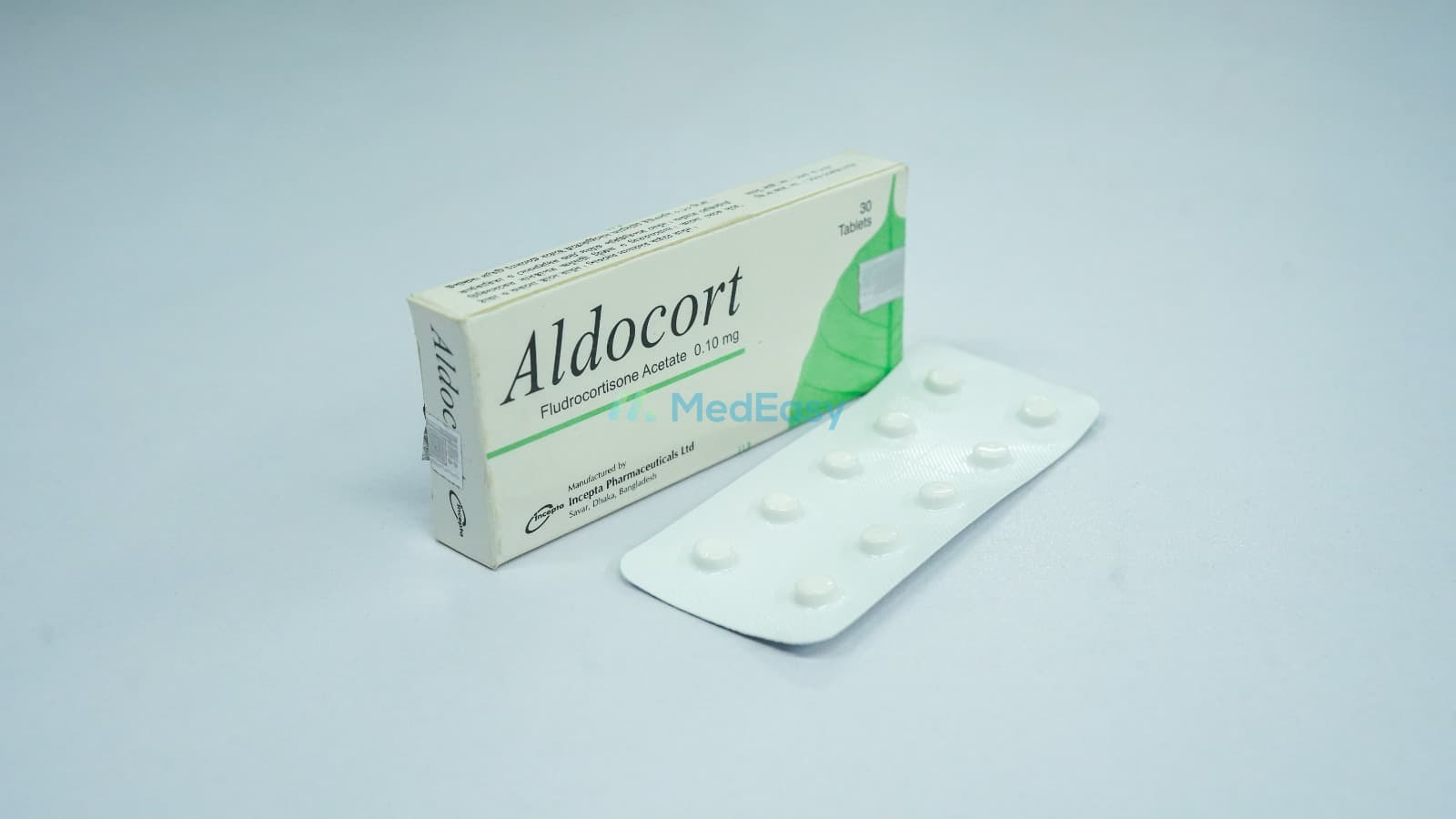

Medicine overview
Indications of Aldocort
Aldocort is a synthetic mineralocorticoid used for the following indications:
Established/FDA-approved uses
- Replacement therapy for primary adrenocortical insufficiency (Addison's disease): Aldocort is given together with a glucocorticoid (e.g., hydrocortisone or cortisone) to replace deficient mineralocorticoid activity.
- Salt-losing adrenogenital syndrome (congenital adrenal hyperplasia): Aldocort is used as part of combination therapy with a glucocorticoid to correct sodium loss and support normal growth and development.
Off-label use
- Orthostatic (postural) hypotension of various causes, including autonomic dysfunction/dysautonomia, when other measures are insufficient. This is not an FDA-approved indication and should only be used under specialist supervision.
Aldocort is not used alone to treat adrenal insufficiency; it does not have significant glucocorticoid activity and must be combined with a glucocorticoid when treating adrenocortical insufficiency.
Composition
Each tablet contains Fludrocortisone Acetate USP as the active ingredient, commonly available in a strength of 0.1 mg per tablet. Inactive ingredients (excipients such as lactose, starch, magnesium stearate, etc.) vary by manufacturer.
Description
Aldocort is a synthetic corticosteroid with potent mineralocorticoid activity and some glucocorticoid activity. It is chemically related to hydrocortisone but has markedly greater sodium-retaining potency, making it useful for replacing the mineralocorticoid (aldosterone-like) function of the adrenal cortex.
It is typically supplied as oral tablets for long-term replacement therapy in patients whose adrenal glands cannot produce adequate mineralocorticoid hormone.
Therapeutic Class
Aldocort belongs to the class of corticosteroids, specifically classified as a synthetic mineralocorticoid (adrenocortical steroid used primarily for its salt-retaining/mineralocorticoid effect rather than its anti-inflammatory glucocorticoid effect).
Pharmacology
Fludrocortisone Acetate acts primarily on the mineralocorticoid receptors located in the distal renal tubules. Activation of these receptors increases reabsorption of sodium (and water) from the renal tubules into the bloodstream, while simultaneously increasing urinary excretion of potassium and hydrogen ions.
This sodium-retaining action helps restore normal extracellular fluid volume and blood pressure in patients with mineralocorticoid deficiency. Fludrocortisone Acetate also possesses some glucocorticoid activity, though at doses used for mineralocorticoid replacement this effect is generally minor compared to its potent mineralocorticoid action.
Pharmacokinetics: Fludrocortisone Acetate is well absorbed after oral administration, extensively metabolized in the liver, and excreted mainly via the kidneys. Its biological half-life (mineralocorticoid effect) is approximately 18-36 hours, though plasma half-life is shorter.
Dosage & Administration of Aldocort
| Indication | Population | Typical Dose |
|---|---|---|
| Primary adrenocortical insufficiency (Addison's disease) | Adults | 0.1 mg orally once daily (range 0.1 mg three times weekly to 0.2 mg daily), combined with a glucocorticoid |
| Salt-losing adrenogenital syndrome | Adults and children | 0.1-0.2 mg orally daily, combined with a glucocorticoid; pediatric dosing individualized by a specialist and adjusted to growth, electrolytes, and blood pressure |
Dosage must be individualized based on clinical response, blood pressure, and serum electrolyte levels. Doses may need temporary adjustment during illness, surgery, or severe stress. Do not stop Aldocort abruptly; discontinuation should be gradual and physician-supervised, as in other corticosteroid therapy.
Aldocort should be taken exactly as prescribed by a physician; do not change the dose or stop treatment without medical advice, as abrupt withdrawal can precipitate adrenal crisis.
Administration of Aldocort
Aldocort tablets are taken by mouth, generally once daily, with or without food, at approximately the same time each day. Swallow the tablet whole; if a dose is missed, take it as soon as remembered unless it is close to the next dose. Do not double the dose. Aldocort should always be taken exactly as directed by the prescribing physician.
Interaction of Aldocort
Aldocort has the following well-established, clinically significant interactions:
- Potassium-wasting diuretics (e.g., thiazides, furosemide) and other drugs causing hypokalemia (e.g., amphotericin B, laxatives): Additive potassium loss; increases risk of hypokalemia and cardiac arrhythmia. Monitor serum potassium closely.
- Cardiac glycosides (e.g., digoxin): Aldocort-induced hypokalemia increases the risk of digitalis toxicity and arrhythmias.
- CYP3A4 inducers (e.g., rifampin, phenytoin, barbiturates): May increase metabolic clearance of corticosteroids, reducing their effect.
- CYP3A4 inhibitors (e.g., ketoconazole, ritonavir): May increase corticosteroid levels and enhance mineralocorticoid/glucocorticoid effects.
- NSAIDs and aspirin: Increased risk of gastrointestinal ulceration and bleeding when combined with corticosteroids.
- Live vaccines: Corticosteroid-associated immunosuppression may increase risk of infection from live vaccines; live vaccines should generally be avoided during therapy.
- Anticoagulants: Corticosteroids may alter anticoagulant response; monitor coagulation parameters.
- Antidiabetic agents/insulin: Corticosteroids can raise blood glucose, requiring dose adjustment of antidiabetic therapy.
Contraindications
Fludrocortisone Acetate is contraindicated in:
- Patients with known hypersensitivity to Fludrocortisone Acetate or any component of the formulation.
- Patients with systemic fungal infections.
Side Effects of Aldocort
Adverse effects of Aldocort are largely related to its potent mineralocorticoid (sodium- and water-retaining) activity, especially with excessive dosing.
Common
- Fluid retention and edema
- Elevated blood pressure (hypertension)
- Headache
- Weight gain
Less common but clinically significant
- Hypokalemia (low potassium), which may cause muscle weakness, cramps, or cardiac arrhythmia
- Cardiac enlargement/congestive heart failure exacerbation in susceptible patients
- Hypokalemic alkalosis
- Acne, bruising, or other skin changes with prolonged use
- Increased susceptibility to infection with long-term use
Report any signs of severe muscle weakness, palpitations, marked swelling, or significant blood pressure elevation to a physician promptly.
Pregnancy & Lactation
Pregnancy: Adequate, well-controlled human studies with Aldocort in pregnancy are lacking. As physiologic replacement therapy is generally necessary and beneficial in patients with true mineralocorticoid deficiency, Aldocort is typically continued during pregnancy when clearly indicated, with the dose adjusted based on clinical status and electrolytes; use only if clearly needed and the potential benefit justifies the potential risk to the fetus. Corticosteroids can cross the placenta, and prolonged or high-dose use of corticosteroids in general has been associated with rare adrenal effects in the newborn. Consult a physician before use during pregnancy.
Lactation: It is not well established whether Aldocort passes into breast milk in clinically significant amounts. Because many corticosteroids are excreted in breast milk in small amounts, caution is advised; a physician should weigh the benefits of treatment for the mother against potential risk to the breastfeeding infant.
Precautions & Warnings
Because of its potent mineralocorticoid activity, Aldocort requires careful monitoring and use with caution in the following situations:
- Fluid retention/edema and hypertension: Aldocort can cause significant sodium and water retention; use with caution in patients with hypertension or a tendency toward edema.
- Heart failure: May exacerbate congestive heart failure due to fluid retention; use with caution and close monitoring in patients with cardiac disease.
- Hypokalemia: Regular monitoring of serum potassium is required, especially with concurrent use of other potassium-lowering drugs.
- Regular monitoring: Blood pressure, body weight, and serum electrolytes should be monitored periodically during therapy.
- Infections: Corticosteroids can mask signs of infection and may lower resistance to new infections; avoid exposure to chickenpox, measles, or other infections, and avoid live vaccines during therapy.
- Stress dosing: Dose may need to be temporarily increased during periods of stress such as surgery, trauma, or severe illness; consult a physician promptly in such situations.
- Abrupt discontinuation: Do not stop Aldocort suddenly; gradual, physician-supervised tapering is required to avoid adrenal insufficiency/adrenal crisis.
Overdose Effects of Aldocort
Overdose of Aldocort may present with signs of excessive mineralocorticoid activity, such as marked fluid retention, edema, significantly elevated blood pressure, and hypokalemia (which may cause muscle weakness or cardiac arrhythmia). If an overdose is suspected, seek immediate medical attention or contact a poison control center/emergency services right away. Do not attempt to manage a suspected overdose at home; treatment should be supervised by a physician and generally includes supportive care, discontinuation or dose reduction, and correction of fluid/electrolyte imbalance under medical supervision.
Storage Conditions
Store at room temperature (below 30°C), away from light and moisture. Keep out of reach of children.
Use In Special Populations
Pediatric use
Aldocort is used in children for salt-losing adrenogenital syndrome (congenital adrenal hyperplasia), with dosing individualized by a pediatric endocrinologist based on weight, growth, blood pressure, and electrolyte status. Long-term use requires monitoring of growth and development, as excessive corticosteroid exposure can affect growth in children. Safety and efficacy for indications outside adrenal insufficiency/adrenogenital syndrome have not been established in children.
Elderly use
Elderly patients may be more susceptible to the sodium/water-retaining effects of Aldocort, including hypertension and edema, and may have age-related renal or cardiac impairment; use with caution and closer monitoring of blood pressure, fluid status, and electrolytes.
Renal impairment
Use with caution; patients with renal impairment may be more susceptible to sodium and fluid retention. Dose should be individualized with close monitoring of electrolytes and fluid status.
Hepatic impairment
Corticosteroid metabolism may be altered in significant hepatic impairment; use with caution and monitor clinical response closely.
Duration Of Treatment
Aldocort is generally used as long-term or lifelong replacement therapy in patients with permanent mineralocorticoid deficiency (e.g., Addison's disease, salt-losing congenital adrenal hyperplasia). Duration of treatment should be determined and periodically reviewed by the treating physician; therapy should never be stopped abruptly without medical guidance.
Drug Classes
Corticosteroids; Synthetic mineralocorticoids; Adrenal cortical steroids
Mode Of Action
Fludrocortisone Acetate binds to mineralocorticoid receptors in the distal renal tubule, promoting sodium reabsorption and potassium/hydrogen ion excretion, thereby increasing extracellular fluid volume and blood pressure. It also has modest glucocorticoid activity, though this is not the primary therapeutic mechanism when used for mineralocorticoid replacement.
Pediatric Uses
Aldocort is used in pediatric patients specifically for salt-losing adrenogenital syndrome (congenital adrenal hyperplasia) as part of combination therapy with a glucocorticoid. Dosing must be individualized by a pediatric specialist based on body weight, clinical response, blood pressure, and serum electrolytes. Long-term corticosteroid use in children requires monitoring of linear growth and development. Safety and efficacy for uses other than mineralocorticoid replacement in adrenal insufficiency/adrenogenital syndrome have not been established in the pediatric population.
Frequently Asked Questions
Q: What is Aldocort 0.10 mg Tablet used for?
A: Aldocort 0.10 mg Tablet is a synthetic mineralocorticoid used mainly as replacement therapy for primary adrenocortical insufficiency (Addison's disease) and salt-losing adrenogenital syndrome, always combined with a glucocorticoid. It is also used off-label, under specialist care, for certain cases of orthostatic hypotension.
Q: How should I take Aldocort 0.10 mg Tablet?
A: Take Aldocort 0.10 mg Tablet by mouth exactly as prescribed by your physician, generally once daily at the same time each day. Do not change your dose or stop taking it without medical advice, as sudden discontinuation can cause a dangerous adrenal crisis.
Q: What are the main side effects of Aldocort 0.10 mg Tablet?
A: The most common effects relate to its sodium- and water-retaining action, including fluid retention, swelling, elevated blood pressure, and headache. It can also cause low potassium levels (hypokalemia), which may lead to muscle weakness or irregular heartbeat, so regular blood pressure and electrolyte monitoring is recommended.
Q: Can Aldocort 0.10 mg Tablet be used during pregnancy?
A: Aldocort 0.10 mg Tablet should be used during pregnancy only if clearly needed, since adequate human studies are lacking; when mineralocorticoid deficiency is confirmed, treatment is usually continued because the benefit generally outweighs the risk, but this must be assessed and monitored by a physician throughout pregnancy.
Q: Who should not take Aldocort 0.10 mg Tablet?
A: Aldocort 0.10 mg Tablet should not be used by anyone with a known hypersensitivity to it or by patients with a systemic fungal infection anywhere in the body. It should be used cautiously, with close monitoring, in people with high blood pressure, heart failure, or low potassium levels.
Q: What should I do if I miss a dose or suspect an overdose of Aldocort 0.10 mg Tablet?
A: If a dose is missed, take it as soon as remembered unless it is nearly time for the next dose; do not double up. If an overdose is suspected (e.g., marked swelling, very high blood pressure, or severe muscle weakness), seek immediate medical attention or contact emergency/poison control services right away rather than attempting home treatment.
Disclaimer
The information provided is accurate to the best of our knowledge, but it does not replace professional medical advice. We cannot guarantee its completeness or accuracy, and the absence of specific information about a drug should not be taken as an endorsement. We are not responsible for any consequences arising from this information, so please consult a healthcare professional for any concerns or questions.
