
7% Off
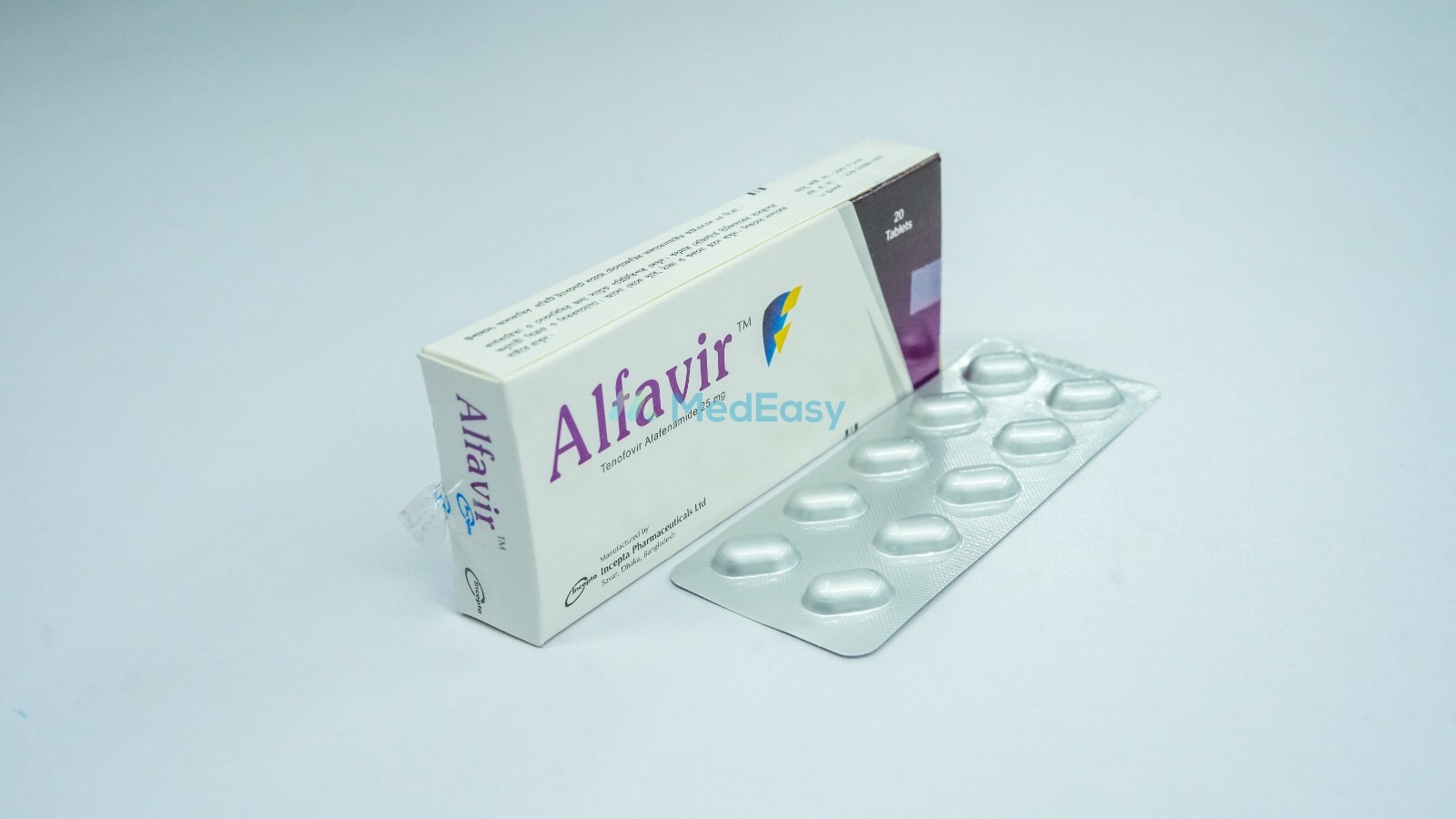
Alfavir25 mg
Incepta Pharmaceuticals Ltd.
৳837.00
Add to cart


Alenvir is a nucleotide analog reverse transcriptase inhibitor (NtRTI) prodrug of tenofovir, approved for the following uses:
Tenofovir Alafenamide is supplied as oral tablets, most commonly as a 25 mg tablet for the chronic hepatitis B indication, and as a fixed-dose component (typically 10 mg or 25 mg per tablet depending on the co-formulated agents) in combination antiretroviral products for HIV-1. Tenofovir Alafenamide is a phosphonoamidate prodrug that is converted intracellularly to the active moiety, tenofovir diphosphate.
Alenvir is an antiviral medicine belonging to the nucleotide analog reverse transcriptase inhibitor class. It is a next-generation prodrug of tenofovir, designed to deliver the active drug more efficiently into lymphoid cells and hepatocytes at a lower circulating plasma tenofovir concentration than the older prodrug, tenofovir disoproxil fumarate. This lower systemic tenofovir exposure is associated with reduced effects on the kidneys and bone mineral density while maintaining antiviral efficacy.
Alenvir is used to treat chronic hepatitis B virus infection and, as part of combination regimens, HIV-1 infection.
Antiviral agent - Nucleotide Analog Reverse Transcriptase Inhibitor (NtRTI); Alenvir is a prodrug of tenofovir used as an anti-hepadnaviral and antiretroviral agent.
Tenofovir Alafenamide is a phosphonoamidate prodrug of tenofovir. After absorption, Tenofovir Alafenamide is taken up preferentially into hepatocytes and lymphoid cells, where it is hydrolyzed by carboxylesterase 1 (hepatocytes) or cathepsin A (lymphoid cells) to release tenofovir. Tenofovir is then phosphorylated by cellular kinases to the active metabolite, tenofovir diphosphate.
Tenofovir diphosphate inhibits:
Because Tenofovir Alafenamide concentrates the active metabolite intracellularly at target sites, it achieves antiviral efficacy at roughly one-tenth the dose of tenofovir disoproxil fumarate, resulting in substantially lower circulating plasma tenofovir levels.
| Population | Dose |
|---|---|
| Adults | One 25 mg tablet of Alenvir orally, once daily, with food |
| Pediatrics (6 to less than 18 years, weight at least 25 kg) | One 25 mg tablet of Alenvir orally, once daily, with food |
| Pediatrics under 6 years or weighing less than 25 kg | Safety and efficacy not established; not recommended |
Alenvir is only available and administered as part of a fixed-dose combination tablet with other antiretroviral agents. The dose of Alenvir in these products (commonly 10 mg or 25 mg) and the dosing schedule follow the specific combination product's approved labeling; Alenvir is never prescribed alone for this indication.
See Precautions and Warnings for the boxed warning regarding hepatitis B exacerbation after discontinuation.
Alenvir tablets should be swallowed whole with food; do not chew, crush, or split the tablet unless a specific formulation is labeled for that use. Taking Alenvir with food increases its absorption. Doses should be taken at approximately the same time each day to maintain consistent drug levels, and patients should not stop or interrupt treatment without consulting their physician (see Precautions and Warnings regarding hepatitis B exacerbation on discontinuation).
Clinically significant interactions with Alenvir generally involve drugs that strongly affect P-glycoprotein (P-gp) and breast cancer resistance protein (BCRP) transporters, which alter absorption of Alenvir:
Always inform the prescribing physician of all other medicines, herbal products, and supplements being taken before starting Alenvir.
Tenofovir Alafenamide is contraindicated in patients with known hypersensitivity to tenofovir alafenamide or to any component of the formulation.
No other absolute contraindications are established. Situations such as severe renal impairment not on hemodialysis or decompensated liver disease are labeled as "not recommended" rather than absolute contraindications; see Precautions and Warnings and Use in Special Populations.
Most patients tolerate Alenvir well. Reported adverse effects include:
Pregnancy: Data from an antiretroviral pregnancy registry involving over a thousand first-trimester exposures to Alenvir-containing regimens have not shown an increase in overall birth defects compared with the background rate. However, this information is not sufficient to consider Alenvir definitively safe in pregnancy. Alenvir should be used during pregnancy only if the potential benefit justifies the potential risk to the fetus, and only under close medical supervision; consult a physician before use.
Lactation: It is not known whether Alenvir passes into breast milk in clinically significant amounts. Because of the potential for HIV transmission (in HIV-exposed infants) and unknown effects on the nursing infant, a decision to breastfeed while taking Alenvir should be made only in consultation with a physician, weighing the mother's clinical need against potential infant risk.
Severe acute exacerbations of hepatitis B have been reported in patients who have discontinued anti-hepatitis B therapy, including Alenvir. Hepatic function should be monitored closely with both clinical and laboratory follow-up for at least several months after stopping Alenvir in patients with HBV infection. If appropriate, resumption of anti-hepatitis B therapy may be warranted.
This class effect of nucleoside/nucleotide analogs has been reported with tenofovir-containing products, including Alenvir, and can be fatal. Treatment should be suspended if clinical or laboratory findings suggestive of lactic acidosis or pronounced hepatotoxicity develop.
New-onset or worsening renal impairment can occur. Renal function (creatinine, estimated creatinine clearance, urine glucose and urine protein) should be assessed before starting and periodically during treatment, particularly in patients with pre-existing renal risk factors.
Decreases in bone mineral density have been observed with Alenvir, although generally less pronounced than with tenofovir disoproxil fumarate. Consider bone monitoring in patients with a history of pathologic fracture or other risk factors for osteoporosis or bone loss.
Alenvir must never be used as HIV-1 monotherapy. Patients being treated for chronic hepatitis B should be tested for HIV-1 infection before starting Alenvir, because unrecognized or untreated HIV-1 infection can develop resistance to Alenvir if it is used alone for the hepatitis B indication.
For the HIV-1 indication, Alenvir is used only as part of an approved multi-drug combination product, never alone.
There is limited clinical experience with acute overdose of Alenvir. If overdose is suspected, the patient should seek immediate medical attention or contact a poison control center or emergency services promptly. Management should be supportive, with monitoring of vital signs and renal function; Alenvir's active metabolite (tenofovir) can be efficiently removed by hemodialysis, which may be considered by treating physicians in cases of significant overdose with renal compromise. Do not attempt to manage a suspected overdose at home without professional medical guidance.
Store at room temperature (below 30°C), away from light and moisture. Keep in the original container, tightly closed. Keep out of reach of children.
No dose adjustment of Alenvir is needed for estimated creatinine clearance ≥15 mL/min. Use is not recommended in patients with CrCl below 15 mL/min who are not on chronic hemodialysis; in patients on hemodialysis, Alenvir may be used, dosed after dialysis. See Dosage and Administration.
No adjustment is needed for mild (Child-Pugh A) impairment. Alenvir is not recommended in moderate-to-severe (decompensated, Child-Pugh B or C) hepatic disease, as safety and efficacy have not been established.
Clinical studies did not include sufficient numbers of patients aged 65 and over to determine whether they respond differently from younger patients; use with caution, considering the greater frequency of decreased renal, hepatic, or cardiac function and concomitant disease in this population.
See Pediatric Uses below.
Patients should be tested for HIV-1 before starting Alenvir for hepatitis B, since Alenvir used alone in an unrecognized HIV-1 infection can lead to HIV-1 resistance.
Alenvir for chronic hepatitis B is typically administered long-term/indefinitely, as chronic HBV suppression generally requires ongoing therapy; the optimal duration is determined by the treating physician based on virologic, biochemical, and serologic response. For HIV-1, Alenvir-containing combination regimens are continued indefinitely as part of lifelong antiretroviral therapy, or for the duration prescribed for pre-exposure prophylaxis. Treatment should not be stopped abruptly without medical advice, given the risk of hepatitis B exacerbation on discontinuation.
Nucleotide Analog Reverse Transcriptase Inhibitor (NtRTI); Antiretroviral agent; Anti-hepadnaviral agent. Tenofovir Alafenamide is a prodrug of tenofovir.
Tenofovir Alafenamide is a prodrug that is preferentially taken up by hepatocytes and lymphoid cells and converted intracellularly to tenofovir, which is then phosphorylated to its active form, tenofovir diphosphate. Tenofovir diphosphate competitively inhibits HBV reverse transcriptase and HIV-1 reverse transcriptase by acting as a chain terminator when incorporated into viral DNA, thereby suppressing viral replication.
Chronic Hepatitis B: Alenvir (25 mg tablet) is approved for pediatric patients aged 6 years and older weighing at least 25 kg with compensated liver disease, at the same dose as adults (one 25 mg tablet once daily with food). Safety and efficacy have not been established in children younger than 6 years or weighing less than 25 kg, and Alenvir is not recommended in this younger/lighter group.
HIV-1: Pediatric use of Alenvir for HIV-1 is only through specific combination products that have their own pediatric approvals, weight bands, and dosing; Alenvir alone is not used for HIV-1 in any age group.
Q: What is Alenvir 25 mg Tablet used for?
A: Alenvir 25 mg Tablet is an antiviral medicine used to treat chronic hepatitis B virus infection, taken as a single 25 mg tablet once daily. It is also used, as part of combination antiretroviral regimens with other drugs, for treatment or prevention of HIV-1 infection; it is never used alone for HIV-1.
Q: Can I stop taking Alenvir 25 mg Tablet on my own if I feel better?
A: No. Do not stop Alenvir 25 mg Tablet without consulting your physician. Stopping anti-hepatitis B treatment, including Alenvir 25 mg Tablet, has been associated with severe, sometimes life-threatening flare-ups of hepatitis B. Your doctor will monitor your liver function closely for several months if treatment is ever discontinued.
Q: Is Alenvir 25 mg Tablet safe during pregnancy?
A: Alenvir 25 mg Tablet should be used during pregnancy only if the potential benefit justifies the potential risk to the fetus, and only under a physician's supervision. Pregnancy registry data so far have not shown an increased rate of birth defects, but this is not enough to call Alenvir 25 mg Tablet definitively safe in pregnancy, so always consult your physician.
Q: What are the most common side effects of Alenvir 25 mg Tablet?
A: The most commonly reported side effects of Alenvir 25 mg Tablet include headache, nausea, abdominal pain, fatigue, cough, back pain, and diarrhea. Most are mild. Serious but less common effects include kidney problems, decreases in bone density, and lactic acidosis; report any unusual symptoms to your doctor promptly.
Q: Do I need any tests before starting Alenvir 25 mg Tablet?
A: Yes. Before starting Alenvir 25 mg Tablet, your doctor will typically test kidney function, liver function, and screen for HIV-1 infection (if Alenvir 25 mg Tablet is being started for hepatitis B), because using Alenvir 25 mg Tablet alone in someone with unrecognized HIV-1 infection can lead to HIV-1 drug resistance.
Q: Can Alenvir 25 mg Tablet be taken with other medicines?
A: Alenvir 25 mg Tablet can interact with certain medicines, especially strong inducers of P-glycoprotein such as rifampin, rifabutin, carbamazepine, phenytoin, and St. John's wort, which can reduce the effectiveness of Alenvir 25 mg Tablet. Always tell your doctor and pharmacist about all medicines, herbal products, and supplements you are taking before starting Alenvir 25 mg Tablet.
Disclaimer
The information provided is accurate to the best of our knowledge, but it does not replace professional medical advice. We cannot guarantee its completeness or accuracy, and the absence of specific information about a drug should not be taken as an endorsement. We are not responsible for any consequences arising from this information, so please consult a healthcare professional for any concerns or questions.

