
10% Off
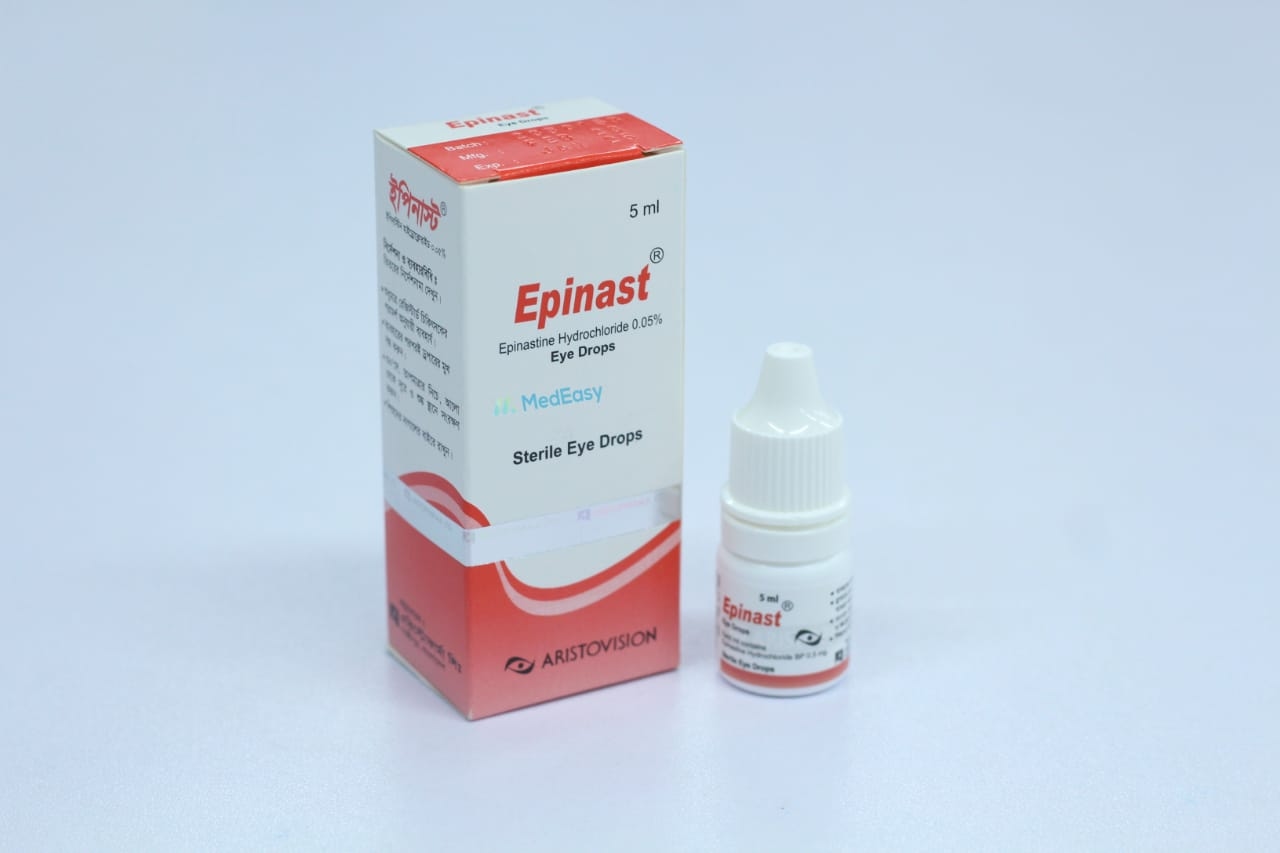
Epinast0.05%
Aristopharma Ltd.
৳135.00
Add to cart


Alpatin is a second-generation antihistamine and mast cell stabilizer used in two distinct formulations with different, FDA-recognized/guideline-supported indications:
Where oral Alpatin is not locally approved, its use for these indications should follow the treating physician's judgment.
Each formulation of Epinastine Hydrochloride contains the active ingredient epinastine hydrochloride:
Alpatin is a topically and systemically active second-generation (non-sedating) antihistamine that acts as a direct, selective histamine H1-receptor antagonist and also inhibits release of histamine and other mediators from mast cells. As an ophthalmic solution, it is used to relieve itching from allergic conjunctivitis; as an oral tablet in some countries, it is used for allergic rhinitis, urticaria, and pruritic skin conditions.
Second-generation (non-sedating) antihistamine / selective histamine H1-receptor antagonist and mast cell stabilizer; ophthalmic anti-allergic agent.
Epinastine Hydrochloride is a direct H1-receptor antagonist with additional mast-cell-stabilizing activity, reducing release of histamine and other inflammatory mediators. It also has affinity for H2 receptors and some other receptors at higher concentrations, but its clinical antiallergic effect is primarily H1-mediated.
Pharmacokinetics:
| Formulation | Indication | Adult Dose | Pediatric Dose |
|---|---|---|---|
| Ophthalmic solution 0.05% | Allergic conjunctivitis (itching prevention) | One drop in each affected eye twice daily (approximately every 8–12 hours) | Same regimen in children ≥2 years; safety and efficacy not established below 2 years |
| Oral tablets (where marketed) | Allergic rhinitis, urticaria, pruritus | Typically 20 mg once daily, or 10 mg twice daily, taken orally, per local physician/manufacturer labeling | Weight/age-based dosing per local labeling; not established under FDA labeling |
Continue ophthalmic Alpatin therapy throughout the period of allergen exposure, even after symptoms improve, for best effect. See Precautions and Warnings for contact lens instructions and Use in Special Populations for renal dose considerations.
Ophthalmic solution: For topical ocular use only. Tilt the head back, pull down the lower eyelid, and instill one drop into the pocket formed; avoid letting the dropper tip touch the eye, eyelid, fingers, or any surface. Close the eye gently for 1–2 minutes after instillation.
Oral tablets (where marketed): Swallow with water, with or without food, at the same time(s) each day as directed by the physician.
No clinically significant drug interactions have been established for ophthalmic Alpatin due to its minimal systemic absorption after topical ocular use.
For oral Alpatin (where marketed), concurrent use with alcohol or other central nervous system depressants (sedatives, hypnotics) may cause additive drowsiness, and concurrent use with other antihistamines may increase anticholinergic/sedative effects; such combinations should be used cautiously and under medical supervision.
Epinastine Hydrochloride is contraindicated in patients with known hypersensitivity to epinastine hydrochloride or to any component of the specific formulation being used.
Ophthalmic solution:
Oral tablets (where marketed):
Patients should contact a physician if any side effect is severe or persistent.
Pregnancy: Animal reproduction studies with Alpatin have not demonstrated harm to the fetus at doses substantially higher than the human therapeutic exposure, but adequate and well-controlled studies in pregnant women are lacking. Alpatin should be used during pregnancy only if the potential benefit justifies the potential risk to the fetus; consult a physician before use.
Lactation: Epinastine is excreted into the milk of lactating animals; whether it is excreted in human breast milk is unknown. Caution is advised, and a physician should be consulted before using Alpatin while breastfeeding.
Ophthalmic solution:
Oral tablets (where marketed):
See Contraindications for hypersensitivity and Pregnancy and Lactation for use during pregnancy/breastfeeding.
Specific human overdose data for Alpatin are limited. Accidental ingestion of ophthalmic solution or excessive oral intake may theoretically cause exaggerated antihistaminic effects such as drowsiness, dry mouth, or dizziness. There is no specific antidote. In case of suspected overdose or accidental ingestion, seek immediate medical attention or contact a poison control center/emergency services; supportive care should be provided as directed by a physician.
Store the ophthalmic solution at 20°C to 25°C (68°F to 77°F); brief excursions between 15°C and 30°C (59°F to 86°F) are permitted. Keep the bottle tightly closed when not in use. Oral tablets should be stored at room temperature (below 30°C), away from light and moisture. Keep all forms of Alpatin out of reach of children.
Renal impairment: Oral Alpatin is predominantly excreted unchanged by the kidneys; dose reduction or extended dosing intervals may be needed in patients with renal impairment, per local physician guidance. No specific dose adjustment is described for the ophthalmic solution due to minimal systemic absorption.
Hepatic impairment: Specific dosing data are limited; use with caution and physician oversight.
Elderly: Clinical studies of the ophthalmic solution have not shown differences in safety or effectiveness between elderly and younger patients.
Pediatric: See Pediatric Uses.
For allergic conjunctivitis, Alpatin ophthalmic solution should be continued throughout the period of allergen exposure, even if symptoms improve or resolve, to maintain control. For oral use (where marketed), duration depends on the condition being treated (e.g., short courses for acute urticaria versus longer, physician-directed courses for chronic allergic rhinitis) and should follow the prescriber's instructions.
Antihistamines (H1-receptor antagonists); Mast cell stabilizers; Ophthalmic anti-allergic/antihistamine agents.
Epinastine Hydrochloride selectively and directly blocks histamine H1 receptors, preventing histamine from binding and triggering allergic symptoms such as itching, redness, and swelling. It additionally stabilizes mast cell membranes, reducing further release of histamine and other allergic mediators. Its limited penetration across the blood-brain barrier contributes to a low potential for sedation compared with first-generation antihistamines.
Ophthalmic solution: Safety and efficacy have been established for children 2 years of age and older at the same dosage as adults; safety and efficacy in children below 2 years have not been established.
Oral tablets (where marketed): Pediatric use follows local, weight/age-based labeling in the countries where the oral form is approved; oral Alpatin is not FDA-approved for any age group in the United States, and its use in children should be guided by a pediatrician.
Q: What is Alpatin 0.05% Ophthalmic Solution used for?
A: Alpatin 0.05% Ophthalmic Solution eye drops are used to prevent itching from allergic conjunctivitis. In some countries, oral Alpatin 0.05% Ophthalmic Solution tablets are also used for allergic rhinitis, hives (urticaria), and itching related to certain skin conditions.
Q: How should I use Alpatin 0.05% Ophthalmic Solution eye drops?
A: Instill one drop of Alpatin 0.05% Ophthalmic Solution into each affected eye twice daily, avoiding contact between the dropper tip and the eye or any surface, and continue use throughout your allergy season even if your eyes feel better.
Q: Can I wear contact lenses while using Alpatin 0.05% Ophthalmic Solution?
A: Do not use Alpatin 0.05% Ophthalmic Solution ophthalmic solution to treat lens-related irritation. If your eyes are not red, you may generally reinsert soft contact lenses at least 10 minutes after using the drops, since the preservative can be absorbed by the lenses; if your eyes are red, consult your physician before use or lens wear.
Q: Is Alpatin 0.05% Ophthalmic Solution safe during pregnancy or breastfeeding?
A: Animal studies have not shown harm to the fetus at high doses, but there is not enough human data to confirm safety. Alpatin 0.05% Ophthalmic Solution should be used in pregnancy only if clearly needed and the potential benefit justifies the potential risk to the fetus, and caution is advised during breastfeeding; consult a physician before use in either situation.
Q: What are the common side effects of Alpatin 0.05% Ophthalmic Solution?
A: The eye drop form may cause mild burning or stinging, redness, itching, or increased tearing. Oral tablets (where used) may cause headache, mild drowsiness, dry mouth, or an upset stomach. Contact your physician if side effects are severe or do not go away.
Q: What should I do in case of accidental overdose?
A: If Alpatin 0.05% Ophthalmic Solution is accidentally swallowed in large amounts, or if excessive eye drops are used, seek immediate medical attention or contact a poison control center or emergency services rather than attempting home treatment.
Disclaimer
The information provided is accurate to the best of our knowledge, but it does not replace professional medical advice. We cannot guarantee its completeness or accuracy, and the absence of specific information about a drug should not be taken as an endorsement. We are not responsible for any consequences arising from this information, so please consult a healthcare professional for any concerns or questions.

