
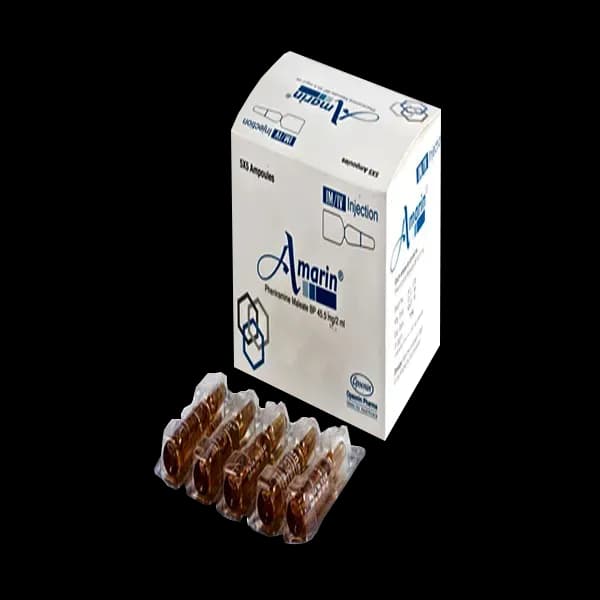

Medicine overview
Indications of Amarin
Amarin is a first-generation (sedating) antihistamine used for the symptomatic relief of a variety of allergic conditions. Established/labeled uses include:
- Allergic rhinitis (seasonal and perennial) - relief of sneezing, rhinorrhea, and nasal/eye itching
- Urticaria (hives) and pruritus (itching) of allergic origin, including insect bite reactions
- Allergic conjunctivitis - relief of itching and redness of the eyes due to allergy (commonly used topically in combination with a decongestant such as naphazoline in eye drops)
Amarin is also used as an adjunct/symptomatic component in various multi-ingredient cold, flu, and allergy combination products (together with decongestants, analgesics, or antitussives) to relieve associated sneezing, runny nose, and watery eyes.
Adjunctive use
Injectable Amarin is sometimes used, under medical supervision, as an adjunct in the management of acute allergic reactions, in addition to first-line treatments such as epinephrine; it is not a substitute for epinephrine in anaphylaxis.
Composition
Each formulation of Pheniramine Maleate contains pheniramine maleate as the active ingredient. Commonly available strengths/forms include:
- Tablet: 25 mg Pheniramine Maleate
- Oral liquid/syrup: strengths vary by manufacturer
- Injection: 22.75 mg/mL (as Pheniramine Maleate) for intramuscular or slow intravenous use
- Ophthalmic combination drops containing Pheniramine Maleate together with a decongestant (e.g., naphazoline)
Exact strengths and dosage forms vary by manufacturer and market; consult the product package insert for the specific formulation dispensed.
Description
Amarin is a first-generation alkylamine-class antihistamine (H1-receptor antagonist) with additional anticholinergic and central nervous system depressant (sedative) properties. It is chemically related to other alkylamine antihistamines such as chlorpheniramine and brompheniramine.
Amarin is available as oral tablets, oral liquid/syrup, injectable solution, and as an ingredient in combination ophthalmic and oral cold/allergy products, and is used to relieve symptoms caused by histamine release during allergic reactions.
Therapeutic Class
Amarin belongs to the class of first-generation (sedating) antihistamines, specifically the alkylamine derivative subgroup of H1-receptor antagonists.
Pharmacology
Pheniramine Maleate acts as a competitive, reversible antagonist at histamine H1 receptors, blocking the actions of endogenously released histamine on smooth muscle, capillaries, and other tissues. This reduces symptoms such as itching, sneezing, rhinorrhea, and the vascular permeability changes seen in allergic reactions.
Because it crosses the blood-brain barrier, Pheniramine Maleate produces central nervous system depression (sedation, drowsiness), typical of first-generation antihistamines. It also has clinically significant anticholinergic (antimuscarinic) activity, accounting for effects such as dry mouth, blurred vision, urinary retention, and constipation, along with mild local anesthetic and antiserotonergic activity at higher concentrations.
Onset of action of oral Pheniramine Maleate is typically within 15-60 minutes, with a duration of action of approximately 4-6 hours.
Dosage & Administration of Amarin
Adults
| Indication | Route | Typical Adult Dose |
|---|---|---|
| Allergic rhinitis, urticaria, pruritus | Oral | 25 mg (1 tablet) of Amarin two to three times daily, or as directed by a physician |
| Acute allergic reaction (adjunct) | Intramuscular/slow IV | Usually one ampoule (22.75 mg/mL, 2 mL) of Amarin as a single dose, repeated only as directed by a physician |
| Allergic conjunctivitis | Ophthalmic (combination drops) | 1-2 drops of a Amarin combination product in the affected eye(s) up to 4 times daily, or as directed |
Children
Pediatric oral dosing of Amarin is weight/age-based and should be determined by a physician; consult product labeling for age-specific liquid/syrup dosing. Amarin is contraindicated in newborn and premature infants (see Contraindications).
Renal/Hepatic Impairment
No well-established formal dose-adjustment guidelines exist for renal or hepatic impairment; such patients should use Amarin cautiously and under medical supervision, since reduced clearance may increase sedative and anticholinergic effects.
Elderly
Start at the lower end of the dosing range when using Amarin in elderly patients due to increased sensitivity to anticholinergic and sedative effects (see Use in Special Populations).
Administration of Amarin
Amarin tablets and syrup may be taken with or without food; taking with food may reduce stomach upset. Swallow tablets whole with water and measure liquid/syrup doses with a proper measuring device.
The injectable form of Amarin should be administered only by a trained healthcare professional, via intramuscular injection or slow intravenous injection.
Ophthalmic combination drops containing Amarin should be instilled into the conjunctival sac; avoid touching the dropper tip to the eye or any surface. Contact lenses should generally be removed before instillation.
Because Amarin causes drowsiness, avoid driving or operating machinery until you know how it affects you.
Interaction of Amarin
Amarin has the following clinically significant drug interactions:
- Monoamine oxidase inhibitors (MAOIs): Concurrent use is contraindicated; MAOIs prolong and intensify the anticholinergic effects of Amarin (see Contraindications).
- CNS depressants (alcohol, sedatives, hypnotics, opioids, benzodiazepines): Additive sedation and CNS depression can occur when taken with Amarin; avoid or use with caution.
- Other anticholinergic drugs (e.g., tricyclic antidepressants, certain antipsychotics): Additive anticholinergic effects (confusion, urinary retention, constipation, blurred vision) may occur, particularly in elderly patients, when combined with Amarin.
Contraindications
Pheniramine Maleate is contraindicated in:
- Patients with known hypersensitivity to Pheniramine Maleate or other antihistamines of similar chemical structure
- Patients taking monoamine oxidase inhibitors (MAOIs), or within 14 days of stopping an MAOI
- Newborn and premature infants
- Patients with narrow-angle glaucoma
- Patients with symptomatic prostatic hypertrophy or bladder-neck obstruction
Side Effects of Amarin
The most common side effect of Amarin is sedation/drowsiness, which is prominent with this first-generation antihistamine. Other side effects may include:
- Dry mouth, dry nose and throat
- Blurred vision
- Urinary retention/hesitancy
- Constipation
- Dizziness, headache, mild hypotension
- Thickened bronchial secretions
In children, Amarin may occasionally cause paradoxical excitation (restlessness, irritability, insomnia) rather than sedation.
Seek prompt medical attention for signs of a serious allergic reaction (rash, swelling of the face/lips/tongue, difficulty breathing) after taking Amarin.
Pregnancy & Lactation
Pregnancy: There are limited well-controlled human studies of Amarin use in pregnancy. It should be used during pregnancy only if clearly needed, and only if the potential benefit justifies the potential risk to the fetus. Consult a physician before using Amarin during pregnancy.
Lactation: It is not well established whether Amarin passes into breast milk. Because first-generation antihistamines may cause sedation or irritability in breastfed infants and may suppress lactation, Amarin should be used during breastfeeding only under medical advice, weighing benefit against risk.
Precautions & Warnings
Because Amarin commonly causes sedation, patients should exercise caution while driving, operating machinery, or performing other activities requiring mental alertness until they know how it affects them. Avoid concurrent alcohol or other CNS depressants (see Interactions).
Use with caution in elderly patients, who are more sensitive to the anticholinergic and sedative effects of Amarin and are at increased risk of confusion, dizziness, and falls.
Use Amarin with caution in patients with asthma or other chronic respiratory conditions (anticholinergic effects may thicken secretions), cardiovascular disease, hypertension, hyperthyroidism, and in those with a history of seizures, since first-generation antihistamines may lower seizure threshold.
Patients with narrow-angle glaucoma or symptomatic prostatic hypertrophy should not use Amarin (see Contraindications).
Overdose Effects of Amarin
Overdose of Amarin may cause marked drowsiness or, particularly in children, paradoxical CNS stimulation (excitement, tremor, hallucinations, seizures), along with anticholinergic effects such as dry mouth, fixed/dilated pupils, flushing, and urinary retention. Severe overdose can progress to cardiovascular collapse, arrhythmias, or coma.
If overdose of Amarin is suspected, seek immediate medical attention or contact a poison control center/emergency services right away. Do not attempt home treatment; management is supportive and should be provided in a medical facility.
Storage Conditions
Store Amarin at room temperature (below 30°C), away from light and moisture. Keep out of reach of children.
Use In Special Populations
Pediatric Use
Amarin is contraindicated in newborns and premature infants. In older children, use only under medical supervision with age/weight-appropriate dosing; safety and efficacy of some formulations of Amarin have not been formally established in all pediatric age groups. Watch for paradoxical excitation.
Geriatric Use
Elderly patients are more susceptible to the sedative and anticholinergic effects of Amarin (confusion, dizziness, urinary retention, constipation, fall risk); use the lowest effective dose with caution.
Renal/Hepatic Impairment
No formal dose-adjustment guidelines are established; use Amarin cautiously in patients with significant renal or hepatic impairment due to potential for reduced clearance.
Duration Of Treatment
Amarin is generally used for short-term, symptomatic relief of allergic symptoms. Duration of use should follow product labeling or a physician's advice; if symptoms persist beyond 7 days, worsen, or are accompanied by fever, a physician should be consulted rather than continuing self-treatment with Amarin.
Drug Classes
Pheniramine Maleate is classified as an Antihistamine (H1-receptor antagonist), first-generation, alkylamine derivative.
Mode Of Action
Pheniramine Maleate works by competitively and reversibly blocking histamine at H1 receptors, preventing histamine-mediated effects such as increased capillary permeability, smooth muscle contraction, and stimulation of sensory nerve endings that produce itching and sneezing. Its central H1-blocking and anticholinergic activity also accounts for the sedative and drying effects of Pheniramine Maleate.
Pediatric Uses
Amarin is contraindicated in newborn and premature infants due to increased risk of severe adverse anticholinergic and CNS effects in this age group. In older infants and children, Amarin should be used only under medical supervision, with dosing individualized by age and weight; safety and efficacy for certain indications and formulations have not been formally established in all pediatric age groups. Children may experience paradoxical excitation (irritability, insomnia, nervousness) instead of sedation.
Frequently Asked Questions
Q: What is Amarin 45.5 mg/2 ml Injection used for?
A: Amarin 45.5 mg/2 ml Injection is an antihistamine used to relieve allergic symptoms such as sneezing, runny nose, itchy/watery eyes, hives (urticaria), and itching (pruritus). It is also used in combination eye drops for allergic conjunctivitis and in some cold/allergy combination products.
Q: Does Amarin 45.5 mg/2 ml Injection cause drowsiness?
A: Yes. Amarin 45.5 mg/2 ml Injection is a first-generation antihistamine and commonly causes sedation and drowsiness. Avoid driving or operating machinery until you know how it affects you, and avoid alcohol or other sedating medicines while taking it.
Q: Can I take Amarin 45.5 mg/2 ml Injection during pregnancy or while breastfeeding?
A: Amarin 45.5 mg/2 ml Injection should be used during pregnancy only if clearly needed, when the potential benefit justifies the potential risk to the fetus, and only under a physician's advice. Its passage into breast milk is not well established, so it should also be used during breastfeeding only under medical supervision, weighing benefits against possible sedation or irritability in the infant.
Q: Who should not take Amarin 45.5 mg/2 ml Injection?
A: Amarin 45.5 mg/2 ml Injection should not be used by people with known hypersensitivity to it or related antihistamines, those taking monoamine oxidase inhibitors (MAOIs) or within 14 days of stopping one, newborns and premature infants, and people with narrow-angle glaucoma or symptomatic prostatic hypertrophy/bladder-neck obstruction.
Q: What should I do if I miss a dose or take too much Amarin 45.5 mg/2 ml Injection?
A: If you miss a dose, take it as soon as you remember unless it is almost time for your next dose - do not double up. If you suspect an overdose of Amarin 45.5 mg/2 ml Injection, which can cause severe drowsiness, agitation (especially in children), or other serious effects, seek immediate medical attention or contact a poison control center right away.
Q: Can Amarin 45.5 mg/2 ml Injection be given to children?
A: Amarin 45.5 mg/2 ml Injection is contraindicated in newborns and premature infants. In older children, it should only be used under a physician's guidance with age/weight-appropriate dosing, as children may experience paradoxical excitation (restlessness, irritability) instead of sedation.
Disclaimer
The information provided is accurate to the best of our knowledge, but it does not replace professional medical advice. We cannot guarantee its completeness or accuracy, and the absence of specific information about a drug should not be taken as an endorsement. We are not responsible for any consequences arising from this information, so please consult a healthcare professional for any concerns or questions.
